
Excavator Export Prices Raised 5% by Sany, LiuGong and XCMG





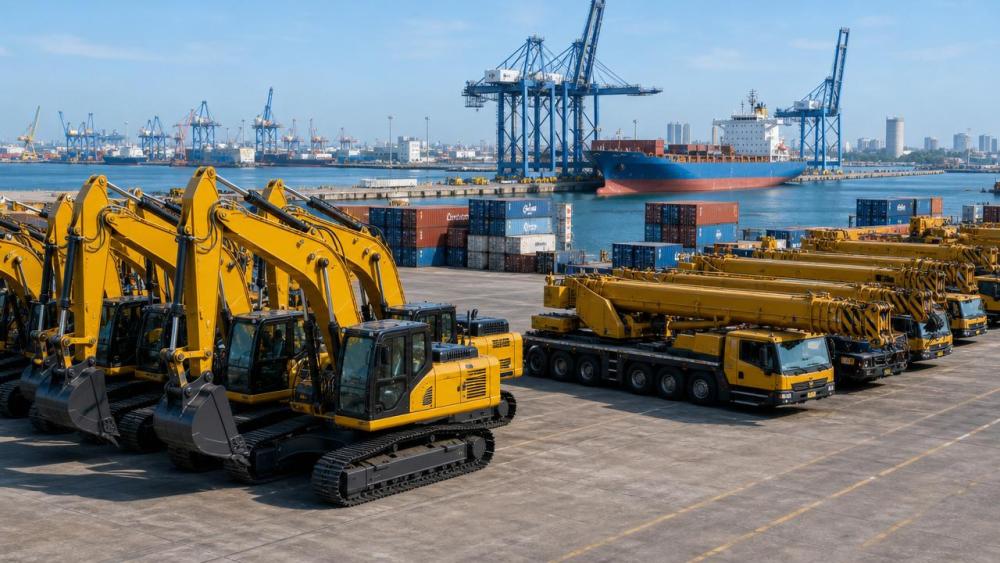
On May 15, 2026, Sany Heavy Machinery, LiuGong Excavator and XCMG Excavator announced a 5% increase in export prices for excavators, with price increases of 2% to 5% for wheeled, crawler and truck cranes set to follow from June. From an industry perspective, this is not just a pricing update; it is an immediate execution signal affecting export trade terms, procurement budgeting, distributor pricing, delivery planning and bid preparation across global markets. For importers, channel partners and project-based buyers, the practical issue is how this change will flow into contract review, technical documentation, lead-time assumptions and compliance-linked delivery commitments.
What has been confirmed so far
The confirmed facts are limited but commercially significant. The three manufacturers named in the event summary moved in parallel on May 15, 2026 to raise export prices for excavators by 5%. The summary also states that from June, other equipment categories including wheeled, crawler and truck cranes will also see increases of 2% to 5%.
The adjustment applies across major global markets. The event summary further confirms that the change directly affects overseas importers' procurement budgets, distributors' pricing strategies and project tender costs. The stated drivers are rising raw material costs, a higher share of high-end intelligent models and tightening export delivery cycles.
Where the pressure is likely to appear first
Budget control at the buyer and importer end
Analysis shows that overseas buyers and importers are likely to feel the first impact in procurement planning and internal approval processes. A 5% change in export pricing can alter previously prepared equipment budgets, and that in turn may require renewed review of purchase schedules, quotation validity and contract assumptions tied to delivery timing. What deserves closer attention is whether existing procurement files, bid calculations and technical-commercial comparisons still align with the updated supplier offers.
Distributor pricing and channel execution
For distributors and channel operators, the issue is not only margin pressure but also execution discipline. Observably, a synchronized adjustment across major manufacturers can force a faster review of local resale pricing, quotation cycles and stock replenishment decisions. These businesses also need to pay closer attention to product configuration descriptions, technical documentation and any commitments already made to end customers, especially where pricing and delivery expectations were set before the export adjustment took effect.
Tendering and project delivery coordination
Project contractors and other bid-sensitive buyers may be affected through revised equipment cost assumptions. From an industry perspective, when export prices and delivery cycles tighten at the same time, the commercial side of a tender can no longer be reviewed separately from delivery feasibility. Companies involved in bidding, project equipment allocation or subcontract execution should pay close attention to quote validity periods, delivery clauses, specification alignment and any supporting documents used to justify budget and schedule commitments.
Supply-chain and service-side coordination
Supply-chain service providers and after-sales related businesses may also need to adjust operating assumptions. Analysis shows that if lead times become tighter while product mix shifts toward higher-end intelligent models, document handling, shipment coordination, spare-parts preparation and service readiness could become more sensitive in the export process. This does not confirm any new compliance rule by itself, but it does raise the importance of document consistency, delivery traceability and coordination across trade and service links.
What companies should watch in the next stage
Review contract and quotation language carefully
Companies engaged in export purchasing, distribution or project supply should closely review how current quotations, purchase orders and framework agreements handle price validity, configuration scope and delivery timing. The event summary confirms the price adjustment, but it does not provide detailed execution language, so businesses should avoid assuming that all product lines, contract forms or commercial terms will be implemented identically.
Keep technical and tender files aligned with new pricing
Where equipment procurement is linked to tender documents or internal capital approval, technical files and commercial files should be checked together. Observably, when higher-end intelligent models are becoming a larger share of exports, product specifications, supporting technical materials and pricing logic may need to be reviewed in parallel rather than treated as separate workflows.
Watch delivery-cycle commitments and supporting documents
Because tightening export delivery cycles are identified in the event summary as one of the drivers, companies should pay closer attention to delivery promises, shipment planning and supporting documentation used in trade execution. This includes monitoring whether updated offers, delivery schedules and transaction records remain consistent across procurement, logistics and customer-facing documentation.
Stay alert to follow-on adjustments in related equipment
The notice that crane categories will also move up by 2% to 5% from June suggests that the immediate excavator adjustment may not remain isolated at a single product category level. It is more appropriate to understand this as a signal to monitor adjacent product lines, commercial terms and procurement timing rather than as a fully settled industry-wide rule outcome.
Why this looks more like an execution signal than a standalone price move
Analysis shows that the event is best read as an operational market signal rather than a simple headline about higher prices. The pricing action is already in effect for the named excavator products, so in that sense it reflects an implemented change. At the same time, the broader implications for tenders, distribution policies, document practice, delivery commitments and product-category spillover still require observation.
What deserves closer attention is not only the announced percentage increase, but how market participants translate that change into procurement thresholds, bid updates, document control and customer communication. For that reason, the event is closer to an executed commercial rule change with wider downstream implications still being tested in practice.
How the market may need to interpret this development now
A neutral reading of this event is that overseas procurement costs for the affected equipment have already moved upward, while the full industry response is still unfolding. From an industry perspective, the most reasonable interpretation at this stage is neither to overstate the impact nor to treat it as a routine short-term adjustment without consequences. It is better understood as a landed commercial change that requires continued monitoring of procurement execution, delivery coordination, tender document updates and market feedback in the coming period.
Basis of this article and points still requiring verification
This article is generated from the user-provided news title, event date and event summary. Typical source types relevant to this kind of development may include official company announcements, releases from regulatory or trade authorities, customs or trade administration information, industry association updates, standard-setting documents and reporting by authoritative media.
No specific official source link was provided in the input, so the precise official reference still needs to be verified on an ongoing basis. Observably, the next points worth tracking are any further clarification on execution practice, changes in certification or compliance wording used in transactions, updates to tender documents, market feedback from buyers and distributors, and how companies implement the announced price changes in actual export operations.
Related News

How to Evaluate European Drill-and-Blast Tunnelling Contractors for Complex Projects
Drill and blast tunnelling contractors Europe: learn how to assess geology expertise, blast control, equipment reliability, safety, and programme resilience for complex projects.

Which Trenchless Construction Technique Fits Your Utility Crossing Conditions?
Trenchless construction techniques compared for utility crossings: choose HDD, microtunnelling, pipe jacking, or auger boring based on ground, accuracy, access, and risk.

What Is Driving Metro Tunnelling Demand Across Southeast Asia’s Major Cities?
Metro tunnelling Southeast Asia is accelerating as major cities tackle congestion, flooding, and connectivity. Explore the market forces, technical risks, and opportunities shaping demand.

Hard Rock Tunnelling in Australia: Selecting Methods for Variable Ground Conditions
Hard rock tunnelling in Australia: compare TBM, drill-and-blast and hybrid methods to manage variable ground, reduce risk and protect project costs.

Hydropower Tunnel Excavation: Selecting Methods for Variable Rock Conditions
Hydropower tunnel excavation methods for variable rock conditions: compare TBM, drill-and-blast, and hybrid strategies to improve safety, progress, and project control.

How to Select Underground Safety Equipment for Tunnelling by Hazard and Work Zone
Underground Safety Equipment for tunnelling: match protection to hazards, work zones, compliance, and emergency needs with this practical selection guide.

EPB or Slurry Shield? Selecting Soft-Ground Tunnelling Equipment by Soil Conditions
Tunnel Excavation Equipment for soft ground: compare EPB and slurry shields by soil, groundwater, settlement risk, and project logistics to choose confidently.

How to Specify TBM Backup System Parts for Reliable Long-Distance Tunnelling
TBM backup system parts: learn how to specify reliable spares for long-distance tunnelling, reduce downtime, ensure compatibility, and speed underground recovery.

How to Size Open Pit Mining Trucks for Haul Distance, Grade, and Payload?
Open Pit Mining Trucks: learn how to match payload, haul distance, grade, road resistance, and loading capacity for safer, lower-cost mine operations.
Related News
- 00
0000-00
How to Evaluate European Drill-and-Blast Tunnelling Contractors for Complex Projects - 00
0000-00
Which Trenchless Construction Technique Fits Your Utility Crossing Conditions? - 00
0000-00
What Is Driving Metro Tunnelling Demand Across Southeast Asia’s Major Cities? - 00
0000-00
Hard Rock Tunnelling in Australia: Selecting Methods for Variable Ground Conditions - 00
0000-00
Hydropower Tunnel Excavation: Selecting Methods for Variable Rock Conditions
Weekly Insights
Stay ahead with our curated technology reports delivered every Monday.