
Hydropower Tunnel Excavation: Selecting Methods for Variable Rock Conditions





Hydropower Tunnel Excavation: Selecting Methods for Variable Rock Conditions
Hydropower tunnel excavation is rarely a straightforward choice between a tunnel boring machine and drill-and-blast. On a route map, a headrace tunnel may look like one continuous line between reservoir and powerhouse. Underground, it can pass from competent granite into fractured schist, encounter high-pressure groundwater, cross weathered fault material, and then return to hard abrasive rock within a relatively short distance.
That variability is what makes excavation-method selection a project-management decision rather than simply an equipment decision. The preferred method must protect the construction schedule, keep support installation under control, manage water and spoil logistics, and leave a tunnel profile suitable for long-term hydraulic performance. A machine that performs exceptionally in one reach can become an expensive constraint in the next.
For project teams, the practical question is not “Which method has the highest theoretical advance rate?” It is: “Which method gives us the most reliable production across the full ground model, including the sections where the ground model is wrong?” That distinction matters in hydropower projects, where access is often limited, tunnel lengths can be substantial, and a delay at one underground heading may affect civil works, electromechanical installation, and commissioning downstream.
Start With the Ground Model, Not the Machine Catalogue
A useful geotechnical baseline does more than classify rock strength. It should help the construction team understand how rock mass behavior may change along the alignment. Intact compressive strength is important, but it does not by itself predict excavation difficulty. A strong rock mass with persistent joints, squeezing behavior, stress-induced spalling, or water-bearing discontinuities can be far more disruptive than a weaker but uniform formation.
Before selecting a hydropower tunnel excavation method, the project team should examine several interacting conditions:
- Expected rock mass quality and its variability by chainage, not only average values.
- Faults, shear zones, karst features, dykes, and highly weathered intervals.
- Groundwater pressure, inflow pathways, and the ability to drain or pre-grout ahead of the face.
- Overburden depth, in-situ stress, and the likelihood of squeezing or rockburst conditions.
- Required finished diameter, lining concept, hydraulic roughness requirements, and allowable overbreak.
- Available portals, adits, shafts, muck handling routes, ventilation capacity, and power supply.
The most common planning mistake is to treat uncertain ground as an isolated risk register item while selecting equipment on the basis of the dominant rock type. In reality, the minority sections often govern the program. A single unstable fault crossing may dictate support cycles, grouting capability, machine recovery provisions, or the number of standby systems that should be included from the beginning.
A disciplined selection process therefore uses geological mapping, borehole records, probe drilling assumptions, laboratory testing, hydrogeological interpretation, and construction access constraints together. None of these sources is perfect. The objective is not false certainty; it is to identify where the chosen method has little tolerance for changing conditions.
Where Full-Face TBMs Make Sense—and Where They Need Caution
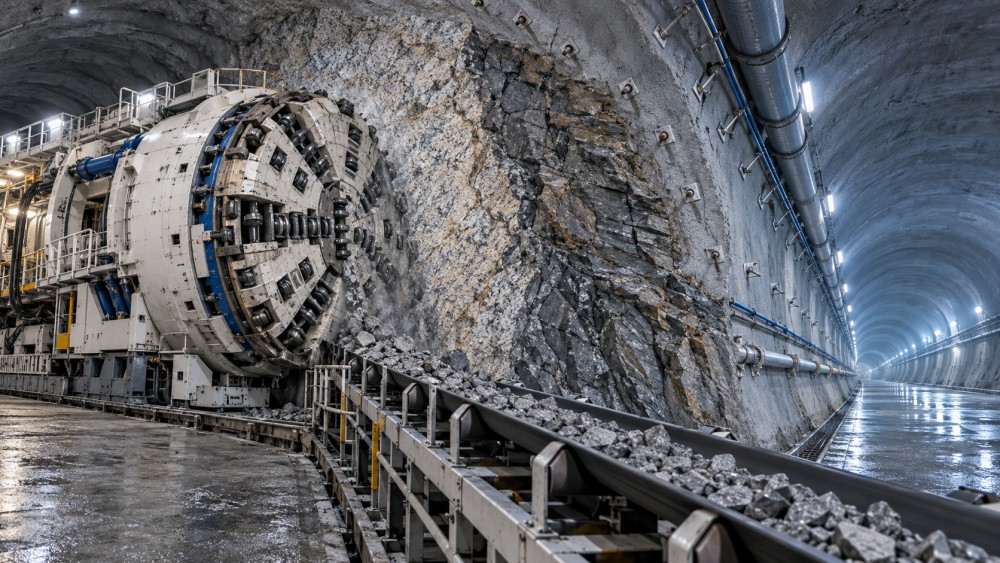
For long hydropower tunnels with relatively continuous competent rock, a hard-rock TBM can offer attractive advantages. Continuous full-face excavation can create a consistent profile, reduce repeated drill-and-blast cycles, and support steady material handling where conveyors or efficient rail systems are available. In long drives, the operational rhythm of boring, probing, supporting, and removing muck may be easier to optimize than a conventional cyclic heading.
However, “hard rock” is not enough to justify a TBM. The question is whether the rock mass is sufficiently predictable and whether the project can absorb the consequences of a difficult reach. Disc cutter wear, cutterhead access, face instability, blocky ground, water inflow, and machine entrapment risk must be assessed before mobilization. Abrasive formations can also change the economics sharply if cutter consumption and intervention time were treated too casually during tender planning.
TBM selection becomes particularly sensitive when the alignment includes substantial faulted or mixed-ground zones. Open-type hard-rock machines can achieve excellent progress in sound conditions, but they have limited shielding when the face or crown deteriorates. Shielded and double-shield TBMs can provide more protection in selected ground conditions, yet they introduce their own dependencies: ring build, thrust transfer, segment logistics, and the risk that convergence interferes with the shield or segment erection sequence.
The right conclusion is not that TBMs are unsuitable for variable geology. Many projects use them successfully. It is that their procurement package should include a realistic ground-response strategy: probe drilling ahead of the face, defined grouting procedures, cutter-change access, contingency support materials, monitoring protocols, and decision authority for slowing or stopping the machine. A high-capacity TBM without a prepared intervention plan is not a resilient production system.
Why Drill-and-Blast Remains a Strong Option in Uncertain Ground
Drill-and-blast remains the more flexible method where geology changes frequently, tunnel geometry is complex, or multiple headings are required from adits and access tunnels. Modern drilling jumbos can provide accurate drill patterns, while the excavation cycle allows the team to inspect each newly exposed face, alter the round length, change support classes, and introduce pre-grouting or forepoling before proceeding.
That adaptability is valuable in hydropower works because tunnels often include intersections, pressure shafts, surge chambers, caverns, cross passages, and enlarged sections. A TBM may still be appropriate for the main long reach, but drill-and-blast is often the practical method for non-circular excavations and local transitions. Trying to force every underground structure into one excavation philosophy can create avoidable interface problems.
The trade-off is that drill-and-blast production is more cyclic. It depends on drilling accuracy, charging discipline, ventilation clearance after blasting, scaling, mucking, and rapid support installation. Poor blast design can lead to overbreak, damage to the remaining rock mass, increased shotcrete consumption, and a rougher final profile. For water conveyance tunnels, excess overbreak is not just a concrete cost issue; it can complicate lining control and create variability where hydraulic surfaces need to be managed carefully.
Project managers should look beyond nominal advance rates when comparing drill-and-blast with mechanized boring. The relevant measure is reliable net progress after support, rework, ventilation delays, maintenance, water treatment, and muck transport. A well-organized drill-and-blast heading with capable jumbos, loaders, haulage equipment, and support crews may outperform an overly ambitious mechanized plan in highly variable ground.
Hybrid Strategies Often Reflect the Real Tunnel Better
Many hydropower schemes are best served by a hybrid strategy rather than a single-method commitment. This can mean using a TBM for the long, geologically favorable main tunnel while excavating access adits, caverns, bifurcations, and difficult zones by drill-and-blast. It can also mean retaining conventional equipment and specialist support capability even when the principal drive is mechanized.
A hybrid plan should not be treated as a vague contingency. It needs defined triggers. For example, the project may establish geological or operational thresholds that require reduced boring parameters, systematic probe drilling, face treatment, temporary support changes, or a planned transition to an alternative approach. The exact thresholds must be project-specific and agreed through the geotechnical and construction governance process, but the principle is simple: decisions should not be improvised when the heading is already under stress.
This is also where logistics matters. A hybrid arrangement only works if compatible equipment, spare parts, trained crews, ventilation capacity, and material supply routes are available when needed. Bringing in grouting equipment, additional support drills, or a rescue haulage system after conditions deteriorate can consume far more time than the original contingency allowance.
Groundwater Changes the Decision Faster Than Most Teams Expect
Water is often the factor that turns a manageable geological transition into a major construction event. A fractured zone may be excavatable under drained conditions but unstable when pressurized groundwater weakens the face, transports fines, or enters the tunnel faster than pumping and treatment systems can handle. In hydropower environments, the consequences extend beyond production loss: uncontrolled inflow can affect worker safety, electrical systems, spoil handling, downstream water quality obligations, and the durability of support materials.
Method selection should therefore include an advance water-control philosophy. Depending on the geology and local requirements, this may involve probe drilling, pre-excavation grouting, drainage holes, staged excavation, or modified support sequences. It is not enough to specify pumping capacity in broad terms. Teams need to understand where water will be discharged, how sediments will be managed, what happens during a power interruption, and whether the chosen excavation method allows adequate access for treatment at the face.
There is a commercial point here as well. Contracts sometimes separate excavation productivity from water-control responsibility in a way that encourages dispute rather than timely action. Clear baseline assumptions and transparent change procedures are especially important where inflow uncertainty is material.
Evaluate the Whole Production Chain
Excavation equipment does not operate in isolation. A TBM’s performance is limited by backup logistics, conveyor reliability, segment or support supply, cutter maintenance, power availability, and the speed at which geological information reaches the machine operator. Drill-and-blast output is equally dependent on the balance between jumbos, charging crews, LHD loaders, trucks or conveyors, shotcrete systems, and ventilation.
This is why procurement teams should compare systems rather than individual machines. A high-output jumbo offers little benefit if mucking becomes the bottleneck. An advanced full-face machine can lose its advantage if the backup train cannot clear material or if cutter interventions require difficult manual access. In confined underground spaces, equipment choices also affect diesel emissions, heat load, ventilation demand, and worker exposure.
The move toward electric and automated underground equipment is relevant here, although it should be judged on site conditions rather than treated as a universal upgrade. Battery-electric LHDs and digitally managed haulage can reduce local exhaust emissions, while remote operation can remove personnel from certain exposure zones. Yet charging or battery-swap logistics, maintenance support, gradients, cycle distances, and electrical infrastructure must be evaluated as part of the tunnel plan.
UTMD’s work across TBM systems, drilling technology, and smart underground transport highlights a recurring lesson: rock-cutting performance and haulage performance cannot be assessed separately. Reliable advance comes from matching cutterhead or drilling capability with support response, material flow, machine availability, and the realities of underground power and ventilation.
Build Flexibility Into the Contract and the Schedule
An excavation method can be technically sound and still fail commercially if the contract assumes uninterrupted production through uncertain geology. Schedules should distinguish between normal cycles and the activities needed to investigate, stabilize, drain, grout, or support difficult ground. Those activities are not evidence of poor performance when they are a reasonable response to actual conditions.
For managers reviewing bids or construction plans, a few questions reveal whether the approach is mature:
- What geological conditions would force a change in excavation or support practice?
- How will face mapping, probe drilling, and monitoring feed into daily production decisions?
- What equipment is available for grouting, scaling, heavy support, dewatering, and rescue?
- Which logistics assumptions are critical, and what happens if a conveyor, loader, or ventilation circuit is unavailable?
- Does the schedule include realistic time for cutter changes, blast clearance, support installation, and unexpected ground treatment?
The strongest plans are not the ones that claim geology will be simple. They are the ones that show how the team will recognize a change early and respond without losing control of the heading.
A Practical Selection Position
For long, relatively uniform tunnels in competent rock, a properly specified TBM can be the most effective route to consistent advance and profile control. For short drives, complex geometry, frequent geological changes, or uncertain faulting, drill-and-blast often offers a more forgiving operational envelope. Where a project contains both conditions—as many hydropower developments do—a planned hybrid approach may be the most realistic choice.
The decision should be made against the difficult sections of the alignment, not just the favorable ones. Review the ground model, support concept, groundwater strategy, spoil system, energy supply, and recovery provisions as one connected system. In hydropower tunnel excavation, the method that looks fastest on a good day is not always the method that delivers the project when the rock stops behaving as expected.
Related News

How to Evaluate European Drill-and-Blast Tunnelling Contractors for Complex Projects
Drill and blast tunnelling contractors Europe: learn how to assess geology expertise, blast control, equipment reliability, safety, and programme resilience for complex projects.

Which Trenchless Construction Technique Fits Your Utility Crossing Conditions?
Trenchless construction techniques compared for utility crossings: choose HDD, microtunnelling, pipe jacking, or auger boring based on ground, accuracy, access, and risk.

What Is Driving Metro Tunnelling Demand Across Southeast Asia’s Major Cities?
Metro tunnelling Southeast Asia is accelerating as major cities tackle congestion, flooding, and connectivity. Explore the market forces, technical risks, and opportunities shaping demand.

Hard Rock Tunnelling in Australia: Selecting Methods for Variable Ground Conditions
Hard rock tunnelling in Australia: compare TBM, drill-and-blast and hybrid methods to manage variable ground, reduce risk and protect project costs.

How to Select Underground Safety Equipment for Tunnelling by Hazard and Work Zone
Underground Safety Equipment for tunnelling: match protection to hazards, work zones, compliance, and emergency needs with this practical selection guide.

EPB or Slurry Shield? Selecting Soft-Ground Tunnelling Equipment by Soil Conditions
Tunnel Excavation Equipment for soft ground: compare EPB and slurry shields by soil, groundwater, settlement risk, and project logistics to choose confidently.

How to Specify TBM Backup System Parts for Reliable Long-Distance Tunnelling
TBM backup system parts: learn how to specify reliable spares for long-distance tunnelling, reduce downtime, ensure compatibility, and speed underground recovery.

How to Size Open Pit Mining Trucks for Haul Distance, Grade, and Payload?
Open Pit Mining Trucks: learn how to match payload, haul distance, grade, road resistance, and loading capacity for safer, lower-cost mine operations.
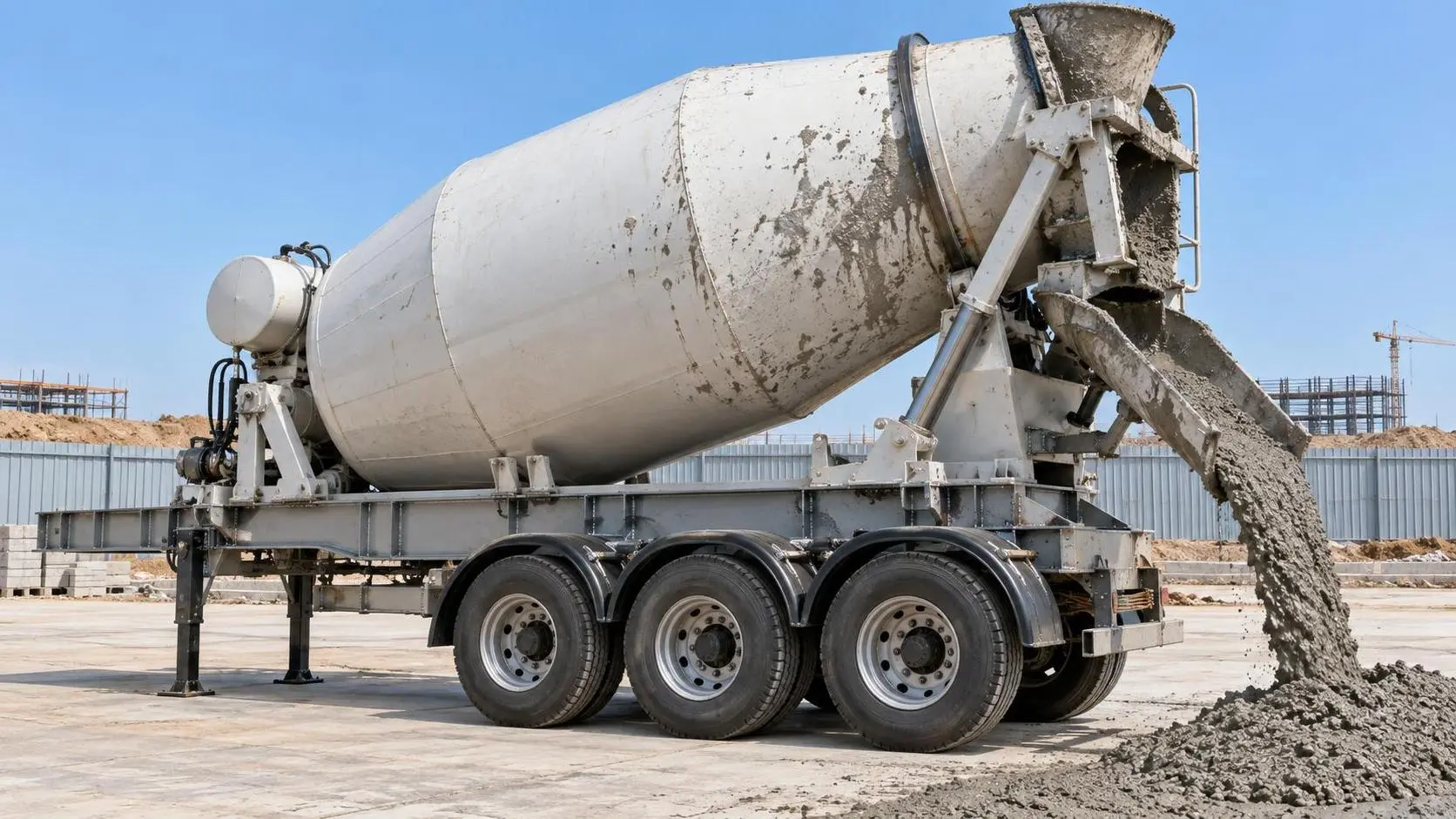
Evaluating Structural Durability and Maintenance Frequency in Heavy-Duty Concrete Mixer Trailers Under Frequent Dump Cycles
Discover how dump special trailers withstand 12–18 daily dump cycles — structural durability, maintenance optimization & real-world fleet insights revealed.
Related News
- 00
0000-00
How to Evaluate European Drill-and-Blast Tunnelling Contractors for Complex Projects - 00
0000-00
Which Trenchless Construction Technique Fits Your Utility Crossing Conditions? - 00
0000-00
What Is Driving Metro Tunnelling Demand Across Southeast Asia’s Major Cities? - 00
0000-00
Hard Rock Tunnelling in Australia: Selecting Methods for Variable Ground Conditions - 00
0000-00
Hydropower Tunnel Excavation: Selecting Methods for Variable Rock Conditions
Weekly Insights
Stay ahead with our curated technology reports delivered every Monday.