
How to Evaluate Tunnel Boring Machine Components Manufacturers for OEM Supply





How to Evaluate Tunnel Boring Machine Components Manufacturers for OEM Supply
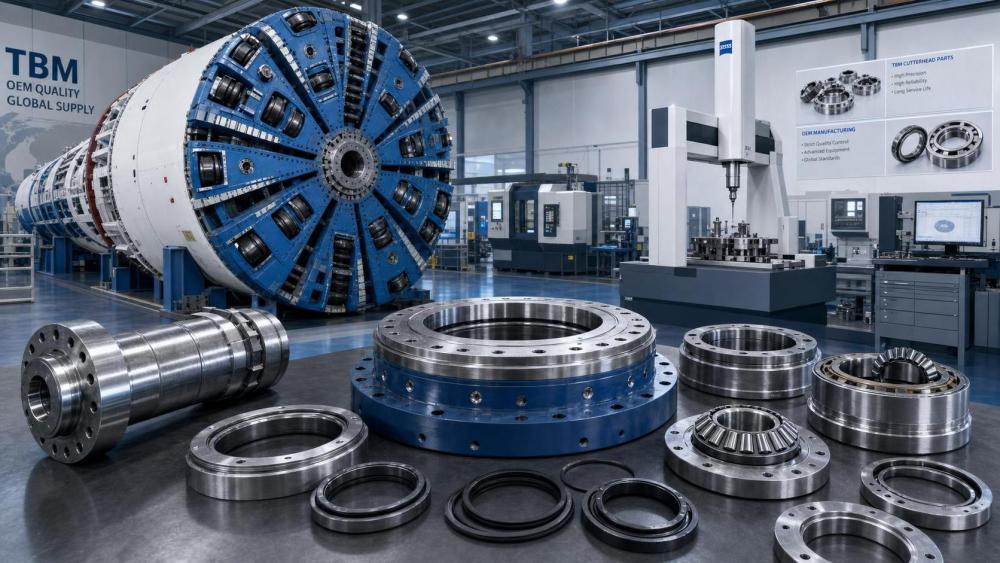
Choosing the right Tunnel Boring Machine Components manufacturers for OEM supply is a high-stakes procurement decision.
A weak supplier can delay assembly, raise lifecycle cost, and create reliability issues underground.
A strong supplier supports schedule discipline, stable quality, and predictable field performance.
That matters even more when OEM programs depend on tight tolerances, traceable materials, and long service intervals.
In practice, evaluating Tunnel Boring Machine Components manufacturers goes well beyond unit price.
You need a structured view of engineering strength, process control, risk exposure, and commercial fit.
This guide breaks that process into clear checkpoints that help reduce sourcing risk.
Start with Component Criticality
Not all suppliers should be screened with the same depth.
Begin by ranking the parts you plan to outsource.
Critical TBM components usually include cutterhead parts, main bearing interfaces, seals, hydraulic modules, drive elements, and wear parts.
These parts affect boring efficiency, machine uptime, and crew safety.
Less critical parts may still need control, but the approval process can be lighter.
A practical scoring model should cover four questions:
- What happens if the part fails underground?
- How hard is it to replace during operation?
- How sensitive is the part to machining or material variation?
- How much downtime cost does it create?
This first step helps procurement teams focus on the manufacturers that require deeper technical validation.
Check Real Technical Capability
Many Tunnel Boring Machine Components manufacturers claim broad capacity.
The real question is whether they can build your exact component repeatedly.
Look at engineering resources first.
A qualified OEM supplier should understand metallurgy, load paths, wear behavior, and fit-up requirements.
That is especially important for parts exposed to high shock, abrasion, and groundwater contamination.
During evaluation, ask for evidence in these areas:
- Similar TBM component projects delivered in the last three years
- Material selection logic and substitution controls
- Tolerance capability for large and complex machined parts
- Welding procedure qualification and operator certification
- Non-destructive testing methods and acceptance criteria
- Reverse engineering and drawing optimization support
A supplier that answers with data is usually more reliable than one that answers with marketing language.
This is often the clearest signal when comparing Tunnel Boring Machine Components manufacturers.
Audit Manufacturing Discipline
A capable engineering team still needs disciplined factory execution.
For OEM supply, process stability matters as much as design knowledge.
Review the full production route, not only the final inspection sheet.
You want to know where errors can enter the process.
Then you want proof that those risks are controlled.
Factory points worth verifying
- Incoming material inspection with heat number traceability
- Calibration status for machining and measuring equipment
- Controlled handling of large parts to avoid hidden damage
- In-process checkpoints for dimensions, hardness, and weld quality
- Segregation and root-cause treatment for nonconforming parts
- Clean packing, corrosion protection, and export readiness
On-site audits remain the strongest method.
If travel is limited, request live video walkthroughs with timestamps and production records.
For Tunnel Boring Machine Components manufacturers, weak process control usually shows up before shipment problems do.
Review Quality Systems and Compliance
Certificates matter, but they are only the starting point.
A supplier may hold ISO certifications and still struggle with OEM consistency.
The better test is how the system works under pressure.
Ask to see actual documents from recent batches.
That includes inspection plans, dimensional reports, material certificates, and corrective action records.
Good Tunnel Boring Machine Components manufacturers should provide traceability from raw material to finished shipment.
If your market requires CE-related documentation, environmental declarations, or customer-specific protocols, confirm them early.
Late compliance gaps are expensive to fix.
From recent sourcing shifts, buyers are also looking harder at ESG alignment and energy use transparency.
That trend is becoming more relevant in long-term framework agreements.
Measure Supply Reliability, Not Just Lead Time
Quoted lead time is easy to promise.
Consistent delivery performance is harder to maintain.
This is where supplier evaluation becomes more commercial and more realistic.
Ask how the factory manages bottlenecks, subcontractors, and raw material volatility.
One delayed forging or heat treatment cycle can disrupt an entire OEM build plan.
Useful questions during supplier review
- What is the on-time delivery rate for similar parts?
- Which steps are outsourced, and how are they controlled?
- What safety stock or raw material agreements are in place?
- How quickly can capacity scale for urgent project changes?
- What happened in the last major supply disruption?
The answers reveal whether Tunnel Boring Machine Components manufacturers can protect delivery when the market becomes unstable.
That also shapes the true cost of procurement.
Compare Total Cost of Ownership
Low purchase price can be misleading in underground equipment sourcing.
The better metric is total cost of ownership.
This includes scrap risk, maintenance intervals, replacement frequency, logistics, and downtime exposure.
For example, a cheaper wear component may shorten service life and increase cutterhead intervention costs.
That erases any savings very quickly.
A simple comparison table helps keep decisions grounded.
The best Tunnel Boring Machine Components manufacturers often look more competitive after this wider review.
Test Responsiveness Before Award
Supplier behavior during evaluation usually predicts behavior after purchase order award.
This is why responsiveness deserves its own checkpoint.
Pay attention to drawing review speed, technical clarification quality, and change control discipline.
A dependable supplier asks precise questions and flags risk early.
That reduces surprises in pilot batches.
Before full nomination, consider a trial order or sample validation program.
This gives real data on packaging, documentation, quality consistency, and communication rhythm.
For Tunnel Boring Machine Components manufacturers, a controlled pilot often reveals execution gaps that presentations do not show.
Build a Supplier Scorecard That Supports Decisions
A formal scorecard keeps sourcing decisions consistent across teams.
It also helps explain supplier selection when internal approvals become complex.
Use weighted criteria rather than a simple checklist.
For critical parts, technical capability and process control should carry the highest weight.
Commercial terms should matter, but they should not dominate the decision.
A practical scorecard may include capacity, quality history, engineering support, compliance, delivery reliability, and total cost.
That creates a clearer comparison across Tunnel Boring Machine Components manufacturers.
In actual procurement work, this structure also speeds up requalification later.
Final Takeaway
Evaluating Tunnel Boring Machine Components manufacturers for OEM supply requires more than comparing quotes.
The strongest sourcing decisions come from combining technical review, factory validation, compliance checks, and cost analysis.
When these steps are handled early, supplier risk becomes easier to measure and easier to control.
That means better uptime, fewer claims, and more stable OEM program execution.
For teams sourcing underground equipment parts, a disciplined evaluation framework is the fastest path to stronger supplier partnerships.
Use the checkpoints above to shortlist, test, and approve Tunnel Boring Machine Components manufacturers with greater confidence.
Related News

How to Evaluate European Drill-and-Blast Tunnelling Contractors for Complex Projects
Drill and blast tunnelling contractors Europe: learn how to assess geology expertise, blast control, equipment reliability, safety, and programme resilience for complex projects.

Which Trenchless Construction Technique Fits Your Utility Crossing Conditions?
Trenchless construction techniques compared for utility crossings: choose HDD, microtunnelling, pipe jacking, or auger boring based on ground, accuracy, access, and risk.

What Is Driving Metro Tunnelling Demand Across Southeast Asia’s Major Cities?
Metro tunnelling Southeast Asia is accelerating as major cities tackle congestion, flooding, and connectivity. Explore the market forces, technical risks, and opportunities shaping demand.

Hard Rock Tunnelling in Australia: Selecting Methods for Variable Ground Conditions
Hard rock tunnelling in Australia: compare TBM, drill-and-blast and hybrid methods to manage variable ground, reduce risk and protect project costs.

Hydropower Tunnel Excavation: Selecting Methods for Variable Rock Conditions
Hydropower tunnel excavation methods for variable rock conditions: compare TBM, drill-and-blast, and hybrid strategies to improve safety, progress, and project control.

How to Select Underground Safety Equipment for Tunnelling by Hazard and Work Zone
Underground Safety Equipment for tunnelling: match protection to hazards, work zones, compliance, and emergency needs with this practical selection guide.

EPB or Slurry Shield? Selecting Soft-Ground Tunnelling Equipment by Soil Conditions
Tunnel Excavation Equipment for soft ground: compare EPB and slurry shields by soil, groundwater, settlement risk, and project logistics to choose confidently.

How to Specify TBM Backup System Parts for Reliable Long-Distance Tunnelling
TBM backup system parts: learn how to specify reliable spares for long-distance tunnelling, reduce downtime, ensure compatibility, and speed underground recovery.

How to Size Open Pit Mining Trucks for Haul Distance, Grade, and Payload?
Open Pit Mining Trucks: learn how to match payload, haul distance, grade, road resistance, and loading capacity for safer, lower-cost mine operations.
Related News
- 00
0000-00
How to Evaluate European Drill-and-Blast Tunnelling Contractors for Complex Projects - 00
0000-00
Which Trenchless Construction Technique Fits Your Utility Crossing Conditions? - 00
0000-00
What Is Driving Metro Tunnelling Demand Across Southeast Asia’s Major Cities? - 00
0000-00
Hard Rock Tunnelling in Australia: Selecting Methods for Variable Ground Conditions - 00
0000-00
Hydropower Tunnel Excavation: Selecting Methods for Variable Rock Conditions
Weekly Insights
Stay ahead with our curated technology reports delivered every Monday.