
How to Specify TBM Backup System Parts for Reliable Long-Distance Tunnelling





Specify TBM backup system parts from the interruption they must prevent, then work back to the interfaces, duty profile, and replacement path. A spare that matches a catalogue description but cannot accept the machine's hydraulic fluid, communicate with its control architecture, fit through the tunnel logistics route, or be exchanged within the available maintenance window is not a reliable backup.
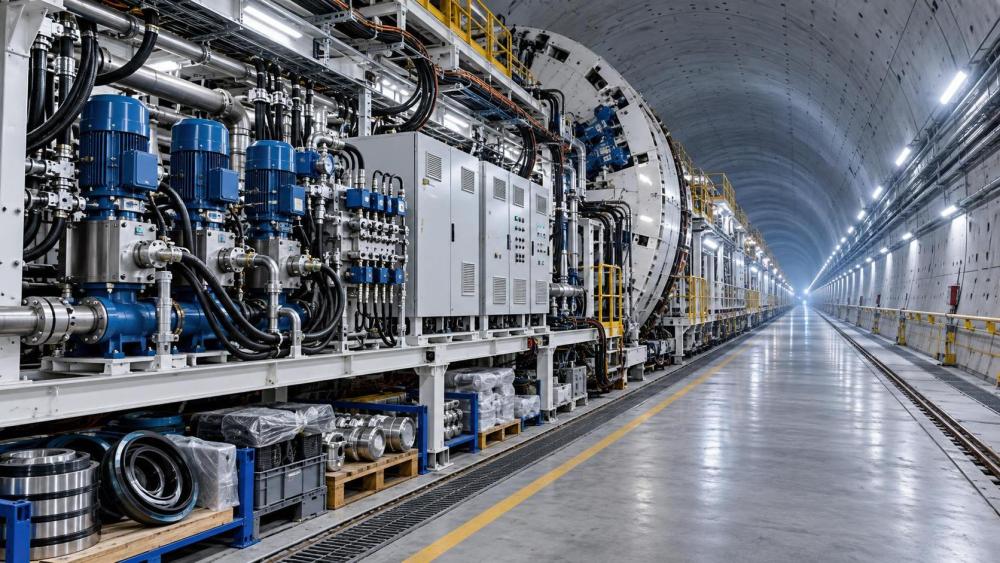
Long-distance drives amplify small specification errors. The cutterhead, main drive, thrust system, belt conveyor, slurry circuit, erector, ventilation, dewatering, and guidance equipment form a connected production chain. A fault in a comparatively small valve coil, encoder, seal kit, contactor, filter housing, or sensor can stop excavation as effectively as a major mechanical failure. The correct spare-parts scope therefore reflects functional consequence and recovery time, rather than component purchase value alone.
Begin with the machine's actual configuration
Before selecting any TBM backup system parts, establish a controlled configuration baseline. Use the as-built machine documentation, current drawings, electrical schematics, hydraulic circuit diagrams, PLC input/output lists, software versions, and records of modifications completed after commissioning. The original bill of materials is useful, but it may no longer represent the equipment underground. A substituted pump, changed solenoid valve, revised cable connector, upgraded variable-frequency drive, or replacement sensor with a different output signal can invalidate an apparently correct spare.
Part numbers need to be verified at three levels: the OEM assembly number, the original component manufacturer's number, and the site-specific revision or calibration requirement. A pressure transmitter may share a threaded connection and pressure range with another unit while differing in signal type, hazardous-area suitability, wetted materials, connector pinout, or programmed scaling. Treating these as equivalent can create a delayed failure that appears only when the replacement is installed under pressure.
Configuration control matters especially where the backup system includes automation components. A spare PLC module, remote I/O card, safety relay, HMI, drive controller, or communication switch should be linked to a defined firmware and parameter set. Hardware compatibility alone does not ensure restart capability. Maintain an offline, version-controlled copy of approved settings, application programs, drive parameters, and network addresses with the spare package. The recovery procedure should state who can load the configuration and how its integrity is confirmed before the machine returns to production.
Rank parts by lost production path, not by component category
Classifying every item simply as mechanical, hydraulic, electrical, or consumable produces long inventories without showing where protection is strongest. A more useful method traces the failure to the function it removes. Ask whether the component prevents cutting, propulsion, muck removal, segment erection, ground conditioning, steering, dewatering, cooling, ventilation, fire protection, or personnel-safe access for maintenance.
A hydraulic pump feeding an auxiliary circuit may be tolerable if a parallel pump has enough capacity for reduced operation. The same pump becomes a drive-stopping exposure when it supplies cylinder actuation required for thrust or shield articulation. Likewise, a single encoder on a noncritical auxiliary motor does not deserve the same spare position as an encoder required by the main drive control loop.
This ranking should distinguish a true redundant path from a spare held in a container. Redundancy allows the function to continue after isolation or changeover. A spare only reduces the duration of a stop, and its value depends on lifting access, isolation requirements, available tools, diagnostic certainty, and whether the failed part can be reached without dismantling adjacent systems.
Match duty cycle and environment to the failure mechanism
Selection cannot rely on nominal ratings alone. A component that is correctly sized for pressure, current, or torque may still be unsuitable for the actual cycling pattern. Hydraulic directional valves subjected to frequent short strokes need spool, seal, and contamination tolerance appropriate to repeated actuation. Motors on conveyor, screw conveyor, slurry, or cooling duties need evaluation against starts per hour, load inertia, thermal dissipation, and the control method used on the machine. A standby component also needs a defined duty: cold standby, periodically exercised standby, or load-sharing operation impose different storage and reliability requirements.
Ground conditions influence the backup scope. Abrasive rock and high fines loading accelerate wear in conveyor idlers, scraper components, slurry pump liners, agitator seals, filters, and hydraulic cylinder rod protection. Water-bearing ground raises the importance of seal materials, cable glands, connector sealing, drainage hardware, and corrosion protection. In mixed ground, pressure fluctuations and frequent changes in operating mode can expose weaknesses in instruments, valve settings, and control tuning that do not appear in stable conditions.
Temperature should be assessed at the installed location rather than from ambient tunnel temperature. Electrical cabinets near drives or transformers, hydraulic units near return lines, and bearings close to hot motors experience local heat loads. Conversely, stored spares in surface containers can encounter condensation and temperature swings before entering the tunnel. Elastomer seals, batteries, electronic modules, lubricants, and adhesive-backed items need preservation rules that reflect those conditions. Shelf life is a technical acceptance criterion, not merely a warehouse record.
Specify interfaces as a complete installation envelope
Every critical spare should have an interface record that goes beyond dimensions. For mechanical parts, capture mounting pattern, shaft diameter and keyway, coupling type, axial position, torque reaction, mass, lifting points, and permissible alignment. For hydraulic items, record port type and size, allowable pressure, flow range, return-line backpressure, pilot arrangement, filtration requirement, fluid compatibility, and cleanliness level needed after installation. A valve cartridge with the correct external thread can still be wrong if its pressure setting, spool logic, or pilot ratio differs.
Electrical and electronic parts require equally disciplined review. Confirm supply voltage and frequency, rated current, short-circuit protection coordination, enclosure rating, connector family, shielding method, grounding arrangement, communication protocol, and signal range. A replacement proximity sensor needs the correct sensing mode and output logic as well as the same physical thread. A replacement drive requires motor data, acceleration limits, braking arrangement, fault handling, and any linked supervisory-control parameters.
For rotating assemblies, insist on the matched elements that make the assembly usable. A backup gearbox without the compatible coupling half, shrink disc, torque arm bushings, lubricating fittings, and installation hardware creates a false sense of readiness. The same principle applies to hydraulic cylinders: a cylinder may require the correct pin bushes, retaining hardware, hose-end adapters, and bleeding procedure. Specify kits around the intervention, rather than treating each major component as a self-contained spare.
Do not confuse commonality with interchangeability
Parts common across several TBM subsystems reduce stock only when their functional conditions truly overlap. The same bearing series may operate at different loads, speeds, lubrication intervals, and sealing arrangements. A common contactor frame may use different coil voltages or auxiliary contact layouts. Combining such items under one generic stock code transfers complexity from the store to the breakdown event.
Build a controlled interchangeability matrix for proposed shared spares. It should identify the supported equipment tags, required adapters, firmware or parameter differences, minimum ratings, and restrictions on substitution. Where a component can physically fit but lowers capacity, label the operational limitation clearly. A temporary pump that supports steering but not full thrust flow is useful only when its permitted operating envelope is defined before a fault occurs.
Standardization remains valuable where it is engineered into the machine. Shared sensor families, valve coils, filter elements, fuses, connectors, hose fittings, and motor protection devices can simplify stockholding. The decision must be based on approved equivalence, not visual similarity or supplier claims of a “direct replacement.”
Size spares around restoration time
Lead time is often discussed as an external procurement issue, yet the more immediate question is time to restore function underground. Break that duration into fault detection, diagnosis, isolation, access preparation, removal, parts retrieval, installation, flushing or alignment, functional test, and controlled restart. A component with a short supplier lead time may still justify on-site stock if its replacement requires a planned stoppage and several supporting items.
Large or awkward items deserve logistics engineering. Determine the maximum load that can move through the tunnel, the transport vehicle clearance, rail or conveyor conflicts, turning radii, hoist capacity, and final lifting route. A spare motor or pump skid that fits at the launch portal may be impossible to deliver to the backup gantry after the machine has advanced. Packaging should protect the item while remaining compatible with the last section of manual handling. Preserve lifting eyes and alignment surfaces; do not bury critical accessories in separate, unmarked crates.
High-value assemblies do not automatically require a complete spare. Some are better protected through a repairable exchange strategy, provided the disassembly boundary is established, repair lead time is credible, and a tested serviceable unit is available before the installed unit reaches an unacceptable condition. For wear components such as seals, hoses, filter elements, scraper blades, and slurry pump wet-end parts, stock should reflect the intervention batch. Holding one seal when a planned repair needs several identical seals, gaskets, fasteners, and contamination-control materials does not support the job.
Protect hydraulic reliability through cleanliness and repair discipline
Hydraulic backup items fail prematurely when they are installed into contaminated systems or when preservation is broken during storage. Pumps, valves, proportional controls, cylinders, hose assemblies, filters, and pressure instruments should arrive with ports protected and with their preservation status recorded. Opened spares need resealing procedures. Hoses require end caps, bend-radius protection, and identification that survives wet, abrasive tunnel conditions.
When replacing a failed hydraulic component, determine whether the component caused the fault or merely suffered it. A seized pump may indicate suction restriction, air ingress, unsuitable viscosity, cavitation, or contamination. Replacing the pump without correcting the source can damage the backup immediately. The spare package should therefore include the consumables and test points needed to restore system cleanliness: approved filters, seals, flushing connections where applicable, sampling containers, and calibrated pressure measurement equipment.
Seal selection needs particular care. Nitrile, fluorocarbon, polyurethane, and other elastomer families differ in compatibility with fluid type, temperature, extrusion risk, and abrasion exposure. A seal kit identified only by cylinder bore is insufficient when rod finish, groove geometry, pressure pulsation, and installation method vary. Premature leakage after a rapid field repair often originates in damaged sealing lips, incorrect orientation, contaminated grooves, or a mismatch between the replacement material and the duty.
Make electrical backups recoverable, not merely available
Electronic modules should be stored in protective packaging with suitable electrostatic controls and periodic inspection. Long-term storage of batteries, displays, network components, and drive electronics requires attention to manufacturer preservation instructions. For critical control hardware, maintain a bench-test method or a planned functional verification during maintenance periods. An untested spare controller held for years can introduce a new fault at the worst possible time.
Record the dependencies around each electronic item. A replacement I/O module may need terminal blocks, coding keys, interface cables, a software image, license information, and a documented commissioning sequence. A drive replacement may need a parameter file and motor-identification data. Software backups should be readable without relying on a single laptop, password holder, or obsolete cable. Control-system recovery is strongest when the physical unit, approved configuration, access method, and validation steps are maintained as one controlled package.
Use failure evidence to revise the stock position
The first spare-parts schedule is an engineering hypothesis. Update it from actual failure records, inspection findings, repair reports, and condition trends. Separate random failures from repeated symptoms. Several failed pressure sensors may indicate vibration, moisture ingress, cable strain, unstable supply voltage, or incorrect mounting rather than inadequate sensor quality. Replenishing the same item without resolving the common cause inflates inventory while leaving availability exposed.
Review stock after major geology transitions, changes in advance rate, modifications to hydraulic or electrical systems, and altered maintenance intervals. Remove obsolete revisions only after confirming that they cannot support an installed legacy component. For every critical item, preserve a concise record of location, quantity, revision, storage condition, associated installation kit, last inspection, and the functional consequence of absence.
Reliable long-distance tunnelling depends on backup parts that are technically identical where identity is required, deliberately substituted where equivalence is proven, and physically ready for the repair they are meant to support. The most effective specification turns each stored item into a defined recovery action rather than an uncertain piece of inventory.
Related News
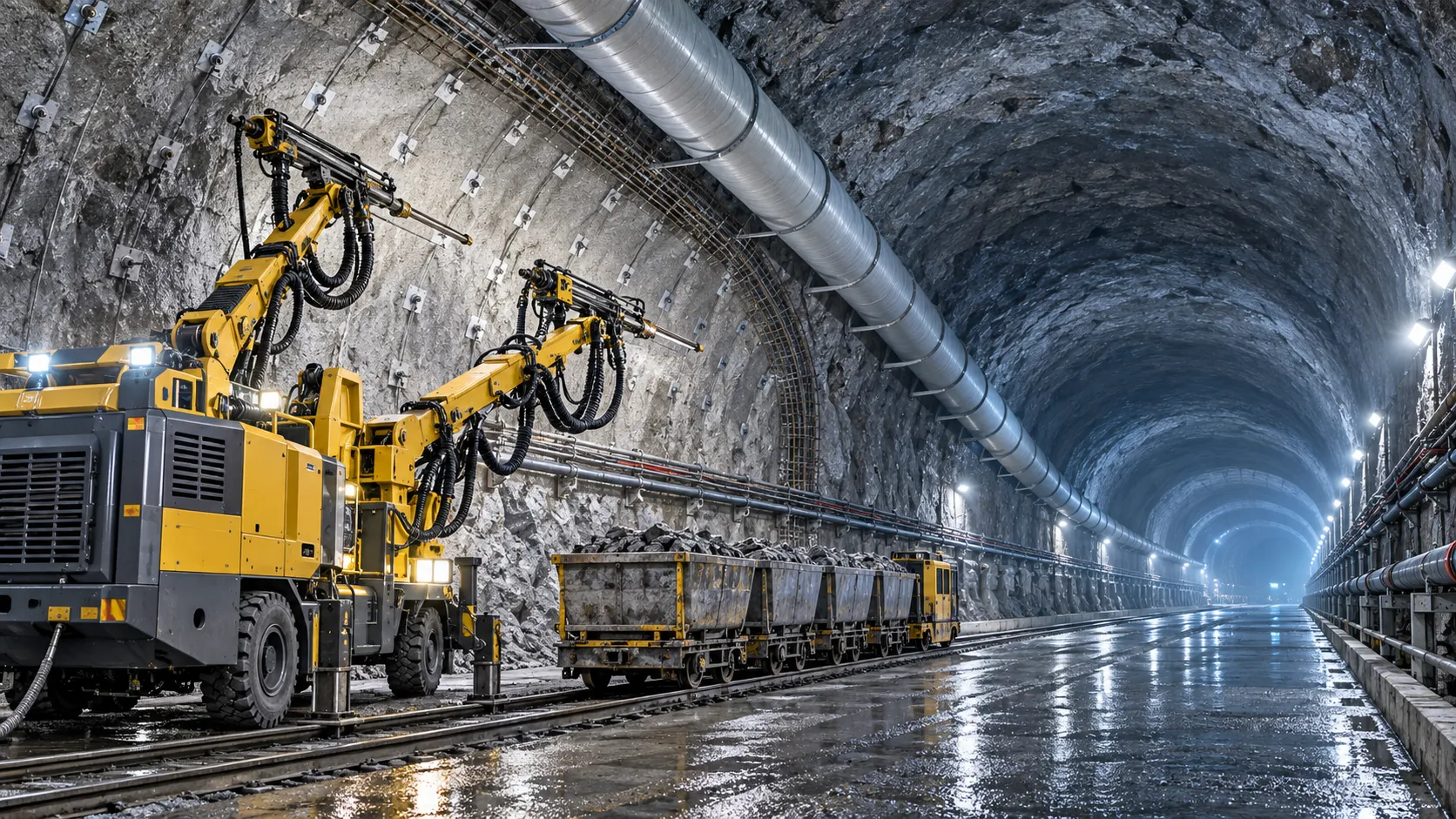
How to Evaluate European Drill-and-Blast Tunnelling Contractors for Complex Projects
Drill and blast tunnelling contractors Europe: learn how to assess geology expertise, blast control, equipment reliability, safety, and programme resilience for complex projects.
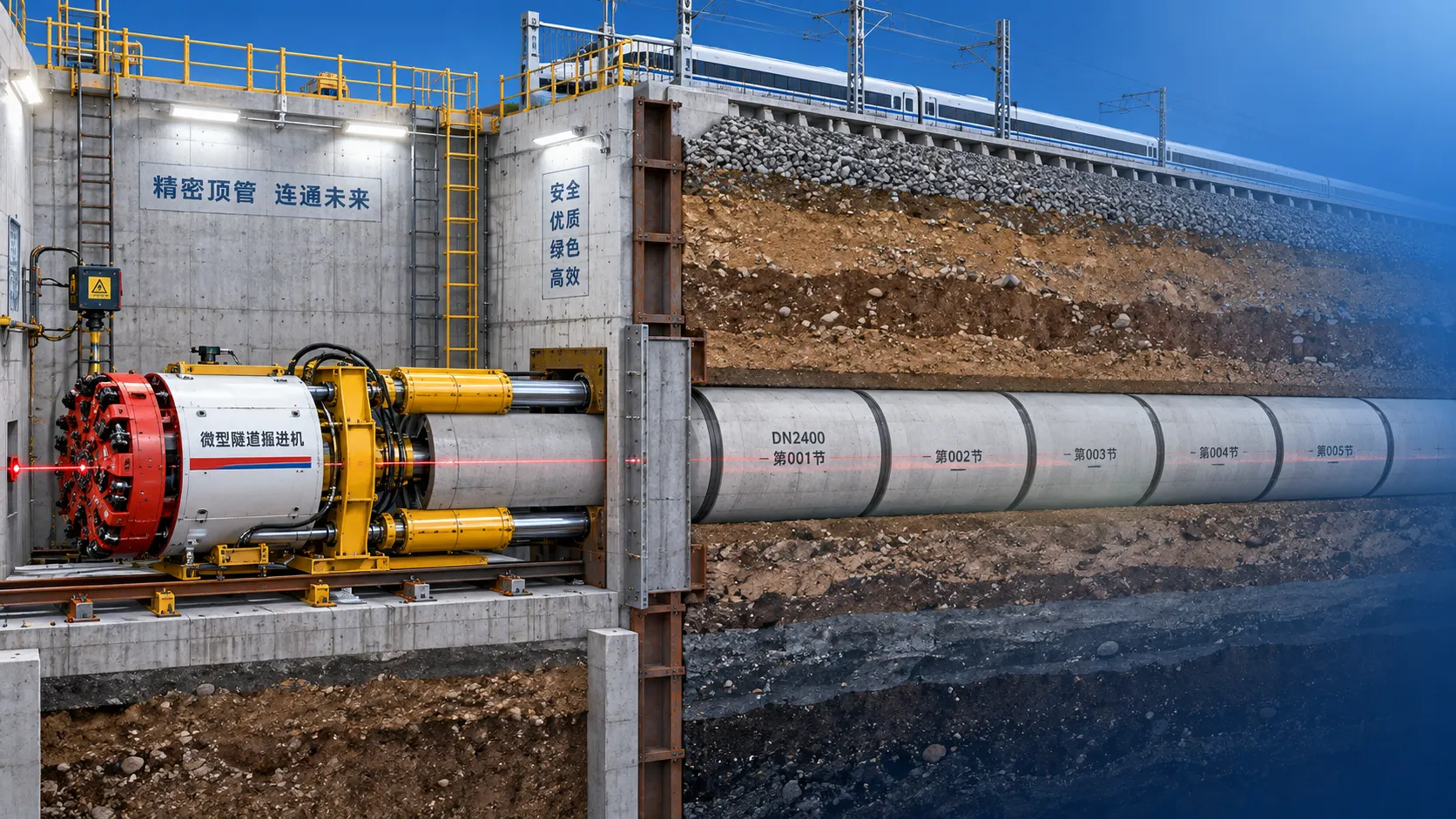
Which Trenchless Construction Technique Fits Your Utility Crossing Conditions?
Trenchless construction techniques compared for utility crossings: choose HDD, microtunnelling, pipe jacking, or auger boring based on ground, accuracy, access, and risk.

What Is Driving Metro Tunnelling Demand Across Southeast Asia’s Major Cities?
Metro tunnelling Southeast Asia is accelerating as major cities tackle congestion, flooding, and connectivity. Explore the market forces, technical risks, and opportunities shaping demand.
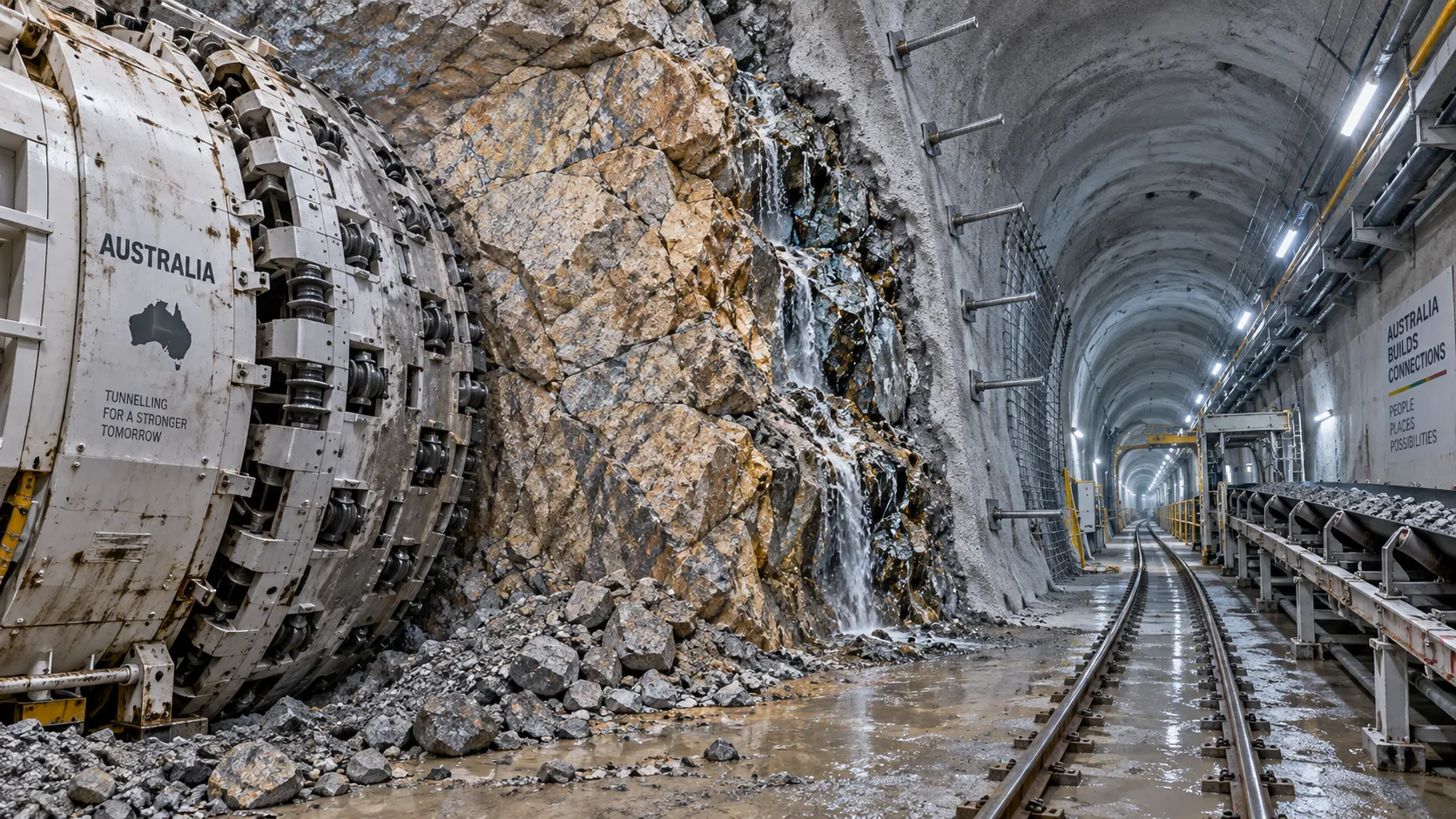
Hard Rock Tunnelling in Australia: Selecting Methods for Variable Ground Conditions
Hard rock tunnelling in Australia: compare TBM, drill-and-blast and hybrid methods to manage variable ground, reduce risk and protect project costs.
Hydropower Tunnel Excavation: Selecting Methods for Variable Rock Conditions
Hydropower tunnel excavation methods for variable rock conditions: compare TBM, drill-and-blast, and hybrid strategies to improve safety, progress, and project control.
How to Select Underground Safety Equipment for Tunnelling by Hazard and Work Zone
Underground Safety Equipment for tunnelling: match protection to hazards, work zones, compliance, and emergency needs with this practical selection guide.
EPB or Slurry Shield? Selecting Soft-Ground Tunnelling Equipment by Soil Conditions
Tunnel Excavation Equipment for soft ground: compare EPB and slurry shields by soil, groundwater, settlement risk, and project logistics to choose confidently.

How to Size Open Pit Mining Trucks for Haul Distance, Grade, and Payload?
Open Pit Mining Trucks: learn how to match payload, haul distance, grade, road resistance, and loading capacity for safer, lower-cost mine operations.
Evaluating Structural Durability and Maintenance Frequency in Heavy-Duty Concrete Mixer Trailers Under Frequent Dump Cycles
Discover how dump special trailers withstand 12–18 daily dump cycles — structural durability, maintenance optimization & real-world fleet insights revealed.
Related News
- 00
0000-00
How to Evaluate European Drill-and-Blast Tunnelling Contractors for Complex Projects - 00
0000-00
Which Trenchless Construction Technique Fits Your Utility Crossing Conditions? - 00
0000-00
What Is Driving Metro Tunnelling Demand Across Southeast Asia’s Major Cities? - 00
0000-00
Hard Rock Tunnelling in Australia: Selecting Methods for Variable Ground Conditions - 00
0000-00
Hydropower Tunnel Excavation: Selecting Methods for Variable Rock Conditions
Weekly Insights
Stay ahead with our curated technology reports delivered every Monday.