
Panama Canal Curbs Extend TBM Shipping Times





The continuing drought-related navigation restrictions at the Panama Canal are affecting the maritime transport of key hard rock TBM components, with average ocean shipping cycles reportedly extending from the usual 6–8 weeks to 12–14 weeks. The event time has not been clearly specified in the available information. This development deserves attention from tunnelling contractors, TBM equipment manufacturers, project logistics providers, and infrastructure project owners because delays in main bearings, cutterhead components, and oversized shield modules can directly affect project schedules and delivery planning.
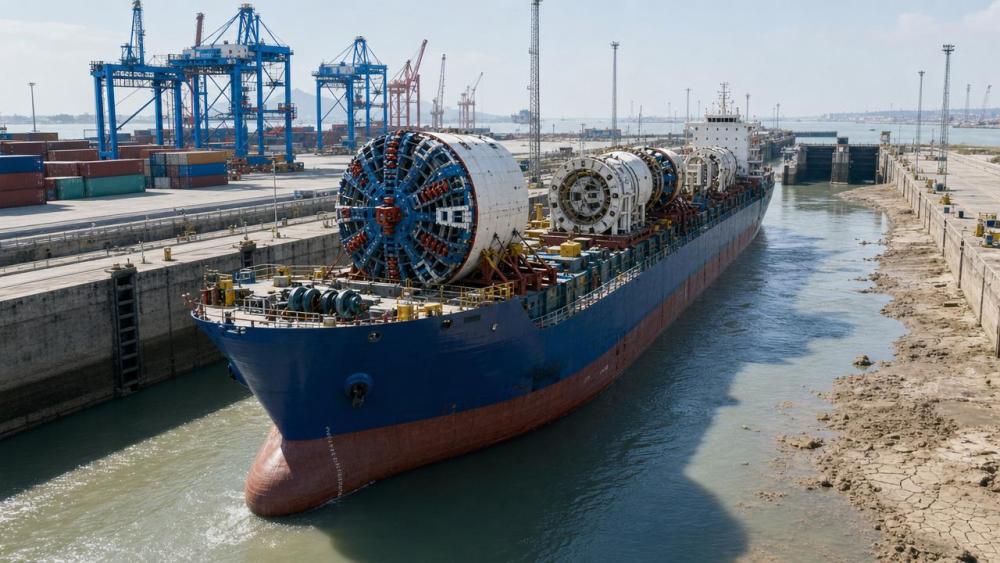
Event Overview
According to the available information, the Panama Canal has continued to impose vessel draft restrictions and quota-based scheduling due to persistent drought conditions. As a result, exports of key hard rock TBM components from China, Germany, and Japan have either been rerouted via the Cape of Good Hope or delayed before shipment.
The affected components include hard rock TBM main bearings, cutterhead assemblies, and oversized shield modules. The currently reported average ocean shipping cycle has increased from the conventional 6–8 weeks to 12–14 weeks.
The public information also indicates that several international contractors have urgently adjusted project schedules, including work related to the El Teniente deep tunnel project in Chile and Mumbai Metro Line 3 in India. No exact event date has been specified in the provided information.
Which Segments Are Affected
TBM Equipment Exporters and Manufacturers
TBM equipment exporters and manufacturers are directly affected because the components mentioned are large, specialized, and difficult to replace quickly. Main bearings, cutterhead assemblies, and shield modules are not standard cargo that can be easily shifted across transport modes without planning constraints.
From an industry perspective, the main impact is not only longer shipping time but also weaker certainty in delivery windows. Manufacturers shipping from China, Germany, and Japan may need to reassess dispatch schedules, port booking arrangements, and customer delivery commitments for projects that depend on these key parts.
Tunnelling Contractors and Infrastructure Project Owners
Contractors and project owners are affected because hard rock TBM components are closely linked to equipment assembly, commissioning, repair, or replacement schedules. If critical parts arrive later than expected, site-level work sequencing may need to be adjusted.
Analysis shows that the impact is most visible in projects where construction milestones are tied to the arrival of major TBM components. The reported schedule adjustments for the El Teniente deep tunnel project and Mumbai Metro Line 3 indicate that contractors are already treating the shipping extension as a practical scheduling issue rather than a distant logistics risk.
Project Logistics and Freight Forwarding Providers
Project logistics companies and freight forwarders are also affected because oversized TBM modules require route planning, vessel allocation, documentation coordination, and destination-side handling. When the Panama Canal route becomes constrained, rerouting via the Cape of Good Hope may require different timing assumptions and operational coordination.
Observably, the challenge for logistics providers is to provide more reliable transit-time visibility and contingency options. For oversized components, delays are not only a matter of days at sea; they may also affect berth planning, lifting arrangements, inland transfer, and site readiness at the receiving end.
Supply Chain and Procurement Teams
Procurement teams within contractors, manufacturers, and project owners are affected because the extension from 6–8 weeks to 12–14 weeks changes the practical lead time for critical TBM parts. Orders that were previously aligned with a shorter ocean freight cycle may now require earlier confirmation and more careful coordination with project schedules.
What deserves closer attention now is the gap between contractual delivery assumptions and actual shipping availability. If procurement plans are based on conventional transit cycles, they may not reflect the current constraints affecting canal transit and rerouted shipments.
What Companies and Practitioners Should Watch and How to Respond
Track Panama Canal Restrictions and Booking Conditions
Companies involved in TBM component transport should closely follow subsequent official statements and operational updates related to Panama Canal draft limits and quota scheduling. The current issue is directly linked to canal transit conditions, so changes in restriction levels may influence whether shipments are delayed, rerouted, or scheduled through the canal.
From an industry perspective, it is more practical to monitor confirmed shipping windows rather than rely only on historical transit times. For components already scheduled for export, companies should verify whether vessel bookings remain valid under current canal operating constraints.
Prioritize Critical TBM Components in Planning
Procurement and project teams should identify whether main bearings, cutterhead assemblies, and oversized shield modules are on the critical path of their projects. These items are specifically mentioned in the available information and are more likely to create schedule pressure if their arrival is delayed.
Analysis shows that the most urgent task is to distinguish between components that can wait and components that determine assembly, launch, maintenance, or tunnelling progress. For high-priority components, earlier shipment confirmation and closer supplier communication may reduce uncertainty.
Reassess Project Schedules Against 12–14 Week Shipping Cycles
Contractors should compare current project schedules with the reported 12–14 week average ocean shipping cycle. If project plans still assume the conventional 6–8 week cycle, the delivery baseline may no longer match current shipping conditions.
It is more appropriate to understand this as a schedule-risk adjustment rather than a simple freight delay. For projects such as deep tunnels and metro works that depend on TBM availability, contractors may need to update milestone planning, site readiness dates, and stakeholder communication based on the longer transport cycle.
Prepare Route and Communication Contingencies
For shipments that may be rerouted via the Cape of Good Hope or delayed before departure, companies should prepare practical contingency plans. These may include confirming alternative routing feasibility, checking port handling arrangements, and ensuring that all parties share the same expected arrival timeline.
Observably, clear communication between equipment suppliers, logistics providers, contractors, and project owners is important because the same delay can affect multiple stages of a tunnelling project. Updated delivery forecasts should be reflected in procurement records, construction planning, and client-facing schedule discussions.
Editor’s View / Industry Observation
From an industry perspective, this development is a reminder that long-distance transport of large tunnelling equipment is highly sensitive to maritime route constraints. The issue is not limited to general freight movement; it affects specialized TBM components that are difficult to substitute and closely tied to project execution.
Analysis shows that the situation has already produced operational consequences, as several international contractors are adjusting schedules for major tunnelling projects. At the same time, it should still be understood with caution because the available information does not provide a specific event date or a detailed official timeline for the duration of the canal restrictions.
It is more appropriate to understand this as both a current logistics result and a warning signal for the hard rock TBM supply chain. If transit uncertainty continues, companies connected to TBM manufacturing, export logistics, and underground infrastructure construction will need to keep reviewing procurement lead times and project milestones.
Conclusion
The continued Panama Canal drought-related restrictions have extended the shipping cycle for key hard rock TBM components and are affecting project planning for tunnelling and metro infrastructure works. The industry significance lies in the connection between maritime transit constraints and the delivery of specialized, oversized equipment.
At this stage, the information is best understood as a practical supply chain and schedule-management issue rather than a general shipping headline. Companies should focus on confirmed route conditions, critical component lead times, and realistic project schedule adjustments while continuing to monitor further developments.
Information Source Statement
Main source: Provided industry information on Panama Canal drought-related navigation restrictions and the resulting extension of shipping cycles for hard rock TBM components.
Items requiring continued observation: future Panama Canal draft restriction updates, quota scheduling changes, confirmed routing decisions for TBM component shipments, and further schedule adjustments by contractors involved in affected tunnelling projects.
Related News

How to Evaluate European Drill-and-Blast Tunnelling Contractors for Complex Projects
Drill and blast tunnelling contractors Europe: learn how to assess geology expertise, blast control, equipment reliability, safety, and programme resilience for complex projects.

Which Trenchless Construction Technique Fits Your Utility Crossing Conditions?
Trenchless construction techniques compared for utility crossings: choose HDD, microtunnelling, pipe jacking, or auger boring based on ground, accuracy, access, and risk.

What Is Driving Metro Tunnelling Demand Across Southeast Asia’s Major Cities?
Metro tunnelling Southeast Asia is accelerating as major cities tackle congestion, flooding, and connectivity. Explore the market forces, technical risks, and opportunities shaping demand.

Hard Rock Tunnelling in Australia: Selecting Methods for Variable Ground Conditions
Hard rock tunnelling in Australia: compare TBM, drill-and-blast and hybrid methods to manage variable ground, reduce risk and protect project costs.

Hydropower Tunnel Excavation: Selecting Methods for Variable Rock Conditions
Hydropower tunnel excavation methods for variable rock conditions: compare TBM, drill-and-blast, and hybrid strategies to improve safety, progress, and project control.

How to Select Underground Safety Equipment for Tunnelling by Hazard and Work Zone
Underground Safety Equipment for tunnelling: match protection to hazards, work zones, compliance, and emergency needs with this practical selection guide.

EPB or Slurry Shield? Selecting Soft-Ground Tunnelling Equipment by Soil Conditions
Tunnel Excavation Equipment for soft ground: compare EPB and slurry shields by soil, groundwater, settlement risk, and project logistics to choose confidently.

How to Specify TBM Backup System Parts for Reliable Long-Distance Tunnelling
TBM backup system parts: learn how to specify reliable spares for long-distance tunnelling, reduce downtime, ensure compatibility, and speed underground recovery.

How to Size Open Pit Mining Trucks for Haul Distance, Grade, and Payload?
Open Pit Mining Trucks: learn how to match payload, haul distance, grade, road resistance, and loading capacity for safer, lower-cost mine operations.
Related News
- 00
0000-00
How to Evaluate European Drill-and-Blast Tunnelling Contractors for Complex Projects - 00
0000-00
Which Trenchless Construction Technique Fits Your Utility Crossing Conditions? - 00
0000-00
What Is Driving Metro Tunnelling Demand Across Southeast Asia’s Major Cities? - 00
0000-00
Hard Rock Tunnelling in Australia: Selecting Methods for Variable Ground Conditions - 00
0000-00
Hydropower Tunnel Excavation: Selecting Methods for Variable Rock Conditions
Weekly Insights
Stay ahead with our curated technology reports delivered every Monday.