
Tunnel Engineering Risks in Mixed Ground: Common Failure Points and Mitigation Methods





Why does mixed ground create outsized Tunnel Engineering risk?
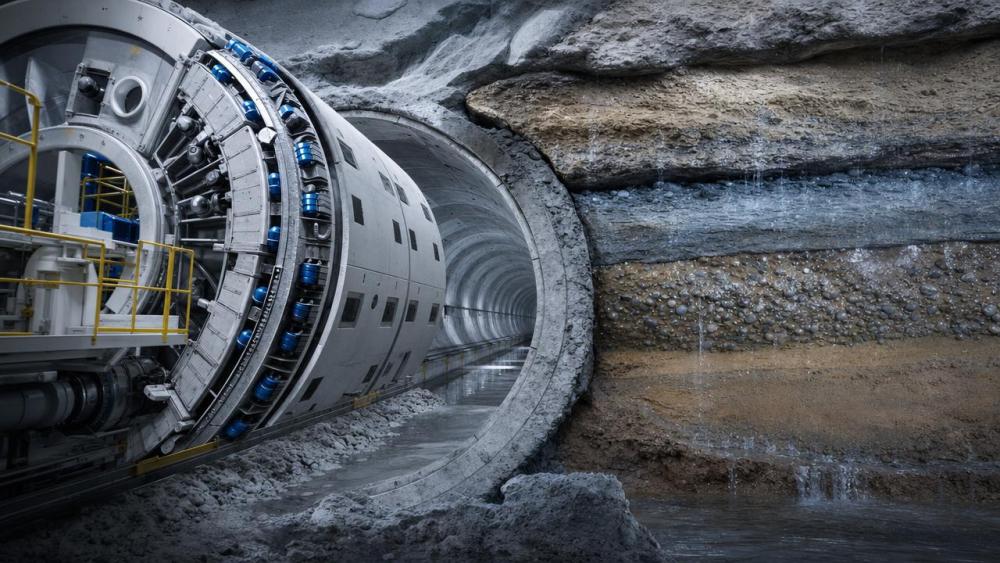
Mixed ground is where Tunnel Engineering stops behaving like a predictable production process and starts acting like a moving target.
A tunnel face may pass from soft clay into weathered rock, then into water-bearing sand within a short distance.
That transition changes support demand, cutter performance, spoil behavior, and settlement response almost at once.
In practice, the problem is rarely one isolated defect. More often, several small control failures line up together.
Face pressure drifts slightly low, advance rate stays too high, conditioning is uneven, and ring build quality drops.
That is why mixed ground often produces sudden incidents that seem surprising, even when warning signs were present.
For Tunnel Engineering teams, the key lesson is simple. Geology is not the only variable. System response matters just as much.
This is also why UTMD tracks TBM performance, trenchless methods, and underground equipment intelligence as connected subjects rather than separate topics.
When excavation, transport, lining, and monitoring data are read together, failure points become easier to detect before they escalate.
Which failure points appear most often when geology changes quickly?
The most common Tunnel Engineering failures in mixed ground usually start at the interface between unlike materials.
One side of the face may stand firm, while the other loosens, squeezes, or washes out.
This uneven response can trigger overbreak, localized collapse, or unstable muck flow into the chamber.
Water ingress is another repeated issue. A stable heading can become difficult within minutes if a permeable seam opens unexpectedly.
Segment damage also rises in mixed ground. Misalignment, tail void problems, and differential loading can crack or chip rings during assembly.
At surface level, the biggest concern is often settlement. It may be gradual, but mixed ground can also cause sharp, localized movement.
The table below helps connect common failure points with the field signs that usually appear first.
A useful habit is to treat these signs as linked indicators, not separate alarms.
When two or three indicators move together, mixed ground risk is usually rising faster than reports suggest.
How can face instability be recognized before it turns into a stoppage?
Face instability rarely appears without warning. The warning is just easy to miss during routine production pressure.
In EPB or slurry Tunnel Engineering operations, watch for unstable torque, variable penetration, and sudden changes in spoil texture.
If the machine needs frequent corrections to maintain line and grade, geology may be influencing the face unevenly.
Another practical clue is a mismatch between expected and actual cutter wear.
Abrupt wear concentration can mean one part of the cutterhead is meeting stronger inclusions while another stays unsupported.
UTMD often highlights this equipment-geology relationship because cutter wear is not only a maintenance topic.
It can be an early safety signal, especially in variable rock and soft ground interfaces.
A stronger mitigation approach usually combines four controls instead of relying on pressure alone.
- Refine probe drilling and ahead-of-face interpretation before each transition zone.
- Slow advance rate where data confidence drops, even if production targets are affected.
- Tune soil conditioning or slurry properties to maintain consistent support behavior.
- Set trigger levels that force review before a full alarm state is reached.
The best Tunnel Engineering control plans define what to change first, second, and third when those triggers appear.
Why do water ingress and settlement still happen after surveys look adequate?
Because mixed ground is not only about what is mapped. It is also about what is connected underground.
A thin permeable lens or fractured contact can behave like a much larger pathway once excavation disturbs local stress.
That is why a reasonable baseline investigation does not automatically guarantee low water risk.
Settlement follows the same logic. Volume loss may begin at the face, the shield, the tail void, or all three.
More common than dramatic collapse is a chain of modest losses that accumulate unnoticed over several rings.
A practical control method is to compare predicted ground response with live operational data every shift, not only weekly.
This includes inflow trends, grout take, chamber balance, and surface monitoring movement rates.
In urban Tunnel Engineering and trenchless work, settlement thresholds should also be tied to nearby utilities and structures, not generic values alone.
Where UTMD’s intelligence approach becomes useful is in joining geotechnical, TBM, and asset-risk information into one operating picture.
That broader view helps teams judge whether a minor inflow is isolated or the start of a larger instability trend.
What usually causes segment damage and lining quality problems in mixed ground?
Segment damage is often blamed on handling, but in mixed ground the deeper cause is usually load inconsistency.
When thrust is uneven, articulation is excessive, or the tail void is not filled uniformly, the ring absorbs unintended stress.
Small chips at the start can become gasket issues, leakage paths, or long-term durability concerns.
Watch carefully when the machine exits stronger rock into weaker soils, or the reverse. Ring build tolerance often tightens at those interfaces.
A useful field question is not just, “Was the segment damaged?”
The better question is, “What machine or ground condition made the damage repeatable?”
Mitigation is most effective when it covers both quality control and machine behavior:
- Verify ring geometry against real-time steering corrections, not design assumption alone.
- Check backfill grout volume, timing, and stiffness after every geology transition.
- Review segment lifting, storage, and assembly records alongside shield thrust data.
- Escalate repeated minor defects early, because repeated minor damage is rarely random.
This is where disciplined Tunnel Engineering quality records become valuable. They show patterns before failure becomes structural.
How should mitigation methods be prioritized when time and access are limited?
Not every countermeasure deserves equal urgency. In mixed ground, priority should follow consequence speed.
If a failure can escalate within one shift, it belongs at the top of the action list.
That usually means face support balance, water control, tail void filling, and short-interval monitoring review.
Longer-term improvements still matter, including better geological forecasting, cutterhead inspection planning, and digital alarm logic refinement.
In actual Tunnel Engineering delivery, a useful decision sequence looks like this:
- Stabilize the current face condition before chasing production recovery.
- Confirm whether the issue is local, repeating, or geology-driven ahead.
- Adjust operating parameters with a defined hold point for review.
- Capture the event in a lessons-learned loop tied to future transition zones.
This matters beyond one tunnel. The same discipline supports pipe jacking, mine access development, and other underground systems where ground variability changes equipment behavior.
That cross-sector view is one reason intelligence platforms such as UTMD remain relevant in today’s underground engineering environment.
What is the smartest next step if mixed ground risk is already affecting the project?
Start by narrowing the problem to three things: where the risk appears, how fast it is changing, and which control is actually lagging.
That sounds basic, but it prevents teams from treating every mixed ground issue as a pure geology problem.
A focused Tunnel Engineering review should combine field observations, machine logs, lining quality records, and monitoring trends from the same chainage.
Once those data sets are aligned, the right mitigation method becomes clearer and usually more practical.
In many cases, the next move is not a major redesign. It is a tighter control window, a better trigger threshold, or a more cautious transition protocol.
Mixed ground will never be fully predictable. Still, failure points become far more manageable when warning signs are connected early.
For teams reviewing current Tunnel Engineering risk, the practical next step is to map likely transition zones, test alarm logic, verify ring quality trends, and recheck settlement and inflow response plans.
That kind of structured review improves compliance, protects asset quality, and supports steadier delivery across complex underground work.
Related News

How to Evaluate European Drill-and-Blast Tunnelling Contractors for Complex Projects
Drill and blast tunnelling contractors Europe: learn how to assess geology expertise, blast control, equipment reliability, safety, and programme resilience for complex projects.

Which Trenchless Construction Technique Fits Your Utility Crossing Conditions?
Trenchless construction techniques compared for utility crossings: choose HDD, microtunnelling, pipe jacking, or auger boring based on ground, accuracy, access, and risk.

What Is Driving Metro Tunnelling Demand Across Southeast Asia’s Major Cities?
Metro tunnelling Southeast Asia is accelerating as major cities tackle congestion, flooding, and connectivity. Explore the market forces, technical risks, and opportunities shaping demand.

Hard Rock Tunnelling in Australia: Selecting Methods for Variable Ground Conditions
Hard rock tunnelling in Australia: compare TBM, drill-and-blast and hybrid methods to manage variable ground, reduce risk and protect project costs.

Hydropower Tunnel Excavation: Selecting Methods for Variable Rock Conditions
Hydropower tunnel excavation methods for variable rock conditions: compare TBM, drill-and-blast, and hybrid strategies to improve safety, progress, and project control.

How to Select Underground Safety Equipment for Tunnelling by Hazard and Work Zone
Underground Safety Equipment for tunnelling: match protection to hazards, work zones, compliance, and emergency needs with this practical selection guide.

EPB or Slurry Shield? Selecting Soft-Ground Tunnelling Equipment by Soil Conditions
Tunnel Excavation Equipment for soft ground: compare EPB and slurry shields by soil, groundwater, settlement risk, and project logistics to choose confidently.
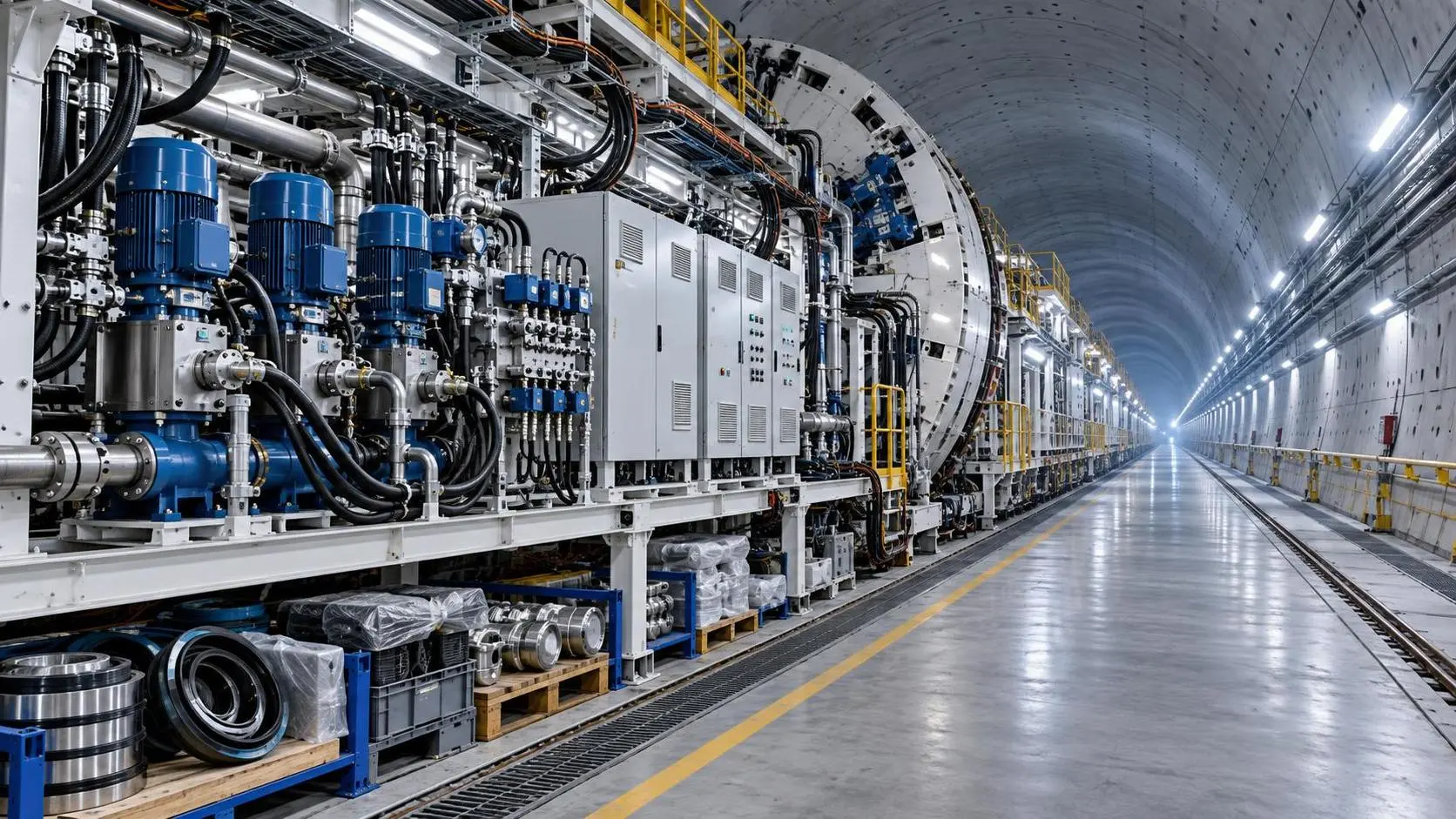
How to Specify TBM Backup System Parts for Reliable Long-Distance Tunnelling
TBM backup system parts: learn how to specify reliable spares for long-distance tunnelling, reduce downtime, ensure compatibility, and speed underground recovery.

How to Size Open Pit Mining Trucks for Haul Distance, Grade, and Payload?
Open Pit Mining Trucks: learn how to match payload, haul distance, grade, road resistance, and loading capacity for safer, lower-cost mine operations.
Related News
- 00
0000-00
How to Evaluate European Drill-and-Blast Tunnelling Contractors for Complex Projects - 00
0000-00
Which Trenchless Construction Technique Fits Your Utility Crossing Conditions? - 00
0000-00
What Is Driving Metro Tunnelling Demand Across Southeast Asia’s Major Cities? - 00
0000-00
Hard Rock Tunnelling in Australia: Selecting Methods for Variable Ground Conditions - 00
0000-00
Hydropower Tunnel Excavation: Selecting Methods for Variable Rock Conditions
Weekly Insights
Stay ahead with our curated technology reports delivered every Monday.