
What makes TBM backup systems easier to maintain on site?





For after-sales maintenance teams, keeping TBM Backup Systems reliable on site depends on how quickly faults can be identified, parts can be accessed, and routine service can be completed without disrupting tunnelling progress. Well-designed systems reduce downtime through modular layouts, clearer diagnostics, safer maintenance access, and stronger component integration—making daily support more efficient in demanding underground conditions.
In real tunnelling projects, backup gantries are more than trailing support units. They carry power distribution, hydraulic supply, ventilation auxiliaries, slurry or conveyor interfaces, consumables storage, and service access routes over operating cycles that may run 20 to 24 hours per day. For maintenance personnel, the difference between a service-friendly design and a cramped, poorly integrated layout can easily mean the difference between a 30-minute intervention and a 6-hour stoppage.
This is why maintainability has become a practical selection criterion for TBM Backup Systems. Beyond machine thrust, torque, and advance rate, after-sales teams now look closely at modularity, inspection space, cable and hose routing, fault isolation logic, spare part interchangeability, and safe access under underground constraints. The following sections explain what makes these systems easier to maintain on site and what buyers, operators, and support teams should evaluate before deployment.
Why maintainability matters in TBM Backup Systems
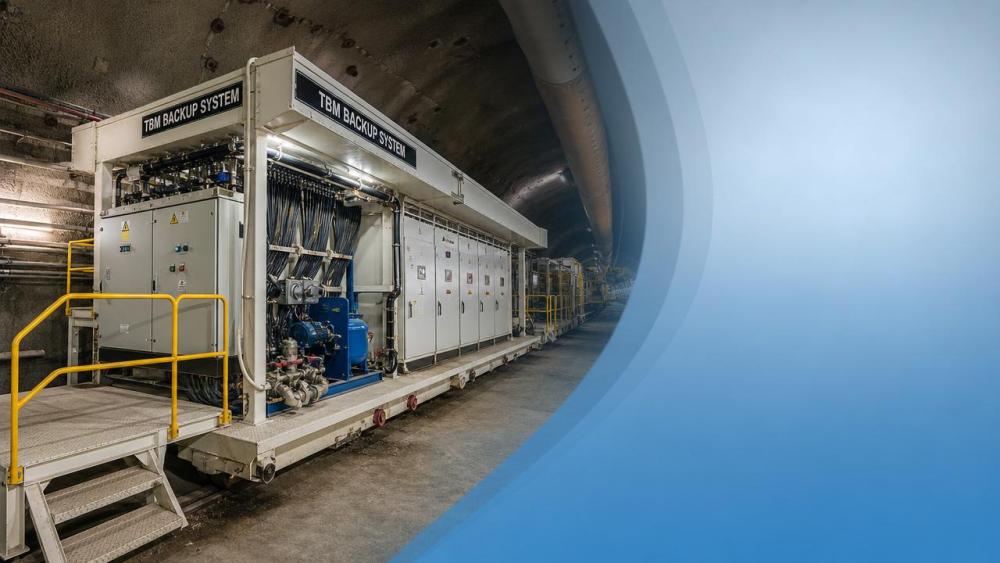
TBM Backup Systems operate in a narrow service environment where heat, dust, water mist, vibration, and continuous logistics all compete for space. When a fault appears on a transformer skid, hydraulic power unit, lubrication line, or segment handling support frame, technicians often work within access corridors as tight as 700 to 1000 mm. In such conditions, maintainability directly affects safety, response time, and production continuity.
A maintainable system lowers mean time to diagnose and mean time to repair. In practical terms, this means clearer component zoning, fewer overlapping service points, and better visibility of wear-prone parts. For a tunnelling contractor advancing 10 to 20 meters per day, even a 2-hour reduction in unplanned maintenance can protect a meaningful portion of the daily target.
Typical site pain points for after-sales teams
Most maintenance difficulties come from layout conflicts rather than component failure alone. A failed sensor is rarely the full problem. The real issue is often that 3 cable trays, 2 hydraulic lines, and one steel support frame must be removed before the sensor can even be reached. This increases labor exposure, restart delay, and the probability of secondary damage.
- Hidden service points behind fixed guards or structural members
- Mixed routing of electrical cables, hydraulic hoses, and water lines
- Non-standard spare parts across different backup gantries
- Insufficient fault code clarity from PLC or local control panels
- Unsafe maintenance positions near moving conveyors or trailing systems
Features that reduce downtime underground
The easiest TBM Backup Systems to maintain usually share 4 design traits: modular subassemblies, accessible service zones, standardized consumables, and integrated diagnostics. These elements reduce dependency on trial-and-error troubleshooting and allow mixed teams of OEM staff, contractor mechanics, and electricians to work from the same logic.
For example, when hydraulic filter banks, lubrication pumps, and power cabinets are grouped by function rather than scattered across multiple gantries, routine checks can be completed in 1 inspection route instead of 3 separate passes. Over a 7-day maintenance cycle, that can save several technician-hours without changing the excavation plan.
Maintainability indicators worth tracking
During commissioning and early operation, after-sales teams should track serviceability using simple field indicators rather than abstract engineering language. This helps compare different TBM Backup Systems in a measurable way.
- Average access time to critical components: target under 15 minutes
- Routine inspection route duration: ideally 30 to 60 minutes per shift
- Number of tools needed for common service tasks: preferably 3 to 5 core tools
- Time to isolate a failed module electrically or hydraulically: under 10 minutes
- Share of standardized wear parts: target above 70% where possible
Design characteristics that make on-site maintenance easier
Not all maintainability improvements require complex technology. In many underground projects, simple mechanical and layout decisions create the biggest impact. Good TBM Backup Systems are designed so that technicians can inspect, isolate, replace, and restart with minimal disassembly and minimal exposure to surrounding hazards.
Modular architecture and quick replacement logic
Modularity is one of the strongest maintainability advantages. If pump sets, power distribution panels, hose bundles, lubrication stations, and control cabinets are configured as replaceable modules, faulted sections can be swapped in 1 maintenance window instead of being rebuilt underground. This is especially useful when the nearest surface workshop is several kilometers away.
A modular backup gantry also simplifies spare strategy. Rather than stocking dozens of unique items, operators can prepare 1 complete motor starter assembly, 2 standard sensor kits, or 1 pretested valve block. That shortens recovery time and improves first-time fix rate during night shifts or remote projects.
Accessible layout and safe service clearance
Accessibility is often underestimated during design reviews. Maintenance teams need reach zones, removable covers, anti-slip walkways, and adequate lighting around every critical service point. A practical target is at least 600 mm hand-access space for minor tasks and 800 to 1000 mm clearance for regular module service where site geometry allows.
Safe maintenance access also includes lockout points, pressure release valves, cable labeling, and clear separation from moving conveyor belts, segment cars, or ventilation lines. In TBM Backup Systems with high service density, these details can reduce both intervention time and the chance of repeated shutdowns caused by incomplete isolation.
The table below compares design factors that typically improve or reduce field maintainability in TBM Backup Systems.
The key lesson is that maintainability is built into the arrangement, not added afterward. A system may use robust components, but if access is poor and routing is congested, repair efficiency still suffers. For after-sales teams, layout quality often matters as much as component brand or rated capacity.
Diagnostic visibility and control integration
Clear diagnostics make TBM Backup Systems easier to maintain because they shorten fault isolation. Instead of tracing a problem manually through multiple cabinets and junction points, technicians can work from alarm hierarchy, I/O status, pressure deviations, motor current trends, and interlock logic displayed locally or through the machine control network.
A useful standard is a 3-layer diagnostic structure: first, operator alarms; second, maintenance-level fault descriptions; third, engineering-level signal tracing. When these layers are available, teams can distinguish between a failed device, a communication issue, and a process interlock within minutes rather than hours.
How after-sales teams should evaluate TBM Backup Systems before and after commissioning
For maintenance personnel, evaluation should begin before the TBM enters service. Once the backup system is underground and trailing services are connected, redesign becomes slow and expensive. A structured review during FAT, assembly, and first 30 days of operation can reveal whether the system is truly field maintainable.
Pre-acceptance checklist for serviceability
At minimum, after-sales teams should inspect 6 points before acceptance: access clearance, module labeling, spare part coding, cable and hose routing, drain and refill convenience, and local diagnostic readability. This review should not be limited to static workshop conditions. It should also consider underground dust, moisture, vibration, and reduced lighting.
- Verify whether weekly service points can be reached without removing structural panels
- Check that consumables such as filters and seals are matched to standard stock lists
- Confirm that lockout and isolation points are physically accessible
- Review whether alarm text is meaningful for field technicians, not only programmers
- Inspect whether hose replacement can be done without disturbing neighboring systems
Routine maintenance planning underground
Once operation begins, maintenance efficiency depends on planning discipline. TBM Backup Systems benefit from a 3-level plan: per-shift visual checks, weekly functional service, and 250 to 500 hour preventive tasks depending on duty severity. This structure helps teams separate immediate safety issues from trend-based wear management.
A practical schedule often includes daily leak inspection, weekly cable support review, monthly fastener torque verification in high-vibration zones, and periodic cleaning of cabinet ventilation filters. If these tasks are designed into the access path, they can be completed without interfering with segment supply or backup logistics.
The next table shows a practical maintenance framework that after-sales teams can adapt for different TBM Backup Systems and project conditions.
This type of framework helps convert general maintainability claims into daily operating practice. If a supplier cannot explain how service tasks are completed at each interval, the design may still depend too heavily on workshop assumptions rather than real tunnel conditions.
Common mistakes during support planning
One common mistake is focusing only on major mechanical assemblies while ignoring small failure points such as connectors, cable glands, pressure switches, and access latches. In many TBM Backup Systems, these low-cost items trigger a high share of nuisance stoppages. Another mistake is assuming all spare parts can be sourced quickly despite project locations with 2 to 8 week lead times.
A third mistake is underestimating documentation. Maintenance teams need as-built drawings, service routes, alarm maps, and parts cross-reference sheets that match the machine delivered to site. Without this, even a well-designed backup train becomes harder to maintain than necessary.
Selection guidance for buyers and service managers
When comparing TBM Backup Systems, procurement teams should include after-sales personnel in technical evaluation. Maintainability affects labor hours, spare inventory, availability, and project risk over the full operating cycle. The lowest upfront price can become expensive if routine service requires repeated disassembly or specialist intervention for minor faults.
Questions to ask suppliers
Good supplier discussions move beyond nominal specifications. Buyers should ask how many service points are grouped, how many unique filter types are used, whether alarm messages are customizable, and how long it typically takes to replace a pump, sensor, or hose section in tunnel conditions. These questions reveal whether maintainability has been engineered deliberately.
- Which components are modular and field replaceable?
- How many standard spare kits cover 80% of expected routine failures?
- What is the recommended preventive maintenance interval by subsystem?
- Can technicians isolate electrical and hydraulic sections independently?
- What documentation is delivered at commissioning and after modifications?
Best fit for demanding underground projects
The best TBM Backup Systems for after-sales maintenance are not necessarily the most complex. They are the ones that balance robustness with service simplicity. In long drives, hard rock conditions, or high-utilization urban projects, systems with standardized parts, clean routing, and meaningful diagnostics usually outperform visually dense designs with poor access logic.
For organizations following electrification, digitalization, and higher utilization targets across underground equipment, maintainability is also part of strategic asset management. Easier maintenance supports better machine availability, safer intervention routines, and more predictable lifecycle cost across the project portfolio.
For after-sales maintenance teams, easier-to-maintain TBM Backup Systems are defined by practical details: modular assemblies, fast fault isolation, standardized parts, accessible service areas, and documentation that matches field reality. These features reduce downtime, support safer interventions, and help tunnelling operations protect daily advance targets under difficult underground conditions.
If you are assessing backup train layouts, upgrading supportability standards, or comparing service-ready configurations for future tunnel projects, UTMD can help you review the maintainability factors that matter most. Contact us to discuss project-specific needs, request a tailored evaluation framework, or learn more about underground equipment intelligence and maintenance-focused solutions.
Related News

How to Evaluate European Drill-and-Blast Tunnelling Contractors for Complex Projects
Drill and blast tunnelling contractors Europe: learn how to assess geology expertise, blast control, equipment reliability, safety, and programme resilience for complex projects.

Which Trenchless Construction Technique Fits Your Utility Crossing Conditions?
Trenchless construction techniques compared for utility crossings: choose HDD, microtunnelling, pipe jacking, or auger boring based on ground, accuracy, access, and risk.

What Is Driving Metro Tunnelling Demand Across Southeast Asia’s Major Cities?
Metro tunnelling Southeast Asia is accelerating as major cities tackle congestion, flooding, and connectivity. Explore the market forces, technical risks, and opportunities shaping demand.

Hard Rock Tunnelling in Australia: Selecting Methods for Variable Ground Conditions
Hard rock tunnelling in Australia: compare TBM, drill-and-blast and hybrid methods to manage variable ground, reduce risk and protect project costs.

Hydropower Tunnel Excavation: Selecting Methods for Variable Rock Conditions
Hydropower tunnel excavation methods for variable rock conditions: compare TBM, drill-and-blast, and hybrid strategies to improve safety, progress, and project control.

How to Select Underground Safety Equipment for Tunnelling by Hazard and Work Zone
Underground Safety Equipment for tunnelling: match protection to hazards, work zones, compliance, and emergency needs with this practical selection guide.

EPB or Slurry Shield? Selecting Soft-Ground Tunnelling Equipment by Soil Conditions
Tunnel Excavation Equipment for soft ground: compare EPB and slurry shields by soil, groundwater, settlement risk, and project logistics to choose confidently.
How to Specify TBM Backup System Parts for Reliable Long-Distance Tunnelling
TBM backup system parts: learn how to specify reliable spares for long-distance tunnelling, reduce downtime, ensure compatibility, and speed underground recovery.

How to Size Open Pit Mining Trucks for Haul Distance, Grade, and Payload?
Open Pit Mining Trucks: learn how to match payload, haul distance, grade, road resistance, and loading capacity for safer, lower-cost mine operations.
Related News
- 00
0000-00
How to Evaluate European Drill-and-Blast Tunnelling Contractors for Complex Projects - 00
0000-00
Which Trenchless Construction Technique Fits Your Utility Crossing Conditions? - 00
0000-00
What Is Driving Metro Tunnelling Demand Across Southeast Asia’s Major Cities? - 00
0000-00
Hard Rock Tunnelling in Australia: Selecting Methods for Variable Ground Conditions - 00
0000-00
Hydropower Tunnel Excavation: Selecting Methods for Variable Rock Conditions
Weekly Insights
Stay ahead with our curated technology reports delivered every Monday.