
What makes TBM guidance systems worth the upgrade?





For enterprise decision-makers managing cost, risk, and project performance, upgrading TBM Guidance Systems is no longer just a technical choice—it is a strategic one. From improving tunneling accuracy and reducing downtime to supporting automation, data integration, and safer underground operations, modern guidance systems can directly influence productivity and long-term asset value. So, what exactly makes the upgrade worth the investment?
In underground construction and mining-linked infrastructure, even small deviations can compound into major cost events. A misalignment of 20–50 mm over a sustained drive can affect segment fit, jack force distribution, slurry balance, and downstream schedule control. For decision-makers evaluating capital allocation, the value of TBM Guidance Systems lies in how they improve measurable project outcomes rather than how impressive the hardware appears on paper.
For organizations following the underground equipment intelligence landscape, including those engaging with UTMD’s analysis of TBM technology, trenchless systems, and digitalized heavy equipment, guidance upgrades sit at the intersection of mechanical performance, digital operations, and risk governance. They support not only line-and-grade control, but also better decision speed, stronger traceability, and more reliable production planning.
Why TBM Guidance Systems matter more on modern projects
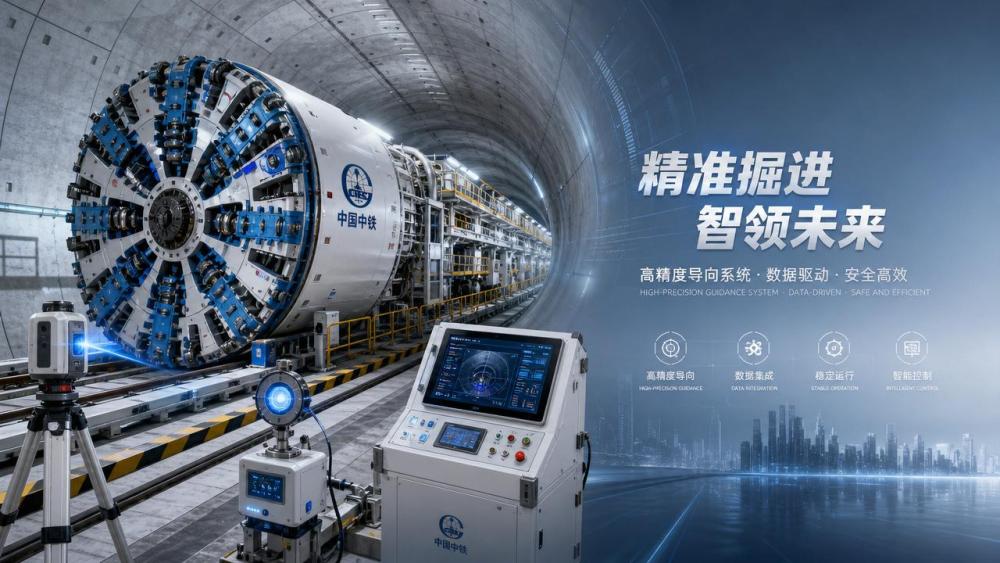
TBM Guidance Systems have evolved from alignment tools into operational control platforms. In older setups, guidance mainly served survey verification and steering correction. In upgraded configurations, the system can integrate laser targeting, gyroscopic references, ring build monitoring, machine articulation data, and reporting dashboards into one interface.
That shift matters because modern tunnel projects are more demanding in at least 4 ways: tighter tolerances, denser urban constraints, longer continuous drives, and stronger reporting requirements. A metro, utility, rail, or water tunnel often has less margin for cumulative error than projects executed 10–15 years ago. The cost of rework now extends beyond geometry; it can affect safety reviews, stakeholder reporting, and contractual claims.
Accuracy is not only a survey issue
When a TBM drifts off line or grade, the problem rarely stays isolated to navigation. Cutterhead attitude, articulation response, and segment assembly can all become less efficient. In mixed ground or hard rock transitions, the correction effort can raise wear rates and increase intervention frequency. A strong guidance platform helps operators detect directional drift earlier, often within one ring or even in near real time.
On many projects, guidance accuracy targets are discussed in ranges such as ±10 mm to ±25 mm depending on tunnel diameter, geology, contract tolerance, and control methodology. While actual performance depends on field conditions, modern TBM Guidance Systems are valuable because they reduce the gap between theoretical design alignment and actual machine behavior underground.
Downtime reduction often delivers the fastest payback
A guidance upgrade is often justified not by one spectacular improvement, but by repeated reductions in short disruptions. If crews spend 15–30 minutes per shift reconciling conflicting references, manually rechecking target positions, or correcting avoidable steering drift, the accumulated loss across a 24-month drive becomes substantial.
Better visualization, automated logging, and stable sensor fusion can reduce troubleshooting time and simplify shift handovers. For enterprise leadership, this matters because the return is visible in machine utilization, fewer unplanned stops, and better confidence in daily advance forecasts.
Data quality supports future automation
Many tunnel operators are moving toward semi-automated or highly assisted steering. That transition depends on reliable position and orientation data. If the guidance layer is outdated, automation efforts may be limited by noisy data, delayed updates, or poor interoperability with PLC, SCADA, or project reporting systems.
For companies building a digital underground strategy, TBM Guidance Systems are foundational. They generate the positional intelligence needed for performance analytics, exception alerts, ring-by-ring traceability, and digital twin workflows. In other words, the upgrade supports not only current tunneling but also future operational maturity.
What changes when you upgrade
Not every upgrade delivers the same value. Some projects only require sensor renewal and interface modernization, while others need a broader architecture change. The practical difference usually appears across 5 areas: measurement stability, operator visibility, integration depth, maintenance burden, and reporting capability.
The table below outlines how decision-makers can compare a legacy setup with a modernized guidance environment in realistic operational terms rather than generic performance claims.
The key takeaway is that the best upgrade is not simply more advanced instrumentation. It is a system that reduces operational friction across multiple departments: survey, production, maintenance, engineering, and management reporting. That is where enterprise value becomes visible.
Higher confidence in line and grade control
A stronger system improves confidence during long drives, curve sections, station approaches, and breakthrough zones. In projects with 1 km to 10 km sections, the risk of compounding small steering errors is materially higher. Upgraded TBM Guidance Systems help teams manage this with more stable reference handling and better visualization of machine attitude against design alignment.
Better shift-to-shift consistency
Shift change is a hidden performance variable. When interfaces are unclear or logs are incomplete, each new crew may spend 10–20 minutes rebuilding context. Modern systems reduce that loss with clearer dashboards, stored alignment history, and event logs that connect steering decisions to actual outcomes.
Typical operational gains decision-makers look for
- Fewer steering corrections per ring over stable geology sections
- Shorter diagnostic time during sensor or reference anomalies
- More consistent daily reporting across 2 or 3 shifts
- Lower dependence on a single highly experienced operator
- Cleaner data for claims management, quality audits, and progress reviews
How the upgrade creates business value beyond engineering
Enterprise decision-makers rarely approve an upgrade based on technical merit alone. The investment case usually depends on whether TBM Guidance Systems can improve commercial predictability, reduce delivery risk, and support future fleet or project standardization. These outcomes are especially relevant for contractors, asset owners, EPC organizations, and mining-linked underground developers managing multiple packages or long capital programs.
Schedule protection
When progress plans are tight, even 1–2 lost hours per day can create claims pressure, subcontractor coordination issues, and delayed downstream works. If a guidance upgrade reduces rechecking, unplanned stoppages, and steering inefficiency, the schedule benefit may outweigh the hardware cost over a single major drive.
In practical terms, a project running 6 days per week over 18 months has very little tolerance for recurring avoidable delays. Decision-makers often prefer upgrades that strengthen predictability rather than chase headline performance gains that are hard to sustain in real geology.
Risk control and documentation
Claims, disputes, and quality deviations often depend on records. Modern TBM Guidance Systems can help produce more structured logs of position, correction events, and system status. That can support internal governance and external reporting when questions arise over alignment variance, intervention timing, or operational response.
This matters in urban tunneling, cross-passage interfaces, and high-consequence zones where a deviation of a few centimeters can trigger wider engineering review. Better records do not eliminate risk, but they can make response faster and more defensible.
Scalability across fleets and projects
Companies operating more than 2 TBMs or managing repeated trenchless and tunneling programs benefit from standardization. A unified guidance environment simplifies operator training, spare part planning, software support, and data reporting. Over 3–5 years, those efficiencies can be more valuable than a one-time improvement in any single drive.
What to evaluate before choosing a TBM guidance upgrade
Not every project needs the same specification. A short urban pipe-jacking drive, a mixed-ground metro tunnel, and a deep hard-rock TBM project can place different demands on reference stability, data rate, interface design, and environmental durability. A disciplined evaluation framework helps procurement teams avoid overspending in one area while under-specifying another.
Five evaluation dimensions
- Measurement architecture: laser, gyroscopic, total station integration, and backup logic
- System interoperability: compatibility with TBM control systems and site IT workflows
- User interface: visibility for operators, survey crews, and project managers
- Lifecycle support: calibration process, remote diagnostics, spare availability, service response
- Implementation risk: commissioning time, crew training, and migration from legacy systems
The following table provides a practical procurement lens for decision-makers comparing upgrade options under real project constraints.
The common mistake is to compare systems only on acquisition cost. A lower-priced option can become more expensive if it creates extra downtime, poor data quality, or weak field support. Procurement teams should measure total operational impact over the full drive, not just purchase value at contract award.
Questions procurement and operations should ask together
- Can the upgraded system integrate with existing TBM controls without major redesign?
- What is the recommended calibration frequency: daily, weekly, or event-based?
- How is data backed up and retrieved during communications loss?
- What local or remote support is available within 24–48 hours?
- Will the platform remain viable for future automation and analytics plans?
Implementation risks, common mistakes, and how to avoid them
Even a technically strong upgrade can underperform if implementation is rushed. The biggest risks usually appear in interface mapping, sensor placement, crew adoption, and unclear ownership between survey, TBM operations, and automation teams. A structured rollout reduces these issues.
Common mistakes
- Upgrading hardware without aligning reporting workflows and control logic
- Assuming experienced operators need no retraining on a new interface
- Ignoring environmental stress factors such as vibration or slurry contamination
- Failing to define acceptance criteria before commissioning starts
A practical 3-stage rollout
Stage 1: Assessment
Review current alignment performance, downtime patterns, sensor issues, and reporting gaps. This usually takes 5–10 working days when machine logs and survey records are available.
Stage 2: Integration and commissioning
Confirm interfaces, install components, verify calibration logic, and run controlled field testing. Depending on project complexity, this stage may range from several days to 2 weeks.
Stage 3: Stabilization
Track early performance over the first 20–50 rings or the first few weeks of operation. Use this window to fine-tune alarms, reporting formats, and operator workflows before full production reliance.
Where UTMD’s industry lens becomes useful
For decision-makers tracking long-term technology direction, TBM Guidance Systems should not be viewed in isolation. They are part of a broader shift toward intelligent underground engineering, where excavation, transport, sensing, electrification, and remote operations become increasingly connected. That perspective is central to UTMD’s coverage of TBMs, trenchless equipment, and smart underground mining systems.
As tunnels and mines push deeper, hotter, and more automated environments, the value of precise machine intelligence rises. Guidance upgrades help create the reliable positional layer needed for safer operation, better asset utilization, and stronger integration with future digital workflows.
What makes TBM Guidance Systems worth the upgrade is not a single feature. It is the combined effect of better accuracy, lower downtime, stronger documentation, improved operator consistency, and clearer readiness for automation. For enterprise leaders, that means a tighter link between underground execution and business performance.
If your organization is reviewing tunnel technology investments, standardizing guidance across projects, or preparing for more digitalized underground operations, now is the right time to assess the upgrade pathway. Contact us to discuss project requirements, get a tailored evaluation framework, or explore more underground equipment intelligence and solution guidance.
Related News
How to Evaluate European Drill-and-Blast Tunnelling Contractors for Complex Projects
Drill and blast tunnelling contractors Europe: learn how to assess geology expertise, blast control, equipment reliability, safety, and programme resilience for complex projects.
Which Trenchless Construction Technique Fits Your Utility Crossing Conditions?
Trenchless construction techniques compared for utility crossings: choose HDD, microtunnelling, pipe jacking, or auger boring based on ground, accuracy, access, and risk.
What Is Driving Metro Tunnelling Demand Across Southeast Asia’s Major Cities?
Metro tunnelling Southeast Asia is accelerating as major cities tackle congestion, flooding, and connectivity. Explore the market forces, technical risks, and opportunities shaping demand.
Hard Rock Tunnelling in Australia: Selecting Methods for Variable Ground Conditions
Hard rock tunnelling in Australia: compare TBM, drill-and-blast and hybrid methods to manage variable ground, reduce risk and protect project costs.
Hydropower Tunnel Excavation: Selecting Methods for Variable Rock Conditions
Hydropower tunnel excavation methods for variable rock conditions: compare TBM, drill-and-blast, and hybrid strategies to improve safety, progress, and project control.
How to Select Underground Safety Equipment for Tunnelling by Hazard and Work Zone
Underground Safety Equipment for tunnelling: match protection to hazards, work zones, compliance, and emergency needs with this practical selection guide.
EPB or Slurry Shield? Selecting Soft-Ground Tunnelling Equipment by Soil Conditions
Tunnel Excavation Equipment for soft ground: compare EPB and slurry shields by soil, groundwater, settlement risk, and project logistics to choose confidently.
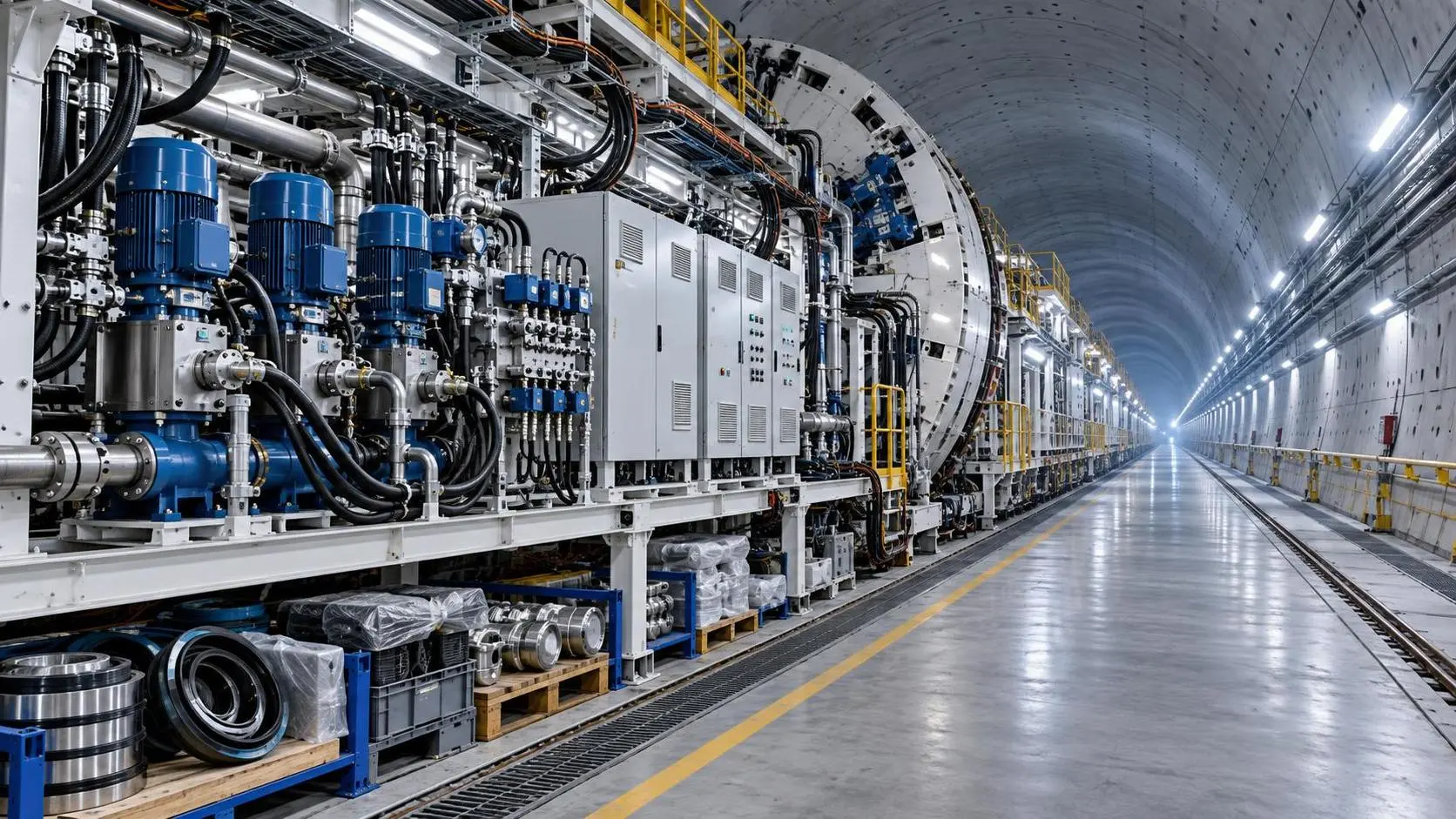
How to Specify TBM Backup System Parts for Reliable Long-Distance Tunnelling
TBM backup system parts: learn how to specify reliable spares for long-distance tunnelling, reduce downtime, ensure compatibility, and speed underground recovery.

How to Size Open Pit Mining Trucks for Haul Distance, Grade, and Payload?
Open Pit Mining Trucks: learn how to match payload, haul distance, grade, road resistance, and loading capacity for safer, lower-cost mine operations.
Related News
- 00
0000-00
How to Evaluate European Drill-and-Blast Tunnelling Contractors for Complex Projects - 00
0000-00
Which Trenchless Construction Technique Fits Your Utility Crossing Conditions? - 00
0000-00
What Is Driving Metro Tunnelling Demand Across Southeast Asia’s Major Cities? - 00
0000-00
Hard Rock Tunnelling in Australia: Selecting Methods for Variable Ground Conditions - 00
0000-00
Hydropower Tunnel Excavation: Selecting Methods for Variable Rock Conditions
Weekly Insights
Stay ahead with our curated technology reports delivered every Monday.