
Singapore Says No Evidence of Forced Labor in Supply Chains





On June 4, 2026, Singapore’s Ministry of Trade and Industry responded to recent U.S. forced-labor trade scrutiny involving Southeast Asian supply chains by stating that there is no evidence that Singapore companies or their supply chains are involved in forced labor. For manufacturers of Slurry/EPB Shields that have set up operations in Singapore or export through Singapore, this matters because it strengthens compliance positioning at a time when buyers in Europe and the United States are placing closer attention on ESG due diligence and supply-chain documentation.
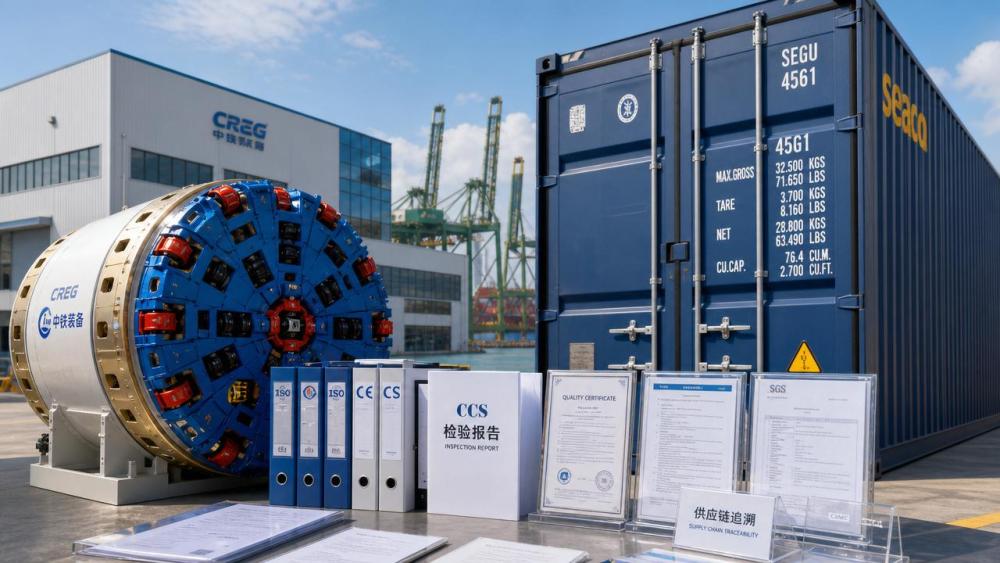
What Singapore’s June 4 statement confirmed
The confirmed facts are limited but commercially relevant. On June 4, Singapore’s Ministry of Trade and Industry said there is no evidence indicating that Singapore companies or their supply chains are involved in forced labor. The statement came in response to recent U.S. trade investigations related to forced labor in Southeast Asian supply chains. Based on the information provided, this response offers a compliance credibility reference point for Slurry/EPB Shields manufacturers that are newly producing in Singapore or routing exports through Singapore, and it may help ease ESG due-diligence concerns among customers in European and U.S. markets.
Where the immediate business impact may be felt
For manufacturers using Singapore as a production or export base
From an industry perspective, these companies may feel the impact first in customer qualification, export discussions, and transaction-level compliance reviews. The reason is straightforward: when buyers ask about supply-chain integrity, an official statement from Singapore’s trade authority can become part of the broader compliance narrative. What deserves closer attention is that this does not automatically replace customer audits or documentary checks; it mainly helps support credibility in conversations tied to origin, routing, and supplier risk review.
For overseas buyers and procurement teams
Procurement teams in Europe and the United States may view the statement as a useful reference when assessing suppliers connected to Singapore. Analysis shows the effect is likely to be strongest in due-diligence workflows, internal risk screening, and supplier communication rather than in any automatic relaxation of controls. Buyers still need to distinguish between a general official position and the evidence required for a specific order, shipment, or supplier relationship.
For supply-chain and trade service providers
Service providers involved in export handling, trade documentation, and supply-chain coordination may also be affected because compliance discussions often extend beyond the manufacturer itself. Observably, the key business link here is documentation support: parties involved in shipment routing or export execution may face more requests for traceability materials, declarations, or background explanations when dealing with sensitive markets.
What companies should watch now
Separate official signaling from shipment-level compliance
Analysis shows companies should avoid treating the June 4 statement as a complete substitute for transaction-level proof. The policy signal is helpful, but actual trade execution may still depend on the consistency of supplier records, export documents, and customer-required compliance materials.
Review how Singapore-linked exports are described to customers
For Slurry/EPB Shields suppliers producing in Singapore or exporting through Singapore, customer communication deserves careful handling. What deserves closer attention is whether commercial teams, compliance teams, and logistics teams are using aligned language when describing manufacturing location, supply-chain structure, and export routing.
Prepare for continued ESG due diligence from Western markets
Even with a supportive official statement, buyers may continue to ask for supporting materials. From an industry perspective, companies should pay attention to supplier qualifications, document readiness, and the time needed to respond to due-diligence requests. This is especially relevant where procurement cycles are long or where customers apply enhanced screening before approving suppliers.
Track whether official wording or external scrutiny changes
Observably, the current development is important because it provides a clear response from Singapore’s trade authority. At the same time, companies should continue to monitor whether future official statements, customer requirements, or trade-review practices evolve, particularly for exports linked to markets with strict ESG expectations.
Why this is better read as a compliance signal than a final outcome
This section is analysis. It is more appropriate to understand this as a meaningful compliance signal rather than a definitive end to market scrutiny. The statement helps frame Singapore-linked supply chains in a more favorable compliance context, especially for Slurry/EPB Shields exporters. However, the broader commercial environment still depends on how overseas customers, internal procurement teams, and trade-control processes interpret and apply that signal in practice. In other words, the development reduces some immediate concern, but it does not eliminate the need for case-by-case verification.
How the market may interpret this update for now
At this stage, the most balanced reading is that Singapore’s June 4 response offers practical reassurance for companies tied to Slurry/EPB Shields production or export activity involving Singapore. It may support supplier credibility and help ease some ESG-related concerns in Europe and the United States. Still, it is more appropriate to understand this as a monitored industry development with real short-term compliance value and possible longer-term relevance, rather than as a conclusive change to all trade-risk assessments.
Basis of this article and what still needs verification
This article is based on the user-provided news title, event date, and event summary. For developments of this kind, commonly relevant source types may include official government statements, company disclosures, industry association updates, authoritative media reports, and standards or compliance-related documents. A specific official source link was not provided in the input, so the exact primary publication should still be verified on an ongoing basis. Follow-up attention should focus on any additional official wording, changes in buyer due-diligence practices, and whether Singapore-linked Slurry/EPB Shields exports face new documentation expectations in key overseas markets.
Related News

How to Evaluate European Drill-and-Blast Tunnelling Contractors for Complex Projects
Drill and blast tunnelling contractors Europe: learn how to assess geology expertise, blast control, equipment reliability, safety, and programme resilience for complex projects.

Which Trenchless Construction Technique Fits Your Utility Crossing Conditions?
Trenchless construction techniques compared for utility crossings: choose HDD, microtunnelling, pipe jacking, or auger boring based on ground, accuracy, access, and risk.

What Is Driving Metro Tunnelling Demand Across Southeast Asia’s Major Cities?
Metro tunnelling Southeast Asia is accelerating as major cities tackle congestion, flooding, and connectivity. Explore the market forces, technical risks, and opportunities shaping demand.

Hard Rock Tunnelling in Australia: Selecting Methods for Variable Ground Conditions
Hard rock tunnelling in Australia: compare TBM, drill-and-blast and hybrid methods to manage variable ground, reduce risk and protect project costs.

Hydropower Tunnel Excavation: Selecting Methods for Variable Rock Conditions
Hydropower tunnel excavation methods for variable rock conditions: compare TBM, drill-and-blast, and hybrid strategies to improve safety, progress, and project control.

How to Select Underground Safety Equipment for Tunnelling by Hazard and Work Zone
Underground Safety Equipment for tunnelling: match protection to hazards, work zones, compliance, and emergency needs with this practical selection guide.

EPB or Slurry Shield? Selecting Soft-Ground Tunnelling Equipment by Soil Conditions
Tunnel Excavation Equipment for soft ground: compare EPB and slurry shields by soil, groundwater, settlement risk, and project logistics to choose confidently.

How to Specify TBM Backup System Parts for Reliable Long-Distance Tunnelling
TBM backup system parts: learn how to specify reliable spares for long-distance tunnelling, reduce downtime, ensure compatibility, and speed underground recovery.

How to Size Open Pit Mining Trucks for Haul Distance, Grade, and Payload?
Open Pit Mining Trucks: learn how to match payload, haul distance, grade, road resistance, and loading capacity for safer, lower-cost mine operations.
Related News
- 00
0000-00
How to Evaluate European Drill-and-Blast Tunnelling Contractors for Complex Projects - 00
0000-00
Which Trenchless Construction Technique Fits Your Utility Crossing Conditions? - 00
0000-00
What Is Driving Metro Tunnelling Demand Across Southeast Asia’s Major Cities? - 00
0000-00
Hard Rock Tunnelling in Australia: Selecting Methods for Variable Ground Conditions - 00
0000-00
Hydropower Tunnel Excavation: Selecting Methods for Variable Rock Conditions
Weekly Insights
Stay ahead with our curated technology reports delivered every Monday.