
Are Autonomous Mining Loaders worth the investment now





Are Autonomous Mining Loaders worth the investment now? The answer is no longer theoretical for underground operations facing higher costs, tighter safety targets, and stronger decarbonization pressure.
Across modern mining, Autonomous Mining Loaders are moving from pilot projects into practical fleet planning. Their value depends on duty cycle, mine layout, digital infrastructure, and ventilation economics.
For intelligence platforms such as UTMD, this shift matters because loader autonomy sits at the intersection of rock production, battery transition, and underground transport optimization.
What Autonomous Mining Loaders mean in current underground operations
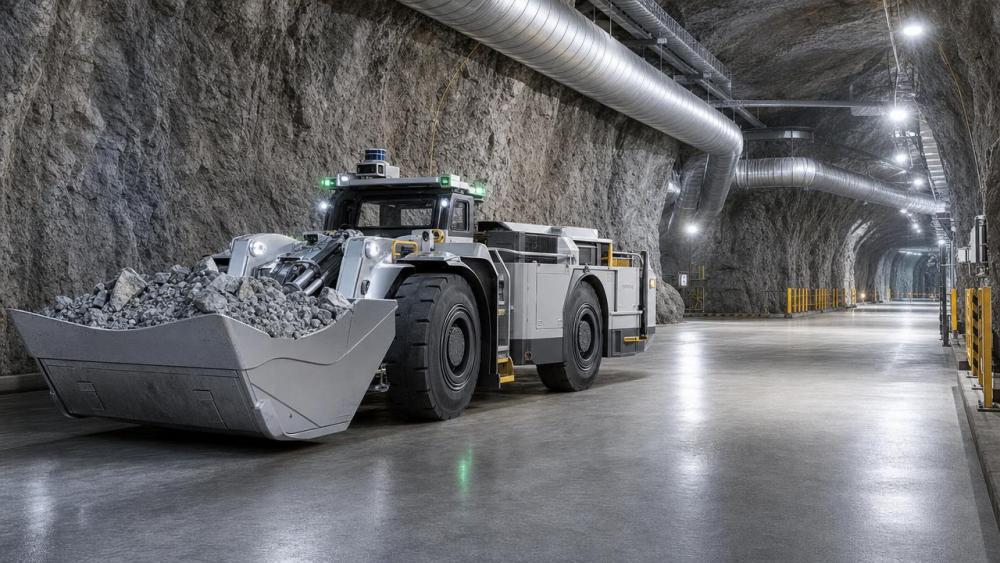
Autonomous Mining Loaders are underground LHD machines that perform loading, hauling, and dumping with limited or no onboard human control during active cycles.
They usually combine sensors, onboard perception, route control, obstacle detection, traffic logic, and remote supervision from surface or protected underground stations.
In many mines, full autonomy is still selective. Common deployment starts with tele-remote operation, then advances toward automated tramming and repeatable loading routes.
This matters because underground loading is repetitive, hazardous, and highly sensitive to delays. Even small cycle improvements can affect tonnes moved per shift.
Autonomous Mining Loaders also align with battery-electric platforms. Zero-exhaust machines reduce diesel particulates, while automation supports more disciplined energy use and traffic patterns.
Why the investment question is gaining urgency now
The business case for Autonomous Mining Loaders is stronger today than five years ago because several technology and market signals are converging at once.
- Ventilation power costs are rising in deep and hot underground mines.
- Battery-electric equipment is improving loader uptime and energy efficiency.
- Mine safety expectations increasingly favor remote and autonomous exposure reduction.
- Wireless networks, edge computing, and fleet software are more mature underground.
- Orebody complexity demands tighter control over haulage productivity and asset utilization.
These trends make Autonomous Mining Loaders less of a novelty and more of a system-level decision involving ventilation, shift design, maintenance, and production planning.
Key industry signals affecting return on investment
Where Autonomous Mining Loaders create measurable value
The investment case becomes credible when value is measured beyond purchase price. Underground equipment economics depend on total system performance, not machine cost alone.
Autonomous Mining Loaders often create value in four practical areas: productivity, safety, ventilation, and asset utilization.
1. Productivity stability
Autonomous cycles reduce variability in tramming speed, stopping behavior, route selection, and dump execution. That can make shift output more predictable.
In repeatable headings, autonomous loading systems can maintain operations during blasting clearance windows or shift changes when manual activity slows.
2. Safer operating conditions
Autonomous Mining Loaders help move workers away from unsupported ground, dust-heavy zones, heat, and collision-prone intersections in confined tunnels.
That does not eliminate risk, but it changes exposure patterns. For many mines, this exposure reduction is one of the strongest investment drivers.
3. Ventilation and energy savings
When autonomous loaders are paired with battery-electric platforms, mines may lower diesel exhaust treatment needs and reduce some ventilation demand.
Savings vary by mine depth, temperature, and air regulations. Still, ventilation is often a major hidden factor in Autonomous Mining Loaders ROI.
4. Higher fleet utilization
Automation can extend productive time by reducing operator handover delays, improving dispatch discipline, and supporting off-shift operation in selected zones.
UTMD closely tracks this issue because equipment reliability and utilization often decide whether smart mine investment creates real margin improvement.
When the economics work best and when they do not
Not every site should invest immediately. Autonomous Mining Loaders perform best where operating conditions support repeatability, digital control, and sustained machine demand.
Favorable conditions
- Long production horizons that justify infrastructure upgrades.
- Consistent routes between drawpoints, ore passes, and dumping areas.
- High ventilation cost or strict underground emission targets.
- Strong network coverage, positioning systems, and maintenance discipline.
- Multi-machine fleets where dispatch optimization multiplies benefits.
Less favorable conditions
- Short mine life with limited time to recover capital spending.
- Highly irregular headings that constantly change traffic logic.
- Weak communications backbone or poor interoperability across systems.
- Low fleet availability caused by basic maintenance issues.
- Sites expecting instant gains without process redesign.
In short, Autonomous Mining Loaders are not a shortcut around poor mine planning. They reward operational discipline more than optimistic assumptions.
Typical deployment scenarios for Autonomous Mining Loaders
Practical evaluation points before investing
A serious investment review should test the full operating environment, not just machine specifications. Autonomous Mining Loaders succeed when hardware and mine systems are aligned.
Core checkpoints
- Map actual loader cycle times, delays, idle periods, and queue points.
- Quantify ventilation and energy costs linked to current loading methods.
- Assess network reliability, localization precision, and software interoperability.
- Review maintenance readiness for sensors, batteries, and automation components.
- Run staged trials from tele-remote to semi-autonomous workflows before full scaling.
This phased approach reduces implementation risk and helps reveal whether the mine can support Autonomous Mining Loaders at dependable utilization rates.
Current conclusion on investment timing
For well-prepared underground mines, Autonomous Mining Loaders are increasingly worth the investment now. Technology maturity has improved, and the system-level benefits are becoming easier to measure.
The strongest cases appear where ventilation savings, exposure reduction, and repeatable haul cycles combine with electrification and digital mine planning.
The weakest cases remain sites with poor connectivity, short mine life, or unstable operating conditions that prevent autonomous workflows from scaling effectively.
UTMD’s broader underground equipment perspective suggests that loader autonomy should be evaluated as part of smart mine architecture, not as a standalone machine upgrade.
The next step is practical: build a mine-specific value model covering tonnes moved, ventilation demand, exposure reduction, charging or battery swap logistics, and fleet utilization.
That framework will show whether Autonomous Mining Loaders are a future ambition or a justified investment decision today.
Related News

How to Evaluate European Drill-and-Blast Tunnelling Contractors for Complex Projects
Drill and blast tunnelling contractors Europe: learn how to assess geology expertise, blast control, equipment reliability, safety, and programme resilience for complex projects.

Which Trenchless Construction Technique Fits Your Utility Crossing Conditions?
Trenchless construction techniques compared for utility crossings: choose HDD, microtunnelling, pipe jacking, or auger boring based on ground, accuracy, access, and risk.

What Is Driving Metro Tunnelling Demand Across Southeast Asia’s Major Cities?
Metro tunnelling Southeast Asia is accelerating as major cities tackle congestion, flooding, and connectivity. Explore the market forces, technical risks, and opportunities shaping demand.

Hard Rock Tunnelling in Australia: Selecting Methods for Variable Ground Conditions
Hard rock tunnelling in Australia: compare TBM, drill-and-blast and hybrid methods to manage variable ground, reduce risk and protect project costs.

Hydropower Tunnel Excavation: Selecting Methods for Variable Rock Conditions
Hydropower tunnel excavation methods for variable rock conditions: compare TBM, drill-and-blast, and hybrid strategies to improve safety, progress, and project control.

How to Select Underground Safety Equipment for Tunnelling by Hazard and Work Zone
Underground Safety Equipment for tunnelling: match protection to hazards, work zones, compliance, and emergency needs with this practical selection guide.
EPB or Slurry Shield? Selecting Soft-Ground Tunnelling Equipment by Soil Conditions
Tunnel Excavation Equipment for soft ground: compare EPB and slurry shields by soil, groundwater, settlement risk, and project logistics to choose confidently.
How to Specify TBM Backup System Parts for Reliable Long-Distance Tunnelling
TBM backup system parts: learn how to specify reliable spares for long-distance tunnelling, reduce downtime, ensure compatibility, and speed underground recovery.
How to Size Open Pit Mining Trucks for Haul Distance, Grade, and Payload?
Open Pit Mining Trucks: learn how to match payload, haul distance, grade, road resistance, and loading capacity for safer, lower-cost mine operations.
Related News
- 00
0000-00
How to Evaluate European Drill-and-Blast Tunnelling Contractors for Complex Projects - 00
0000-00
Which Trenchless Construction Technique Fits Your Utility Crossing Conditions? - 00
0000-00
What Is Driving Metro Tunnelling Demand Across Southeast Asia’s Major Cities? - 00
0000-00
Hard Rock Tunnelling in Australia: Selecting Methods for Variable Ground Conditions - 00
0000-00
Hydropower Tunnel Excavation: Selecting Methods for Variable Rock Conditions
Weekly Insights
Stay ahead with our curated technology reports delivered every Monday.