
Are SLAM Algorithms for underground mining accurate enough?





For technical evaluators, the real question is not whether SLAM Algorithms for underground mining are impressive in controlled demos, but whether they remain dependable in dust, darkness, vibration, feature-poor drifts, and constantly changing mine layouts.
As underground LHDs, drill rigs, and autonomous haulage systems advance, localization accuracy directly affects safety, productivity, and fleet utilization.
This article examines how accurate today’s SLAM approaches can be underground, what limits performance, and which evaluation criteria matter before deployment.
Are SLAM Algorithms for underground mining accurate enough in real mine scenarios?
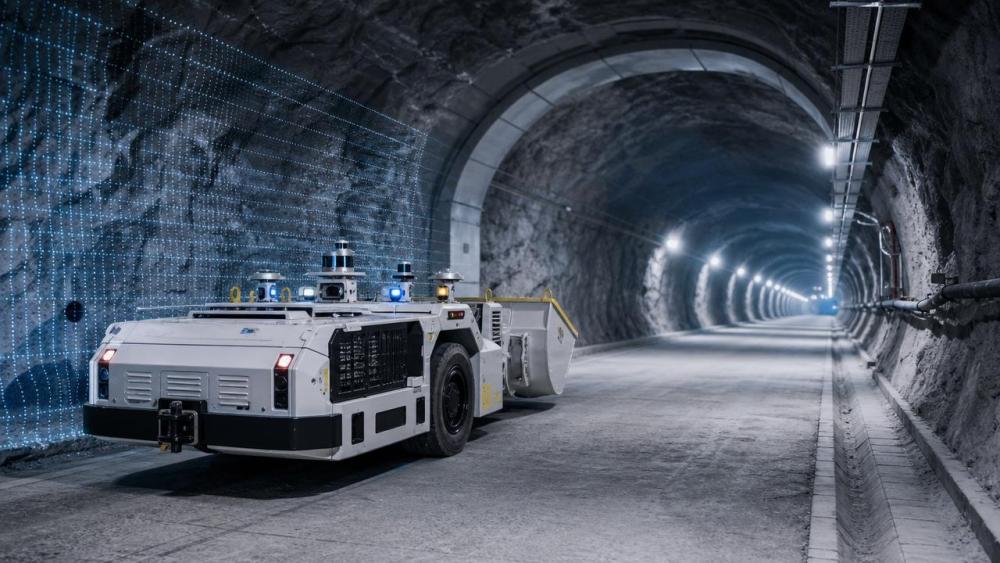
The short answer is conditional. SLAM Algorithms for underground mining can be accurate enough for many automation tasks, but not for every mine or duty cycle.
Accuracy depends on sensor fusion, tunnel geometry, map maintenance, vehicle dynamics, communication design, and operational tolerance for localization drift.
A system that works in a straight haulage drift may struggle in intersections, drawpoints, ramps, or newly blasted headings.
For UTMD’s underground engineering view, accuracy is not a single number. It is a scenario-based reliability measure under harsh physical constraints.
Scenario background: why underground SLAM accuracy changes by mission
Underground mines are not static laboratories. Routes change, headings advance, ground support appears, and parked machines reshape the sensing environment.
SLAM Algorithms for underground mining must localize without GNSS, often with repetitive walls, water, dust clouds, and limited visual texture.
Different scenarios also define different acceptable errors. A mapping survey may tolerate slower processing, while autonomous tramming needs continuous positioning.
A drill jumbo alignment task may require centimeter-level pose confidence near the face, especially when blast pattern accuracy affects downstream fragmentation.
An underground LHD on a repeated route may accept slightly wider drift if controls include speed limits, geofencing, and verified stop zones.
Therefore, the right question is not “how accurate is SLAM?” It is “accurate enough for which underground decision?”
Scenario 1: autonomous LHD tramming on fixed production routes
Fixed LHD routes are among the strongest use cases for SLAM Algorithms for underground mining, especially when routes are pre-mapped and well controlled.
The machine repeatedly observes similar geometry, allowing loop closure, map matching, and localization checks against known tunnel features.
Accuracy is usually sufficient when the vehicle stays centered, avoids walls, respects traffic zones, and stops precisely at loading or dumping points.
Core judgement points include lateral error, heading error, recovery after wheel slip, and pose stability during dust-heavy loading cycles.
For production tramming, SLAM Algorithms for underground mining should be validated during shift changes, ventilation changes, wet floor conditions, and full-bucket travel.
Scenario 2: new headings, development drives, and changing mine layouts
New development headings are harder. The environment changes rapidly, and map priors may become outdated after each blast and mucking cycle.
SLAM Algorithms for underground mining may still perform well, but uncertainty grows when features disappear, surfaces fracture, or temporary equipment blocks scan lines.
The key requirement is not only accuracy. The system must detect when its own confidence has degraded beyond safe limits.
In these scenarios, map update workflows matter as much as the algorithm. Poor map governance can defeat an otherwise strong localization engine.
Useful evaluation metrics include relocalization time, drift per meter, map freshness, and automatic flagging of geometry changes near active faces.
Scenario 3: drilling, bolting, and face positioning accuracy
Drilling jumbos and bolting rigs create a different requirement. The machine may move slowly, but pose accuracy near the face is critical.
SLAM Algorithms for underground mining must support accurate boom positioning, pattern repeatability, and alignment to design coordinates.
Here, integration with total stations, IMUs, LiDAR, encoder feedback, and mine planning data becomes important.
A small localization error can shift blast holes, affect overbreak, reduce advance quality, or create ground support mismatches.
For this scenario, decision criteria should include repeatability, coordinate traceability, boom-to-map calibration, and stability under hydraulic vibration.
Scenario 4: mixed traffic with autonomous and manual machines
Mixed traffic introduces moving obstacles, unpredictable stops, and temporary occlusions. Localization must remain stable while perception handles dynamic hazards.
SLAM Algorithms for underground mining should distinguish permanent tunnel geometry from people, service vehicles, parked trucks, cables, and ventilation ducting.
If dynamic objects are absorbed into the map, future localization can become biased or unstable.
This scenario demands robust object filtering, traffic management interfaces, and conservative fallback behavior when confidence declines.
Accuracy must be judged together with safety logic. A precise pose estimate is insufficient if the map contains stale dynamic clutter.
Different underground scenarios demand different SLAM accuracy thresholds
This comparison shows why SLAM Algorithms for underground mining should be evaluated by operational consequence, not only by average positioning error.
Scenario adaptation: how to decide whether the system is ready
A practical readiness assessment should connect algorithm output with mine production requirements, safety procedures, and maintenance capacity.
- Define the tolerated lateral, longitudinal, and angular error for each task.
- Test SLAM Algorithms for underground mining during representative dust, water, and vibration conditions.
- Require confidence scores, not only final pose outputs.
- Check recovery behavior after sensor blockage or temporary loss of features.
- Validate map update processes after blasting, ground support, or route changes.
- Compare algorithm localization against independent survey references.
Sensor fusion is often decisive. LiDAR-only systems can be strong in geometric tunnels, but may struggle with dust or repetitive profiles.
Camera-based approaches need lighting and texture. Radar can help in poor visibility, though resolution and interpretation challenges remain.
IMUs and wheel odometry provide continuity, but drift without external correction. Strong systems combine complementary strengths rather than relying on one sensor.
Common misjudgments when evaluating underground SLAM accuracy
Mistaking demo accuracy for production accuracy
A clean demonstration route rarely represents continuous production. SLAM Algorithms for underground mining need validation across shifts, loads, and environmental cycles.
Ignoring map lifecycle management
Even accurate systems fail when maps are outdated. Underground mines need disciplined map versioning, change detection, and approval workflows.
Using average error while ignoring rare failures
A low average error can hide dangerous outliers. Tail-risk events matter more than smooth results in easy tunnel sections.
Separating localization from vehicle control
Localization accuracy must be assessed with braking distance, steering response, payload changes, ramp grade, and traction variability.
Underestimating maintenance and calibration
Dirty lenses, misaligned LiDARs, loose mounts, and encoder errors can degrade SLAM Algorithms for underground mining faster than expected.
What accuracy is realistic today?
In controlled underground routes, modern SLAM Algorithms for underground mining can often deliver accuracy suitable for autonomous navigation and fleet assistance.
In complex development areas, accuracy becomes more variable. The decisive factor is uncertainty management, not peak performance.
For high-precision drilling alignment, SLAM often needs support from surveying systems, calibration routines, and design-coordinate integration.
For haulage automation, SLAM can be accurate enough when routes are prepared, maps are maintained, and fallback states are engineered.
For fully dynamic, unmanaged environments, expectations should be more conservative. The gap is usually operational integration, not only algorithm mathematics.
Action guide: practical next steps before deployment
Before adopting SLAM Algorithms for underground mining, define the mission first. Then select accuracy targets, sensors, maps, and control rules around that mission.
- Create a route and task matrix for LHDs, drill rigs, trucks, and service vehicles.
- Set measurable accuracy thresholds for each scenario.
- Run underground trials under production-like conditions.
- Measure drift, relocalization, confidence, and failure recovery.
- Build a map maintenance plan before scaling automation.
- Link localization validation with safety cases and fleet rules.
The conclusion is clear. SLAM Algorithms for underground mining are increasingly accurate enough, but only when matched to the right scenario.
UTMD recommends judging every system through mine-specific evidence, not generic claims. The strongest deployments combine algorithm accuracy with operational discipline.
For the next step, compare candidate SLAM solutions against route complexity, sensor resilience, map governance, and automation safety requirements.
That approach turns SLAM Algorithms for underground mining from an impressive technology into a dependable foundation for smart, zero-emission underground operations.
Related News
How to Evaluate European Drill-and-Blast Tunnelling Contractors for Complex Projects
Drill and blast tunnelling contractors Europe: learn how to assess geology expertise, blast control, equipment reliability, safety, and programme resilience for complex projects.
Which Trenchless Construction Technique Fits Your Utility Crossing Conditions?
Trenchless construction techniques compared for utility crossings: choose HDD, microtunnelling, pipe jacking, or auger boring based on ground, accuracy, access, and risk.
What Is Driving Metro Tunnelling Demand Across Southeast Asia’s Major Cities?
Metro tunnelling Southeast Asia is accelerating as major cities tackle congestion, flooding, and connectivity. Explore the market forces, technical risks, and opportunities shaping demand.
Hard Rock Tunnelling in Australia: Selecting Methods for Variable Ground Conditions
Hard rock tunnelling in Australia: compare TBM, drill-and-blast and hybrid methods to manage variable ground, reduce risk and protect project costs.
Hydropower Tunnel Excavation: Selecting Methods for Variable Rock Conditions
Hydropower tunnel excavation methods for variable rock conditions: compare TBM, drill-and-blast, and hybrid strategies to improve safety, progress, and project control.
How to Select Underground Safety Equipment for Tunnelling by Hazard and Work Zone
Underground Safety Equipment for tunnelling: match protection to hazards, work zones, compliance, and emergency needs with this practical selection guide.
EPB or Slurry Shield? Selecting Soft-Ground Tunnelling Equipment by Soil Conditions
Tunnel Excavation Equipment for soft ground: compare EPB and slurry shields by soil, groundwater, settlement risk, and project logistics to choose confidently.
How to Specify TBM Backup System Parts for Reliable Long-Distance Tunnelling
TBM backup system parts: learn how to specify reliable spares for long-distance tunnelling, reduce downtime, ensure compatibility, and speed underground recovery.

How to Size Open Pit Mining Trucks for Haul Distance, Grade, and Payload?
Open Pit Mining Trucks: learn how to match payload, haul distance, grade, road resistance, and loading capacity for safer, lower-cost mine operations.
Related News
- 00
0000-00
How to Evaluate European Drill-and-Blast Tunnelling Contractors for Complex Projects - 00
0000-00
Which Trenchless Construction Technique Fits Your Utility Crossing Conditions? - 00
0000-00
What Is Driving Metro Tunnelling Demand Across Southeast Asia’s Major Cities? - 00
0000-00
Hard Rock Tunnelling in Australia: Selecting Methods for Variable Ground Conditions - 00
0000-00
Hydropower Tunnel Excavation: Selecting Methods for Variable Rock Conditions
Weekly Insights
Stay ahead with our curated technology reports delivered every Monday.