
Codelco Tender Drives 300% Surge in Battery LHDs





Image Placement Plan
Place one image near the opening section to illustrate battery-powered underground loaders, remote operation, or mine electrification procurement.
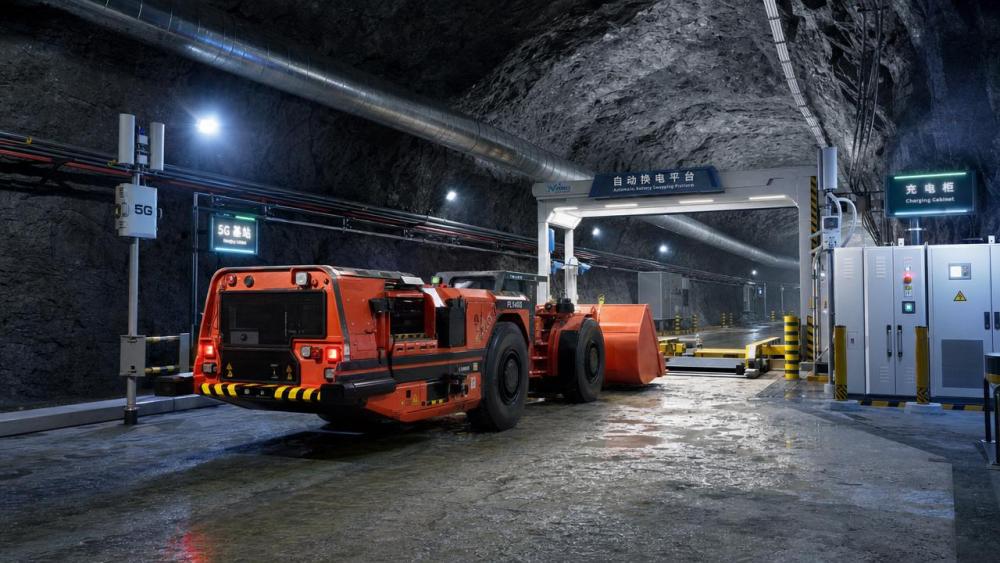
On June 2, 2026, Codelco released its 2026 Underground Electrification Tender Package, creating a notable procurement and compliance signal for the underground mining equipment sector because the tender requires Battery LHDs to meet specific remote-control, battery-safety, and battery-swap interface standards.
What Codelco Confirmed in the 2026 Tender
Codelco, the state-owned copper producer in Chile, formally issued the 2026 Underground Electrification Tender Package on June 2, 2026.
The package invites global suppliers to provide battery-powered underground load-haul-dump machines, commonly referred to as Battery LHDs. The first tender batch covers three major mines: El Teniente, Chuquicamata, and Salvador.
The total stated requirement is 218 units, representing a 300% increase compared with the actual purchase volume in 2025.
The technical tender documentation sets mandatory requirements for support of 5G remote operation, active thermal runaway suppression, and battery-swap interface compatibility with GB/T 34014.
How the Tender Requirements May Affect Industry Roles
Direct trading companies
Direct trading companies may be affected because the tender is open to global participation while also setting mandatory technical requirements. Their business impact is likely to appear in quotation preparation, supplier matching, tender documentation review, and cross-border delivery coordination.
From an industry perspective, these companies need to pay close attention to whether represented products can demonstrate 5G remote-operation capability, battery safety controls, and GB/T 34014 interface compatibility in a way that aligns with the tender language.
Raw material procurement companies
Raw material procurement companies may feel indirect pressure from the increased Battery LHD requirement. A larger tender volume can affect planning for battery-related materials, electrical components, and other inputs used in underground electric equipment.
Analysis shows that the key issue for procurement teams is not only availability, but also traceability and specification consistency. If the final equipment must support active thermal runaway suppression and compatible battery-swap interfaces, upstream purchasing decisions may need closer alignment with technical documentation and supplier qualification requirements.
Processing and manufacturing companies
Processing and manufacturing companies are likely to face the most direct technical impact. The tender requirements relate to machine design, battery integration, control systems, thermal management, and interface standardization.
For manufacturers, the affected business stages may include engineering design, prototype validation, compliance documentation, factory testing, and technical bid alignment. What deserves closer attention is the need to connect equipment performance claims with verifiable test evidence, especially where safety and remote-operation functions are mandatory tender conditions.
Supply chain service providers
Supply chain service providers may be affected through logistics planning, after-sales coordination, spare-parts readiness, and quality traceability. Battery-powered underground equipment may require more careful service coordination than conventional equipment because of battery systems, control software, and safety-related components.
Observably, service providers should monitor how tender requirements translate into delivery schedules, technical documentation packages, maintenance support, and field-response obligations for mines covered in the first batch.
Preparation Points for Companies Reviewing the Package
Align technical bids with mandatory functions
Companies considering participation should compare their Battery LHD specifications against the stated tender requirements: 5G remote operation, active thermal runaway suppression, and compatibility with GB/T 34014 for the battery-swap interface.
This review should be treated as specification alignment rather than a general product introduction. Any gap between tender language and product documentation may become a bidding risk.
Prepare evidence for battery safety and interface compatibility
The requirement for active thermal runaway suppression makes battery safety documentation especially important. Companies may need to organize test reports, validation records, engineering descriptions, and quality-control documents that support their technical claims.
For GB/T 34014 compatibility, suppliers should ensure that interface descriptions, drawings, and related technical files are consistent and clear enough for tender review.
Review supplier qualification and component readiness
Because the first batch covers 218 units across El Teniente, Chuquicamata, and Salvador, suppliers may need to evaluate whether component sourcing, battery-system supply, and assembly capacity can support a tender of this scale.
From a business preparation standpoint, supplier qualification management becomes important where critical parts relate to batteries, remote-control systems, and safety control functions.
Connect delivery planning with after-sales traceability
The tender information highlights equipment requirements, but companies should also prepare for the operational implications of underground deployment. Delivery schedules, service training, spare-parts planning, and traceability records may become important parts of the broader response strategy.
It is more appropriate to understand this as a tender-driven compliance and service-readiness issue, not only as a unit-sales opportunity.
Industry Reading: A Procurement Signal for Mine Electrification
Analysis shows that Codelco's 2026 tender may serve as a procurement signal for underground mine electrification, particularly because it links large-volume demand with specific technical requirements.
From an industry perspective, the inclusion of 5G remote operation suggests that equipment suppliers may need to integrate automation and connectivity capabilities more closely into Battery LHD offerings. This is an analytical observation based on the tender requirements, not a confirmation of future procurement rules across the wider market.
What deserves closer attention is the role of GB/T 34014 compatibility. The reference to a defined battery-swap interface standard may raise the importance of interface standardization, technical documentation, and cross-system compatibility in future tender reviews.
Observably, the 300% increase in stated demand compared with 2025 actual purchases could intensify preparation pressure on manufacturers and supply chain partners. However, the final business impact will still depend on tender execution, supplier participation, technical review outcomes, and subsequent procurement decisions.
Closing View
Codelco's 2026 Underground Electrification Tender Package is significant because it combines a larger Battery LHD requirement with clear technical conditions for remote operation, battery safety, and standardized battery-swap interfaces.
A rational view is that the event may accelerate compliance preparation and technical bid alignment across the underground mining equipment supply chain. It should not be read as a guaranteed market outcome, but it does raise the importance of documented capability, standard compatibility, and service readiness for companies targeting mine electrification projects.
Information Basis and Follow-Up Items
This article is based on the information title, event date, and event summary provided in the input. Specific official source links were not provided in the input and should be verified continuously.
For this type of event, relevant information is commonly checked through official tender documents, company procurement notices, technical specification files, certification documentation, and recognized standards references. No specific source link is asserted here.
Further observation is needed on tender-document updates, detailed certification interpretation, technical review criteria, possible changes to specification wording, supplier feedback, and implementation requirements during the procurement process.
Related News

How to Evaluate European Drill-and-Blast Tunnelling Contractors for Complex Projects
Drill and blast tunnelling contractors Europe: learn how to assess geology expertise, blast control, equipment reliability, safety, and programme resilience for complex projects.

Which Trenchless Construction Technique Fits Your Utility Crossing Conditions?
Trenchless construction techniques compared for utility crossings: choose HDD, microtunnelling, pipe jacking, or auger boring based on ground, accuracy, access, and risk.

What Is Driving Metro Tunnelling Demand Across Southeast Asia’s Major Cities?
Metro tunnelling Southeast Asia is accelerating as major cities tackle congestion, flooding, and connectivity. Explore the market forces, technical risks, and opportunities shaping demand.

Hard Rock Tunnelling in Australia: Selecting Methods for Variable Ground Conditions
Hard rock tunnelling in Australia: compare TBM, drill-and-blast and hybrid methods to manage variable ground, reduce risk and protect project costs.

Hydropower Tunnel Excavation: Selecting Methods for Variable Rock Conditions
Hydropower tunnel excavation methods for variable rock conditions: compare TBM, drill-and-blast, and hybrid strategies to improve safety, progress, and project control.

How to Select Underground Safety Equipment for Tunnelling by Hazard and Work Zone
Underground Safety Equipment for tunnelling: match protection to hazards, work zones, compliance, and emergency needs with this practical selection guide.

EPB or Slurry Shield? Selecting Soft-Ground Tunnelling Equipment by Soil Conditions
Tunnel Excavation Equipment for soft ground: compare EPB and slurry shields by soil, groundwater, settlement risk, and project logistics to choose confidently.
How to Specify TBM Backup System Parts for Reliable Long-Distance Tunnelling
TBM backup system parts: learn how to specify reliable spares for long-distance tunnelling, reduce downtime, ensure compatibility, and speed underground recovery.

How to Size Open Pit Mining Trucks for Haul Distance, Grade, and Payload?
Open Pit Mining Trucks: learn how to match payload, haul distance, grade, road resistance, and loading capacity for safer, lower-cost mine operations.
Related News
- 00
0000-00
How to Evaluate European Drill-and-Blast Tunnelling Contractors for Complex Projects - 00
0000-00
Which Trenchless Construction Technique Fits Your Utility Crossing Conditions? - 00
0000-00
What Is Driving Metro Tunnelling Demand Across Southeast Asia’s Major Cities? - 00
0000-00
Hard Rock Tunnelling in Australia: Selecting Methods for Variable Ground Conditions - 00
0000-00
Hydropower Tunnel Excavation: Selecting Methods for Variable Rock Conditions
Weekly Insights
Stay ahead with our curated technology reports delivered every Monday.