
Codelco Sets New Battery LHD Requirements for 2026-2030





On July 10, 2026, Codelco released its Underground Electrification Roadmap v3.0, tying a five-year Battery LHD procurement plan to a clearer set of technical and certification conditions. Beyond the budget increase to US$180 million, the update matters because it combines purchasing demand with defined requirements for 5G remote operation, UL 2580:2026 battery safety certification, ISO 19453-3:2026 explosion-protection validation, and CE+IECEx documentation for Chinese suppliers using the newly opened direct supply channel. For equipment makers, exporters, certification-related service providers, and procurement teams, this is not only a buying signal but also a compliance filter that can affect bid readiness, document preparation, and delivery planning.
What the roadmap formally sets out
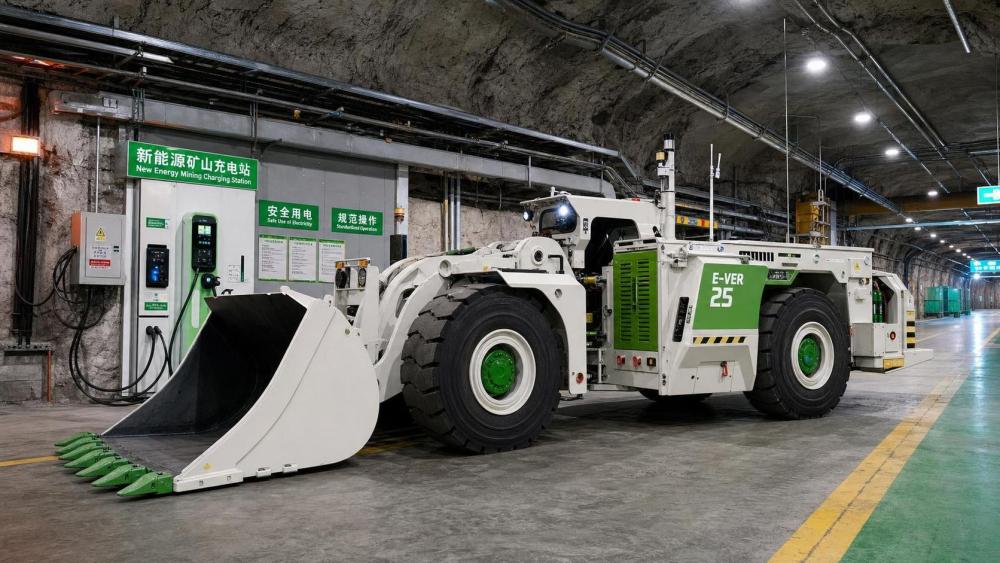
The confirmed information is limited but clear. Codelco announced on July 10, 2026 that it will allocate US$180 million over 2026-2030 for the procurement of Battery LHDs under its Underground Electrification Roadmap v3.0. The roadmap states that eligible equipment must support 5G remote operation, must hold UL 2580:2026 battery safety certification, and must complete ISO 19453-3:2026 explosion-protection validation. The same plan also opens a direct supply route for Chinese suppliers, with the condition that CE and IECEx documentation must be provided.
Where the practical pressure is likely to appear
Technical qualification may move closer to the front of procurement
From an industry perspective, OEMs and system integrators are likely to feel the first impact at the technical bid stage. The stated requirement for 5G remote operation means that product eligibility is being linked not only to core vehicle performance but also to remote-control capability as part of the procurement condition. Analysis shows that suppliers pursuing these orders will need to check whether product specifications, supporting technical files, and bid documents are aligned with that requirement before commercial discussions move forward.
Certification readiness becomes part of market access
For manufacturers, exporters, and certification-related firms, the combination of UL 2580:2026 and ISO 19453-3:2026 raises the compliance threshold around battery safety and explosion-protection validation. What deserves closer attention is that these items are presented as explicit equipment requirements rather than optional supporting credentials. In practice, this may affect testing schedules, conformity file preparation, and the order in which suppliers organize product approval and tender participation.
The direct channel for Chinese suppliers comes with document discipline
The opening of a direct supply route for Chinese suppliers changes the access pathway, but it does not reduce documentary obligations. Observably, the need to provide both CE and IECEx documents may influence export preparation, bid packaging, and pre-delivery compliance review. For trading companies and supply-chain service providers, the operational issue is less about market entry in principle and more about whether documentary sets are complete, current, and consistent across technical and commercial submissions.
After-sales and traceability may face closer scrutiny
Analysis shows that when procurement requirements are framed around safety certification, explosion-protection validation, and remote operating capability, after-sales support providers may also be indirectly affected. The reason is practical: documentation continuity, parts traceability, and technical support records often become more important once equipment is supplied under clearly specified compliance conditions. This should be understood as a likely execution consequence rather than a confirmed rule already published in detail.
What companies should watch before tenders move further
Review certification status against the named standards
Companies targeting this opportunity should first verify whether current products already match the referenced certification and validation requirements, and whether supporting files can be presented in a form suitable for procurement review. Where certification status is incomplete or still in process, firms should treat that as a bid-readiness issue rather than a later administrative step.
Check how remote-operation claims are documented
Because 5G remote operation is named as an equipment requirement, suppliers should pay close attention to how that capability is described in technical literature, test materials, and tender-facing documents. Analysis shows that inconsistency between product claims and formal submission materials could become a practical barrier even before price or delivery terms are assessed.
Prepare CE and IECEx files as a coordinated set
For Chinese suppliers in particular, the direct supply channel should be read together with the CE+IECEx document requirement. What deserves closer attention is not only whether both certifications exist, but whether the document package is internally consistent, current, and ready for procurement review. Export teams, compliance staff, and external certification partners may need to coordinate earlier than usual.
Continue watching for execution language in procurement documents
The roadmap gives a clear direction, but the input does not provide detailed tender rules, review procedures, or document formatting requirements. It is more appropriate to understand this stage as a defined compliance signal with further execution detail still to be watched. Companies should therefore monitor subsequent procurement wording, qualification language, and any clarification affecting submission standards or delivery expectations.
Why this looks like an execution signal, not just a technology statement
Observably, the significance of this update lies in the way procurement spending, technical capability, and certification requirements have been placed in the same policy-facing document. Analysis shows that this is more than a general statement of interest in electrification: it links future purchasing demand to named compliance conditions and an access route for Chinese suppliers. At the same time, it would be premature to treat every downstream requirement as settled, because the available information does not yet define how each condition will be checked in tender execution or post-award delivery.
How the market should read this update for now
The most balanced reading is that Codelco has issued a concrete procurement-and-compliance signal for Battery LHD suppliers over 2026-2030. The immediate industry relevance is not only the US$180 million budget, but the fact that market access appears increasingly tied to remote-operation capability, battery safety certification, explosion-protection validation, and complete cross-border compliance documentation. For now, this is better understood as a rule-linked procurement shift with clear direction but with execution details still requiring close follow-up.
Basis of this article and what still needs verification
This article is based on the user-provided news title, event date, and event summary. For developments of this kind, relevant source types usually include company announcements, regulator releases, trade or customs authority information, industry association notices, standard-setting organization documents, and reporting by established industry media. No specific official source link was provided in the input, so the exact official publication record still needs continued verification. Further observation should focus on later procurement documents, detailed compliance language, certification review practice, supplier response, and evidence of how the roadmap is implemented in actual bidding and delivery processes.
Related News

How to Evaluate European Drill-and-Blast Tunnelling Contractors for Complex Projects
Drill and blast tunnelling contractors Europe: learn how to assess geology expertise, blast control, equipment reliability, safety, and programme resilience for complex projects.

Which Trenchless Construction Technique Fits Your Utility Crossing Conditions?
Trenchless construction techniques compared for utility crossings: choose HDD, microtunnelling, pipe jacking, or auger boring based on ground, accuracy, access, and risk.

What Is Driving Metro Tunnelling Demand Across Southeast Asia’s Major Cities?
Metro tunnelling Southeast Asia is accelerating as major cities tackle congestion, flooding, and connectivity. Explore the market forces, technical risks, and opportunities shaping demand.

Hard Rock Tunnelling in Australia: Selecting Methods for Variable Ground Conditions
Hard rock tunnelling in Australia: compare TBM, drill-and-blast and hybrid methods to manage variable ground, reduce risk and protect project costs.

Hydropower Tunnel Excavation: Selecting Methods for Variable Rock Conditions
Hydropower tunnel excavation methods for variable rock conditions: compare TBM, drill-and-blast, and hybrid strategies to improve safety, progress, and project control.

How to Select Underground Safety Equipment for Tunnelling by Hazard and Work Zone
Underground Safety Equipment for tunnelling: match protection to hazards, work zones, compliance, and emergency needs with this practical selection guide.

EPB or Slurry Shield? Selecting Soft-Ground Tunnelling Equipment by Soil Conditions
Tunnel Excavation Equipment for soft ground: compare EPB and slurry shields by soil, groundwater, settlement risk, and project logistics to choose confidently.

How to Specify TBM Backup System Parts for Reliable Long-Distance Tunnelling
TBM backup system parts: learn how to specify reliable spares for long-distance tunnelling, reduce downtime, ensure compatibility, and speed underground recovery.

How to Size Open Pit Mining Trucks for Haul Distance, Grade, and Payload?
Open Pit Mining Trucks: learn how to match payload, haul distance, grade, road resistance, and loading capacity for safer, lower-cost mine operations.
Related News
- 00
0000-00
How to Evaluate European Drill-and-Blast Tunnelling Contractors for Complex Projects - 00
0000-00
Which Trenchless Construction Technique Fits Your Utility Crossing Conditions? - 00
0000-00
What Is Driving Metro Tunnelling Demand Across Southeast Asia’s Major Cities? - 00
0000-00
Hard Rock Tunnelling in Australia: Selecting Methods for Variable Ground Conditions - 00
0000-00
Hydropower Tunnel Excavation: Selecting Methods for Variable Rock Conditions
Weekly Insights
Stay ahead with our curated technology reports delivered every Monday.