
Ductile Iron Pipe Procurement: Balancing Specification, Lead Time and Cost





A low pipe price can become an expensive purchase if the quoted joint does not match the existing network, the lining is unsuitable for the conveyed water, or a missing fitting delays installation. For water infrastructure projects, procurement should balance three connected questions: what must the pipeline withstand, when must each component arrive, and what will the installed system actually cost?
The practical answer is to establish a technically acceptable baseline before comparing prices, evaluate delivery against construction milestones, and calculate costs beyond the pipe itself. Buyers do not need to perform the engineer’s design work, but they do need to recognize where an incomplete specification transfers risk into manufacturing, installation, or operation.
Start with the project conditions, not the supplier’s catalog
A useful request for quotation begins with an approved design basis. Identify the conveyed fluid, operating conditions, installation environment, and interfaces with existing assets. “Water main pipe” is not a sufficiently precise purchasing description, especially when quotations may come from suppliers working under different standards.
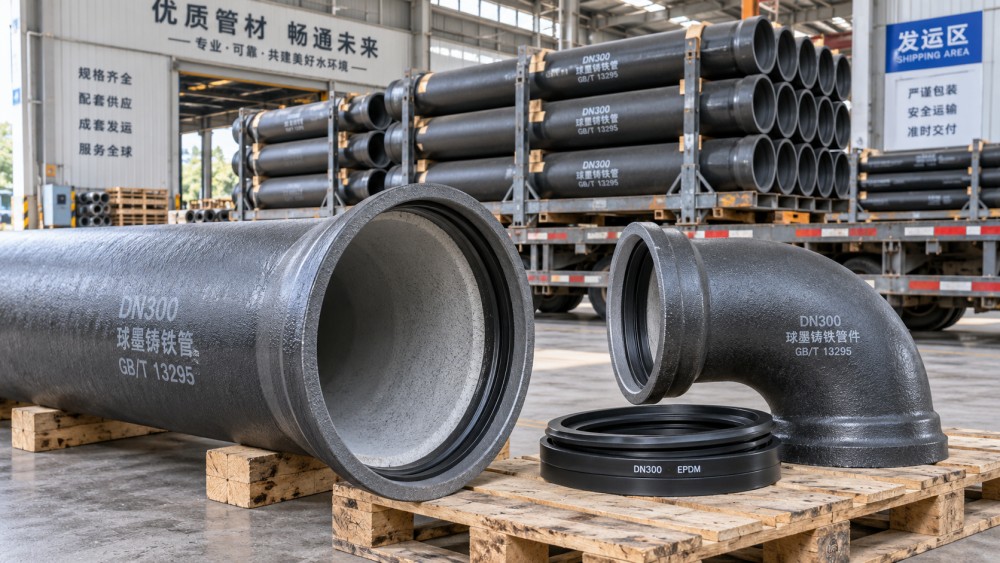
For ductile iron pipe, product information can help buyers identify available dimensions, joint configurations, and protection options. It should then be checked against the project specification. A catalog description is a starting point for comparison, not proof that a particular configuration satisfies the design.
The engineering team should define the following before procurement releases an order:
- Hydraulic conditions: design pressure, relevant transient conditions, and any vacuum conditions requiring assessment.
- Burial conditions: cover depth, external loading, trench configuration, bedding, and soil support assumptions.
- Connection requirements: nominal size, actual mating dimensions, joint type, fittings, valves, and restraint arrangements.
- Exposure conditions: soil corrosivity assessment, groundwater conditions, conveyed-water characteristics, and protection requirements.
- Acceptance requirements: governing standards, required documentation, inspection stages, and permitted deviations.
These are design inputs, not interchangeable commercial preferences. A pressure designation alone does not establish suitability for every buried installation. AWWA C150 addresses thickness design for this pipe material, while AWWA C151 addresses centrifugally cast pipe requirements; buyers should distinguish the design basis from the manufacturing specification. [1]
Resolve standards and interfaces before comparing bids
Water projects may specify an AWWA-based system, ISO 2531, EN 545, or another locally accepted framework. ISO 2531 covers pipes, fittings, accessories, and joints for water applications; EN 545 addresses corresponding requirements and test methods for water pipelines. Procurement documents should identify the applicable standard and edition rather than allowing bidders to select different bases without explanation. [2]
Similar nominal sizes or pressure descriptions should not be treated as evidence of interchangeability. Require dimensional drawings and confirm the proposed pipe, fittings, and accessories against the project’s connection schedule. Where a supplier proposes an alternative standard, obtain engineering approval of the complete arrangement, not just the straight pipe.
Joint selection deserves particular attention. Push-on connections, mechanical joints, flanged connections, and proprietary restrained systems create different purchasing and installation requirements. AWWA C111 covers rubber-gasket joints within its scope, but the buyer must still confirm the exact components, dimensions, and approved assembly details for the proposed system. [3]
The commercial schedule should identify who supplies gaskets, bolts, lubricants, locking components, and special adapters. For proprietary restraint, request confirmation of approved pipe and fitting combinations and any restrictions on field cutting or assembly. Do not assume that a standard unrestrained joint supplies the axial restraint required by the design.
A qualification meeting before award is often more useful than a lengthy exchange after production starts. Put unresolved interfaces on a drawing or deviation register, assign an owner, and require closure before the affected items are manufactured.
Specify protection and drinking-water requirements separately
Internal lining, external coating, and supplementary corrosion protection address different exposures. Procurement should describe each separately so that bidders do not substitute a general statement such as “standard coating” for an identifiable system.
AWWA C104 addresses cement-mortar lining, while AWWA C105 addresses polyethylene encasement for qualifying pipe systems. These standards provide specification references; they do not replace a project-specific assessment of conveyed-water conditions or the buried environment. The protection arrangement should follow the engineer’s requirements and the applicable installation guidance. [4]
Request the lining and coating descriptions, applicable standards, inspection criteria, and approved repair procedures. Clarify how cut ends and handling damage will be addressed. If an alternative protection system is proposed, ask engineering to review its suitability rather than accepting it solely because the supplier describes it as an upgrade.
For potable-water applications, distinguish material health-effects requirements from mechanical performance. NSF/ANSI/CAN 61 addresses drinking-water system component health effects; NSF/ANSI/CAN 372 addresses lead content. Neither designation, by itself, establishes that the pipe meets the project’s structural or pressure requirements. Whether either is required depends on the jurisdiction and contract. [5]
Where certification is specified, verify that the evidence covers the offered product, manufacturing location, size range, and relevant water-contact components. A certificate for a different product family or an unrelated factory is not adequate evidence. Resolve any uncertainty before award, when clarification is less disruptive than replacing delivered material.
Build a delivery schedule around installation readiness
“Lead time” can refer to several different events: production completion, readiness for inspection, dispatch, arrival at a port, or delivery to the jobsite. A quotation is difficult to evaluate unless it states which event the promised date represents.
Ask each bidder to separate technical approval, production, inspection, document release, and transport. Identify when the delivery clock starts and which buyer approvals are prerequisites. Special fittings, restrained components, nonstandard protection, or project-specific tests may follow a different schedule from straight pipe.
The construction sequence should drive shipment priorities. An early delivery of standard lengths has limited value if the valves, bends, or connection assemblies needed for the first installation section arrive later. Consider ordering and tracking complete installation packages rather than treating all tonnage as equally useful.
If acceleration is necessary, target the actual constraint. Earlier drawing approval may be more effective than expedited transport. Splitting shipments can support construction, but it may increase freight, handling, and storage costs. Agree on those consequences before accepting a revised schedule.
Compare the cost of an accepted installation
A bid comparison should begin by normalizing scope. Confirm that each offer includes the same lengths, quantities, accessories, protection, inspection obligations, and delivery boundary. Separate optional items and exclusions so that a low headline price does not conceal costs assigned to the buyer.
A practical evaluated-cost model includes quoted material, transport, import charges where applicable, unloading, storage, installation-related differences, inspection, and identifiable schedule exposure. Keep recurring operating costs separate unless the engineering team has supplied a defensible basis for comparing them.
Installation consequences need contractor input. A lower-priced joint arrangement may require different tools or assembly procedures. A change in supplied lengths may alter the number of joints, field cuts, or handling operations. None of these differences automatically makes an offer worse, but they should be priced against the actual site conditions.
Include wastage and replacement planning explicitly. Ask how damaged lengths, unsuitable cut pieces, or shortages would be replaced and whether replacement items would come from stock or require a new production run. An inexpensive initial order may be less attractive if a minor shortage creates a long interruption.
Separate confirmed costs from assumptions. Freight can be supported by a quotation; disruption exposure may require scenarios based on the construction program. Showing those assumptions is more credible than adding an unexplained contingency percentage to every bid.
Make quality evidence traceable to the shipment
Technical compliance should be demonstrated through an agreed inspection and test plan. Identify the required records, applicable acceptance criteria, review points, and any witness or hold points. Testing and inspection obligations should reference the governing product standard and approved project specification, rather than an unspecified promise of “full testing.” [1][2]
Request a document schedule before production. Depending on the specification, it may include manufacturing records, material or mechanical test results, pressure-test records, dimensional inspection reports, and lining or coating inspection records. The supplier should explain how those records connect to the markings and shipment identification on delivered products.
A broad factory certificate may be difficult to use if the buyer cannot identify which shipment it covers. Agree on the traceability method and document format early. If independent inspection is required, define its scope and timing; an inspector cannot compensate for missing acceptance criteria.
Receiving inspection should reconcile quantities and identification, check for visible transport damage, and confirm that required accessories and records arrived. Establish a process for quarantining questionable items. Supplier-approved handling, storage, and repair instructions should be available to the site team before unloading begins.
Award on resolved risk, then control changes
The final evaluation should distinguish mandatory compliance from commercial preference. An offer that fails an essential interface or documentation requirement should not regain acceptability merely by scoring well on price. Record deviations, engineering decisions, and commercial adjustments in a single evaluation file.
Before placing the order, close the practical questions: which configuration is approved, what each delivery includes, when it must reach site, how acceptance will be demonstrated, and who bears the cost of nonconformance. The purchase order should also define approval requirements for substitutions and the procedure for resolving rejected material.
After award, track changes against both cost and schedule. A revised fitting, protection system, or delivery sequence can affect more than the item being changed. The strongest buying decision is the lowest evaluated cost among technically acceptable, realistically deliverable offers—with the assumptions visible and the remaining risks assigned.
Sources
[1] American Water Works Association: ANSI/AWWA C150/A21.50, Thickness Design of Ductile-Iron Pipe; ANSI/AWWA C151/A21.51, Ductile-Iron Pipe, Centrifugally Cast. Apply the editions specified by the project.
[2] International Organization for Standardization: ISO 2531, Ductile iron pipes, fittings, accessories and their joints for water applications. European Committee for Standardization: EN 545, Ductile iron pipes, fittings, accessories and their joints for water pipelines—Requirements and test methods.
[3] American Water Works Association: ANSI/AWWA C111/A21.11, Rubber-Gasket Joints for Ductile-Iron Pressure Pipe and Fittings.
[4] American Water Works Association: ANSI/AWWA C104/A21.4, Cement-Mortar Lining for Ductile-Iron Pipe and Fittings; ANSI/AWWA C105/A21.5, Polyethylene Encasement for Ductile-Iron Pipe Systems.
[5] NSF: NSF/ANSI/CAN 61, Drinking Water System Components—Health Effects; NSF/ANSI/CAN 372, Drinking Water System Components—Lead Content.
Related News
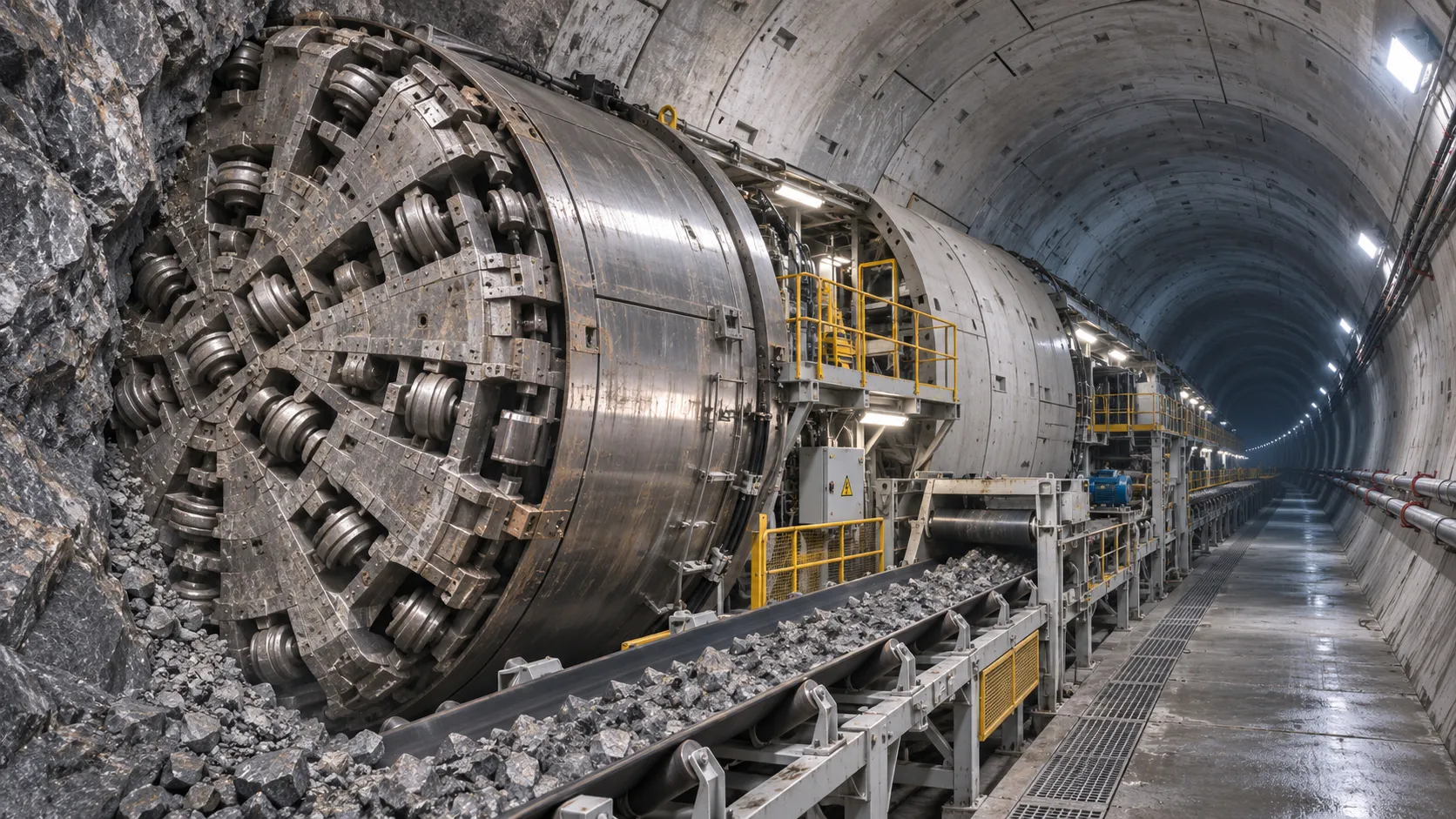
How TBM Excavation Works in Rock and Soft Ground: A Practical Guide
TBM Excavation in rock and soft ground explained: compare machine types, ground support, spoil removal, and the factors that guide smarter project planning.
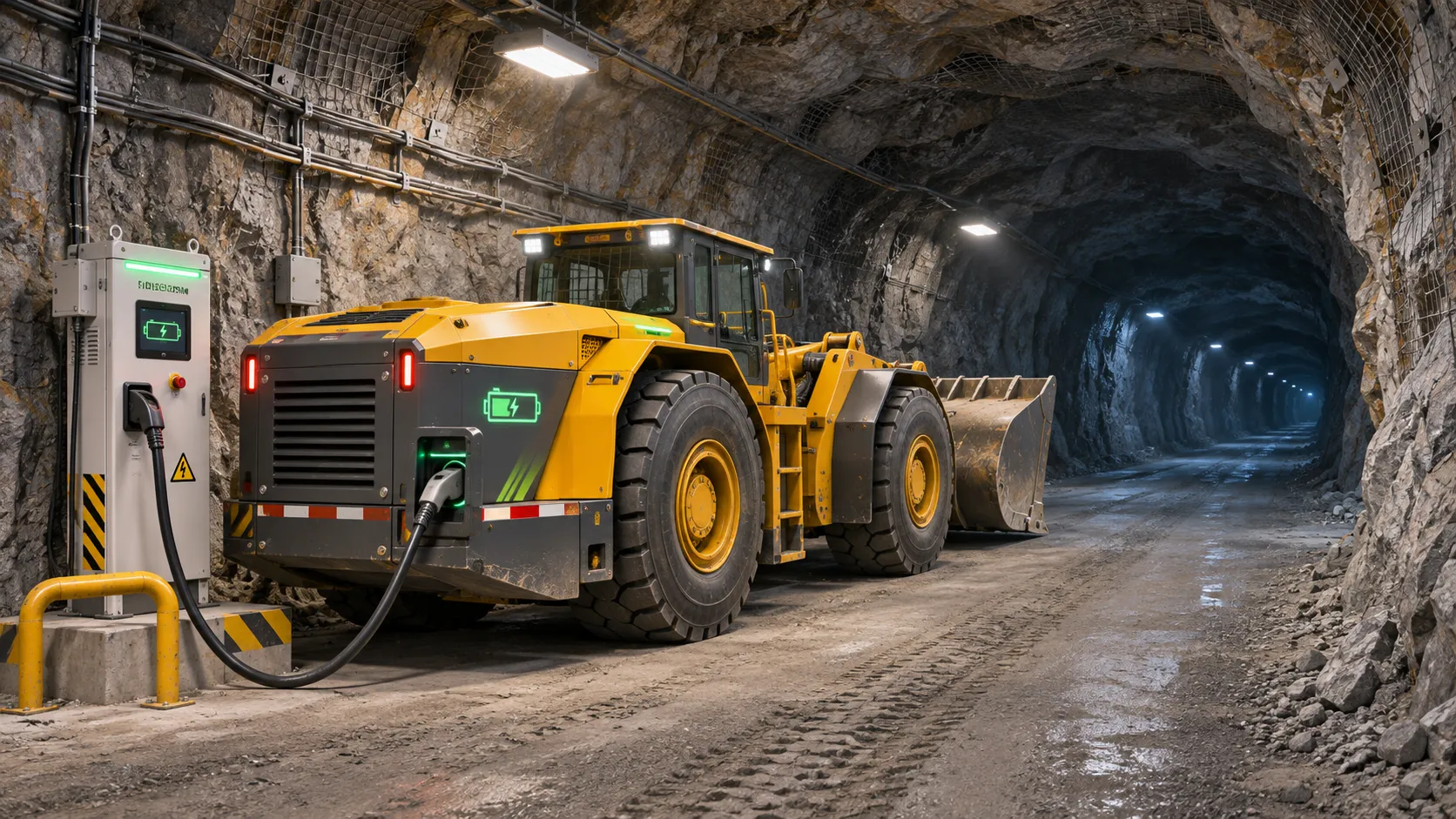
Choosing a Zero-Emission Underground Equipment Supplier: What to Check
Choosing a zero emission underground equipment supplier? Compare duty-cycle performance, charging, safety, total costs and support before you commit.
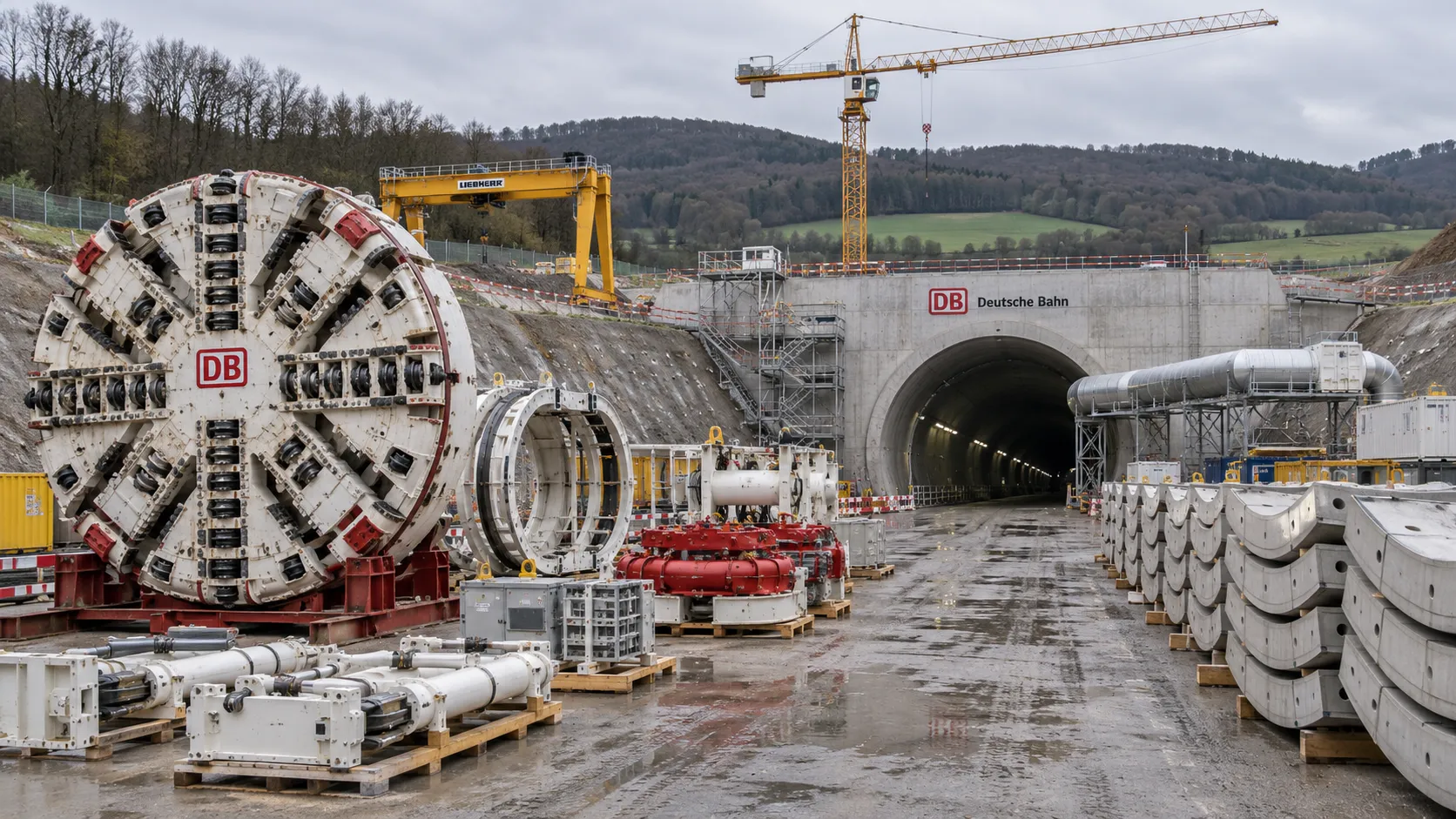
Construction Starts on Germany's Pfaffensteig Rail Tunnel, With Two TBMs Planned
Pfaffensteig rail tunnel construction is underway in Germany. Discover how two planned TBMs will support the 11-kilometre project near Stuttgart.
How Real-Time Underground Mapping Systems Work in Tunneling
Discover how real-time underground mapping systems guide tunneling teams, integrate sensor data, and support confident decisions with verified accuracy.
First Mechanized Tunnel Crossing Beneath the Panama Canal Completed
Panama Canal tunnel crossing: Explore the reported Metro Line 3 milestone and what it could mean for future underwater tunneling projects.
Underground Utility Construction Equipment: Choosing by Ground Conditions
Choose underground utility construction equipment with confidence. Compare trenching, HDD, microtunnelling and TBMs by ground conditions, risk and cost.
China Sets Tunnel Boring Machine Export Controls as India Pushes Local Production
China tunnel boring machine export controls could reshape procurement as India pushes local production. Explore potential supply and project impacts.
Choosing a Trenchless Pipeline Installation Contractor: Key Qualifications
Choose a trenchless pipeline installation contractor with confidence. Learn how to assess experience, equipment, safety, costs, and project risks before you hire.
China's 70% TBM Share and Export Controls Challenge India's Local Production
China's TBM export controls could challenge India's local production and infrastructure sourcing. Explore the potential risks and procurement options.
Related News
- 00
0000-00
How TBM Excavation Works in Rock and Soft Ground: A Practical Guide - 00
0000-00
Choosing a Zero-Emission Underground Equipment Supplier: What to Check - 00
0000-00
Construction Starts on Germany's Pfaffensteig Rail Tunnel, With Two TBMs Planned - 00
0000-00
How Real-Time Underground Mapping Systems Work in Tunneling - 00
0000-00
First Mechanized Tunnel Crossing Beneath the Panama Canal Completed
Weekly Insights
Stay ahead with our curated technology reports delivered every Monday.