
How copper mine haulage systems handle changing ore grades





Grade Variability Turns Haulage Into a Control Problem
Copper mine haulage systems are often designed around tonnes moved per hour, cycle time, road condition, and equipment availability. Those measures remain important, but they are incomplete when ore grades shift across benches, drawpoints, stockpiles, or development headings. A haulage fleet can meet its tonnage target and still reduce metal output if material with different copper content is mixed, misrouted, delayed, or delivered to the wrong destination.
For project managers, the practical question is not whether the haulage system can physically move changing grades. Trucks, loaders, conveyors, and underground LHDs can all move the material. The question is whether the mine can preserve the value information attached to each load while maintaining production flow. The better systems treat grade as an operating variable that influences dispatch, destination, stockpile strategy, payload targets, and shift priorities.
This becomes especially important where the difference between ore and waste is narrow, where multiple ore types require different processing responses, or where the concentrator depends on a relatively stable feed blend. In those conditions, a haulage decision made at the loading point can affect recovery, concentrate quality, plant stability, and cost per pound of contained copper many hours later.
The Haulage System Needs a Grade Model, Not Just a Production Model
Ore grades change for several reasons. The geological model may be refined as drilling advances. Blast movement may shift material boundaries in an open pit. Underground development can expose variable mineralisation faster than planned. Short-term grade control sampling may identify local high-grade pockets, marginal ore, or material carrying undesirable contaminants. Even when the long-term resource model is sound, the operating model must deal with uncertainty at the scale of a truck load or loader bucket.
A conventional production model asks whether enough material is available to keep the fleet and plant busy. A grade-aware model adds further questions: What is the expected copper grade? How confident is that estimate? Does the ore need to be separated from another lithology or sulphide type? Is the material suitable for direct mill feed, low-grade stockpiling, blending, heap leach routing, or waste placement? Can it remain in a stockpile without losing traceability?
These decisions should be made before a truck is released from the loading unit wherever possible. Sending every potentially economic load toward a common crusher or run-of-mine pad may appear operationally simple, but it can remove the mine’s ability to correct for grade variation later. Once material is mixed, recovery options narrow and reconciliation becomes less reliable.
A workable approach links four information layers:
- Short-term geology and grade control data that defines material boundaries and confidence levels.
- Loading-point identification, such as bench, block, drawpoint, stope, or heading location.
- Fleet-management data showing the truck or LHD, payload, route, queue time, and destination.
- Plant and stockpile constraints, including feed requirements, crusher capacity, available storage, and blending rules.
The system does not need perfect grade knowledge to add value. It needs enough confidence to distinguish loads that should be handled differently. A dispatch platform that receives uncertain or outdated material codes may optimize travel time while making poor value decisions. Conversely, highly detailed grade data is of limited use if operators cannot apply it consistently at the face, loading point, or truck assignment screen.
Destination Rules Should Reflect Metallurgy and Timing
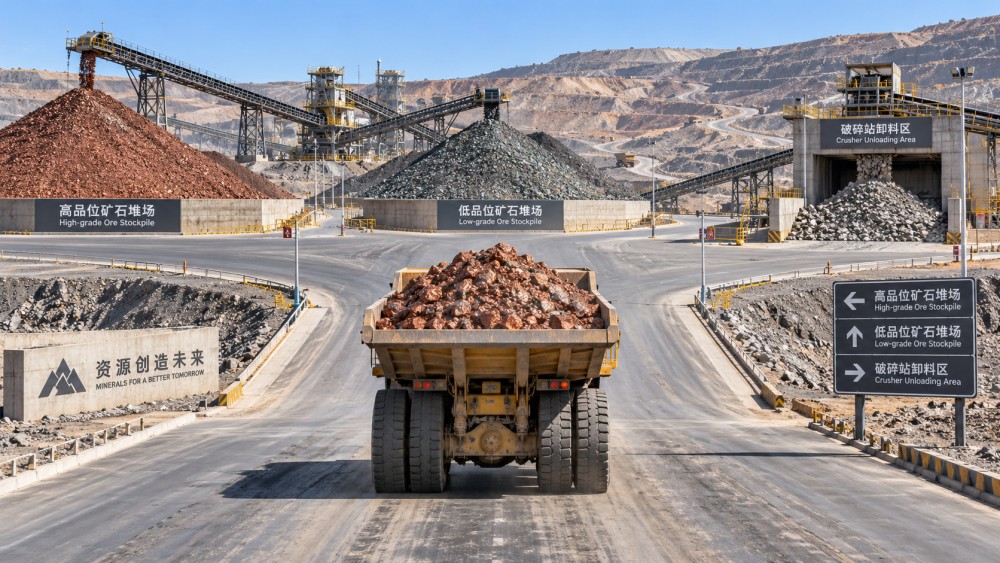
The obvious response to a higher-grade block is to move it to the plant as quickly as possible. That is sometimes correct, but it is not a universal rule. A concentrator often performs best within an operating envelope rather than at the highest possible feed grade. Sudden swings in head grade, mineralogy, hardness, moisture, clay content, or deleterious elements can upset crushing, grinding, flotation, and downstream concentrate handling.
For that reason, copper mine haulage systems often need several destinations rather than a simple ore-versus-waste split. Typical routing choices may include direct crusher feed, a high-grade stockpile, a lower-grade stockpile, a blending pad, a leach facility where relevant, backfill-related handling, or a waste dump. The appropriate set depends on the mine plan and processing route, but the operating principle is consistent: retain optionality until the plant can use the material effectively.
High-grade ore may be stockpiled when the mill is already receiving sufficient metal content, when another ore type is required to balance the blend, or when the plant is constrained by hardness rather than grade. Low-grade ore may be preserved rather than discarded when copper prices, recovery expectations, and remaining mine life support later treatment. Material near the economic cutoff requires particularly disciplined routing because repeated rehandling can consume the margin that justified retaining it.
Project teams should define these rules as operational constraints, not as informal preferences. A dispatch instruction such as “send good ore to the crusher” is too vague when several material classes are present. Better rules specify the material code, grade range, confidence category, destination priority, stockpile capacity limit, and escalation path when a destination becomes unavailable.
Payload Targets Can Change When Grade Changes
Payload management is usually framed as an equipment reliability issue: underloading wastes truck capacity, while sustained overload increases tyre, frame, suspension, braking, and road-maintenance exposure. Grade variability adds another layer. A truck carrying high-grade ore is not automatically more valuable than a fully loaded truck carrying lower-grade ore, because the decision must account for mill feed requirements, available processing capacity, and the value of preserving a planned blend.
Still, accurate payload measurement becomes more useful when the mine tracks contained metal movement. A dispatch system that records only truck counts can create misleading production signals. Ten loads from different blocks may represent very different copper quantities even if truck payloads are similar. Pairing payload data with material classification allows the operation to estimate tonnes and contained copper moving through each part of the system.
This should not be confused with treating every payload estimate as a final grade accounting figure. Grade estimates will be updated through sampling, belt scales, plant reconciliation, and stockpile surveys. The value of fleet data is operational: it helps supervisors see whether a planned blend is being achieved, whether high-grade material is accumulating unexpectedly, and whether low-grade material is consuming scarce haulage capacity.
For underground operations, the issue can be harder because LHD bucket loads may be sourced from variable drawpoints before being dumped into trucks, ore passes, or crushing stations. Remote operation and automation improve repeatability, but they do not remove the need for accurate drawpoint identification and material coding. If several drawpoints feed the same ore pass without control, the system may gain cycle efficiency while losing grade separation.
Dispatch Logic Must Be Able to Trade Distance Against Value
Most fleet-management systems can assign equipment according to queue length, travel distance, destination availability, and equipment status. These are useful inputs, but grade-sensitive haulage requires the dispatch logic to make controlled trade-offs. A nearby dump point may reduce cycle time, while a more distant stockpile may protect feed quality or prevent high-value ore from being diluted. The best route for the fleet is therefore not always the shortest route for an individual truck.
That trade-off should be explicit. Project managers should ask whether the dispatch configuration can apply priorities by material class and whether it can change those priorities during a shift without creating confusion for operators. It should also be clear who owns the decision. Geology may define the material classification, mine operations may execute hauling, and metallurgy may define plant-feed constraints. Without an agreed control process, dispatch personnel can be left to resolve competing production demands in real time.
A practical hierarchy often starts with safety and physical constraints: road access, traffic separation, dump stability, crusher availability, ventilation limits underground, and fuel or charging requirements. The next layer considers plant demand and material value. Only after those conditions are met should the system optimize travel time and truck utilization. This order avoids a common mistake: allowing a narrow efficiency metric to override the reason the material was separated in the first place.
Electrified fleets require the same grade-aware logic, with an additional energy constraint. A battery-electric truck or LHD may have charging or battery-swapping windows that influence assignment. Long uphill routes, regenerative downhill segments, ambient conditions, and queue time can change energy use materially. The appropriate response is not to reserve electric equipment only for low-value or short-haul material. It is to include energy state and charging infrastructure in the dispatch model alongside material priority, so grade segregation does not collapse whenever equipment rotates for charging.
Stockpiles Are Useful Only When Their Identity Survives
Stockpiling is often presented as the answer to grade variability. It can be, but only if the mine can maintain a defensible record of what entered the pile, where it was placed, and how it will be reclaimed. A stockpile that mixes high-grade, low-grade, variable mineralogy, and uncertain material may provide physical buffering while creating a major reconciliation problem.
Placement discipline matters. The operation needs practical rules for dump locations, lift sequence, dozer movement, reclaim faces, and survey updates. The rules do not need to turn a stockpile into a laboratory-grade separation system. They do need to prevent uncontrolled mixing that makes later blending impossible. The more material classes a mine tries to preserve, the more space, supervision, and data discipline it needs.
There is also a cost boundary. Holding ore has an opportunity cost, ties up working capacity, and can introduce rehandle requirements. A project manager should therefore test whether proposed stockpile categories will be used often enough to justify their complexity. Too few categories can destroy useful value distinctions; too many can overwhelm operators, consume pad space, and create a classification system that cannot be executed reliably.
Where Grade-Aware Haulage Projects Commonly Fail
The most frequent weakness is assuming that technology will correct weak material-control practices. GPS positioning, onboard payload systems, autonomous haulage, machine guidance, and digital dispatch tools can all improve decision speed and traceability. They cannot compensate for inconsistent block coding, delayed grade-control updates, unclear destination ownership, or stockpiles managed outside the digital record.
Another failure is optimizing on a single production indicator. Tonnes per operating hour, truck utilization, and average cycle time can all improve while metal delivery to the plant becomes less stable. Those measures should remain on the dashboard, but they need to sit beside material-routing compliance, planned-versus-actual blend performance, stockpile inventory confidence, rehandle exposure, and the volume of material moved under temporary or manual classifications.
Manual overrides deserve attention. Operations need them when roads close, crushers trip, geotechnical conditions change, or a loading area becomes unavailable. The risk arises when temporary reroutes are not captured and reconciled. A disciplined system records the override, its reason, the affected loads, and the intended correction. This is especially important during shift changes, where local knowledge can otherwise disappear between crews.
What to Define Before Expanding or Upgrading the Fleet
A fleet expansion or automation project should begin with the material-flow problem rather than a truck-count calculation alone. The initial design review should establish the grade classes that must be protected, the destinations available to each class, expected stockpile roles, the maximum practical diversion distance, and the minimum information required before a load leaves the source area.
It should also test how the plan behaves under disruption. If the primary crusher is unavailable, where does each ore class go? If a high-grade stockpile reaches its operational limit, can the mine preserve segregation elsewhere? If grade-control data changes mid-shift, can dispatch update route rules without stopping production? If autonomous or remote equipment loses communications, what is the controlled fallback process?
Copper mine haulage systems handle changing ore grades well when they are designed as part of the mine’s value chain, not as a separate transport function. The strongest arrangement may move slightly fewer tonnes on some shifts, travel farther for selected loads, or hold ore temporarily instead of feeding it immediately. Those choices are justified when they protect feed quality, reduce avoidable rehandling, and give the operation a clearer view of where its copper-bearing material is moving.
Related News
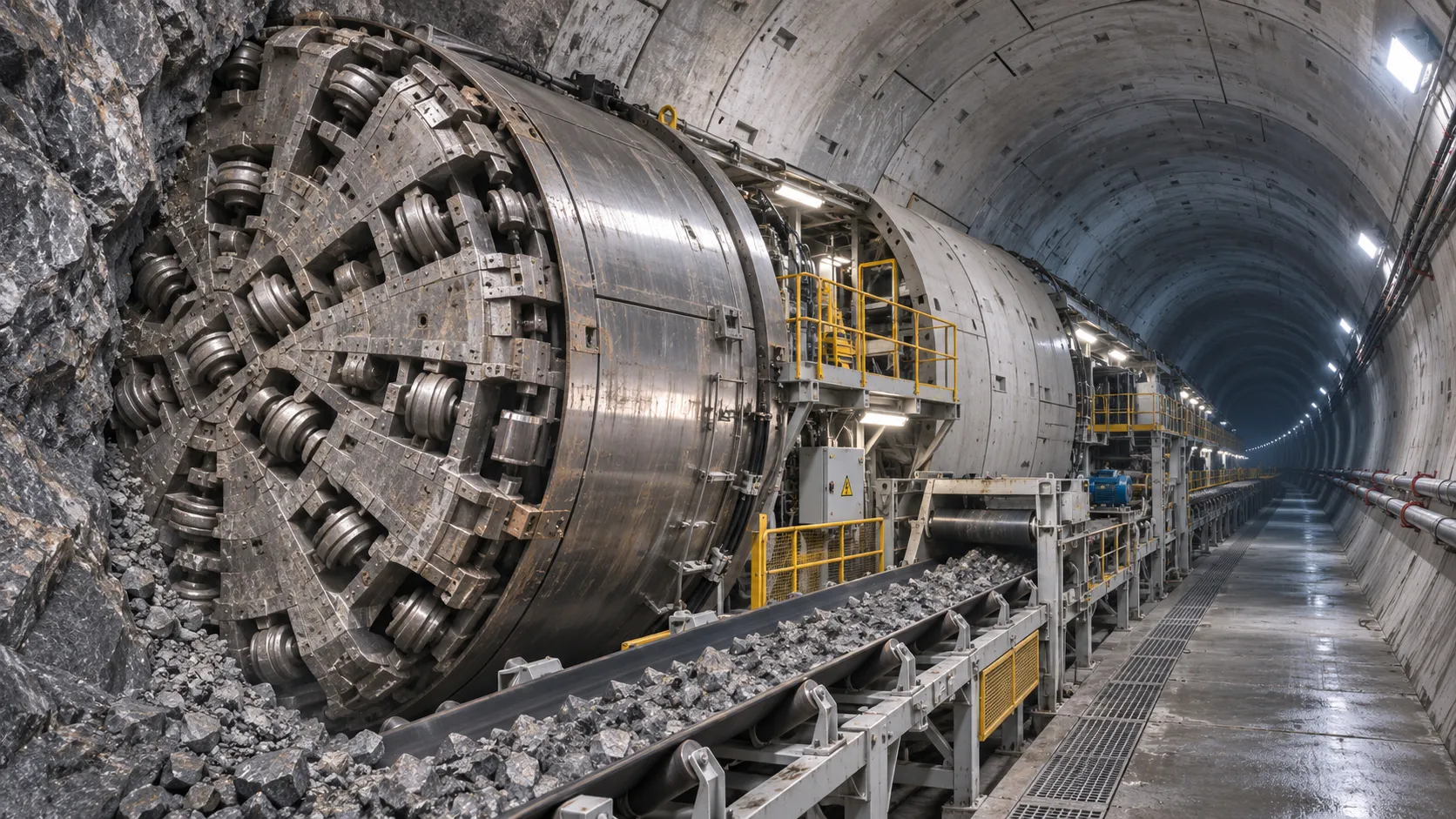
How TBM Excavation Works in Rock and Soft Ground: A Practical Guide
TBM Excavation in rock and soft ground explained: compare machine types, ground support, spoil removal, and the factors that guide smarter project planning.
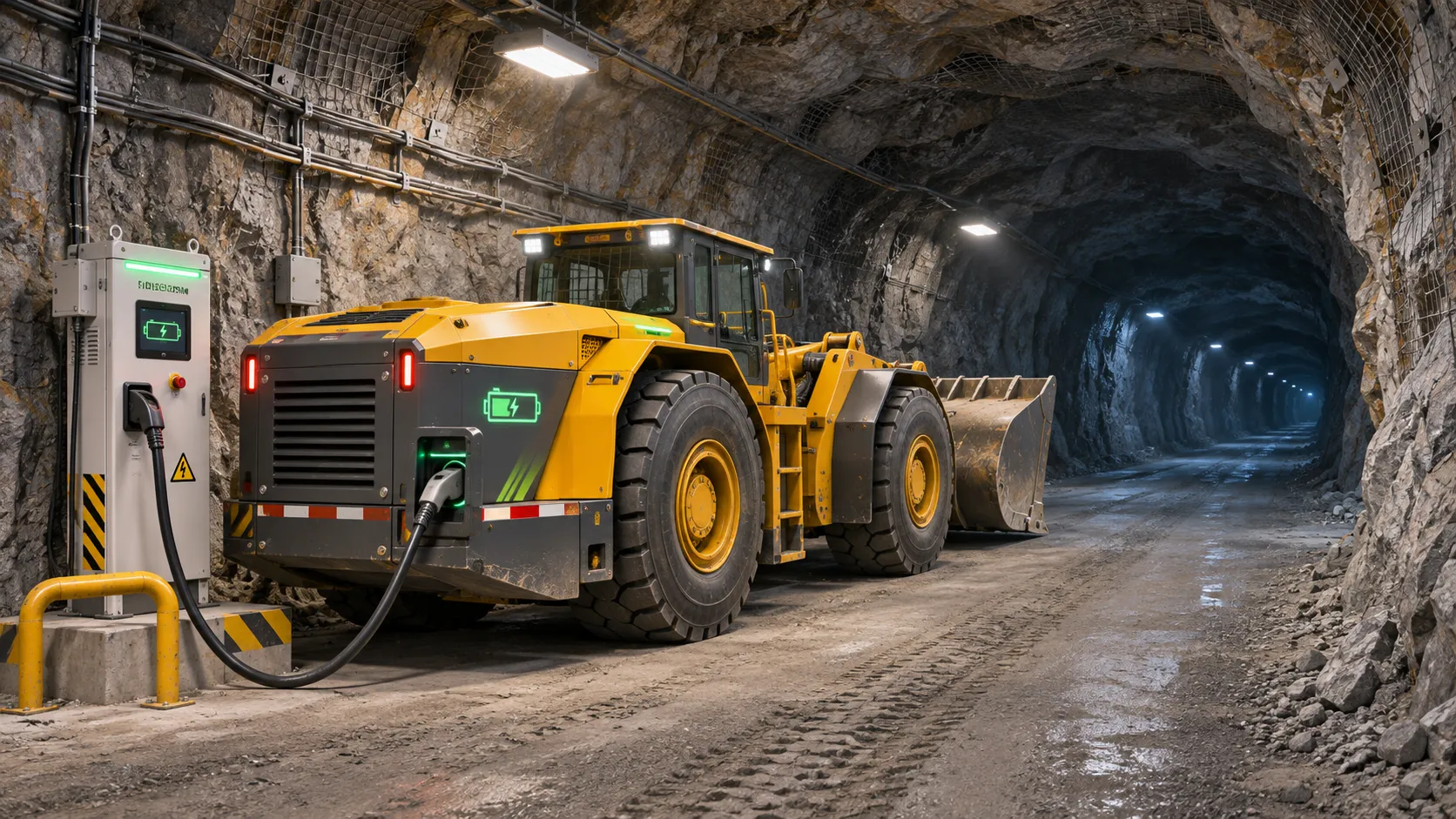
Choosing a Zero-Emission Underground Equipment Supplier: What to Check
Choosing a zero emission underground equipment supplier? Compare duty-cycle performance, charging, safety, total costs and support before you commit.
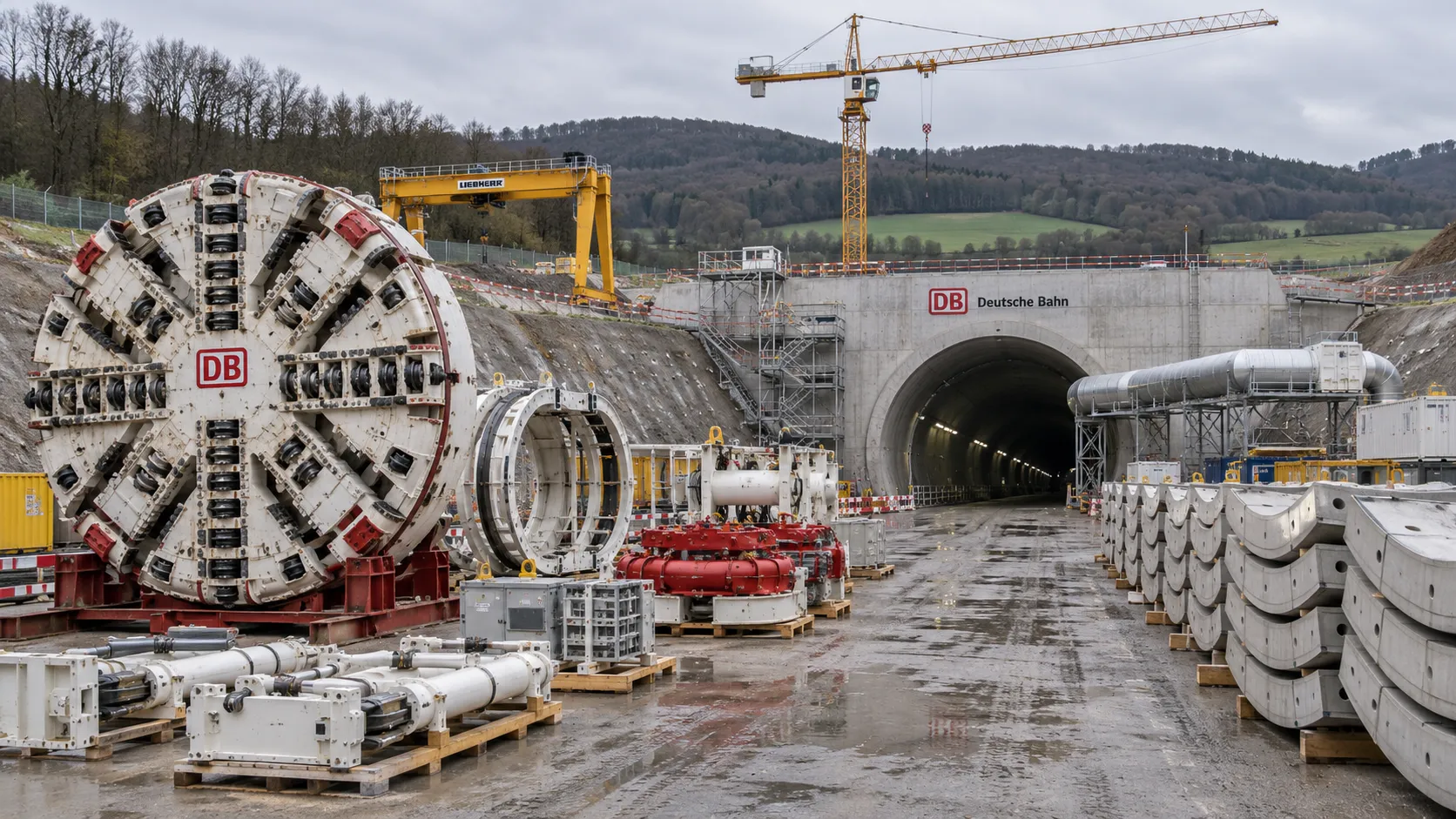
Construction Starts on Germany's Pfaffensteig Rail Tunnel, With Two TBMs Planned
Pfaffensteig rail tunnel construction is underway in Germany. Discover how two planned TBMs will support the 11-kilometre project near Stuttgart.
How Real-Time Underground Mapping Systems Work in Tunneling
Discover how real-time underground mapping systems guide tunneling teams, integrate sensor data, and support confident decisions with verified accuracy.
First Mechanized Tunnel Crossing Beneath the Panama Canal Completed
Panama Canal tunnel crossing: Explore the reported Metro Line 3 milestone and what it could mean for future underwater tunneling projects.
Underground Utility Construction Equipment: Choosing by Ground Conditions
Choose underground utility construction equipment with confidence. Compare trenching, HDD, microtunnelling and TBMs by ground conditions, risk and cost.
China Sets Tunnel Boring Machine Export Controls as India Pushes Local Production
China tunnel boring machine export controls could reshape procurement as India pushes local production. Explore potential supply and project impacts.
Choosing a Trenchless Pipeline Installation Contractor: Key Qualifications
Choose a trenchless pipeline installation contractor with confidence. Learn how to assess experience, equipment, safety, costs, and project risks before you hire.
China's 70% TBM Share and Export Controls Challenge India's Local Production
China's TBM export controls could challenge India's local production and infrastructure sourcing. Explore the potential risks and procurement options.
Related News
- 00
0000-00
How TBM Excavation Works in Rock and Soft Ground: A Practical Guide - 00
0000-00
Choosing a Zero-Emission Underground Equipment Supplier: What to Check - 00
0000-00
Construction Starts on Germany's Pfaffensteig Rail Tunnel, With Two TBMs Planned - 00
0000-00
How Real-Time Underground Mapping Systems Work in Tunneling - 00
0000-00
First Mechanized Tunnel Crossing Beneath the Panama Canal Completed
Weekly Insights
Stay ahead with our curated technology reports delivered every Monday.