
Global Mine Permitting Delays Ease, but the United States Still Lags





Mine permitting delays have eased overall worldwide, according to an industry survey, but the United States remains a notable exception: nearly half of industry professionals surveyed report delays of more than a year there. The timing of the event is not specified in the supplied information, and no particular policy or legal change is identified. The reported difference in the operation of permitting systems matters to mine developers and equipment suppliers because approval timing can affect when new mines and expansions proceed, shaping regional demand for mining trucks, load-haul-dump machines (LHDs), and drills.
What the survey says about permitting delays
The supplied information describes an overall easing of mine permitting delays globally. It also identifies the United States as a significant exception, with nearly half of industry professionals reporting that permitting delays there exceed one year.
The same information states that differences in the regulatory environment affect the pace of new mine development and expansion plans. It identifies potential structural effects on regional demand for mining equipment, including mining trucks, LHDs, and drills. The event date is not specified.
Beyond those points, the supplied information does not identify the survey organization, its sample size, the period covered, or the jurisdictions included in the global comparison. It also does not describe a specific amendment to a law, regulation, or permitting procedure.

How approval timing could reshape equipment orders
Developers face different planning horizons
Analysis suggests that the principal business effect is the gap between a planned project and the point at which its equipment needs become firm. For a new mine or an expansion awaiting approval, a developer may be able to define an initial equipment list while remaining uncertain about when it can commit to purchase, accept delivery, or begin using the machines.
Where delays have eased, a developer might gain greater confidence in its project schedule. Where an approval remains outstanding for longer, the same developer may need to revisit equipment quantities and delivery dates as the project timetable changes. Neither outcome can be assumed for an individual project: the survey describes reported delays, not the status of every application.
For procurement teams, the practical question is whether a proposed order is linked to an approval milestone. Analysis suggests that a purchase plan based only on an expected start date may become difficult to execute if that date moves. A plan that identifies the decisions dependent on the permit may make the exposure easier to assess.
Manufacturers and distributors must assess demand by project stage
For suppliers of trucks, LHDs, and drills, an inquiry from a mine developer may not translate into a near-term order. A permit delay could lengthen the interval between a technical discussion and a binding purchase, while an approval could bring previously planned procurement closer. These are possible effects of approval timing, not outcomes established by the supplied survey.
From an industry perspective, the distinction matters when manufacturers assess production capacity and when distributors decide how much equipment to hold or reserve. If approval schedules differ across markets, suppliers may see demand move between regions or arrive at different times than expected. The direction and scale of any such shift remain unverified in the information provided.
Suppliers may therefore find it useful to distinguish early project interest from demand supported by a clearer approval and procurement schedule. They may also want to check whether the requested equipment is intended for a new mine or an expansion, since the timing of each purchase can depend on the relevant project decision.
Delivery and service plans may need to move with the permit
Equipment delivery involves more than a shipment date. Analysis suggests that installation, commissioning, operator preparation, spare-parts availability, and service arrangements may also need to be rescheduled if a mine project is delayed. These activities can involve equipment suppliers, contractors, distributors, and the buyer, so uncertainty at the approval stage may pass through several commercial relationships.
A delayed project does not necessarily mean that equipment demand disappears. It may instead shift the timing of delivery or lead the buyer to reassess its specification. Equally, a shorter approval process does not establish that a project will immediately place an order. Participants would need project-specific confirmation before treating either possibility as a committed schedule.
Keeping procurement decisions aligned with permits
Check the approval status behind each schedule
Businesses assessing a mine opportunity can ask the project owner which approvals remain outstanding, which project decisions depend on them, and when the next review of the schedule is expected. These are suggested checks, not requirements established by the survey. Their value is to make clear which delivery dates are confirmed and which are planning assumptions.
Where available, relevant official communications and project documents can be reviewed alongside the buyer's procurement timetable. The supplied information does not establish a common approval procedure or a uniform delay across projects, so companies should avoid applying the reported survey result as a fixed waiting period.
Review bids and contracts for timing exposure
Equipment buyers and sellers may want to examine whether quotations, bid documents, and proposed contracts account for changes in project timing. Areas for discussion could include how long an offer remains valid, when an order becomes binding, how delivery dates are agreed, and what happens if the buyer asks to defer acceptance.
These points are commercial considerations, not newly announced regulatory obligations. Their relevance will depend on the agreement and the project. A clear record of assumptions may help both sides understand which schedule changes require further negotiation, particularly when a permit decision remains uncertain.
Keep technical and delivery information current
Longer intervals between initial planning and purchase can make it useful to revisit equipment specifications before a final commitment. A buyer may need to confirm that the proposed truck, LHD, or drill still matches the project's intended operating conditions and latest procurement documents. Suppliers, in turn, may want to verify that the configuration and delivery schedule they have offered remain available.
The input does not identify a new certification, testing, or documentation rule. Any technical or compliance review should therefore be based on the actual project requirements and applicable rules once verified, rather than on an assumption that the reported permitting delays have introduced a new equipment certification obligation.
Test alternative schedules before allocating capacity
Analysis suggests that buyers and suppliers could compare a working schedule with scenarios in which approval arrives earlier or later than expected. For a buyer, this may clarify when equipment orders, site preparation, and service arrangements would need to be adjusted. For a supplier, it may help assess the consequences of reserving manufacturing or delivery capacity before a project has reached a firm decision.
Such scenarios are planning tools, not forecasts of when an individual permit will be issued. Companies may also consider whether staged commitments or alternative delivery dates are commercially workable, subject to agreement between the parties and verification of project needs.
Why the reported gap is an execution signal
At this stage, it is more appropriate to understand the survey as a signal about reported permitting performance than as evidence of a newly implemented rule. The supplied information describes an overall improvement and a continuing exception in the United States, but it does not explain which procedural changes, if any, produced those results.
That distinction limits what can be concluded. The results do not establish that approval requirements have been relaxed, that a particular application will be decided sooner, or that equipment orders have already shifted between markets. They do, however, provide a reason for industry participants to examine whether their project schedules reflect the permitting environment in each relevant market.
Further information about the survey period, respondents, and geographic coverage would help assess how broadly the findings apply. Official statements, project-level feedback, and subsequent industry reporting could also help show whether the reported easing persists and whether delays in the United States change. Until those details are available, the difference should be treated as a planning consideration rather than a precise forecast.
From permitting uncertainty to measured decisions
The reported easing of delays offers a useful point of reference for mine developers and their equipment suppliers, while the survey's finding on the United States highlights continuing schedule uncertainty there. The most defensible response is to connect procurement and delivery decisions to the status of individual projects, review assumptions as new information becomes available, and avoid treating an industry-wide observation as a guarantee for any one mine.
Basis for this report and what remains to verify
This article is based on the user-provided news title, event timing, and event summary. The timing was not specified, and no specific official source link was provided in the input; the underlying information therefore requires continued verification. Potential sources for follow-up include official announcements, releases from relevant regulators, industry association information, and authoritative industry reporting.
Further review should focus on the survey's methodology and coverage, any verified changes to permitting procedures or their implementation, project and tender schedules, and feedback from developers and equipment suppliers. Changes to certification requirements, trade execution, or equipment documentation should be assessed only if supported by relevant verified information.
Share your questions or requirements, and our team will get in touch.
We respect your privacy. Your information is strictly confidential.
Related News
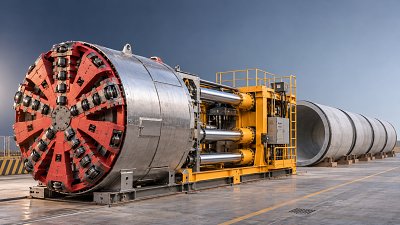
 Pipe Jacking Machine Cost: Key Price Factors and What to BudgetPipe Jacking Machine cost depends on diameter, ground conditions and equipment scope. Explore key price factors and build a reliable project budget.
 Bauma China 2026 Closes as Visitor Numbers Rise 21%Bauma China 2026 reports a 21% rise in visitors. Explore what interest in mining trucks, underground machinery and automation could mean for buyers.
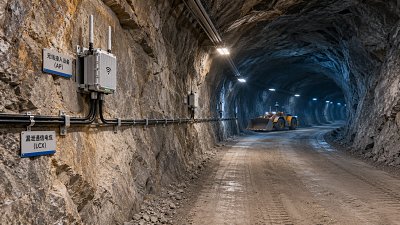
 Underground Communication Systems: Choosing Coverage for Mines and TunnelsCompare Underground Communication Systems for mines and tunnels. Explore coverage options, reliability, and testing to choose the right solution.
 Global Mine Permitting Delays Ease, but the United States Still LagsMine permitting delays are easing globally, but the United States still lags. Explore what this means for project timelines and mining equipment demand.
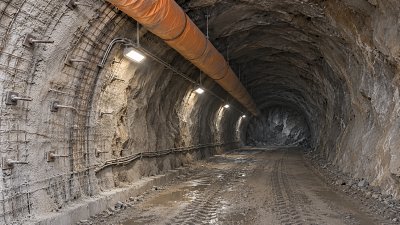
 Underground Excavation Safety: How to Control Ground and Air HazardsUnderground excavation safety starts with stable ground and breathable air. Discover practical controls, monitoring tips and stop-work triggers.
 Mega Tunnel Contractors: How to Evaluate Experience and Project RisksEvaluate mega tunnel contractors with confidence. Learn how to assess relevant experience, ground risks, construction plans, and bid assumptions before award.
 Smart Underground Mining Analytics: Using Equipment Data to Reduce DowntimeSmart underground mining analytics turns equipment data into actionable insights. Discover how to reduce downtime and improve maintenance decisions.
 Choosing a TBM Components Supplier: Lead Times, Quality and CompatibilityChoose a TBM components supplier with confidence. Compare lead times, quality evidence and compatibility to reduce procurement risk and keep your project moving.





Related News
- 00
0000-00
Dinghai Shield Machine Passes 5,000 Metres in Jintang Undersea Tunnel - 00
0000-00
Pipe Jacking Machine Cost: Key Price Factors and What to Budget - 00
0000-00
Bauma China 2026 Closes as Visitor Numbers Rise 21% - 00
0000-00
Chinese-Made 16-Meter Shield Machine Completes Yangtze River Crossing - 00
0000-00
Hydrogen Mining Truck Price: What Drives the Purchase Cost?
Weekly Insights
Stay ahead with our curated technology reports delivered every Monday.