
Underground Excavation Safety: How to Control Ground and Air Hazards





Underground excavation safety depends on keeping the ground stable and the air breathable as the excavation advances. A supported heading can become hazardous when water enters a joint, while a well-ventilated face can deteriorate quickly if airflow is interrupted or contaminants accumulate. The practical challenge for safety managers and quality control personnel is to verify that both sets of controls remain effective at the actual work location, not merely that they were included in the original plan.
Start with a current ground model, a defined support sequence and a ventilation plan matched to the work. Then connect those plans to inspections, monitoring and clear stop-work triggers. This approach applies across tunnels, shafts and underground mines, although the controls must reflect the excavation method, geology, equipment and applicable local requirements.
Identify ground and air hazards before the face advances
A useful assessment describes what crews may encounter during the next stage of work, how conditions could change and which controls must be in place before entry. Geological records, boreholes, mapping and previous excavation observations help establish the expected ground conditions. They also have limits: a borehole describes a small part of the ground, and conditions between investigation points can differ.
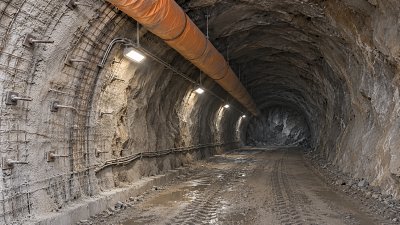
Pay particular attention to faults, fractured or weathered rock, weak soil, groundwater inflows and changes in stress conditions. The consequences depend on the setting. Loose blocks may fall from an exposed rock roof; soft ground may deform around an unsupported heading; water can weaken material, carry fines or make an excavation unstable. In deep or highly stressed ground, sudden rock failure may require controls beyond those used for ordinary loose-rock hazards.
The air assessment should cover oxygen deficiency, flammable or toxic gases, respirable dust, diesel exhaust and fumes from blasting, welding or other work. Sources can be natural, such as gas entering through the ground, or operational, such as combustion equipment. A risk assessment should also account for work that changes airflow: extending a duct, moving machinery, opening a cross-passage or temporarily stopping a fan can alter conditions at the face.
Use uncertainty as a control input. When ground ahead is poorly characterized or an unexpected inflow appears, reduce the distance advanced without reassessment and use the project’s investigation and support procedures. Routine production assumptions are less reliable where conditions are changing faster than crews can observe and respond.
Control unstable ground through a defined support cycle
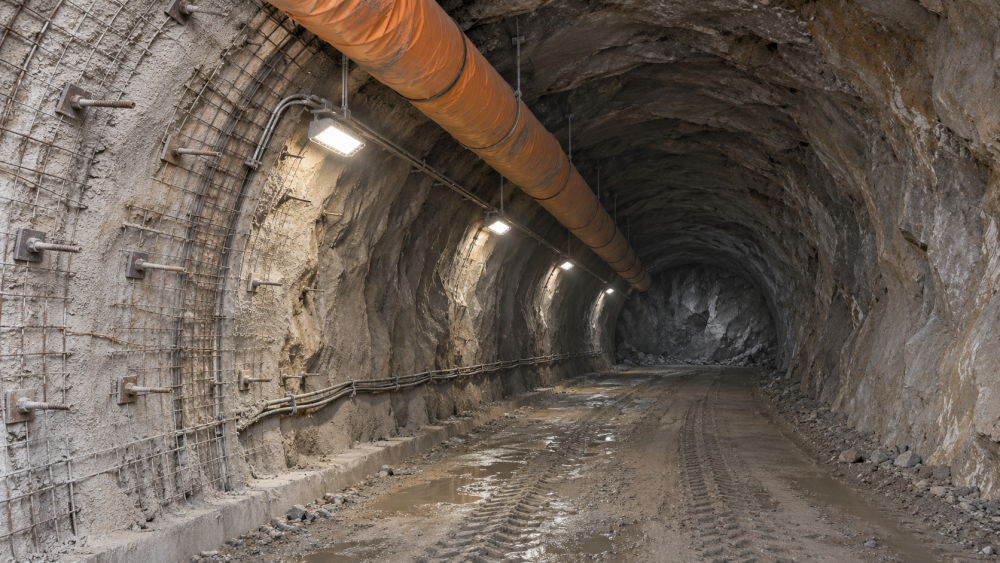
Ground support is a system, not a single product. Its design may combine bolts, mesh, shotcrete, ribs, segmental lining or other measures, depending on ground behavior and excavation method. The critical operational question is whether the support is suitable, installed in the right sequence and effective before people or equipment enter the affected area.
Inspect and scale before exposing crews
Inspect the roof, face and walls after excavation and whenever conditions or activities could have changed the ground. Look for loose rock, fresh fractures, deformation, water seepage and signs that existing support has moved or failed. Where loose material is present, remove it using an approved scaling method and suitable equipment before work continues beneath it.
Scaling addresses material that can be identified and safely removed; it does not replace engineered support or make a deteriorating rock mass stable. Crews should remain under supported ground or other designated protection while inspecting and scaling. If the face or roof cannot be assessed or made safe from a protected position, stop entry and reassess the method.
Match support installation to exposure
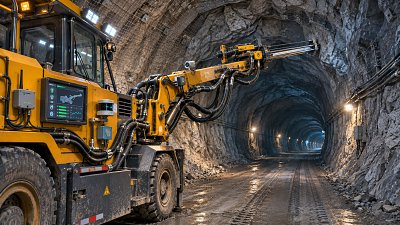
A support plan should define the allowable unsupported distance, the timing and sequence of installation, and the response when observed conditions differ from the design assumptions. In drill-and-blast excavation, the cycle must account for inspecting and securing newly exposed ground before drilling or other close work resumes. A drilling jumbo used for bolting can reduce some manual exposure, but it still requires safe positioning, competent ground and a suitable installation method.
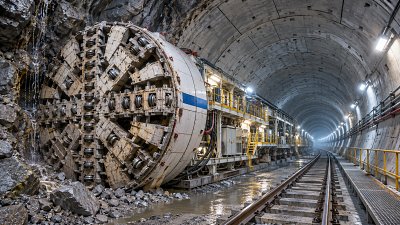
For a tunnel boring machine, the machine and its shield may provide protection in parts of the excavation, but protection depends on the machine configuration, ground conditions and location of the worker. Interventions at the cutterhead or in areas outside the installed lining need a task-specific assessment of ground stability, access and atmospheric conditions. Segment installation should follow the engineered sequence; a completed ring is not a substitute for checking ground behavior, lining condition and any required void treatment.
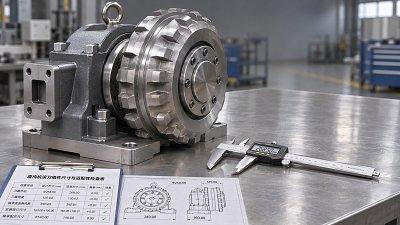
Quality control should verify installation, not just delivery. Check that the specified support is installed at the required locations and that installation records capture deviations. Where the design calls for testing or measurement, record the results and investigate failures before accepting the work. A missing bolt, damaged mesh or poorly applied support can leave a local gap even when the broader design is sound.
Use observations to update the ground model
Compare mapped conditions and monitoring results with the assumptions used for the support design. Increased movement, new cracking, damaged lining or a change in water inflow can indicate that the ground is behaving differently than expected. The response might include restricting access, installing additional support, changing the excavation sequence or obtaining a further engineering assessment.
Monitoring is most useful when each measurement has an owner and a defined response. A trend without an action threshold can become a record of deterioration rather than a warning. Set site-specific trigger levels and escalation steps before work begins, and ensure crews know which visible conditions require immediate withdrawal even before an instrument alarm is reviewed.
Keep ventilation effective at the point of work
Ventilation must deliver sufficient usable airflow to occupied and active areas, remove or dilute contaminants, and account for the layout and activities underway. The main fan alone does not establish that the face is adequately ventilated. Air can leak from damaged ducting, take an unintended path or fail to reach a newly advanced heading.
Inspect fans, ducts, connections and airflow routes as the excavation progresses. Extend and position auxiliary ventilation as specified in the site plan, and check conditions after changes to the layout. Dead-end headings, shafts and enclosed equipment spaces deserve particular attention because contaminants can accumulate where air movement is poor.
Airflow requirements depend on contaminant sources and the work being performed. Diesel equipment, blasting fumes, dust-generating excavation and welding can create different ventilation demands. A change in the number or type of machines may therefore require the ventilation plan to be reassessed before operations continue.
Monitor the atmosphere where exposure can occur
Select and position gas monitors for the hazards identified in the assessment, considering where gases may enter and accumulate. Test the atmosphere before entry when required by the work plan, and use continuous monitoring where conditions can change during occupancy. Instruments need suitable calibration, functional checks, maintenance and alarm settings within the site’s applicable exposure and emergency criteria.
Fixed sensors can provide ongoing coverage at selected locations; portable instruments follow workers into changing work areas. Neither approach is sufficient if sensors are unsuitable for the contaminant or placed away from the potential exposure. Dust and diesel particulate also need appropriate assessment methods: a gas detector does not establish that airborne dust is controlled.
If a monitor alarms, ventilation fails or an abnormal atmosphere is suspected, workers should stop the affected activity, withdraw by the designated route and notify the responsible team. Re-entry follows investigation and restoration of controls under the site procedure. Never enter a suspected hazardous atmosphere to rescue someone without the equipment, training and authorization required by the emergency plan.
Reduce contaminants at the source
Ventilation works alongside source controls. Maintain combustion equipment, manage idling, use suitable dust suppression or extraction at cutting and drilling points, and sequence work so crews are not exposed unnecessarily to fumes. After blasting, keep the affected area closed until the site’s clearance procedure confirms it is safe to re-enter.
Battery-electric underground loaders can remove diesel exhaust from the machine during operation, which may help where equipment emissions constrain air quality. They do not eliminate the need for ventilation: blasting fumes, dust, ground gases and other sources may still be present. Charging, battery handling and emergency arrangements also need to be incorporated into the site’s operating controls.
Manage the interaction between water, ground and air
Ground and air hazards should not be assessed in isolation. A new water inflow may signal a geological discontinuity, weaken ground or disrupt electrical and ventilation equipment. Gas can enter through fractures, while ground movement can damage ducts or obstruct an escape route. A ventilation shutdown may force work to stop in an area where temporary ground support is still being installed.
When an unexpected condition appears, the shift supervisor should assess the combined effect before authorizing the next activity. For example, an inflow near the face may require withdrawal from unsupported ground, a check of the atmosphere, control of electrical hazards and a revised plan for investigation and support. Pumping alone may not address the cause of instability, and gas readings taken elsewhere do not establish conditions at the inflow.
Turn the plan into a shift-by-shift verification process
Safety management and quality control meet at the handover between planned controls and field conditions. A shift record should make it possible to see what has changed, what was checked, which defects remain open and who has authority to release the area for work.
- Before entry: Review the latest ground observations, support status, ventilation condition, atmospheric readings and outstanding restrictions for the specific work area.
- At the work location: Inspect exposed ground and installed support, confirm the planned airflow arrangements, and check that monitoring and communication equipment are ready for the task.
- During the shift: Watch for changes such as fresh cracking, loose material, water inflow, damaged ducting or instrument alarms. Stop work and withdraw when a trigger is reached or conditions cannot be controlled.
- Before the next activity: Verify that required corrective work is complete. Record the location, action taken, inspection or test result, and person responsible for release.
- At handover: Communicate changes in ground, air, access and equipment status to the incoming crew, including unresolved issues and restricted areas.
These checks need competent people and clear authority. Operators must be able to stop when conditions depart from the plan; supervisors need a route to engineering and ventilation support; and quality personnel need a way to hold work when required installation or inspection evidence is missing. A form completed away from the face cannot replace a field verification.
Prepare for failure of a control, not just normal operation
Emergency planning should cover ground collapse, fire, loss of ventilation, hazardous atmospheres and blocked access. Escape routes, refuge arrangements where provided, communications and accountability procedures must suit the actual underground layout and be updated as the excavation advances. Crews should know the alarm signals, withdrawal routes and reporting points for their work area.
Test the arrangements through exercises that reflect credible site conditions, including a route becoming unavailable or a ventilation interruption during active work. Use the findings to correct gaps in communication, equipment access and decision-making. The most effective underground excavation safety program makes the safe response clear before a crew faces a changing roof or an alarm at the heading.
Share your questions or requirements, and our team will get in touch.
We respect your privacy. Your information is strictly confidential.
Related News
 Pipe Jacking Machine Cost: Key Price Factors and What to BudgetPipe Jacking Machine cost depends on diameter, ground conditions and equipment scope. Explore key price factors and build a reliable project budget.
 Bauma China 2026 Closes as Visitor Numbers Rise 21%Bauma China 2026 reports a 21% rise in visitors. Explore what interest in mining trucks, underground machinery and automation could mean for buyers.
 Underground Communication Systems: Choosing Coverage for Mines and TunnelsCompare Underground Communication Systems for mines and tunnels. Explore coverage options, reliability, and testing to choose the right solution.
 Global Mine Permitting Delays Ease, but the United States Still LagsMine permitting delays are easing globally, but the United States still lags. Explore what this means for project timelines and mining equipment demand.
 Underground Excavation Safety: How to Control Ground and Air HazardsUnderground excavation safety starts with stable ground and breathable air. Discover practical controls, monitoring tips and stop-work triggers.
 Mega Tunnel Contractors: How to Evaluate Experience and Project RisksEvaluate mega tunnel contractors with confidence. Learn how to assess relevant experience, ground risks, construction plans, and bid assumptions before award.
 Smart Underground Mining Analytics: Using Equipment Data to Reduce DowntimeSmart underground mining analytics turns equipment data into actionable insights. Discover how to reduce downtime and improve maintenance decisions.
 Choosing a TBM Components Supplier: Lead Times, Quality and CompatibilityChoose a TBM components supplier with confidence. Compare lead times, quality evidence and compatibility to reduce procurement risk and keep your project moving.

Related News
- 00
0000-00
Dinghai Shield Machine Passes 5,000 Metres in Jintang Undersea Tunnel - 00
0000-00
Pipe Jacking Machine Cost: Key Price Factors and What to Budget - 00
0000-00
Bauma China 2026 Closes as Visitor Numbers Rise 21% - 00
0000-00
Chinese-Made 16-Meter Shield Machine Completes Yangtze River Crossing - 00
0000-00
Hydrogen Mining Truck Price: What Drives the Purchase Cost?
Weekly Insights
Stay ahead with our curated technology reports delivered every Monday.