
How to Evaluate Underground Mine WiFi Systems for Coverage, Roaming, and Safety





Selecting the right underground mine WiFi systems requires more than checking signal strength on a map. For technical evaluators, the real benchmark is whether the network can maintain stable coverage, seamless roaming, and safety-critical connectivity across harsh, mobile, and interference-prone underground environments. This guide outlines the key criteria, performance indicators, and operational risks that matter when assessing WiFi systems for modern mining applications.
Why underground WiFi evaluation is different from surface industrial wireless
In surface plants, WiFi design usually starts with predictable geometry, easier line-of-sight planning, and relatively stable environmental conditions. Underground mines are the opposite. Tunnels bend, crosscuts create shadow zones, vehicles block propagation paths, rock moisture changes attenuation, and active headings move as production advances. A system that looks acceptable in a desktop heatmap can fail operationally once loaders, drills, personnel carriers, and blasting schedules enter the picture.
That is why technical evaluation should not begin with “Does it provide WiFi?” but with “Which operational functions must remain connected, where, and under what failure conditions?” In many mines, wireless connectivity is no longer just an IT convenience layer. It supports voice, telemetry, video, fleet management, equipment health monitoring, remote operation, and, in some cases, safety-related communications. The consequence of a roaming drop in a refuge chamber corridor is not the same as a drop in a workshop. Nor is packet loss equally tolerable for email sync and tele-remote mucking.
For this reason, the evaluation of underground mine WiFi systems has to be tied to production logic and safety logic, not only RF logic.
Start with the application profile, not the access point specification
One of the most common mistakes in mine wireless procurement is comparing vendors mainly by radio power, throughput claims, or access point count. Those are secondary until the application profile is clear.
A useful technical assessment separates applications into four categories:
- Safety-critical or safety-supporting traffic: personnel tracking integrations, alarm delivery, refuge chamber communications, gas monitoring backhaul where WiFi is part of the path, emergency voice, or incident video review.
- Mobility-dependent operational traffic: tele-remote LHD operation, connected drilling systems, mobile HMI access, fleet dispatch, onboard diagnostics, and real-time location functions.
- Fixed infrastructure traffic: pump stations, substations, conveyor monitoring, ventilation controls, and environmental sensors.
- Non-critical user traffic: maintenance tablets, file transfer, workforce communications, and administrative access.
Each traffic class has different tolerance for latency, jitter, roaming interruption, and packet loss. A network that performs adequately for tablet-based inspection forms may still be unsuitable for machine-to-control-room mobility. Technical evaluators should therefore request a vendor response matrix that maps every use case to expected performance envelopes, not a generic statement that the system “supports industrial mining applications.”
Coverage should be defined by service quality, not by nominal signal presence
Coverage in underground mines is often overstated because it is presented as binary: covered or not covered. In practice, meaningful coverage means a defined minimum service level at the exact location and height where devices operate.
Questions worth asking include:
- What minimum RSSI and SNR are required for each application class?
- Are measurements taken for pedestrian devices, cab-mounted radios, and roof-height equipment separately?
- How does the design account for tunnel curvature, steel mesh, pipes, power cables, and parked vehicles?
- What happens at intersections, ore passes, loading bays, and conveyor transfer points where multipath becomes severe?
- How frequently must the design be updated as headings advance?
In narrow drifts, propagation can appear favorable because the tunnel acts as a waveguide over certain distances. This often creates false confidence. Waveguide effects may help range, but they do not guarantee stable throughput or predictable handoff behavior, especially when mobile equipment, water, and irregular rock profiles disturb the channel.
Coverage validation should therefore be based on application-level testing. A practical acceptance test is more valuable than a simulated map: can a moving vehicle maintain the required session while transmitting telemetry, voice, and video across defined route segments at typical operating speed?
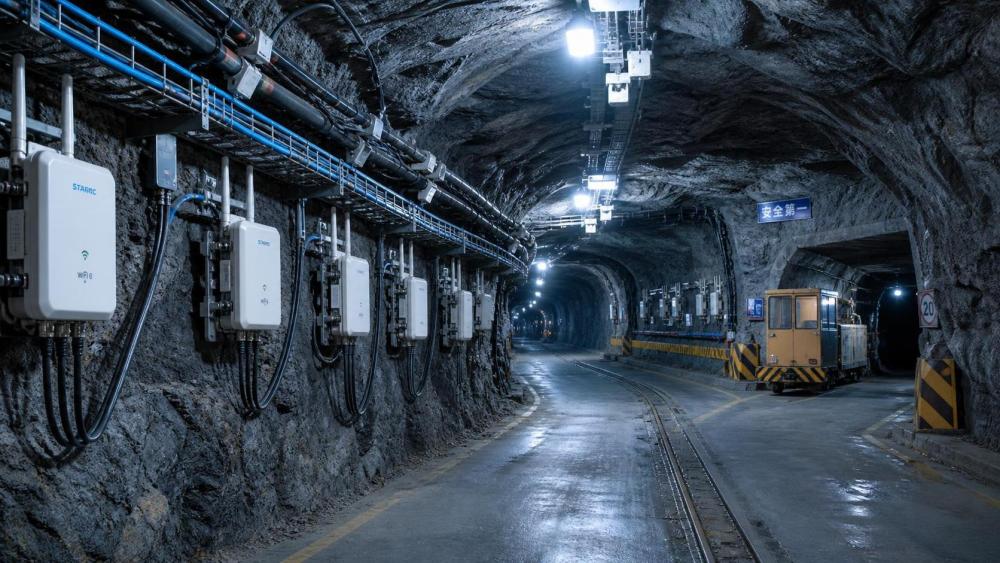
Roaming performance is usually the real make-or-break factor
In many underground deployments, WiFi coverage exists but mobility performance is poor. The mine then discovers that the problem is not dead zones but client roaming behavior, authentication delay, or sticky associations to distant access points.
For technical evaluators, roaming should be treated as a first-class selection criterion. Key issues include:
- Handoff latency: How long does a client take to move from one access point to another under real mine conditions?
- Client diversity: Does performance hold across tablets, cameras, VoWiFi handsets, vehicle gateways, PLC-connected bridges, and OEM machine radios?
- Authentication method: Can the security architecture support fast re-authentication, or does it introduce disruptive delays?
- Roaming optimization support: Are 802.11r/k/v features available, and more importantly, are they validated with the mine’s device fleet?
- Controller architecture: If centralized management is used, what happens to roaming behavior if backhaul quality degrades?
This is where lab compatibility claims often fail in the field. Underground mines typically use mixed device generations and specialized OEM equipment that may not fully support modern roaming enhancements. Evaluators should insist on testing with the actual endpoint mix, not only vendor-certified clients.
A useful discipline is to define a maximum tolerable interruption time for each mobile application. Without that threshold, roaming discussions become vague. For tele-remote control, even short interruptions may be unacceptable. For non-critical telemetry, a brief handoff may be manageable. The correct system choice depends less on peak bandwidth than on whether roaming behavior stays within those operational thresholds.
Safety evaluation must go beyond “ruggedized” marketing language
Safety in underground wireless is not only about keeping equipment online. It also involves hazardous area suitability, system resilience, fault visibility, and the consequences of communication loss.
Evaluation should consider at least four layers.
First, environmental and hazardous location compliance. Depending on jurisdiction and mine type, equipment may need to meet explosion protection or intrinsic safety requirements for specific zones or areas. Applicable certifications vary by market and application. Technical teams should verify exact compliance needs locally rather than assume a global certificate set is sufficient. If a vendor cites mining suitability without clearly documented approvals, treat that claim as incomplete until verified.
Second, mechanical survivability. Underground access points and enclosures face shock, vibration, dust ingress, dripping or sprayed water, corrosive conditions, and accidental impact from equipment or scaling activity. An IP rating alone does not answer the full question. Mounting method, connector integrity, cable protection, and maintenance accessibility matter just as much.
Third, failure behavior. If a node, leaky feeder integration point, fiber segment, or PoE switch fails, what areas lose communication and for how long? Can the architecture isolate faults, alarm them clearly, and restore service quickly? In safety-related environments, graceful degradation is often more important than nominal top-end performance.
Fourth, operational procedures. During blasting windows, maintenance shutdowns, or ventilation changes, can the network continue supporting required communications in adjacent areas? A technically strong WiFi design can still create safety gaps if it depends on maintenance practices the mine cannot realistically sustain.
Backhaul architecture often determines whether the WiFi layer succeeds
Underground mine WiFi systems are frequently judged at the access layer, while the real limitation sits in the transport network behind them. If the backhaul is fragile, congested, or difficult to extend as the mine develops, even well-designed radio cells will underperform.
Technical evaluators should look closely at:
- Fiber reach and topology: ring, spur, or hybrid design; single points of failure; repair time after physical damage.
- Power availability underground: local PoE strategy, protected power distribution, UPS support for critical nodes.
- Edge switching environment: industrial temperature range, enclosure protection, maintainability.
- Integration with other communications systems: leaky feeder, LTE/5G private network, tracking systems, and SCADA pathways.
- Expansion model: how quickly can coverage be extended as headings move or new production areas open?
This matters because many mines do not need WiFi everywhere at the same quality level. They need a scalable architecture that allows selective high-performance zones, reliable roaming corridors, and economical extension into advancing workings. A vendor that offers excellent access points but a weak migration and extension strategy may create high long-term cost and operational friction.
Interference and coexistence are underrated in underground design
Underground RF conditions are rarely clean. Even where the number of wireless systems is limited, interference can come from neighboring access points in reflective geometry, improperly planned channels, vehicle-mounted electronics, VFDs, cameras, Bluetooth devices, and temporary contractor equipment.
Evaluation should ask not only how the system performs in a fresh deployment, but how it will perform after two years of operational layering. Mines add cameras, autonomous functions, environmental sensors, and connected service tools over time. Channel plans that are acceptable on day one may become unstable later.
Key questions include:
- Which bands are being used, and why?
- How does the system manage channel reuse in long tunnels and intersections?
- Can interference events be diagnosed remotely with useful RF telemetry?
- Are there automated RF management features, and are they appropriate for a controlled industrial environment rather than a generic enterprise office model?
In some mines, a conservative, manually engineered RF design is more reliable than highly dynamic optimization features that react unpredictably to underground propagation anomalies.
Device ecosystem compatibility is usually where deployments become expensive
The access network may look strong in isolation, but underground operations depend on a mixed ecosystem: OEM machine controllers, third-party vehicle gateways, handhelds, wearable devices, IP cameras, environmental sensors, dispatch terminals, and maintenance laptops. Compatibility is not simply a matter of “supports WiFi 6” or “backward compatible.”
Technical evaluators should check:
- Supported security modes across legacy and new endpoints
- Antenna and enclosure options for vehicle installations
- Behavior of low-power clients in long tunnel cells
- Firmware support lifecycle and update process
- Interoperability with industrial protocols transported over IP
- Management visibility for third-party clients
This is particularly important in mines introducing tele-remote or semi-autonomous equipment incrementally. A network selected only for current handheld use may later require redesign when machine mobility and video become priorities.
What to ask for in site trials and acceptance testing
A serious evaluation of underground mine WiFi systems should include a structured field trial, not just a demonstration. The trial should reflect actual route geometry, equipment movement, and traffic load. Otherwise, the mine only learns whether radios can associate underground, which is a low bar.
Useful test elements include:
- Drive tests across production routes with representative vehicle speed
- Roaming tests using the actual endpoint mix
- Concurrent traffic tests for voice, telemetry, and video
- Performance checks at intersections, bays, ramps, and curved headings
- Degraded-mode tests with one node or backhaul segment intentionally removed
- Recovery-time measurement after power interruption
- Verification of monitoring alarms and fault localization
Acceptance criteria should be written in operational language. For example: “telemetry continuity maintained along route X,” “voice session interruption not exceeding agreed threshold,” or “network restoration within defined time after edge switch reboot.” This produces a much clearer decision basis than a generic promise of high availability.
Total cost should be evaluated as adaptation cost, not just hardware cost
Cheap hardware can become expensive underground if it requires frequent relocation, complex retuning, difficult spare management, or heavy dependence on vendor field support. The more useful comparison is lifecycle adaptation cost.
That includes:
- How often access points must be moved as headings advance
- Installation labor in difficult underground areas
- Cable and enclosure replacement frequency
- Software licensing model for controllers and analytics
- Training burden for mine maintenance and OT teams
- Time required to diagnose RF versus backhaul faults
For fast-changing mines, modularity and ease of extension may outweigh peak radio performance. For mature operations with stable infrastructure, redundancy and deep monitoring may deserve heavier weighting.
A practical decision framework for technical evaluators
When comparing options, the most reliable approach is to score systems against mine-specific failure risks rather than brochure features. A practical shortlist review usually comes down to six questions:
- Can it deliver the required service quality where mobile and fixed applications actually operate?
- Can it maintain acceptable roaming performance with the mine’s real client mix?
- Does the architecture fail safely and recover predictably?
- Can it coexist with the mine’s existing communications and automation environment?
- Can the mine extend and maintain it without excessive specialist dependence?
- Will it still fit the operation when electrification, remote operation, and higher data loads expand?
That final point is becoming more important. As underground mining pushes further into battery-electric fleets, remote operation, connected drilling, and data-rich condition monitoring, wireless systems are moving from convenience infrastructure to production infrastructure. The right evaluation standard is no longer “Does underground WiFi work here?” but “Will this network remain operationally credible as the mine becomes more digital, mobile, and safety-dependent?”
For technical teams, that is the difference between buying coverage and selecting capability.
Related News
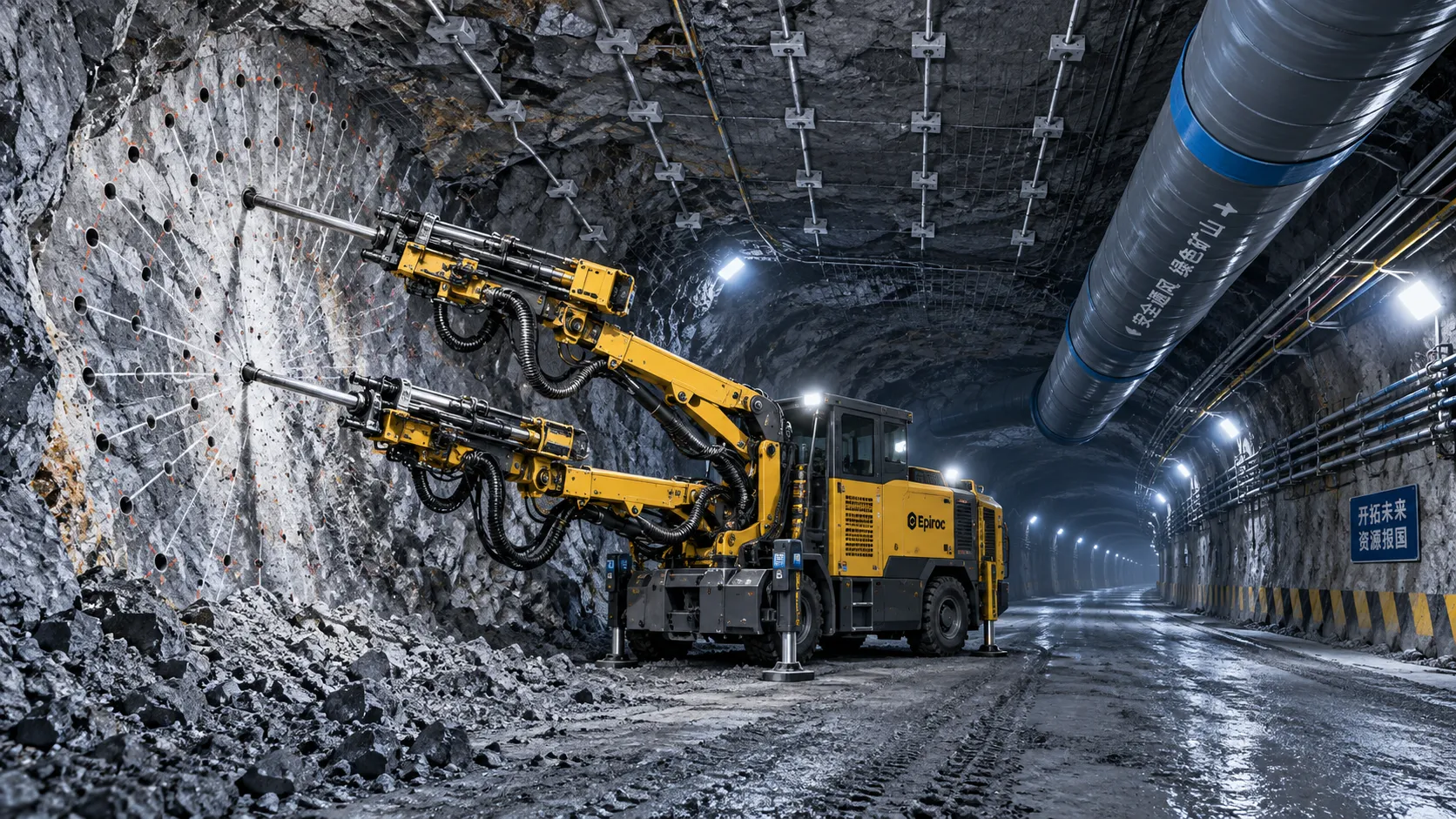
Underground Drilling for Mining: Selecting Methods for Rock Conditions and Mine Layout
Underground drilling for mining: learn how to match drilling methods to rock conditions, mine layout, accuracy needs, ground support, and cycle efficiency.
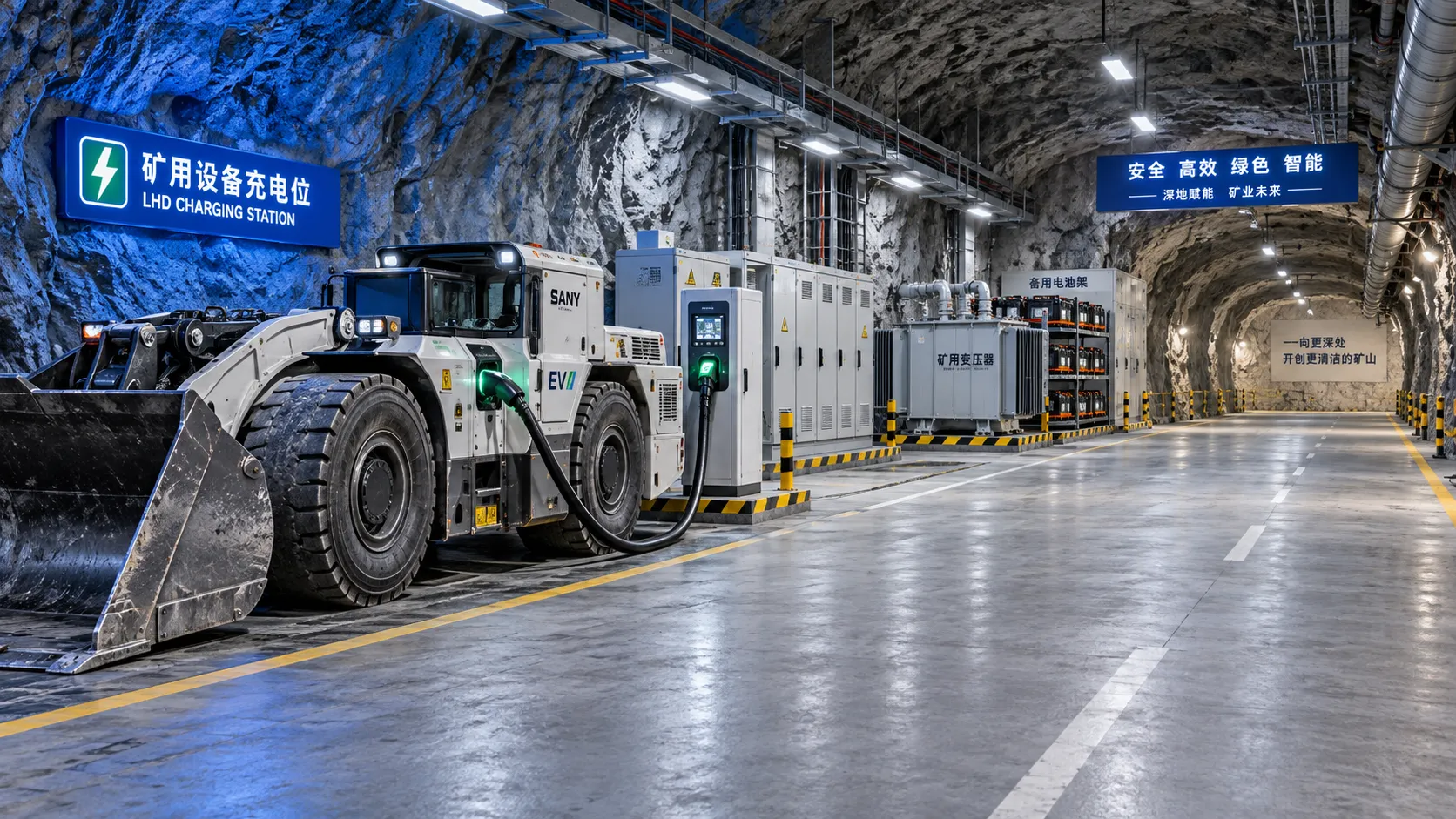
Underground Mine Electrification: How to Size Battery Fleets and Charging Capacity
Mining electrification for underground mines: learn how to size battery fleets, chargers, and power capacity to prevent queues, peak-load issues, and production downtime.
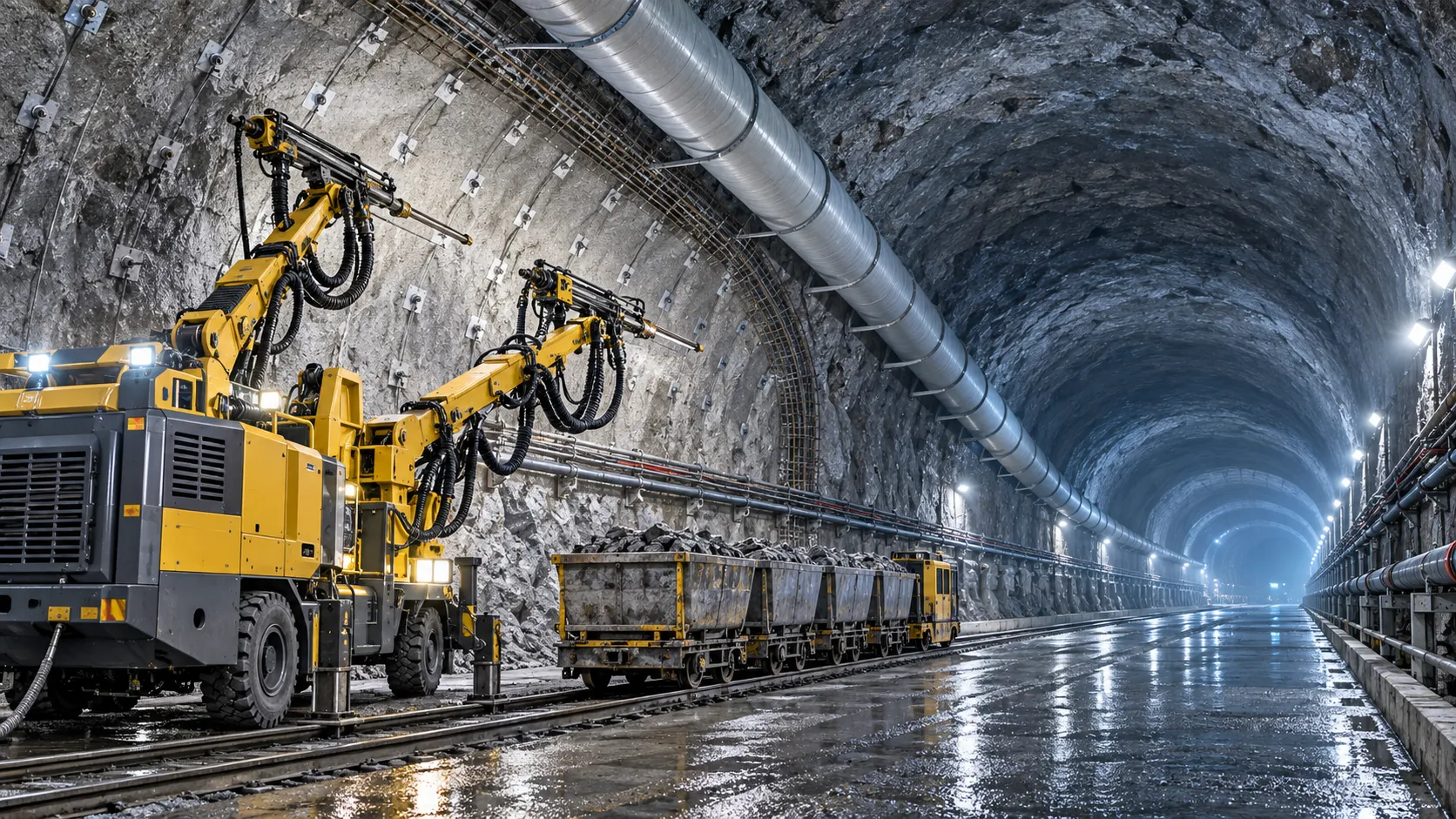
How to Evaluate European Drill-and-Blast Tunnelling Contractors for Complex Projects
Drill and blast tunnelling contractors Europe: learn how to assess geology expertise, blast control, equipment reliability, safety, and programme resilience for complex projects.
Which Trenchless Construction Technique Fits Your Utility Crossing Conditions?
Trenchless construction techniques compared for utility crossings: choose HDD, microtunnelling, pipe jacking, or auger boring based on ground, accuracy, access, and risk.
What Is Driving Metro Tunnelling Demand Across Southeast Asia’s Major Cities?
Metro tunnelling Southeast Asia is accelerating as major cities tackle congestion, flooding, and connectivity. Explore the market forces, technical risks, and opportunities shaping demand.
Hard Rock Tunnelling in Australia: Selecting Methods for Variable Ground Conditions
Hard rock tunnelling in Australia: compare TBM, drill-and-blast and hybrid methods to manage variable ground, reduce risk and protect project costs.
Hydropower Tunnel Excavation: Selecting Methods for Variable Rock Conditions
Hydropower tunnel excavation methods for variable rock conditions: compare TBM, drill-and-blast, and hybrid strategies to improve safety, progress, and project control.
How to Select Underground Safety Equipment for Tunnelling by Hazard and Work Zone
Underground Safety Equipment for tunnelling: match protection to hazards, work zones, compliance, and emergency needs with this practical selection guide.
EPB or Slurry Shield? Selecting Soft-Ground Tunnelling Equipment by Soil Conditions
Tunnel Excavation Equipment for soft ground: compare EPB and slurry shields by soil, groundwater, settlement risk, and project logistics to choose confidently.
Related News
- 00
0000-00
Underground Drilling for Mining: Selecting Methods for Rock Conditions and Mine Layout - 00
0000-00
Underground Mine Electrification: How to Size Battery Fleets and Charging Capacity - 00
0000-00
How to Evaluate European Drill-and-Blast Tunnelling Contractors for Complex Projects - 00
0000-00
Which Trenchless Construction Technique Fits Your Utility Crossing Conditions? - 00
0000-00
What Is Driving Metro Tunnelling Demand Across Southeast Asia’s Major Cities?
Weekly Insights
Stay ahead with our curated technology reports delivered every Monday.