
Mine Fleet Electrification in Europe: Costs, Charging and Planning





When a mine replaces diesel equipment with battery-electric machines, the purchase decision can quickly become a network and production-planning problem. A loader may be capable of completing its duty cycle, yet still miss its production target if charging queues, travel to the charger or limited grid capacity remove too much working time.
For mine fleet electrification in Europe, the practical starting point is to model equipment, charging and electrical supply together against the mine plan—not to compare vehicle prices in isolation. Build a costed operating case for each duty cycle, identify the grid and site constraints early, and phase deployment around infrastructure readiness. Underground LHDs and surface haul trucks need different charging arrangements, even within the same operation.
Define the operating duty before requesting equipment bids
Begin with a representative operating profile for each machine class and working area. Historical diesel consumption can provide a rough sense of energy use, but it is not a direct conversion to battery capacity: electric drivetrain efficiency, idling behaviour, auxiliary loads and regenerative braking differ. Use supplier performance data alongside site measurements and test the assumptions against the planned route.
For underground LHDs, record payload, travel distance, gradients, loading and dumping times, road conditions and the location of available stops. Include ventilation doors, passing delays and changes in mine depth. A charging point that looks convenient on a map may add significant non-productive travel if it sits away from the active production level.
For an open-pit truck, the direction of the loaded haul matters. A loaded downhill route may offer regeneration, subject to battery acceptance limits and vehicle controls; a loaded uphill route can impose a much larger energy demand. Do not assume that braking energy will always be recoverable: a full or temperature-constrained battery may be unable to accept it.
Translate the profile into a shift-level schedule. Estimate energy used between charging opportunities, required reserve at the end of each interval and the time needed to restore that energy. Then check whether the machines can meet production requirements during the busiest period, not merely on an average day.
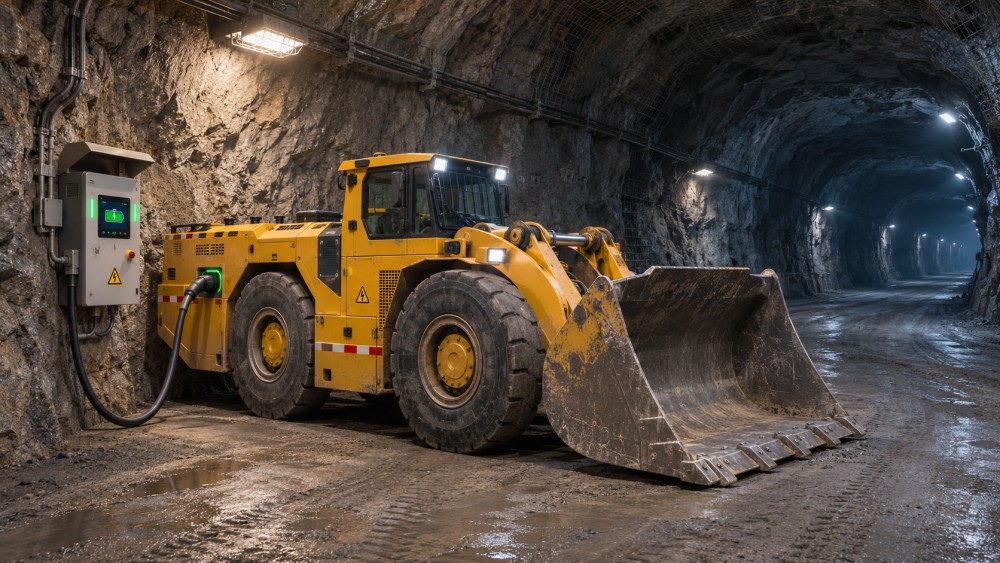
Build a cost model around delivered production
Electric equipment may have a higher initial purchase cost, but the decision should be based on the cost of delivering the required production over a consistent assessment period. Compare diesel and electric options using the same mine plan, operating hours, financing assumptions and treatment of residual value. Keep estimates visible rather than concealing uncertain inputs in a single total.
Separate capital expenditure that serves the whole mine from equipment-specific expenditure. A substation sized for future expansion can make the first deployment appear expensive; allocating all of it to the initial fleet can distort comparison. Conversely, excluding the grid upgrade because it supports later phases understates the funding needed to start.
Ventilation deserves the same discipline. Battery-electric machines eliminate diesel exhaust at the point of use, but a mine may still require substantial airflow for workers, blasting fumes, heat, dust and remaining diesel equipment. Treat any ventilation savings as a site-specific engineering outcome, not an automatic percentage reduction.
Test the model against changes in electricity tariffs, battery life, grid connection cost and equipment availability. Compare cost per tonne or another relevant production unit as well as total expenditure. A low energy cost is not a saving if extra machines are needed to compensate for charging downtime.
Choose charging around the work cycle
The right charging strategy depends on where machines naturally stop, how much energy they need between stops and how reliably power can be delivered there. A mix of approaches may be appropriate, but each additional charging location adds electrical, maintenance and safety obligations.
Depot or shift-change charging
Charging during planned breaks or between shifts can limit interference with production and concentrate electrical infrastructure in a controlled area. It works best when available dwell time is long enough to replenish the battery and when the route back to the depot does not consume the schedule. Check the effect of shift overlap: several vehicles arriving together can create a peak even if their combined daily energy requirement appears manageable.
Opportunity charging near production
Short charging events during loading, queuing or other operational pauses can support a demanding duty cycle without requiring every vehicle to return to a central depot. The constraint is not only charger power. Connector handling, positioning, queue length, battery temperature and the actual duration of each stop determine how much usable energy is delivered.
Underground locations also change as headings advance. Before installing a charger, confirm access, cable protection, clearance, water and dust exposure, communications, emergency access and the effort required to relocate the installation. A charger placed beside a bottleneck can make traffic management worse even while reducing travel distance.
Battery swapping and other arrangements
Where supported by the equipment design, swapping a depleted battery for a charged unit can shorten the vehicle’s stop. It transfers part of the challenge to battery inventory, lifting or handling equipment, charging space and the availability of trained personnel. Compare the full swap cycle—including travel, waiting and checks—with the charging time it replaces. Compatibility and responsibilities for spare batteries must be clear in the supply contract.
Some surface haulage applications may also justify route-based power, such as trolley assistance, or charging infrastructure positioned along the haul route. These options can reduce reliance on depot charging for suitable routes, but they introduce fixed infrastructure that must remain useful as the pit develops. Assess road relocations, gradients, connection arrangements and the impact of equipment failure before committing to a layout.
Check power capacity at the busiest hour
Annual electricity demand is important for budgeting, but peak power often determines the connection and equipment needed. Create a time-based load profile that combines charging with existing mine loads, including processing, pumping, ventilation and other planned electrification. Account for charger losses and the possibility that several machines will need energy at once after a disruption.
Ask the distribution network operator or relevant grid counterpart for the available connection capacity, connection process, required studies and indicative delivery milestones. In parallel, assess the mine’s internal network: incoming supply alone does not establish that transformers, switchgear, protection and underground distribution can carry the new load at the proposed locations.
Managed charging can reduce coincident peaks by scheduling or limiting charger output. It is useful only if the production plan can tolerate the resulting charge times. Stationary storage may also help where it can be recharged reliably and provides an economic or operational benefit, but it does not eliminate the need to assess energy supply, protection and failure modes. Model a delayed charge and a charger outage, not just the normal schedule.
European connection requirements, electricity tariffs, permitting and available support vary by country and network. Confirm the applicable requirements and eligibility directly with the relevant authorities and network operator before incorporating them into the investment case. Do not treat a potential grant or connection date as secured until the conditions and approvals are documented.
Plan the transition without creating a production gap
A phased deployment reduces the number of untested interfaces introduced at once, but only if the first phase is chosen to answer useful questions. Select a duty that represents the intended operation and has measurable routes, payloads and shift patterns. An unusually easy assignment may prove that a vehicle works while revealing little about the fleet’s eventual charging requirement.
- Establish the baseline. Record production, delays, energy consumption, maintenance events and utilisation for the existing duty. Agree on definitions so that diesel and electric results are comparable.
- Confirm the site design. Match vehicle energy demand to charger locations, available electrical capacity, traffic arrangements and emergency procedures. Identify dependencies that could delay commissioning.
- Set acceptance measures. Specify the duty cycle, reserve energy, charging conditions, availability calculation and test duration in procurement documents. Make clear which party supplies data and resolves interface faults.
- Run a controlled operating period. Monitor energy per cycle, time connected, actual charge delivered, queues, downtime and production. Investigate deviations before adding more machines.
- Release the next phase against evidence. Update the fleet schedule, network model and cost forecast using observed operating data and the revised mine plan.
During the transition, diesel and electric equipment may share roads, workshops and ventilation systems. Preserve a realistic contingency for a grid outage, charger fault or delayed machine delivery. That could involve retained diesel capacity or another site-specific recovery arrangement; the appropriate reserve depends on production criticality and the time needed to restore service.
Put operational responsibilities into the contracts
Equipment, charger and electrical-system suppliers may each be responsible for only part of an operational chain. Define who verifies interoperability, communications, power limits and fault response before delivery. The procurement package should also specify access to diagnostic data, software support, spare parts, technician training and the process for changing charging settings as the mine develops.
Battery terms need particular scrutiny. Clarify ownership, warranty conditions, performance measurement, repair or replacement responsibilities, transport and end-of-life arrangements. A warranty based on conditions that differ from the planned charging pattern may not cover the duty assumed in the financial model.
Finally, make safety and commissioning deliverables part of the schedule rather than an activity left until equipment arrives. Electrical isolation, emergency response, battery incidents, underground evacuation and maintenance procedures must reflect the actual installation and applicable local requirements. Where the design relies on a new operating assumption—such as reduced ventilation or unattended charging—obtain the necessary engineering verification and approvals before using that assumption to release capacity or remove existing equipment.
Related News
Mega Tunnel Contractors: How to Evaluate Experience and Project Risks
Evaluate mega tunnel contractors with confidence. Learn how to assess relevant experience, ground risks, construction plans, and bid assumptions before award.
Hudson Tunnel Project’s Second TBM Begins Excavating South Tunnel
Hudson Tunnel Project’s second TBM begins south tunnel excavation. Explore what this milestone could mean for contractors and suppliers.
How Bolting Jumbo Automation Works in Underground Rock Support
Explore how bolting jumbo automation coordinates drilling and rock support, and discover what to assess for safer, more consistent underground operations.
China’s Transport Ministry Issues Highway Tunnel Upgrade Standard
China’s highway tunnel upgrade standard takes effect December 1, 2026. Explore potential implications for contractors, project owners and equipment suppliers.
Smart Underground Mining Analytics: Using Equipment Data to Reduce Downtime
Smart underground mining analytics turns equipment data into actionable insights. Discover how to reduce downtime and improve maintenance decisions.
Three Export Control Notices Take Effect November 18, Adding Tunnel Boring Machines
China export controls add tunnel boring machines to the dual-use list. Explore potential licensing implications for equipment, components and project delivery.
Choosing a TBM Components Supplier: Lead Times, Quality and Compatibility
Choose a TBM components supplier with confidence. Compare lead times, quality evidence and compatibility to reduce procurement risk and keep your project moving.
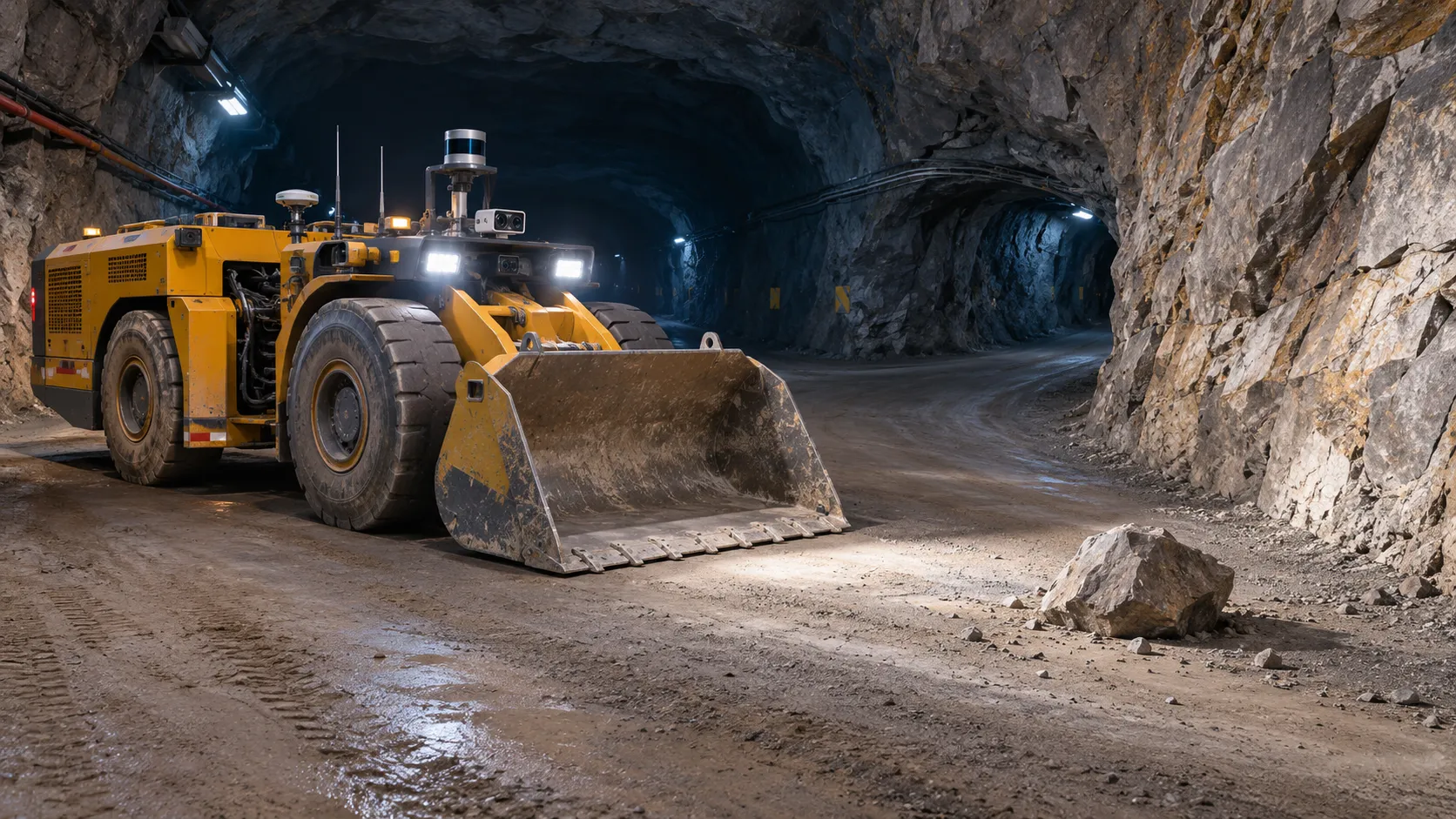
How Autonomous LHD Collision Avoidance Works in Underground Mines
Discover how autonomous LHD collision avoidance combines sensing, positioning and braking to manage underground hazards and support safer mine operations.

Mining Equipment Market Could Reach $19.42 Billion by 2033, Report Says
Mining equipment market could reach $19.42 billion by 2033. Explore how electrification, automation and surface mining demand are shaping the industry's outlook.
Related News
- 00
0000-00
Mega Tunnel Contractors: How to Evaluate Experience and Project Risks - 00
0000-00
Hudson Tunnel Project’s Second TBM Begins Excavating South Tunnel - 00
0000-00
How Bolting Jumbo Automation Works in Underground Rock Support - 00
0000-00
China’s Transport Ministry Issues Highway Tunnel Upgrade Standard - 00
0000-00
Smart Underground Mining Analytics: Using Equipment Data to Reduce Downtime
Weekly Insights
Stay ahead with our curated technology reports delivered every Monday.