How Autonomous LHD Collision Avoidance Works in Underground Mines





An autonomous load-haul-dump vehicle approaching a blind intersection may have only a short distance in which to respond to a person, another machine, or fallen rock. Autonomous LHD collision avoidance addresses that problem through a chain of functions: sensors observe the surroundings, software estimates the vehicle’s position and identifies hazards, and the control system slows or stops the machine when the available path is no longer safe.
The outcome depends on more than detection range. Dust can obscure a sensor, a bend can hide an approaching vehicle, and an articulated loader needs clearance for both its body and bucket. A technical assessment must therefore examine the complete path from hazard detection to braking, including what happens when the system cannot establish a reliable view.
From sensor readings to a vehicle response
Collision avoidance typically operates alongside, but separately from, the LHD’s route-planning function. A planner selects a path through the mine; the avoidance function checks whether movement along that path remains permissible as conditions change. Depending on the system design, it may request a reduced speed, command a stop, or allow a revised path. Whether it can steer around an obstacle autonomously is a capability to verify, not an assumption.
The control chain can be understood in five stages:
- Observe: Collect measurements from onboard sensors and, where provided, infrastructure or other vehicles.
- Interpret: Identify occupied space or objects and estimate their location relative to the machine.
- Predict: Compare the vehicle’s projected swept path with obstacles, accounting for motion and uncertainty.
- Decide: Apply speed restrictions or issue a stop request according to the remaining clearance and stopping capability.
- Act and monitor: Execute the command through the vehicle controls and check that the expected response occurs.
Avoidance is not necessarily dependent on recognizing an object as a person or another LHD. Some designs respond to unclassified occupied space. Classification can support different responses, but it introduces its own failure modes: an unfamiliar object may be misclassified or not classified at all. Evaluators should establish whether such an object still triggers a protective response.
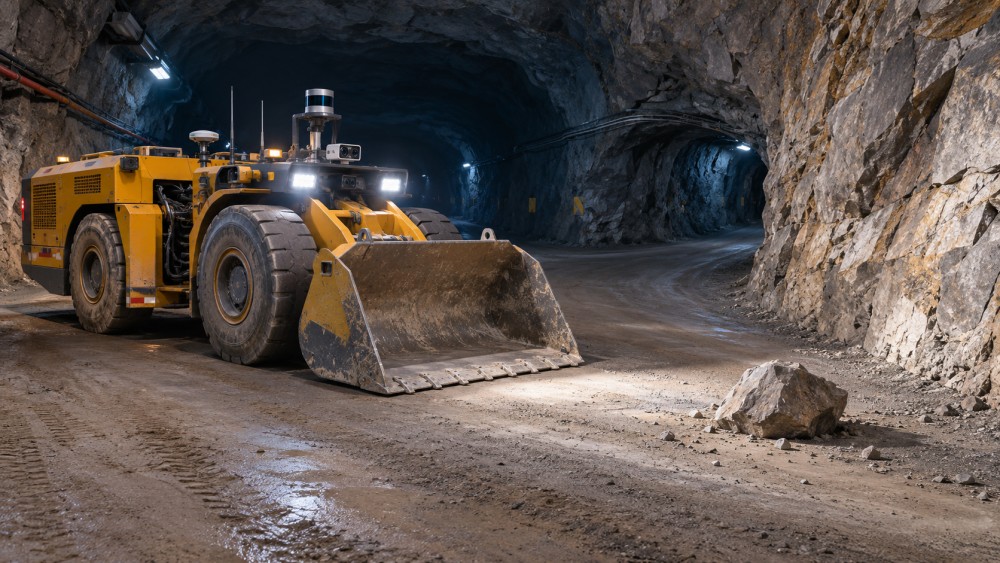
Seeing hazards in a confined, dusty heading
Underground systems may combine lidar, radar, cameras, proximity devices, or other sensing technologies. Their contribution depends on placement and implementation, not simply the number of sensors fitted.
Lidar can provide detailed geometry for mapping and obstacle detection, but airborne dust, water spray, and dirty optical surfaces can reduce usable returns. Cameras can add visual information, yet lighting, glare, contamination, and low contrast affect interpretation. Radar may remain useful in some conditions that impair optical sensing, although its ability to separate closely spaced objects or describe their shape depends on the installation and processing. No sensor should be treated as universally reliable underground.
Sensor coverage must be assessed around the actual vehicle configuration. The bucket may block part of the forward view; articulation changes the relationship between sensors and the rear frame; reversing exposes a different set of blind zones. A sensor layout that works on an unloaded straight run may not provide equivalent coverage with a raised bucket or during a turn.
Ask for detection performance to be described against the relevant obstacle size, position, surface, motion, and environmental conditions. A claimed maximum range alone does not establish that the system can detect a low obstacle near the bucket edge or a person partly hidden at a crosscut. It is equally important to know which regions are not covered and what operating restrictions compensate for them.
Detection is not the same as line of sight
No onboard sensor can reliably detect an object fully concealed behind solid rock using direct observation. At an intersection, a safe design may therefore depend on speed limits, controlled access, traffic management, vehicle-to-vehicle information, or a protected operating zone. Communication can extend awareness beyond the visible field, but the design must specify how stale, missing, or conflicting messages affect permission to move.
Positioning, mapping, and the moving safety envelope
Autonomous LHDs may localize using simultaneous localization and mapping (SLAM), odometry, inertial measurements, mine infrastructure, or a combination. Localization relates the vehicle to its map; it is not a substitute for detecting a new obstacle. A mapped heading can still contain a parked machine, a fallen object, or a person who was not present when the map was built.
Position uncertainty matters most where clearance is tight. The system must account for error in the vehicle pose, map alignment, obstacle measurements, and machine geometry. If confidence falls below an operational threshold, the appropriate response may be to reduce speed, stop, or require recovery under a defined procedure. A display that continues to show a precise-looking position is not evidence that localization remains trustworthy.
The protective region is also more complicated than a fixed box ahead of the loader. An articulated LHD’s front and rear sections follow different paths through a turn, while the bucket and any carried load alter the space required. The system needs to evaluate the swept envelope over the intended maneuver, including relevant overhangs and the clearance required for uncertainty.
Map maintenance is part of that assessment. After excavation, ground support work, or a change to a loading area, the mine should know how the system detects a mismatch, who authorizes an updated map, and whether autonomous operation is restricted until the change is verified.
Stopping distance determines the useful detection zone
A hazard detected at a given distance is actionable only if the vehicle can respond before reaching it. The required distance includes travel during sensing and processing, command transmission, brake actuation, and physical deceleration, plus allowance for uncertainty. The result changes with speed, grade, payload, road condition, tire traction, and brake condition.
A useful engineering approximation is that stopping distance consists of reaction-distance travel plus braking distance. Under a simplified constant-deceleration model, these terms are v × t and v² / (2a), where v is speed, t is total response time, and a is available deceleration. Actual mine acceptance criteria must use justified conditions and margins rather than treating this simplified calculation as a guarantee.
For example, a system may detect a stationary obstruction far enough away on a dry, level roadway but not provide the same margin on a decline with reduced traction. Evaluators should request the assumptions behind the permitted speed profile, including the worst credible delay and braking performance for each operating condition. A protective stop command is meaningful only if the vehicle interface can execute it with the required integrity.
Degraded operation and control authority
Collision avoidance must define what happens when information becomes unreliable. Relevant faults include blocked or damaged sensors, inconsistent localization, loss of a safety-related communication path, control-unit faults, and discrepancies between a commanded and observed vehicle response. The system should indicate the affected function and move to a defined safe state or restricted operating mode appropriate to the hazard analysis.
“Fail-safe” deserves a precise explanation in the system documentation. An immediate stop is not automatically safe in every location, but continued autonomous travel without the required perception or control capability may also be unacceptable. Review the conditions that trigger a stop, the stop method, the remaining functions, and the requirements for restarting. Confirm whether faults are detected promptly enough for the vehicle’s current speed and environment.
Control authority also needs a clear hierarchy. An autonomous command, a remote operator command, and an emergency stop must not produce ambiguous vehicle behavior. For remote operation, the design should define the response to communication loss and distinguish the operator’s video view from any independent protective sensing. An emergency stop is an important protective function, but it should not be assumed to compensate for insufficient detection distance or an unprotected blind corner.
Testing the complete operating case
A credible evaluation follows a traceable safety process: identify hazards, define the operational design domain, allocate protective functions, and verify that the installed system meets its requirements. Applicable machinery safety and autonomous mining equipment standards, as well as local legal requirements, should be identified for the jurisdiction and equipment configuration. A generic reference to compliance is less useful than a documented list of applicable editions, clauses, assumptions, and outstanding deviations.
Evidence should cover the complete vehicle rather than isolated sensor demonstrations. Tests and analysis should address:
- Representative obstacles: People, vehicles, low objects, and irregular material at relevant positions, including partially obscured locations.
- Vehicle states: Forward and reverse travel, articulation, bucket positions, load conditions, and permitted speeds.
- Environmental limits: Dust, water, lighting, surface contamination, grades, and roadway conditions within the stated operating domain.
- Fault response: Sensor obstruction, localization degradation, communication interruption, and a failure to achieve the requested braking response.
- System timing: Measured delays from hazard presentation to effective vehicle response, tied to the stopping-distance assumptions.
Testing should include false stops as well as missed hazards. Excessive nuisance stops can disrupt traffic and encourage unsafe workarounds; reducing sensitivity to avoid them can compromise protection. The relevant question is whether the system maintains its specified protective performance while operating acceptably in the mine’s actual conditions.
Before acceptance, compare the documented operating domain with the intended mine: heading dimensions, intersection controls, mixed traffic, roadway maintenance, and procedures for people entering autonomous areas. Any gap should become an explicit restriction or a requirement for additional engineering and validation. The decisive evidence is not that the LHD stopped during one demonstration, but that the complete detection, decision, and braking chain has been justified for the conditions in which the mine intends to use it.
Related News
Mega Tunnel Contractors: How to Evaluate Experience and Project Risks
Evaluate mega tunnel contractors with confidence. Learn how to assess relevant experience, ground risks, construction plans, and bid assumptions before award.
Hudson Tunnel Project’s Second TBM Begins Excavating South Tunnel
Hudson Tunnel Project’s second TBM begins south tunnel excavation. Explore what this milestone could mean for contractors and suppliers.
How Bolting Jumbo Automation Works in Underground Rock Support
Explore how bolting jumbo automation coordinates drilling and rock support, and discover what to assess for safer, more consistent underground operations.
China’s Transport Ministry Issues Highway Tunnel Upgrade Standard
China’s highway tunnel upgrade standard takes effect December 1, 2026. Explore potential implications for contractors, project owners and equipment suppliers.
Smart Underground Mining Analytics: Using Equipment Data to Reduce Downtime
Smart underground mining analytics turns equipment data into actionable insights. Discover how to reduce downtime and improve maintenance decisions.
Three Export Control Notices Take Effect November 18, Adding Tunnel Boring Machines
China export controls add tunnel boring machines to the dual-use list. Explore potential licensing implications for equipment, components and project delivery.
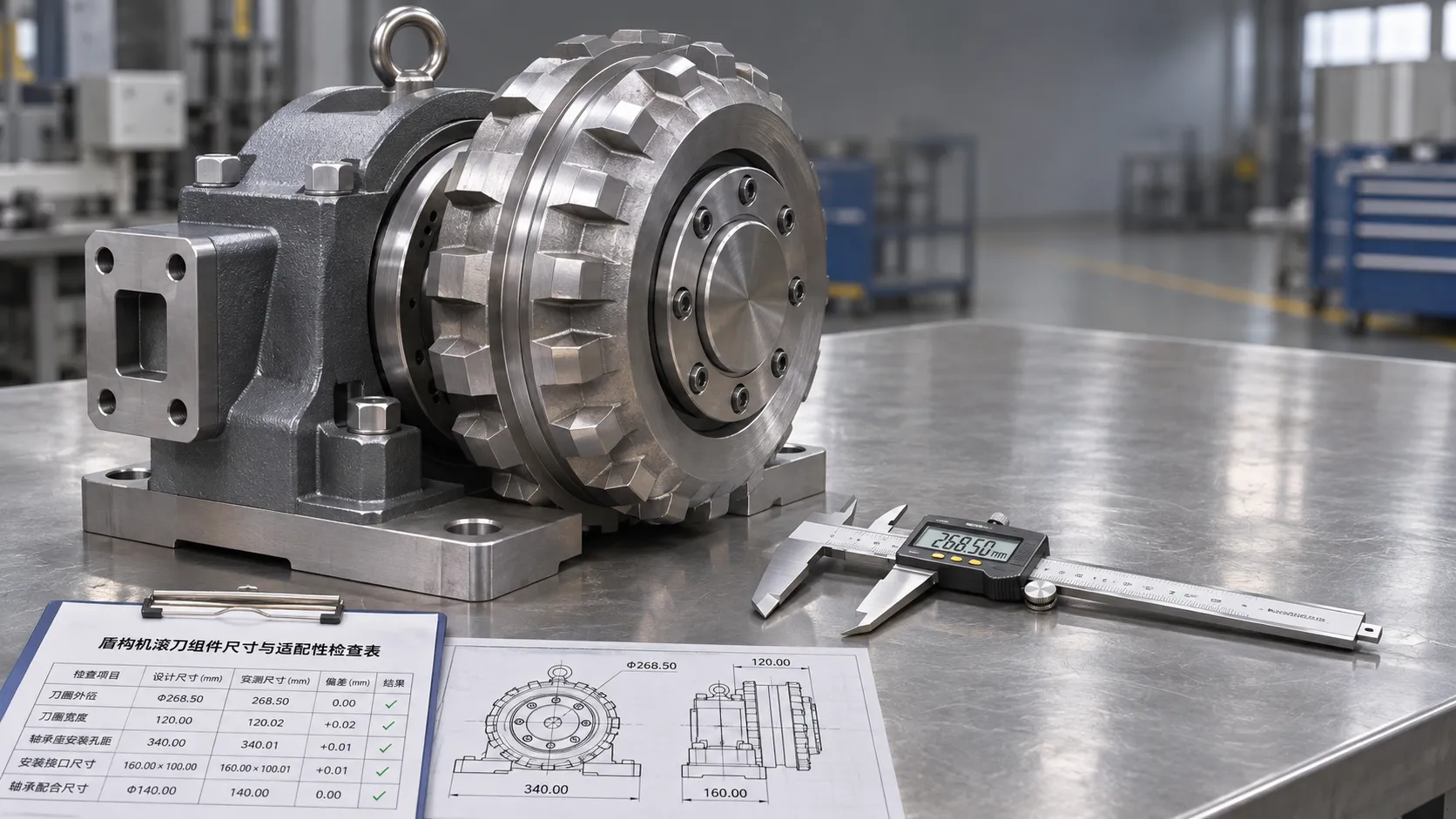
Choosing a TBM Components Supplier: Lead Times, Quality and Compatibility
Choose a TBM components supplier with confidence. Compare lead times, quality evidence and compatibility to reduce procurement risk and keep your project moving.

Mining Equipment Market Could Reach $19.42 Billion by 2033, Report Says
Mining equipment market could reach $19.42 billion by 2033. Explore how electrification, automation and surface mining demand are shaping the industry's outlook.
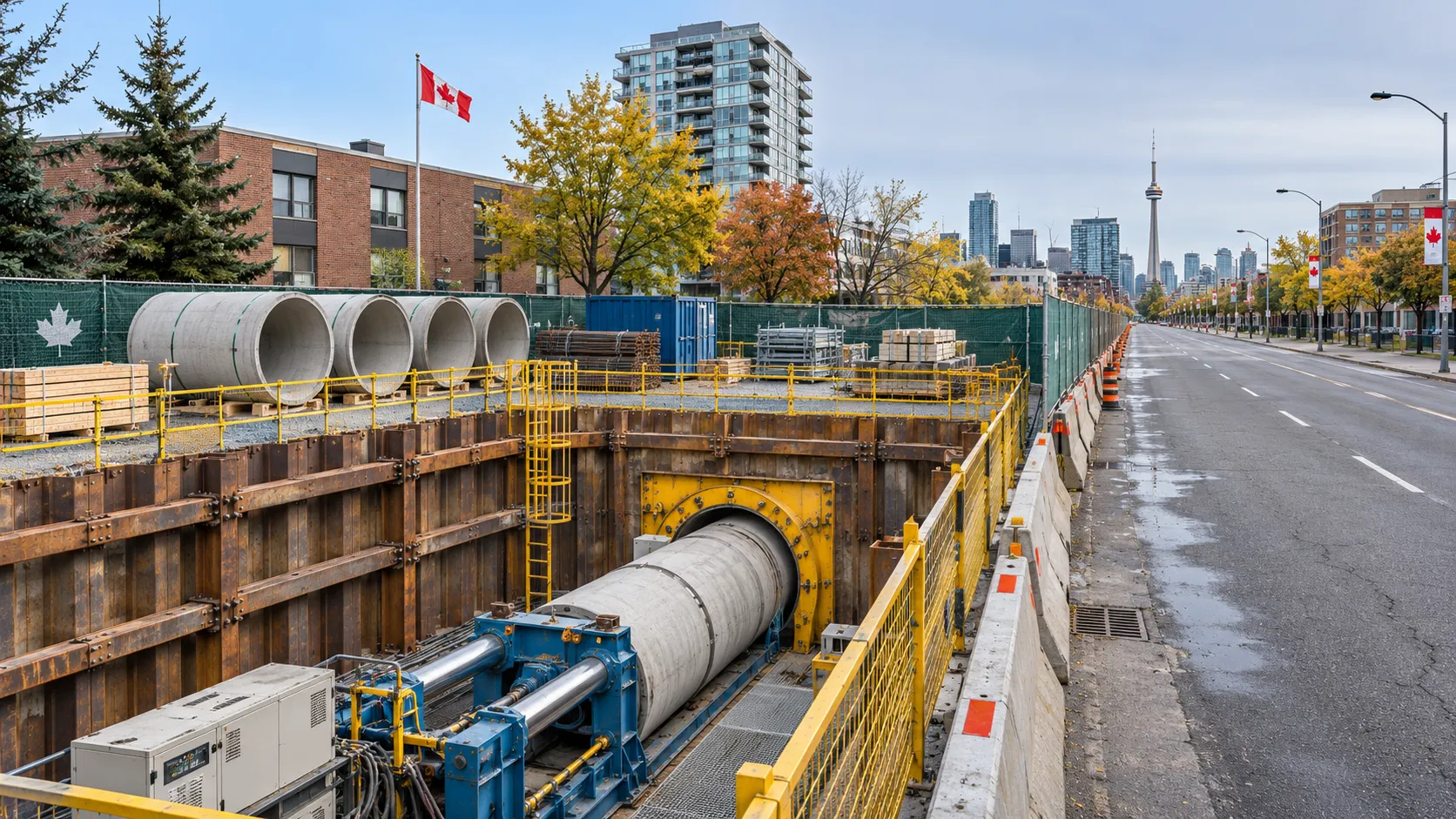
Selecting Municipal Trenchless Contractors in Canada: Key Bid Criteria
Municipal trenchless construction contractors Canada buyers can trust: compare bid criteria, technical risks and costs to make a confident award decision.
Related News
- 00
0000-00
Mega Tunnel Contractors: How to Evaluate Experience and Project Risks - 00
0000-00
Hudson Tunnel Project’s Second TBM Begins Excavating South Tunnel - 00
0000-00
How Bolting Jumbo Automation Works in Underground Rock Support - 00
0000-00
China’s Transport Ministry Issues Highway Tunnel Upgrade Standard - 00
0000-00
Smart Underground Mining Analytics: Using Equipment Data to Reduce Downtime
Weekly Insights
Stay ahead with our curated technology reports delivered every Monday.