
Mining Transport Truck Supplier Evaluation: Fleet Compatibility, Spares, and Delivery Risk





Selecting a mining transport truck supplier is more than comparing payload ratings and quoted purchase prices. A haulage truck sits inside a production system shaped by loading equipment, road geometry, maintenance practices, operator capability, fuel or charging infrastructure, and mine planning. A truck that looks economical in a quotation can become expensive when it creates dispatch delays, needs non-stocked parts, or arrives after the stripping or expansion schedule has already moved on.
For procurement teams, the central question is not simply which supplier can provide the largest truck. It is whether the proposed fleet can sustain the intended material movement at a predictable lifecycle cost and with acceptable supply risk. This applies to conventional mechanical-drive and electric-drive haul trucks, emerging battery-electric platforms, and specialized underground transport units alike.
Start With the Haulage System, Not the Truck Brochure
A credible mining transport truck supplier should be evaluated against the actual haulage circuit. Procurement needs input from mine planning, operations, maintenance, safety, and, increasingly, automation and energy teams before issuing a final technical comparison. Payload alone says little about how a truck will behave on a specific route.
The practical starting point is a route profile: loading tool, material density and fragmentation, haul distance, sustained gradients, rolling resistance, road width, turning radius, dumping arrangement, ambient temperature, altitude, and expected shift pattern. Those conditions affect cycle time, tyre loading, braking demand, fuel consumption, battery draw, structural stress, and service intervals. A supplier should be able to explain the assumptions behind its performance estimates rather than presenting a generic output figure.
Compatibility with the loading fleet deserves special attention. The relationship between excavator or loader bucket size and truck body capacity influences pass matching, loading time, spillage, and payload variation. Too few passes can make payload control difficult; too many passes can extend the loading cycle and reduce truck availability at the face. Body selection also matters. Abrasive hard rock, wet clay-bearing overburden, and low-density bulk material can require very different liner, body, and heating arrangements.
Existing fleet commonality often has greater financial value than a marginally lower acquisition price. If a site already has established diagnostic tools, trained technicians, compatible lubricants, tyre practices, and a proven component-rebuild pathway, introducing an entirely new truck platform needs a strong operating case. Mixed fleets are sometimes unavoidable, particularly during staged mine expansion, but they can multiply the number of parts, software interfaces, and training requirements that the site must manage.
Assess Compatibility at Three Levels
Fleet compatibility is broader than whether trucks carry similar tonnes. It should be tested at the physical, operational, and digital levels.
Digital fit is no longer an optional technical discussion. A truck may produce useful condition data, but the value is limited if the mine cannot access, interpret, or combine that data with loading, fuel, tyre, and dispatch records. Procurement documents should clarify who owns operational data, whether raw data can be exported, what interfaces are available, and whether remote software changes require supplier approval. These terms can become particularly important where autonomous haulage or remote operations are anticipated later in the asset life.
For electric mining trucks, compatibility extends to the energy system. Procurement should distinguish between a truck that is technically electric and a truck that can be reliably operated within the site’s charging, trolley-assist, substations, cable routing, battery handling, and emergency-response arrangements. On long downhill routes, regenerative braking may influence energy planning, but the result depends on route characteristics, operating control strategy, battery acceptance, and the wider electrical architecture. It should not be assumed from a headline feature alone.
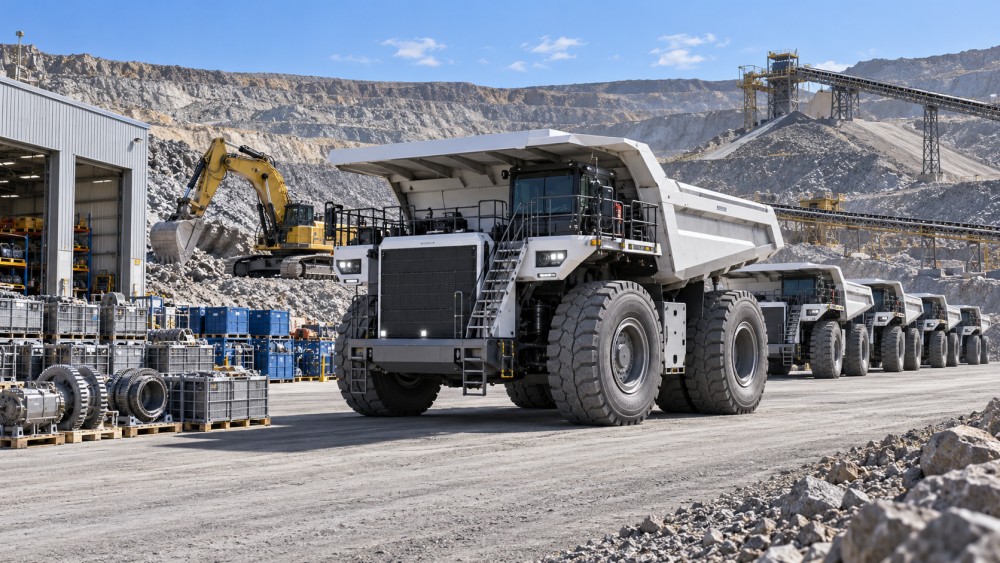
Spare Parts Are a Supply Strategy, Not an Afterthought
Many truck purchase evaluations give excessive attention to the unit price and insufficient attention to the first two years of parts consumption. In mining, a parked truck can affect excavator utilization, crusher feed, stripping progress, and contractor performance. The direct cost of a missing component is often smaller than the production consequence of waiting for it.
A supplier’s parts proposal should therefore be reviewed as a working maintenance plan. Ask for an equipment-specific recommended commissioning package, routine service parts by operating-hour interval, and a list of critical long-lead items. The supplier should identify which components are stocked locally, which are held in a regional hub, and which are manufactured or rebuilt only after order. “Available on request” is not a meaningful availability commitment.
Criticality must be defined with site maintenance personnel. A consumable filter can normally be planned. A proprietary electronic control module, high-voltage connector, hydraulic pump, wheel motor component, or suspension part may immobilize the truck and demand a different stocking decision. The correct inventory level depends on fleet size, component reliability history where demonstrable, supplier replenishment time, repair capability, and the operational cost of lost availability. It is rarely sensible to apply the same inventory rule to every item.
Procurement should also look beyond new parts. Can major components be repaired locally or regionally? Is there a documented exchange or rebuild option? Are special tools, diagnostic licenses, and calibration equipment available to the site? A supplier that retains exclusive control over basic fault finding may create long-term dependency, especially at remote mines where field-service travel is constrained by weather, visas, flight schedules, or site-access rules.
Questions that reveal the real parts position
- Which items are required before commissioning, and are they included in the commercial scope?
- What are the replenishment routes for critical parts, including customs clearance and inland transport?
- Which parts are proprietary, and what diagnostic access is available to the mine?
- How are superseded part numbers and software revisions communicated to the operator?
- Can the supplier provide a recommended site stock list based on the planned fleet size and operating environment?
- What local technical coverage exists outside normal working hours, and what is the escalation path for immobilizing failures?
These questions do not guarantee uptime, but vague responses are a useful warning. A reliable supplier will acknowledge uncertainty where it exists, separate standard lead times from exceptional ones, and explain what information is needed to develop a defensible stockholding recommendation.
Delivery Risk Begins Before the Purchase Order
Mining truck delivery is not a single date. It is a chain of design release, component procurement, fabrication, factory testing, shipping, port handling, inland transport, site assembly where needed, commissioning, operator training, and final acceptance. The truck can be physically present yet unavailable for production if site readiness, technical documentation, software setup, or parts support has not caught up.
A mining transport truck supplier should provide a milestone schedule that identifies dependencies and responsibilities. This is more useful than a broad promise such as “delivery within a specified number of months.” Procurement should ask which date starts the clock: deposit receipt, final specification approval, letter of credit issuance, or completion of export documentation. If the truck includes non-standard bodies, autonomous interfaces, battery systems, fire suppression, or country-specific compliance equipment, clarify whether those elements sit on the critical path.
Transport planning can be underestimated. Large haul trucks may be shipped partly disassembled, creating lifting, laydown, assembly, and inspection requirements at the destination. Road permits, bridge limits, port congestion, seasonal access, and border procedures can affect actual arrival. For remote operations, it is prudent to map the last-mile route rather than assuming that a port arrival date equals mine delivery.
Contract terms should distinguish delay caused by supplier-controlled manufacturing issues from delays tied to buyer approvals, logistics providers, site access, force majeure, or regulatory actions. The objective is not to shift every risk onto one party. It is to ensure that an expansion plan is not built around an ambiguous delivery assumption. Phased delivery may reduce exposure when mine development, power infrastructure, or workforce readiness is still evolving.
Compare Total Cost of Ownership Without Pretending It Is Exact
Total cost of ownership is the right lens, but it should not be turned into false precision. Inputs such as road condition, operator behavior, tyre life, diesel price, electricity tariff, utilization, and component life can change materially over a truck’s working life. The better approach is to model transparent scenarios using the same assumptions for each supplier.
Include acquisition price, freight, duties where applicable, assembly, commissioning, initial spares, training, required workshop upgrades, energy or fuel infrastructure, planned maintenance, major component strategy, tyre exposure, software subscriptions, and end-of-life considerations. Then examine how the outcome moves under different cycle-time, utilization, and energy-price assumptions. A supplier with a higher capital price may still present a reasonable operating case; equally, a low-price offer can conceal a costly support model.
Warranty language needs the same scrutiny. A long warranty headline has limited protection if exclusions are broad, reporting obligations are impractical, or the supplier cannot respond within the mine’s required operating window. Confirm what constitutes normal wear, how payload and operating data are used in a claim review, whether software updates are included, and who carries labour and travel costs for field interventions.
A More Defensible Supplier Decision
The strongest evaluation process combines technical fit, maintainability, supply resilience, commercial terms, and delivery readiness in one decision record. It should document not only the preferred supplier, but also the assumptions that make that choice valid. If a proposal depends on local parts stock, a named service partner, a particular energy arrangement, or a promised factory slot, those conditions should be reflected in the contract and implementation plan.
UTMD’s focus on smart underground mining transport systems and high-duty haulage reflects a wider shift in procurement thinking. Whether reviewing massive open-pit mining dump trucks, battery-powered underground LHD fleets, or transport equipment supporting tunnel and mine development, the asset must be considered as part of a connected production environment. Mechanical reliability, zero-emission requirements in confined spaces, sensing systems, and operational data are increasingly linked rather than separate procurement categories.
Before committing capital, validate the haul profile, test fleet and digital compatibility, establish the critical-spares plan, and turn delivery promises into visible milestones. That discipline will not remove every operational surprise. It does, however, make it far less likely that a mining transport truck supplier is selected on purchase price while the mine absorbs the more expensive risks later.
Related News
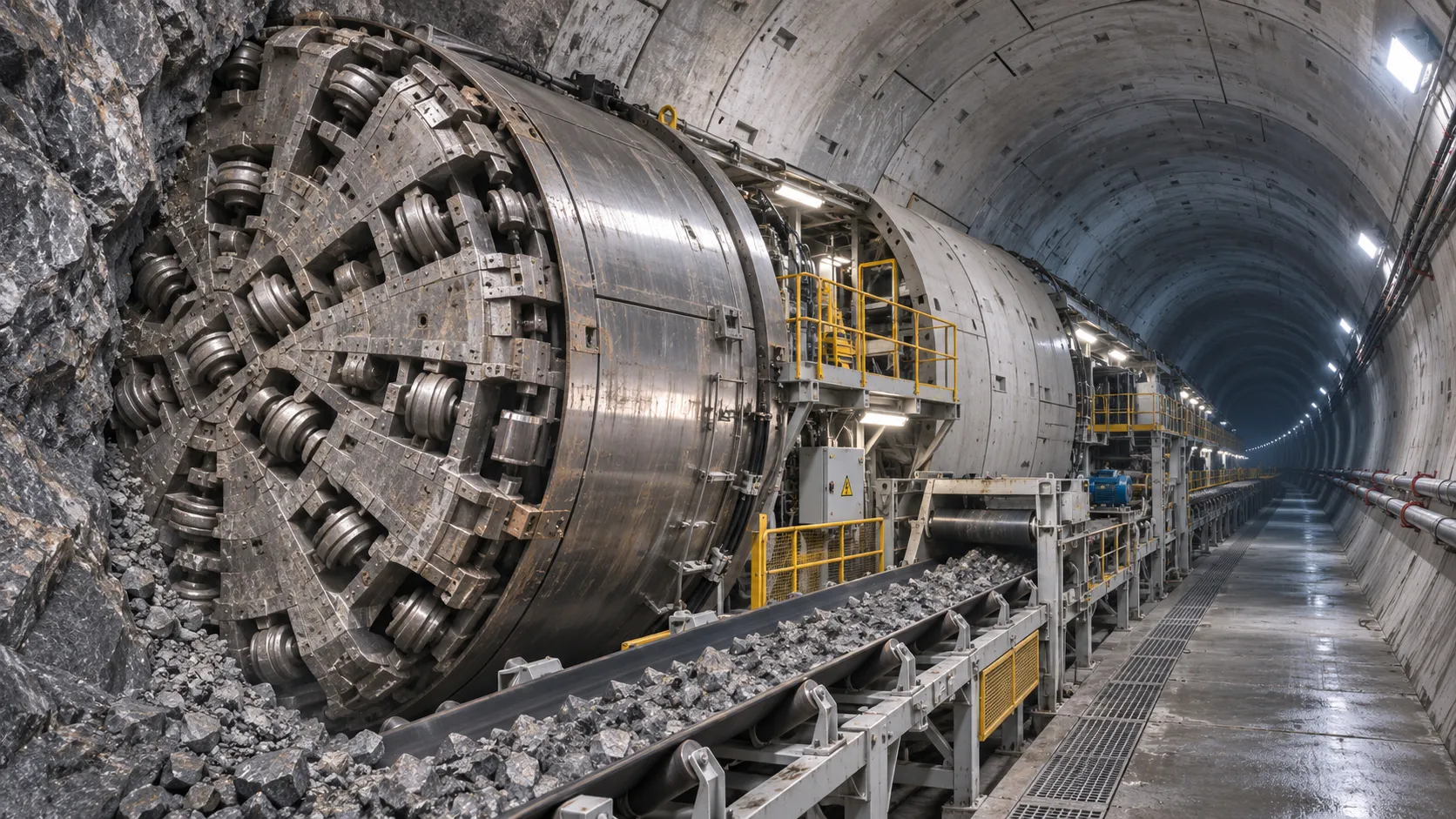
How TBM Excavation Works in Rock and Soft Ground: A Practical Guide
TBM Excavation in rock and soft ground explained: compare machine types, ground support, spoil removal, and the factors that guide smarter project planning.
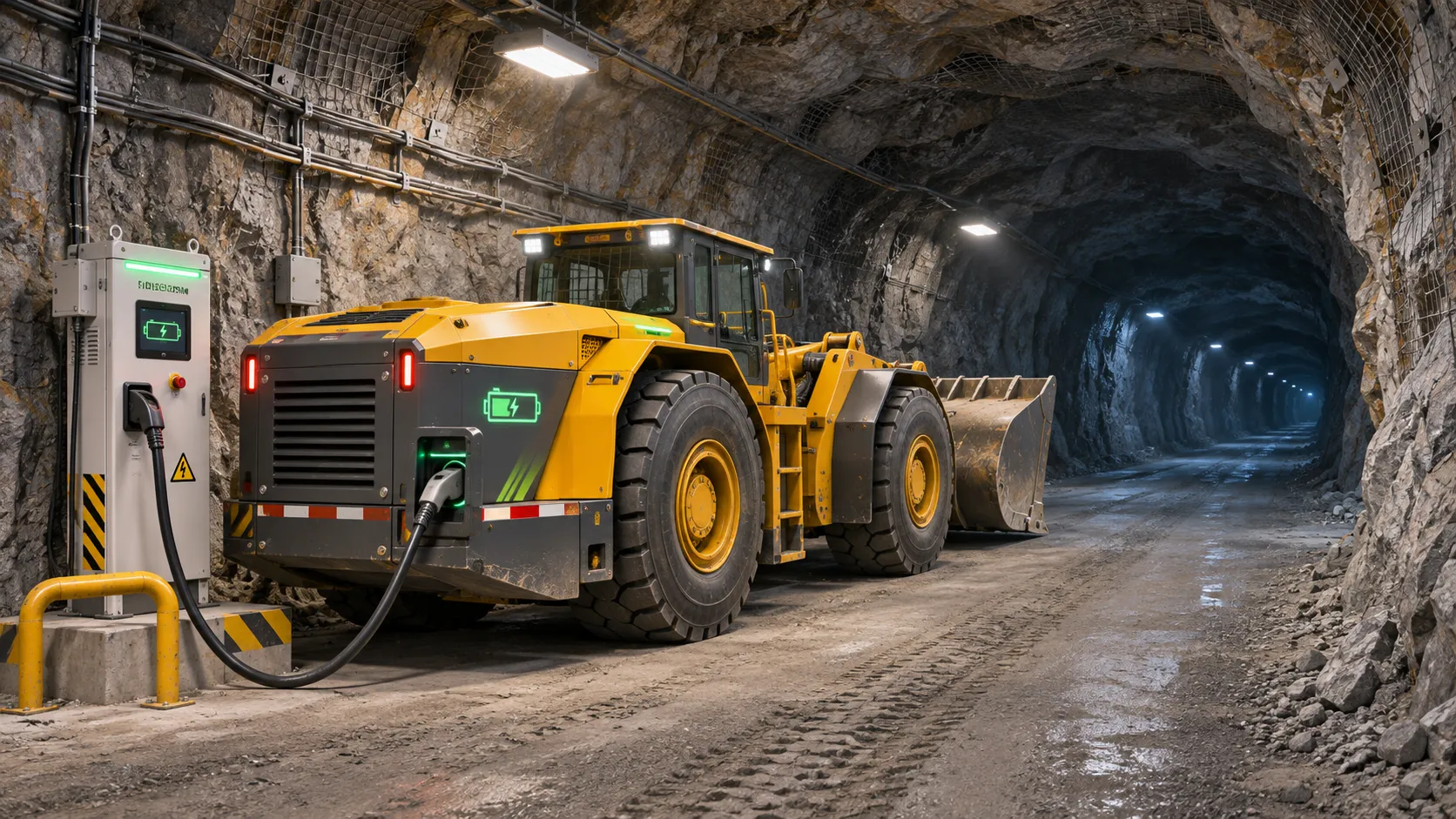
Choosing a Zero-Emission Underground Equipment Supplier: What to Check
Choosing a zero emission underground equipment supplier? Compare duty-cycle performance, charging, safety, total costs and support before you commit.
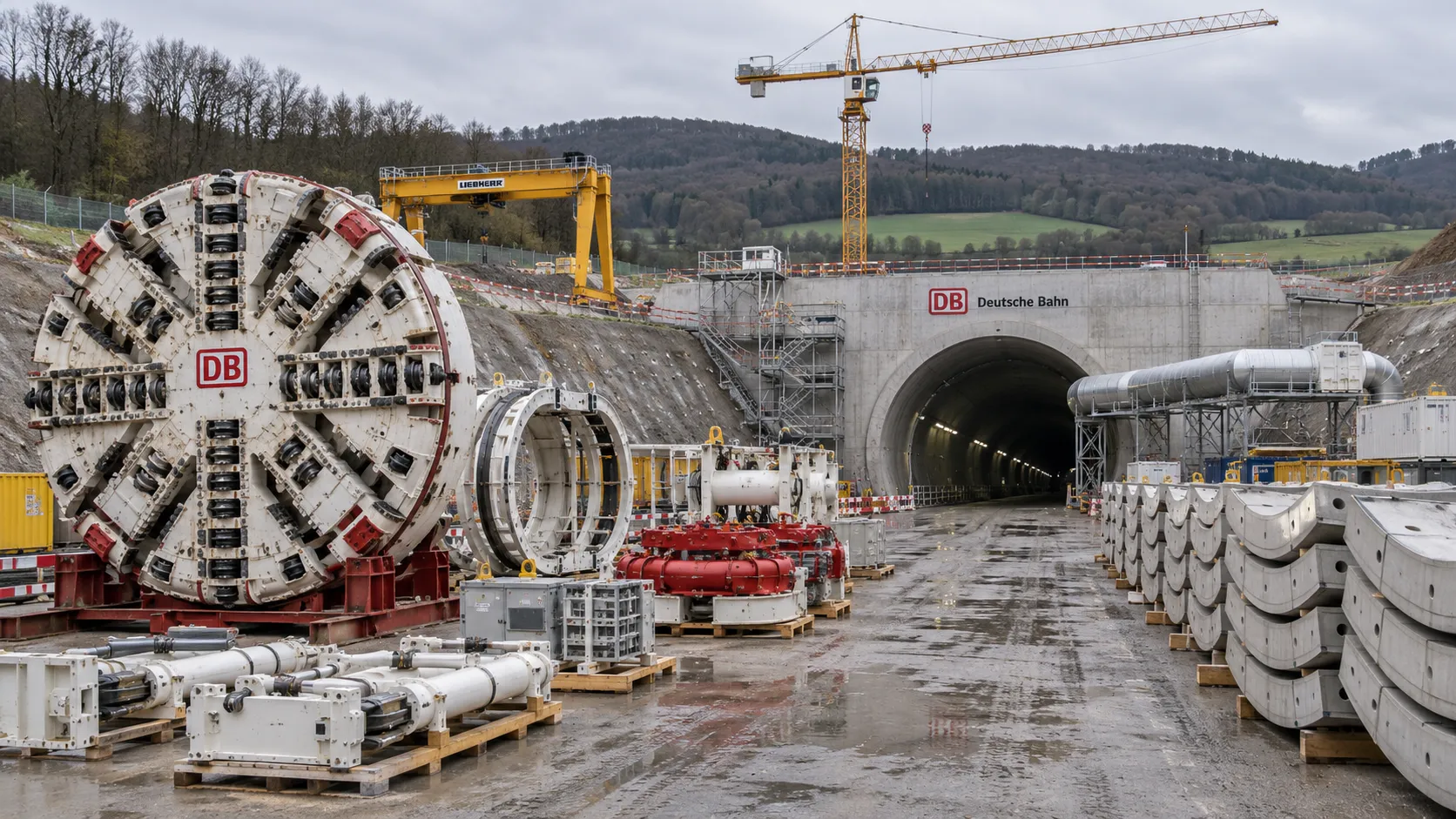
Construction Starts on Germany's Pfaffensteig Rail Tunnel, With Two TBMs Planned
Pfaffensteig rail tunnel construction is underway in Germany. Discover how two planned TBMs will support the 11-kilometre project near Stuttgart.
How Real-Time Underground Mapping Systems Work in Tunneling
Discover how real-time underground mapping systems guide tunneling teams, integrate sensor data, and support confident decisions with verified accuracy.
First Mechanized Tunnel Crossing Beneath the Panama Canal Completed
Panama Canal tunnel crossing: Explore the reported Metro Line 3 milestone and what it could mean for future underwater tunneling projects.
Underground Utility Construction Equipment: Choosing by Ground Conditions
Choose underground utility construction equipment with confidence. Compare trenching, HDD, microtunnelling and TBMs by ground conditions, risk and cost.
China Sets Tunnel Boring Machine Export Controls as India Pushes Local Production
China tunnel boring machine export controls could reshape procurement as India pushes local production. Explore potential supply and project impacts.
Choosing a Trenchless Pipeline Installation Contractor: Key Qualifications
Choose a trenchless pipeline installation contractor with confidence. Learn how to assess experience, equipment, safety, costs, and project risks before you hire.
China's 70% TBM Share and Export Controls Challenge India's Local Production
China's TBM export controls could challenge India's local production and infrastructure sourcing. Explore the potential risks and procurement options.
Related News
- 00
0000-00
How TBM Excavation Works in Rock and Soft Ground: A Practical Guide - 00
0000-00
Choosing a Zero-Emission Underground Equipment Supplier: What to Check - 00
0000-00
Construction Starts on Germany's Pfaffensteig Rail Tunnel, With Two TBMs Planned - 00
0000-00
How Real-Time Underground Mapping Systems Work in Tunneling - 00
0000-00
First Mechanized Tunnel Crossing Beneath the Panama Canal Completed
Weekly Insights
Stay ahead with our curated technology reports delivered every Monday.