
Underground Mining Truck Manufacturers for Narrow Veins: Key Specification Checks





Underground Mining Truck Manufacturers for Narrow Veins: Key Specification Checks
Selecting an underground mining truck manufacturer for narrow-vein operations requires more than comparing advertised payload ratings or engine power figures in a supplier brochure.
Technical evaluators must confirm that dimensions, turning performance, gradeability, emissions, braking, maintenance access, and digital controls fit actual underground constraints and operating practices.
The right machine is the one that sustains safe tonnes per hour through restricted headings, changing ground conditions, and long maintenance intervals without creating bottlenecks.
This guide provides a practical specification-review framework for comparing underground mining truck manufacturers and identifying the trade-offs that matter before procurement, trials, and fleet deployment.
Start With the Mine Envelope, Not the Truck Datasheet
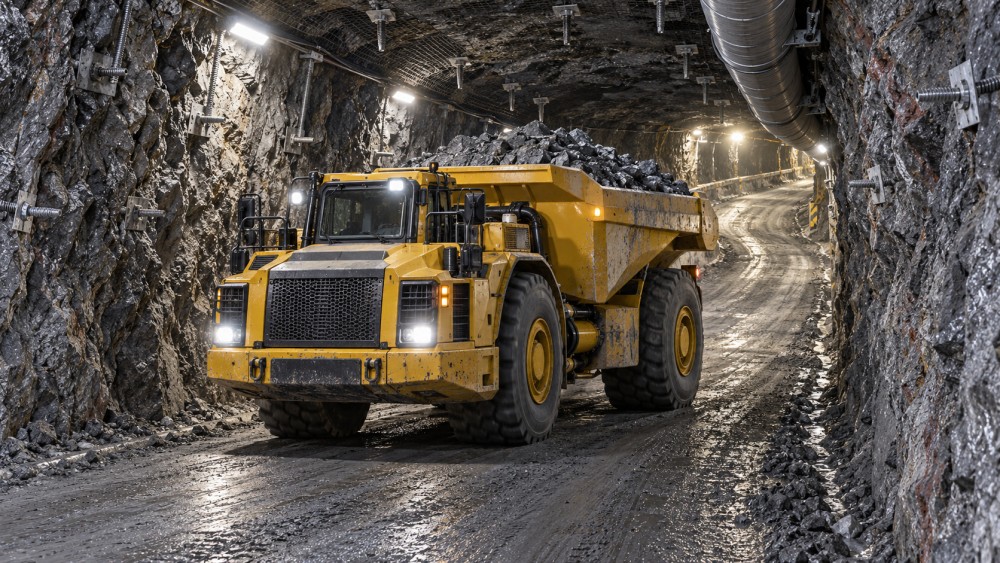
Narrow-vein haulage is governed first by the mine envelope: drift width, back height, intersection geometry, ramp profile, ground support, and traffic separation requirements.
An underground mining truck manufacturer may offer several compact models, but nominal vehicle dimensions rarely reveal the clearance needed during real loading, turning, and passing movements.
Build a route-by-route constraint map before requesting quotations. Include the tightest production drift, the smallest intersection, ramp transitions, refuge bays, and maintenance workshop access.
Evaluate dynamic envelope rather than parked width alone. Tire deflection, articulation angle, body swing, suspension movement, and operator steering variation can consume critical clearance underground.
For narrow veins, a smaller truck can outperform a larger alternative when it avoids drift rehabilitation, reduced-speed restrictions, frequent reversing, or conflict with personnel transport vehicles.
Ask each manufacturer to provide certified dimensions at maximum articulation, steering lock, and suspension travel. CAD overlays against surveyed mine plans are more useful than general drawings.
Also verify transport dimensions and assembly requirements. A truck that fits working headings may still require difficult underground disassembly before it can reach the production level.
Specification review should therefore begin with minimum clearance margins approved by operations, geotechnical, ventilation, and safety teams, rather than a vendor's standard application recommendation.
Check Width, Height, and Turning Radius Under Operating Conditions
Overall width is commonly the first screening criterion, yet tire selection, wheel-rim protection, mudguards, mirrors, and optional safety systems can materially change the delivered width.
Request both shipping width and operating width, including any protrusions that remain exposed when the vehicle articulates or travels beside uneven walls and installed services.
Height requires the same discipline. Measure body-up clearance, exhaust or cooling-package clearance, antenna location, fire-suppression hardware, and clearance below supported or deteriorating backs.
Turning radius should be assessed as inside radius, outside radius, and swept path. A single published figure cannot confirm that the truck can negotiate mine intersections safely.
Articulated trucks often provide strong maneuverability, but articulation creates rear-frame swing. This can strike cable trays, ventilation ducting, service lines, or ground-support elements near corners.
Require a turning simulation using the mine's surveyed intersection geometry and expected road crown. Include the truck's largest approved tire package and lowest expected friction conditions.
Consider reversing requirements as carefully as forward turning. Narrow loading bays and ore passes may demand repeated reverse movements, increasing cycle time and collision exposure.
A manufacturer with a slightly wider machine may remain viable if its steering geometry, camera coverage, and predictable articulation reduce maneuvering time at constrained loading points.
Validate Payload Against Density, Volume, and Road Quality
Payload is valuable only when the truck can carry it within legal axle loads, available drift dimensions, loader bucket matching, and the mine's actual ore characteristics.
Compare rated payload with struck capacity, heaped capacity, body geometry, and ore bulk density. Light, bulky ore can limit volume before the truck reaches rated tonnes.
Conversely, dense ore, waste rock, or wet material can cause overloads when operators fill bodies by visual estimate. Overloading accelerates tire, frame, brake, and drivetrain wear.
Ask for axle-load distribution at empty, nominal payload, and maximum permissible payload. Uneven distribution affects traction, braking stability, suspension fatigue, and roadway damage.
Body design also deserves scrutiny. Rock retention, tailgate sealing, body liner options, and dumping angle influence carryback, spillage, and cleanup labor in restricted underground roads.
Match truck capacity to the loading fleet rather than selecting the largest feasible vehicle. Poor bucket-to-body matching creates excessive passes, uneven loading, and unnecessary loader waiting.
Cycle-time modeling should include loading, travel, queuing, dumping, return travel, and delays. A five-tonne payload advantage may disappear when the larger truck moves more slowly.
For technical evaluators, the useful output is cost per delivered tonne at the ore pass or crusher, measured across expected road grades and congestion scenarios.
Assess Gradeability, Retarding Capacity, and Brake Heat Management
Ramp haulage is often the decisive constraint in narrow-vein mines. Gradeability must be evaluated at the planned payload, road resistance, altitude, ambient temperature, and tire condition.
Do not accept a maximum-grade claim without context. Manufacturers may quote short-duration capability, empty-machine performance, or favorable rolling resistance that does not reflect your mine.
Request rimpull curves, speed-versus-grade charts, and cycle simulations for each planned haul route. Confirm whether stated performance includes derating from heat or altitude.
Downhill control deserves equal attention. Service brakes are not designed to absorb continuous retarding energy during long declines, especially when trucks carry dense ore loads.
Review retarder type, continuous braking rating, brake cooling, transmission response, and control logic. For electric or hybrid systems, assess regenerative braking limits and battery acceptance.
Ask manufacturers to state allowable descent length, gradient, payload, and speed before thermal restrictions occur. This should be a documented operating envelope, not a verbal assurance.
Evaluate fail-safe braking architecture, park-brake holding capacity, emergency brake performance, and recovery procedures after a control-system fault. Underground escape routes leave little room for error.
Brake monitoring should provide operators and maintenance teams with actionable temperature, pressure, and fault data. Alerts must be understandable without distracting drivers in poor visibility.
Compare Diesel, Battery-Electric, and Hybrid Powertrains Realistically
Powertrain selection affects much more than fuel cost. In confined workings, it changes ventilation demand, heat rejection, charging infrastructure, duty-cycle flexibility, and maintenance planning.
Diesel trucks remain practical where haul distances are long and electrical infrastructure is limited. However, their emissions directly increase ventilation energy and compliance pressure.
Confirm the engine's applicable emissions standard, installed aftertreatment configuration, sulfur sensitivity, regeneration behavior, and expected performance under high-altitude or high-temperature underground conditions.
Battery-electric trucks can reduce diesel particulate exposure and ventilation demand, but their viability depends on charging time, battery-swap logistics, grid capacity, and shift scheduling.
Request usable battery energy rather than nominal pack capacity. Usable energy, expected degradation, thermal-management load, and reserve requirements determine productive operating range.
For battery swapping, inspect station footprint, lifting method, connector durability, battery tracking, fire controls, and contingency procedures for blocked routes or unavailable spare packs.
Hybrid options may improve ramp efficiency and reduce fuel consumption, but they add system complexity. Examine service support, diagnostic capability, and component availability at your operating location.
Any underground mining truck manufacturer should provide site-specific energy modeling. Generic zero-emission claims are insufficient without haul-profile data and a defined charging or swapping strategy.
Examine Reliability Through Service Access and Component Life
Narrow-vein mines cannot absorb long truck outages easily. Fleet redundancy is limited, workshop space is restricted, and production interruptions quickly affect development and stoping schedules.
Inspect service access in person whenever possible. Check ground-level access to daily fluids, filters, electrical isolators, fire systems, brake components, and diagnostic ports.
A compact truck should not require major component removal merely to reach routine service items. Tight packaging may reduce dimensions while increasing maintenance labor and downtime.
Ask for component-life assumptions behind planned maintenance intervals. Transmission, axle, hydraulic, tire, brake, and battery-life projections should reflect comparable underground applications, not surface duty cycles.
Review the manufacturer’s failure data by operating hours and by component category. Mean time between failures is useful only when supported by repair duration and parts availability.
Evaluate local dealer capability separately from manufacturer brand strength. Confirm technician coverage, underground-service experience, critical-spares stocking, escalation channels, and diagnostic-tool access.
Check whether the supplier permits mine personnel to access fault codes, service documentation, and calibration procedures. Restricted access can extend downtime during remote or night-shift failures.
Contractual availability commitments should define exclusions carefully. Road conditions, operator behavior, charging infrastructure, and consumables can otherwise become disputed causes of missed targets.
Verify Safety Systems for Confined, Mixed-Traffic Workings
Safety equipment must suit underground visibility, noise, dust, and traffic patterns. Standard automotive-style features may not perform reliably in wet, reflective, or poorly illuminated headings.
Specify camera coverage around articulation zones, rear corners, and dump areas. Cameras should remain usable after exposure to mud, dust, vibration, and cleaning practices.
Proximity-detection systems require careful compatibility testing. Confirm interaction with personnel tags, other mobile equipment, blasting protocols, communication networks, and any existing collision-avoidance platform.
Review emergency egress, fire suppression, automatic shutdown logic, seat restraint design, visibility aids, and operator alarm hierarchy. Safety alerts must be clear without becoming constant nuisance alarms.
Dump stability is especially important around ore passes and constrained stockpiles. Verify body-raised interlocks, tipping-angle alarms, and behavior on uneven or soft road surfaces.
Consider ergonomic risks alongside collision hazards. Cab access, seat adjustment, control reach, vibration exposure, air quality, and visibility affect operator fatigue throughout long underground shifts.
For remote or tele-remote operation, validate latency, camera redundancy, loss-of-communication behavior, and local recovery procedures. Automation should reduce exposure without making recovery unnecessarily complex.
Safety evaluation should include operators and maintenance technicians in addition to engineers. Their practical observations frequently identify access, visibility, and alarm issues missed by specification sheets.
Use Digital Data and Acceptance Testing to Separate Claims From Performance
Telematics can turn truck selection into an evidence-based process. Prioritize systems that capture payload, speed, fuel or energy use, brake temperatures, fault history, idle time, and utilization.
Confirm data ownership, export formats, API availability, retention periods, and cybersecurity responsibilities. Useful data should integrate with the mine's fleet-management and maintenance-planning platforms.
Ask whether the system can distinguish delay causes, such as traffic congestion, charging waits, mechanical faults, operator behavior, or loading-unit availability. This supports future optimization decisions.
Before award, convert major requirements into a factory acceptance test and site acceptance test. Include dimensions, payload accuracy, grade performance, braking, emissions, and safety-system functionality.
Site testing should use representative ore, haul roads, operators, and shift patterns. Demonstrations on level, clean test tracks provide limited evidence for narrow-vein operating conditions.
Define performance guarantees using measurable metrics: tonnes per operating hour, energy per tonne-kilometer, availability, brake-temperature limits, and maximum permitted unplanned downtime.
Keep a structured deviation register during trials. Each unresolved issue should have an owner, corrective action, verification method, commercial consequence, and agreed closure date.
This process gives technical evaluators a defensible basis for selecting an underground mining truck manufacturer, rather than relying on payload labels or anecdotal reference visits alone.
Build a Decision Matrix That Reflects Lifecycle Risk
A weighted decision matrix helps prevent payload, purchase price, or brand reputation from dominating a selection that has wider operational and safety consequences.
Weight dimensions and maneuverability heavily when mine geometry is fixed. Weight energy infrastructure and ventilation impact heavily when the operation is evaluating battery-electric transport.
Include maintainability, local support, parts lead time, safety integration, data compatibility, and residual value. These factors often determine lifecycle cost more than initial acquisition price.
Use sensitivity analysis to test uncertain assumptions, particularly haul distance, ore density, road rolling resistance, battery degradation, and diesel or electricity price forecasts.
Document why each score was assigned and identify evidence quality. A supplier assertion, a reference-mine result, and a site-tested measurement should not receive equal confidence.
Where uncertainty remains high, consider a staged purchase with a monitored pilot unit. This can validate actual cycle times, energy use, maintenance workload, and operator acceptance.
The most suitable underground mining truck manufacturer is the one able to support a verified operating solution, not simply deliver the smallest or highest-capacity machine.
For narrow-vein operations, disciplined specification checks protect productivity and safety simultaneously. Select against mine reality, test critical claims, and evaluate every tonne across its full lifecycle.
Related News
How TBM Excavation Works in Rock and Soft Ground: A Practical Guide
TBM Excavation in rock and soft ground explained: compare machine types, ground support, spoil removal, and the factors that guide smarter project planning.
Choosing a Zero-Emission Underground Equipment Supplier: What to Check
Choosing a zero emission underground equipment supplier? Compare duty-cycle performance, charging, safety, total costs and support before you commit.
Construction Starts on Germany's Pfaffensteig Rail Tunnel, With Two TBMs Planned
Pfaffensteig rail tunnel construction is underway in Germany. Discover how two planned TBMs will support the 11-kilometre project near Stuttgart.
How Real-Time Underground Mapping Systems Work in Tunneling
Discover how real-time underground mapping systems guide tunneling teams, integrate sensor data, and support confident decisions with verified accuracy.
First Mechanized Tunnel Crossing Beneath the Panama Canal Completed
Panama Canal tunnel crossing: Explore the reported Metro Line 3 milestone and what it could mean for future underwater tunneling projects.
Underground Utility Construction Equipment: Choosing by Ground Conditions
Choose underground utility construction equipment with confidence. Compare trenching, HDD, microtunnelling and TBMs by ground conditions, risk and cost.
China Sets Tunnel Boring Machine Export Controls as India Pushes Local Production
China tunnel boring machine export controls could reshape procurement as India pushes local production. Explore potential supply and project impacts.
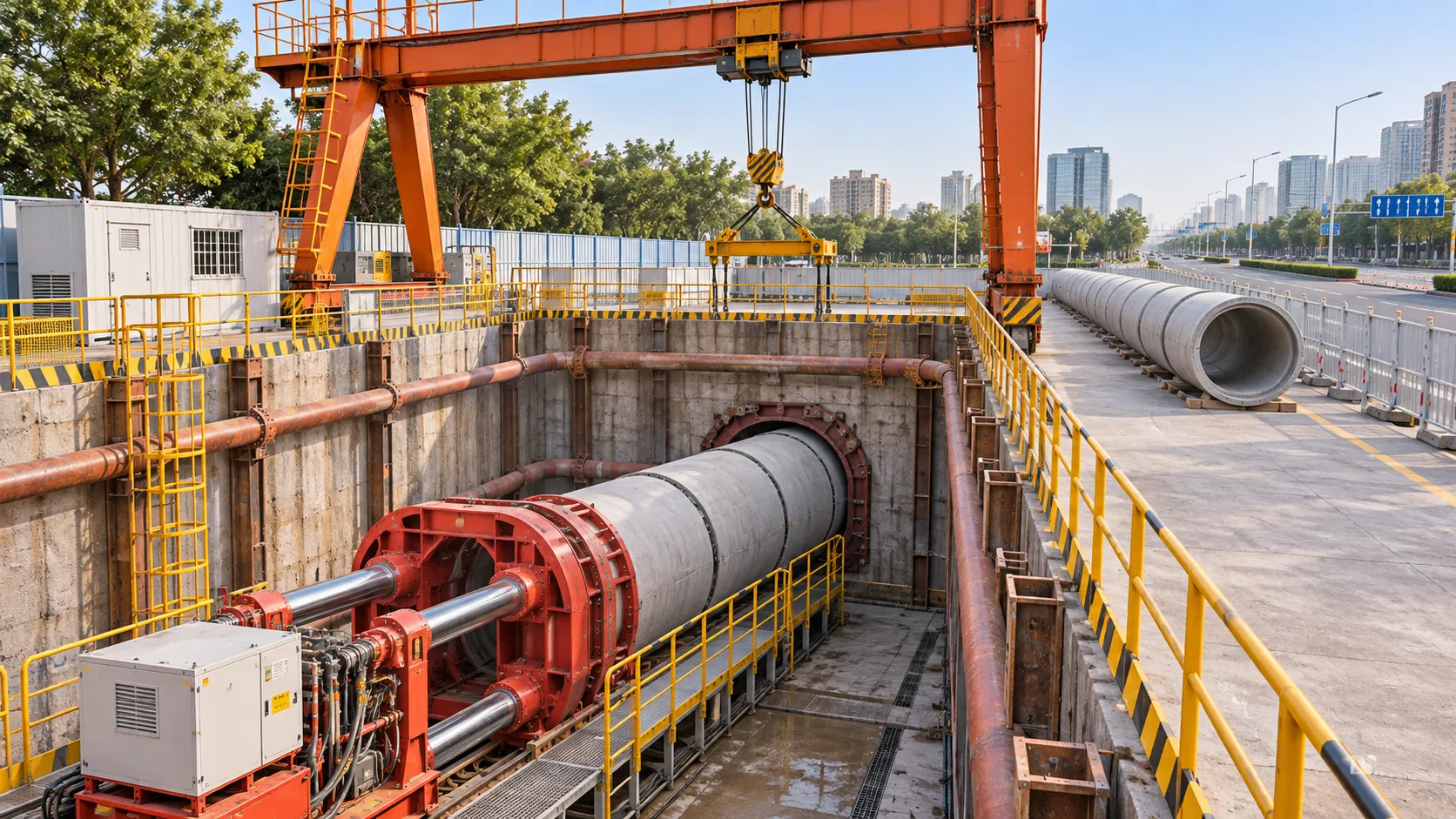
Choosing a Trenchless Pipeline Installation Contractor: Key Qualifications
Choose a trenchless pipeline installation contractor with confidence. Learn how to assess experience, equipment, safety, costs, and project risks before you hire.
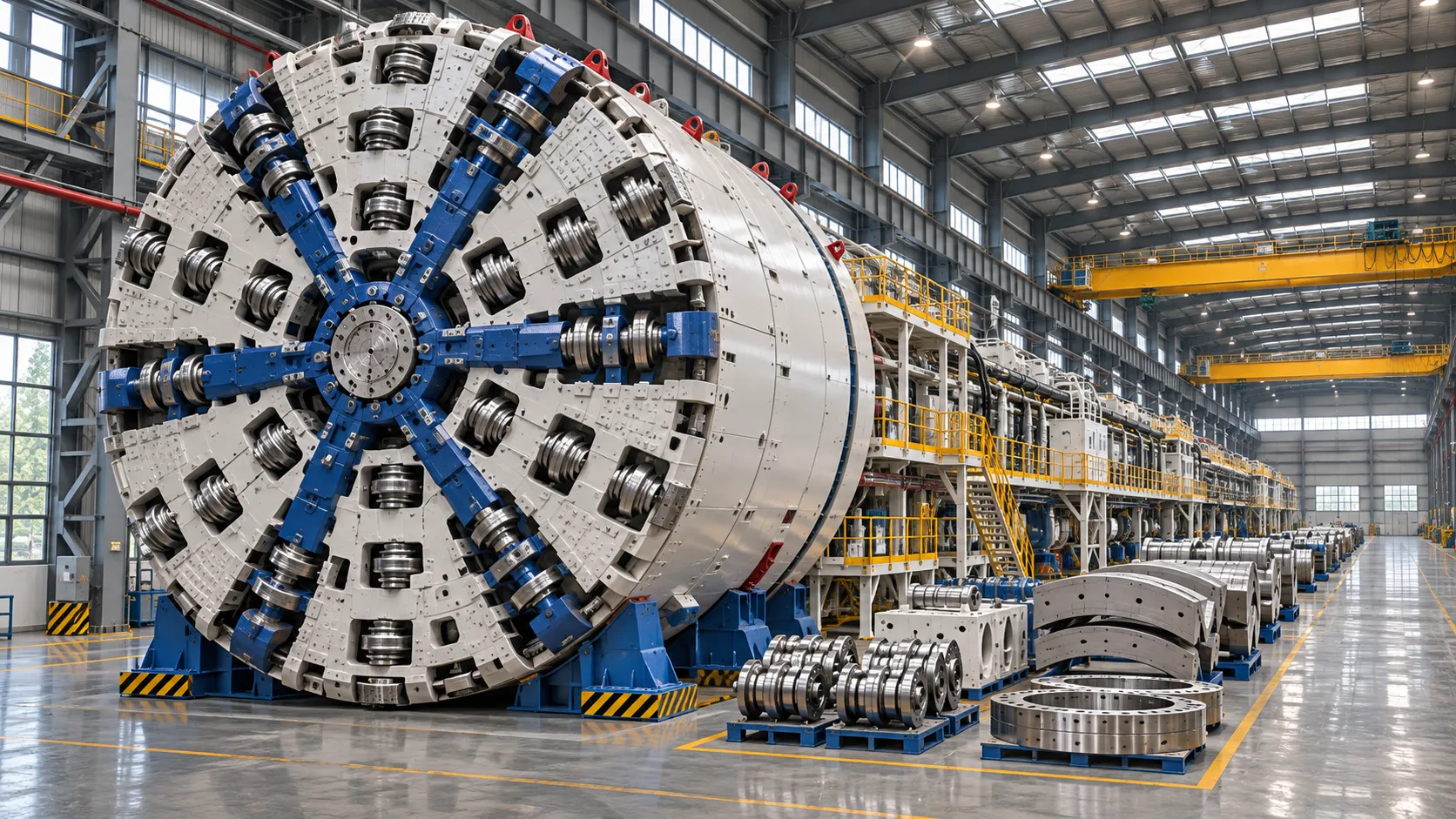
China's 70% TBM Share and Export Controls Challenge India's Local Production
China's TBM export controls could challenge India's local production and infrastructure sourcing. Explore the potential risks and procurement options.
Related News
- 00
0000-00
How TBM Excavation Works in Rock and Soft Ground: A Practical Guide - 00
0000-00
Choosing a Zero-Emission Underground Equipment Supplier: What to Check - 00
0000-00
Construction Starts on Germany's Pfaffensteig Rail Tunnel, With Two TBMs Planned - 00
0000-00
How Real-Time Underground Mapping Systems Work in Tunneling - 00
0000-00
First Mechanized Tunnel Crossing Beneath the Panama Canal Completed
Weekly Insights
Stay ahead with our curated technology reports delivered every Monday.