
Underground Mining Digitalization: Building a Data Strategy for Safer Production





Underground mining digitalization succeeds or fails on one issue: whether operational data can be trusted, connected, and acted on before conditions become unsafe or production losses become irreversible. Adding fleet telemetry, personnel tags, gas monitors, cameras, and maintenance software does not automatically create a safer mine. Without a common data strategy, these systems often remain separate reporting tools, leaving supervisors to reconcile conflicting screens, delayed records, and incomplete context.
The practical objective is not to collect the maximum possible volume of data. It is to create a controlled decision layer that links the state of the workplace, the condition of mobile and fixed assets, and the progress of the mining plan. When this connection is designed well, a ventilation alert can be assessed alongside equipment location, diesel or battery charging status, workforce presence, roadway access, and production activity. That is the foundation required for safer remote operation, autonomous haulage, electrified fleets, and more resilient underground production.
Begin with operational decisions, not a technology shopping list
A data strategy should start with the decisions that repeatedly create operational risk, delay, or avoidable cost. In underground mines, these decisions are usually time-sensitive and cross-functional. They include whether a heading is safe to enter after blasting, whether ventilation capacity matches equipment deployment, whether an LHD should continue operating with an emerging hydraulic or electrical fault, and whether a production delay is caused by ground conditions, traffic congestion, operator availability, or equipment downtime.
If the intended decision is unclear, data programs tend to accumulate isolated sensors and dashboards. The result may be technically impressive but operationally weak: location data that does not inform dispatch, maintenance alerts that are not visible in shift planning, or environmental monitoring that cannot be linked to people and equipment in the affected zone.
A useful test is simple: for each proposed data source, identify the operating decision it changes, the person or system able to act on it, the response time required, and the consequence of poor data quality. This immediately distinguishes critical data from information that is merely interesting.
- Safety-critical decisions require high confidence, clear ownership, and defined escalation logic. Examples include gas exceedances, ventilation failure, proximity events, fire detection, geotechnical alarms, and emergency muster status.
- Production-control decisions depend on current equipment availability, material flow, face readiness, traffic conditions, and shift progress against plan.
- Asset-management decisions require condition history, operating hours, fault codes, loading cycles, and maintenance records that can be interpreted in the context of how the machine has been used.
- Strategic decisions need consistent historical data to assess mine design, fleet replacement, electrification readiness, automation sequencing, and capital allocation.
These decision categories overlap, but they should not be treated as identical. A control-room warning must not depend on a data pipeline designed only for end-of-shift reporting. Conversely, a long-term fleet investment model should not be built around raw alarms without maintenance and production context.
The underground environment makes data integration a safety issue
Above-ground industrial sites can often tolerate fragmented systems for longer because communication coverage, equipment access, and physical visibility are relatively straightforward. Underground operations face narrower operating envelopes. Connectivity can vary by level and heading. Dust, water, vibration, heat, and ground movement affect devices and infrastructure. Equipment may move through areas with different network quality. A ventilation change, vehicle breakdown, or blocked travelway can alter the risk profile of an entire production area.
This means a mine cannot rely solely on individual data streams. A gas sensor reading is important, but its operational meaning depends on airflow direction, fan status, the location of people, the number and type of active machines, and the accessibility of escape routes. An LHD location is useful, but it becomes much more valuable when paired with machine state, battery state of charge or diesel status, payload, operator assignment, and nearby traffic.
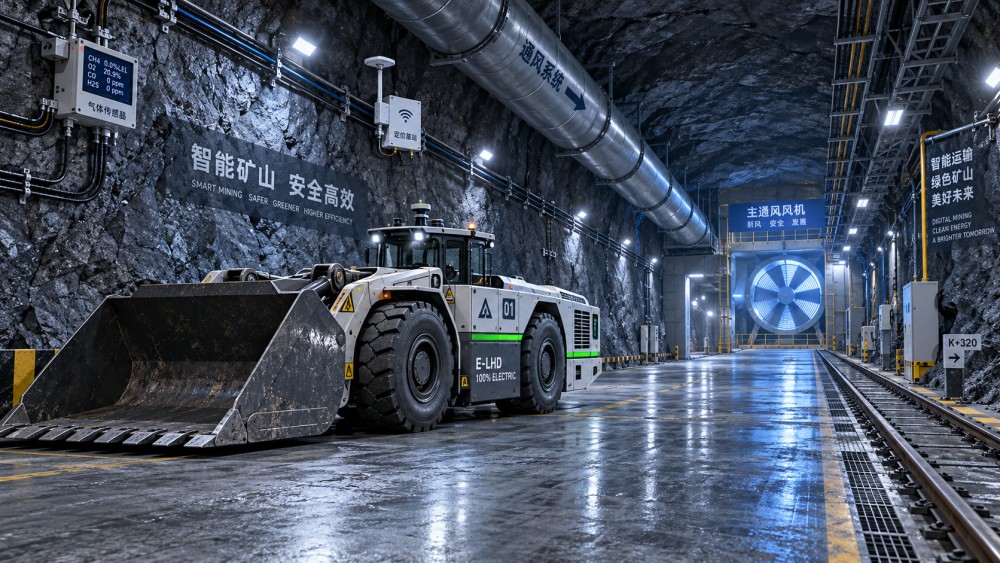
The integration challenge is therefore not simply technical interoperability. It is the creation of a shared operational model: a consistent digital representation of locations, assets, activities, and constraints. Without this model, one system may identify a production area by a local name, another by a coordinate range, and another by a planning code. Software can exchange data successfully while still producing misleading operational conclusions.
Build a common operational model before pursuing advanced analytics
The most important design choice is to establish common identifiers and definitions for the physical mine. This includes mine levels, ramps, drifts, crosscuts, ore passes, refuge chambers, charging bays, ventilation districts, workshops, and active headings. Mobile equipment, fixed infrastructure, personnel categories, work orders, and production tasks also need stable identifiers.
This work can appear administrative, but it determines whether information from different systems can be reconciled. A dispatch platform may record an LHD as available while a maintenance system flags an unresolved fault and a battery-management platform identifies a charging constraint. If the three systems do not refer to the same machine and status definitions, the discrepancy will be discovered manually, often after it has disrupted a shift.
A common model should define more than names. It should clarify:
- which system is the authoritative source for each data element;
- how asset status is defined, including available, operating, delayed, down, isolated, under maintenance, and out of service;
- how location accuracy is represented rather than assumed;
- how timestamps are synchronized across operational technology and information technology systems;
- how planned activities are distinguished from completed activities and automatically detected events;
- how changes to headings, infrastructure, equipment configuration, and mine plans are governed.
Time synchronization deserves particular attention. In an incident review, a few minutes of discrepancy between a ventilation event, a personnel-location record, and a machine alarm can distort the sequence of events. Consistent timestamps are also necessary when correlating machine behavior with operator actions, roadway conditions, or energy use.
Separate real-time control from enterprise reporting
Not every data flow should travel through the same architecture or be treated with the same latency expectations. Safety and operational control systems require predictable performance, local resilience, and controlled failure modes. Enterprise platforms support planning, financial reporting, and historical analysis, but they are not substitutes for systems that must continue functioning during a network interruption.
For this reason, underground digitalization generally needs an edge-to-enterprise approach. Data that drives immediate alarms, machine interlocks, collision-avoidance responses, or ventilation control should be processed close to the operating environment where appropriate. A broader platform can then consolidate selected events, trends, and contextual information for dispatch, maintenance planning, management review, and analytics.
This separation does not mean creating another silo. It means setting clear boundaries between operational autonomy and enterprise visibility. The enterprise layer should receive enough information to explain performance and coordinate decisions, while the operational layer retains the reliability needed for critical functions.
Decision-makers should be cautious when a proposed platform promises a single universal system for every task. The better question is whether the architecture preserves the integrity of safety-critical controls while allowing data to move through governed interfaces. In underground mines, the consequences of a communications outage or a poorly tested software update are different from the consequences of a delayed office report.
Data quality must be managed as an operating discipline
Underground digitalization mining programs frequently underestimate the ongoing work required to keep data reliable. Sensors drift, tags are damaged or reassigned, network nodes lose power, equipment firmware changes, and mine layouts evolve. A dashboard may remain visually polished while gradually losing its connection to physical reality.
Data quality therefore needs operational ownership. Each critical data domain should have a responsible function, a validation method, and a defined response when quality drops below an acceptable level. For example, a personnel-location system requires processes for tag issuance, battery checks, lost-tag handling, visitor management, and validation in areas where location precision is limited. Equipment telemetry requires a method to identify missing messages, implausible values, duplicated records, and changes in machine configuration.
It is also important to make uncertainty visible. Location systems do not deliver the same precision in every underground area. Condition-monitoring signals can be affected by operating load, environment, or sensor placement. Rather than presenting every output as equally certain, interfaces should indicate data recency, coverage, and confidence where those factors affect a decision.
This is especially important for automated and remote-controlled equipment. Autonomous functions depend not only on onboard sensing but also on reliable maps, defined exclusion zones, communications behavior, and accurate awareness of nearby personnel and equipment. A mine that treats data quality as a back-office IT issue may introduce hidden operating risk as it expands automation.
Use connected data to manage ventilation, electrification, and traffic together
Ventilation has become a central digital use case because it sits at the intersection of worker safety, equipment deployment, energy consumption, and production access. Ventilation-on-demand strategies depend on knowing where equipment and people are, what equipment is operating, which areas are active, and whether airflow and air quality are responding as intended. The value does not come from a fan control interface alone; it comes from a credible link between mine activity and ventilation requirements.
The same principle applies to battery-electric underground fleets. Electrification can reduce direct diesel exhaust in working areas, but it adds new operational dependencies. Charging or battery-swapping availability, electrical infrastructure status, thermal conditions, queueing at charging locations, and battery condition all influence fleet utilization. These variables should be visible within dispatch and maintenance planning, not managed as a separate energy project.
Traffic management is another area where integrated data can reduce operational friction. In narrow mine layouts, a delayed truck, stopped loader, or blocked intersection can quickly affect material flow and emergency access. Location, task status, roadway rules, and equipment condition should inform dispatch logic. However, the system should not be judged only by theoretical route optimization. It must account for geotechnical restrictions, temporary closures, changing ground support conditions, operator procedures, and the practical need to preserve safe separation.
Cybersecurity and data governance cannot be added at the end
Connecting operational systems expands the number of interfaces between mine networks, equipment suppliers, remote support services, and enterprise applications. This creates a larger attack surface and more opportunities for accidental disruption. A cybersecurity program for underground digitalization should address system access, identity management, network segmentation, vendor remote access, patch management, backup recovery, and incident response in relation to the mine’s actual operating model.
The central concern is operational continuity, not only confidentiality. A cyber event that interferes with dispatch, communications, ventilation monitoring, battery charging management, or remote equipment control can create immediate production and safety consequences. Critical systems need clear recovery priorities and tested procedures for degraded operation.
Data governance also matters commercially. Equipment manufacturers, automation providers, fleet-management platforms, and cloud service providers may each generate or process valuable operational data. Contracts should define who can access raw and processed data, how long it is retained, whether it can be exported in usable formats, and what happens when a supplier relationship ends. Data portability is not a legal detail alone; it affects a mine’s ability to change technology partners without losing operational history.
Measure value through avoided uncertainty, not dashboard activity
Digital projects are often justified with broad claims about visibility and efficiency. Those benefits are too vague to guide capital allocation. A more disciplined approach evaluates whether the data strategy reduces a specific uncertainty that currently causes loss or risk.
Examples include uncertainty about where people are during an emergency, uncertainty about the true cause of recurring equipment downtime, uncertainty about whether ventilation capacity supports the planned equipment mix, or uncertainty about why a development cycle is missing its target. Each can be translated into measurable operating outcomes such as faster hazard response, fewer unplanned interruptions, improved maintenance planning accuracy, reduced waiting time, or more stable cycle execution.
The baseline must be credible. If data is incomplete before deployment, the project should include the work needed to establish a reliable starting point. Otherwise, apparent improvements may reflect changed reporting rather than changed performance. Benefits should also be assessed across functions. A dispatch improvement that increases equipment utilization but creates maintenance congestion, charging bottlenecks, or ventilation constraints is not a complete gain.
A staged strategy is safer than a sweeping platform replacement
Large-scale replacement programs can be justified when core systems are obsolete or cannot be secured, maintained, or integrated. Yet many mines can create substantial value by addressing the highest-risk decision gaps first and building reusable data foundations around them. A narrowly defined deployment can test data ownership, connectivity assumptions, alarm workflows, and user adoption before the architecture is extended to other levels or fleets.
The sequence should follow operational dependency. Accurate mine-location and asset-status foundations may be required before reliable ventilation-on-demand logic. Maintenance data governance may be necessary before predictive models can produce useful recommendations. Stable charging and battery data may need to precede broad deployment of battery-electric fleets. Automation should not be treated as an endpoint that compensates for weak process control; it depends on that control.
A mature underground data strategy ultimately changes how production is managed. It replaces disconnected reports with a shared view of constraints, makes safety controls more responsive to actual conditions, and gives technical teams a stronger basis for improving equipment, ventilation, traffic, and mine plans. The decisive factor is not the number of connected devices underground. It is whether the organization has built a reliable chain from physical conditions to verified data, accountable decisions, and disciplined action.
Related News
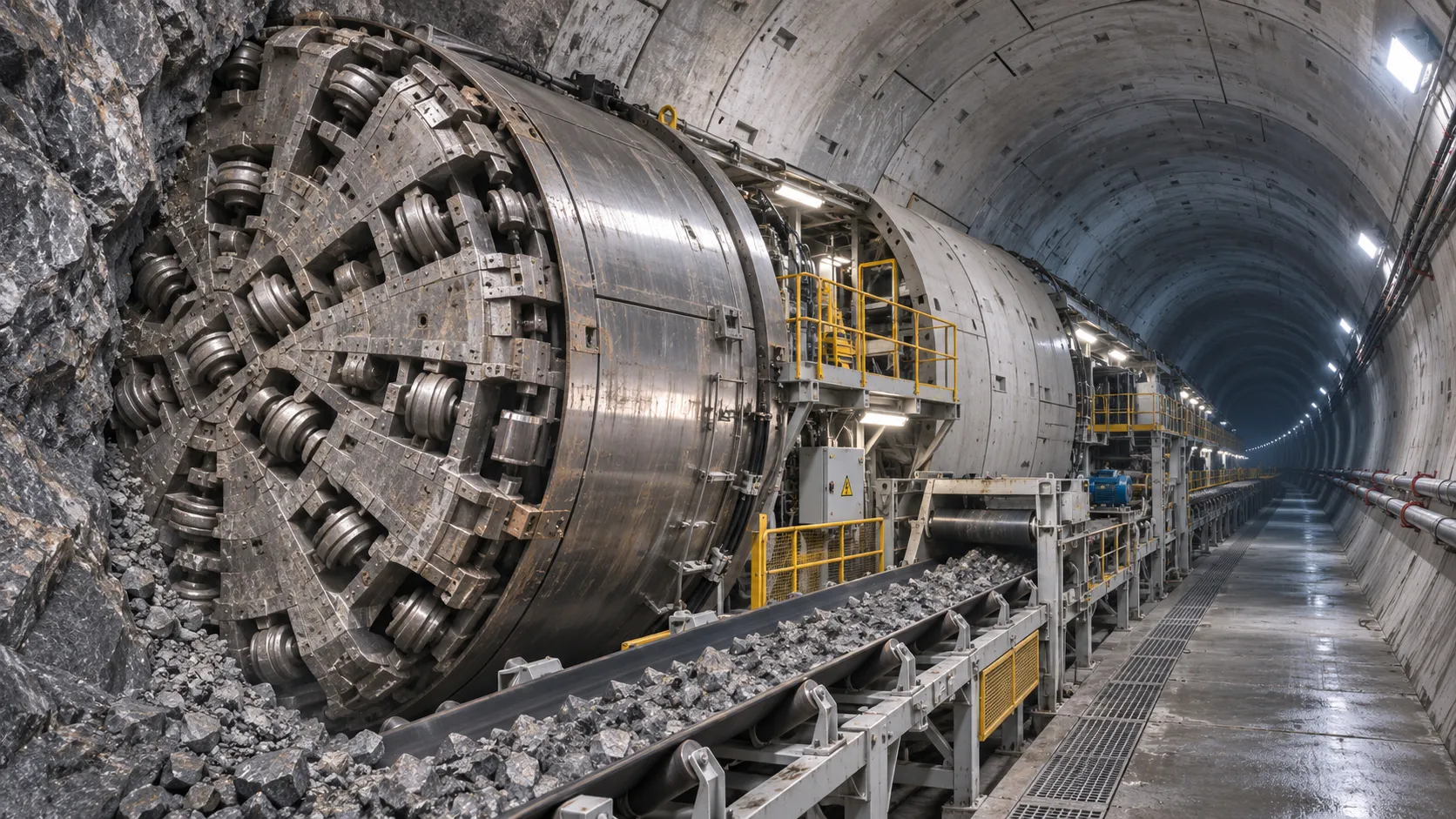
How TBM Excavation Works in Rock and Soft Ground: A Practical Guide
TBM Excavation in rock and soft ground explained: compare machine types, ground support, spoil removal, and the factors that guide smarter project planning.
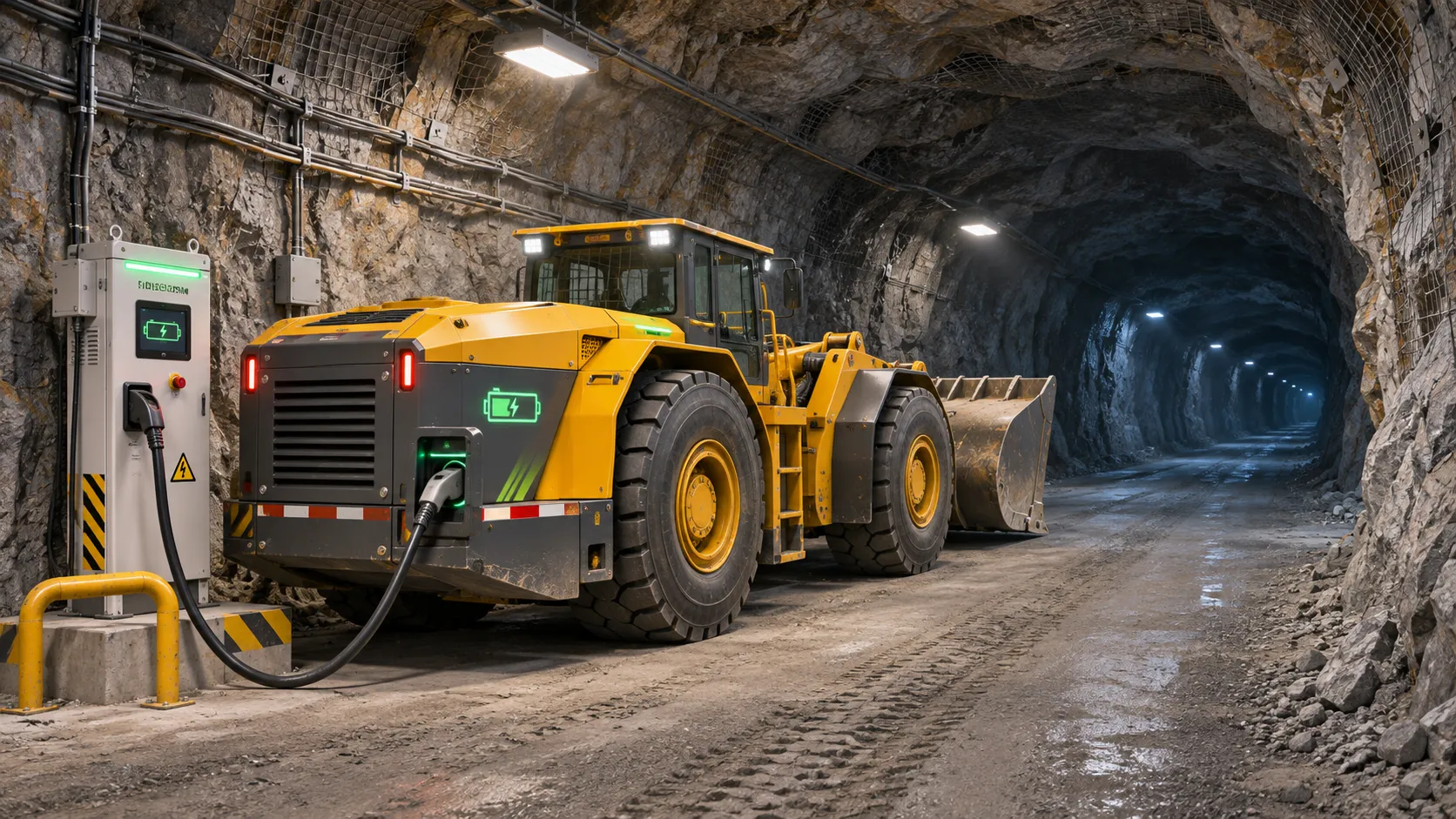
Choosing a Zero-Emission Underground Equipment Supplier: What to Check
Choosing a zero emission underground equipment supplier? Compare duty-cycle performance, charging, safety, total costs and support before you commit.
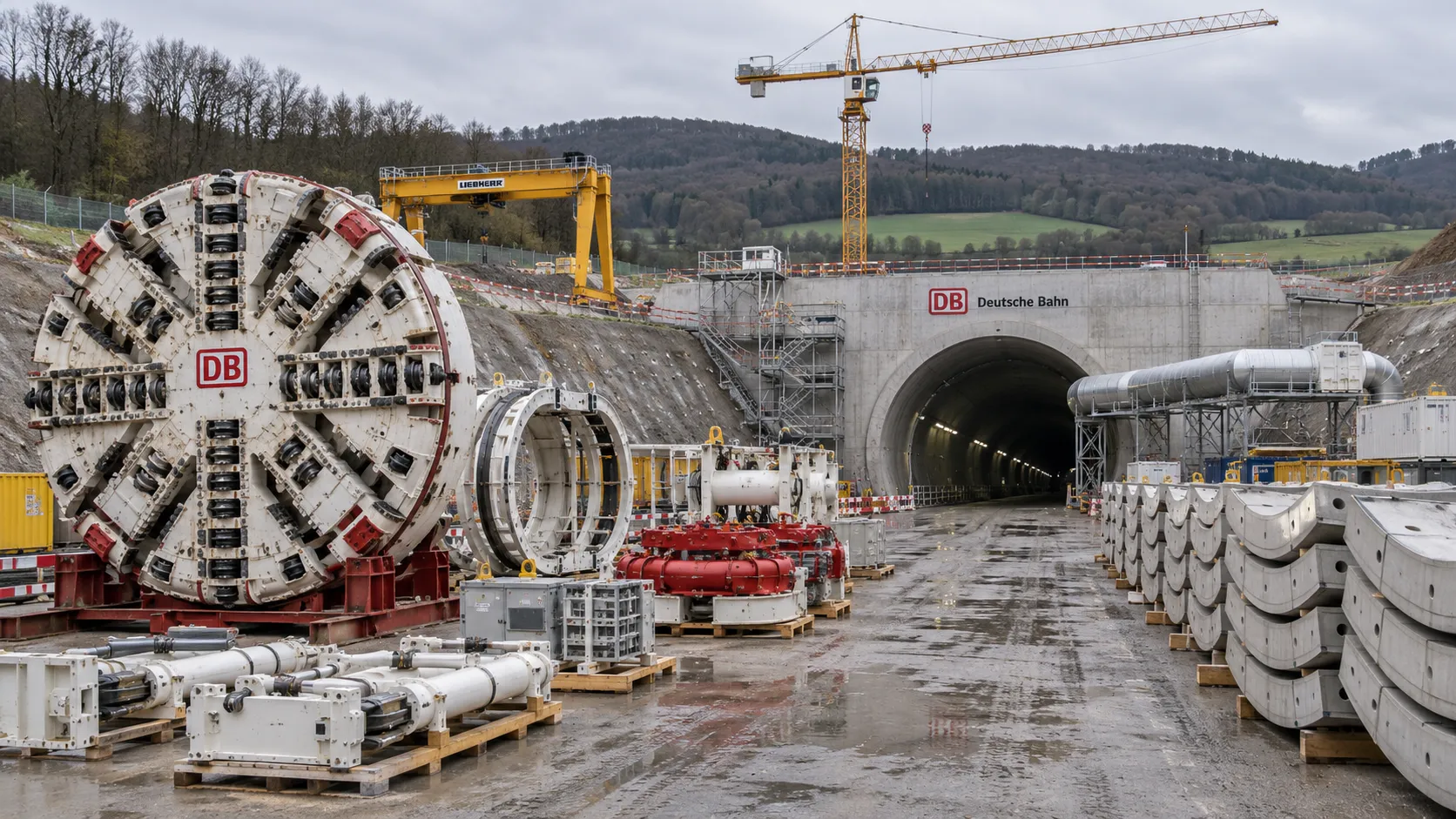
Construction Starts on Germany's Pfaffensteig Rail Tunnel, With Two TBMs Planned
Pfaffensteig rail tunnel construction is underway in Germany. Discover how two planned TBMs will support the 11-kilometre project near Stuttgart.
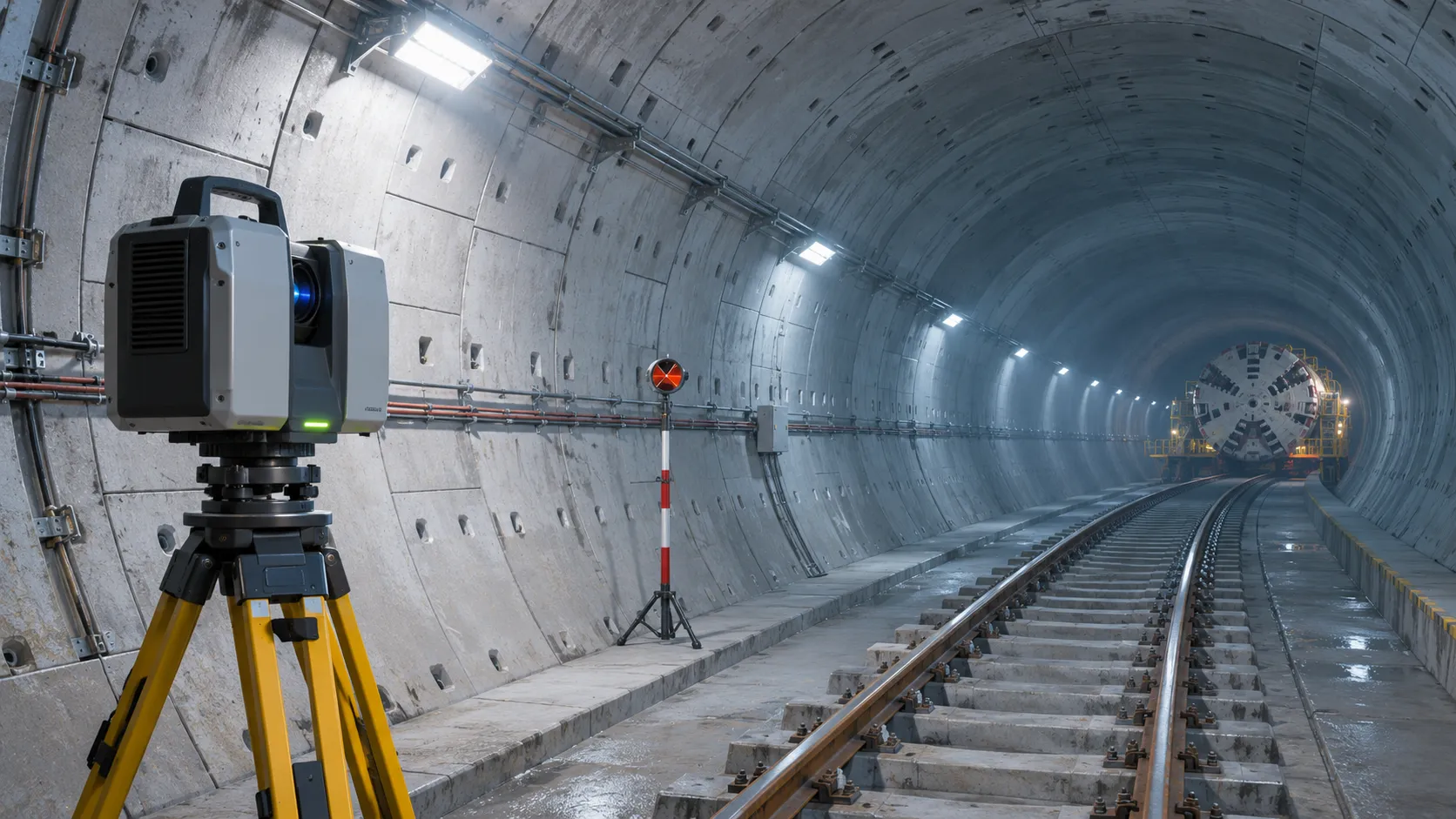
How Real-Time Underground Mapping Systems Work in Tunneling
Discover how real-time underground mapping systems guide tunneling teams, integrate sensor data, and support confident decisions with verified accuracy.
First Mechanized Tunnel Crossing Beneath the Panama Canal Completed
Panama Canal tunnel crossing: Explore the reported Metro Line 3 milestone and what it could mean for future underwater tunneling projects.
Underground Utility Construction Equipment: Choosing by Ground Conditions
Choose underground utility construction equipment with confidence. Compare trenching, HDD, microtunnelling and TBMs by ground conditions, risk and cost.
China Sets Tunnel Boring Machine Export Controls as India Pushes Local Production
China tunnel boring machine export controls could reshape procurement as India pushes local production. Explore potential supply and project impacts.
Choosing a Trenchless Pipeline Installation Contractor: Key Qualifications
Choose a trenchless pipeline installation contractor with confidence. Learn how to assess experience, equipment, safety, costs, and project risks before you hire.
China's 70% TBM Share and Export Controls Challenge India's Local Production
China's TBM export controls could challenge India's local production and infrastructure sourcing. Explore the potential risks and procurement options.
Related News
- 00
0000-00
How TBM Excavation Works in Rock and Soft Ground: A Practical Guide - 00
0000-00
Choosing a Zero-Emission Underground Equipment Supplier: What to Check - 00
0000-00
Construction Starts on Germany's Pfaffensteig Rail Tunnel, With Two TBMs Planned - 00
0000-00
How Real-Time Underground Mapping Systems Work in Tunneling - 00
0000-00
First Mechanized Tunnel Crossing Beneath the Panama Canal Completed
Weekly Insights
Stay ahead with our curated technology reports delivered every Monday.