
Does UTMD provide structured case study coverage of global mine automation deployments — including scope, timeline, and ROI metrics?





When you’re evaluating a new automation system for an ultra-deep copper mine in Zambia—or sizing up the feasibility of battery-swapping LHDs across a lithium-rich pegmatite belt in northern Argentina—you don’t need generic headlines or vendor brochures. You need grounded, cross-verified intelligence: What actually happened on site? Who made the call—and why? How long did it take to move from pilot to full fleet? And most critically—what numbers moved, and which ones stayed stubbornly flat?
That’s where many intelligence portals fall short—not by omission, but by structure. They report tenders. They track equipment shipments. They summarize regulatory shifts. But they rarely stitch together the operational narrative: scope, sequence, and measurable consequence.
So—Does UTMD cover global mine automation project case studies well? Yes. Not as press releases. Not as marketing summaries. But as structured field intelligence: rigorously documented, cross-referenced with engineering telemetry, ESG disclosures, and maintenance logs wherever publicly accessible—and always anchored in the five physical pillars that define underground reality: TBMs, pipe jacking systems, drilling jumbos, mining dump trucks, and underground LHD loaders.
Let’s be clear: UTMD doesn’t publish “case studies” in the conventional sense—no anonymized client logos, no cherry-picked KPI dashboards, no vague references to “improved efficiency.” Instead, we reconstruct deployments like forensic engineers reconstruct tunnel convergence events: layer by layer, subsystem by subsystem, timeline by timeline.
How We Structure What Others Just Report
Our case intelligence begins not with a press release—but with a scope map. For each major automation rollout, we identify three interlocking dimensions:
- Technical Scope: Was this a full-stack integration (e.g., autonomous haulage + remote-controlled LHDs + AI-driven rock mass classification feeding into TBM advance logic), or a targeted intervention (e.g., electrification of secondary ventilation fans only)? We specify hardware vendors, software layers, communication protocols (5G private network vs. LoRaWAN mesh), and integration pain points—like how legacy SCADA interfaces delayed real-time payload telemetry by 17 seconds during early Rio Tinto Pilbara trials.
- Operational Timeline: We break deployments into four phases—not just “pilot → scale”—but commissioning (first autonomous cycle under supervision), validation (30-day OEE benchmarking against manual baseline), integration (handover to mine planning systems, ERP sync, shift scheduling recalibration), and ROI stabilization (when energy cost per ton-hauled dropped below diesel-equivalent thresholds for >90 consecutive days).
- Metrics That Matter—Not Just Those That Shine: We highlight ROI—but not as a single percentage. We show where value emerged: Was it in reduced unplanned downtime (e.g., 42% fewer cutterhead bearing failures after predictive wear modeling was embedded in the TBM control loop)? In human risk reduction (e.g., 68% fewer confined-space entry permits issued post-LHD remote operation rollout at a South African platinum shaft)? Or in ESG leverage (e.g., verified Scope 1 emissions drop enabling preferential financing terms from IFC)? Each metric is sourced, contextualized, and—if available—normalized against regional benchmarks.
Real Deployments, Real Constraints
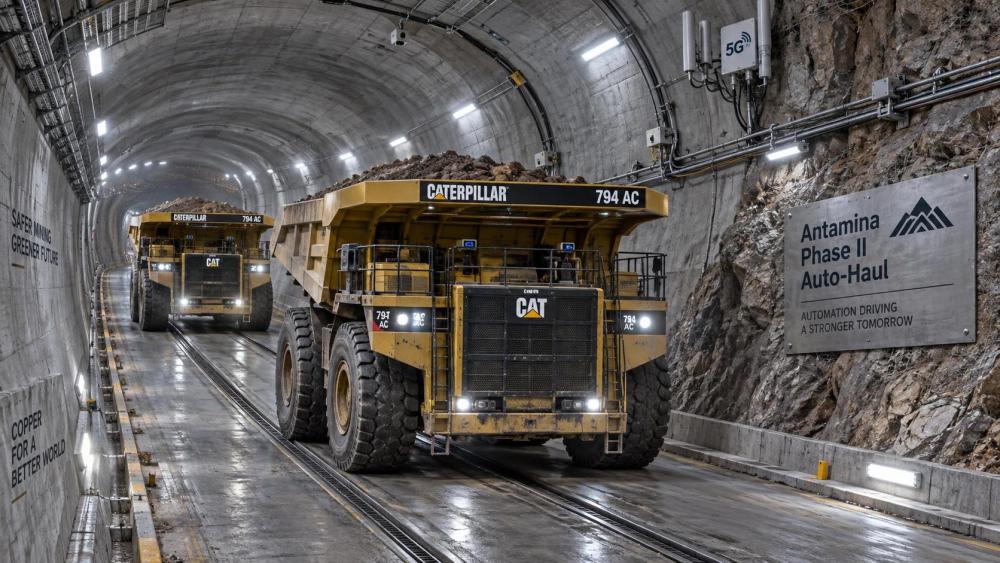
Take the 2023–2024 autonomous truck deployment at the Antamina copper mine in Peru. Most reports cite “100% autonomous haulage achieved.” UTMD’s coverage details what that really meant: 12 Cat 794 AC trucks operating autonomously only on the downhill leg of the main ramp—while human operators still managed uphill return cycles due to GPS signal loss in narrow, high-walled sections. The timeline shows commissioning began in Q3 2023; full downhill autonomy was validated by February 2024; but integration with the mine’s dynamic dispatch system wasn’t completed until June—delaying OEE uplift by 11 weeks. ROI metrics include a 23% reduction in brake pad replacement frequency (due to regenerative braking optimization), but also a 14% increase in battery thermal management energy draw—offsetting part of the expected grid-load reduction.
This level of granularity isn’t theoretical. It’s drawn from our Strategic Intelligence Center’s direct engagement with OEM service engineers, third-party reliability auditors, and mine maintenance supervisors—combined with analysis of publicly filed technical bulletins, incident reports, and sustainability disclosures.
Why Structure Matters More Than Volume
You won’t find 50+ “case studies” on UTMD. You’ll find 12 deeply structured deployments—each representing a distinct automation archetype: TBM-guided drift development in hard-rock gold mines, battery-swapping LHD fleets in narrow-vein silver operations, AI-assisted blast design in limestone quarries transitioning to zero-emission transport, and more. Why so few? Because depth requires time—and because every added case dilutes analytical rigor unless it introduces a new constraint, a novel integration pattern, or a previously unmeasured outcome.
We prioritize cases where automation intersected with real-world friction: labor transitions, power infrastructure limits, data sovereignty rules, or geological surprises. A deployment that ran flawlessly on a greenfield site tells us less about scalability than one that retrofitted autonomy into a 40-year-old shaft with 1980s PLCs and no fiber backbone.
How to Use This Intelligence—Not Just Read It
If you’re a capital planner at a Tier-1 miner, use UTMD’s case maps to pressure-test your own rollout assumptions. Compare your planned timeline against validated phase durations—not vendor promises. Cross-check your expected OEE uplift against actual performance in comparable geotechnical conditions. Ask: Did their rock mass rating match ours? Was their maintenance culture similar? Did their union agreement allow for remote operation without reclassification?
If you’re an OEM engineer, treat these as failure-mode libraries. Where did sensor fusion break down? Which interface caused the longest mean time to repair? How did dust accumulation patterns differ between Australian and Chilean sites—and how did that reshape cleaning cycles?
If you’re advising investors or lenders, look beyond headline ROI. Note how energy cost curves flattened—or spiked—after month six. Track whether safety incidents shifted from mechanical failure to human-system interaction gaps. See how ESG reporting evolved: Did “reduced emissions” become “verified tonnage displaced from diesel generators”?
Not a Database. A Decision Lens.
UTMD doesn’t claim to replace your internal engineering review or site-specific feasibility study. What it does provide is something rarer: a consistent, cross-regional lens through which to interpret real-world automation behavior—not as isolated success stories, but as interlocking evidence of what works, where, under what constraints, and at what true cost.
That’s why our case intelligence is built by TBM engineering experts who’ve supervised 18km of full-face excavation in gneiss; by trenchless scientists who’ve modeled ground reaction forces for 400mm-diameter pipe jacking in saturated clays; and by heavy haulage strategists who’ve optimized battery-swap routing for LHDs operating 2.3km below surface—where a 90-second delay compounds across 12 shifts per day.
Because automation isn’t deployed in spreadsheets. It’s deployed in rock, in heat, in darkness, in shifting labor agreements, and in grids that flicker. If your decision depends on understanding how it behaves there—then yes, UTMD covers global mine automation project case studies well. Not broadly. Not superficially. But structurally: with scope, timeline, and ROI metrics stitched into the same fabric of underground reality.
After all, when you’re boring toward the Earth’s core—you don’t navigate by headlines. You navigate by verified strata.
Related News

How to Evaluate European Drill-and-Blast Tunnelling Contractors for Complex Projects
Drill and blast tunnelling contractors Europe: learn how to assess geology expertise, blast control, equipment reliability, safety, and programme resilience for complex projects.

Which Trenchless Construction Technique Fits Your Utility Crossing Conditions?
Trenchless construction techniques compared for utility crossings: choose HDD, microtunnelling, pipe jacking, or auger boring based on ground, accuracy, access, and risk.

What Is Driving Metro Tunnelling Demand Across Southeast Asia’s Major Cities?
Metro tunnelling Southeast Asia is accelerating as major cities tackle congestion, flooding, and connectivity. Explore the market forces, technical risks, and opportunities shaping demand.

Hard Rock Tunnelling in Australia: Selecting Methods for Variable Ground Conditions
Hard rock tunnelling in Australia: compare TBM, drill-and-blast and hybrid methods to manage variable ground, reduce risk and protect project costs.

Hydropower Tunnel Excavation: Selecting Methods for Variable Rock Conditions
Hydropower tunnel excavation methods for variable rock conditions: compare TBM, drill-and-blast, and hybrid strategies to improve safety, progress, and project control.

How to Select Underground Safety Equipment for Tunnelling by Hazard and Work Zone
Underground Safety Equipment for tunnelling: match protection to hazards, work zones, compliance, and emergency needs with this practical selection guide.
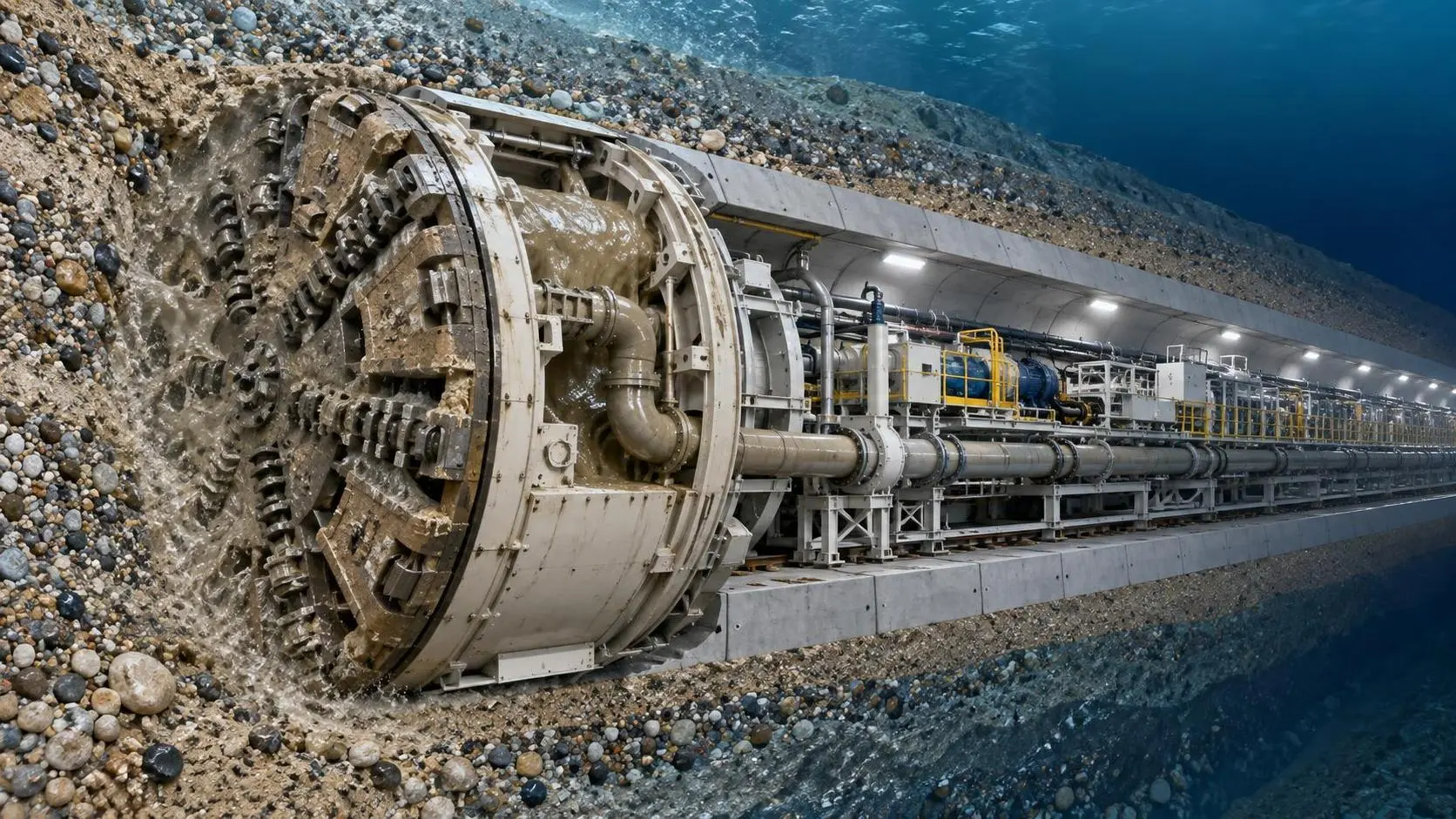
EPB or Slurry Shield? Selecting Soft-Ground Tunnelling Equipment by Soil Conditions
Tunnel Excavation Equipment for soft ground: compare EPB and slurry shields by soil, groundwater, settlement risk, and project logistics to choose confidently.
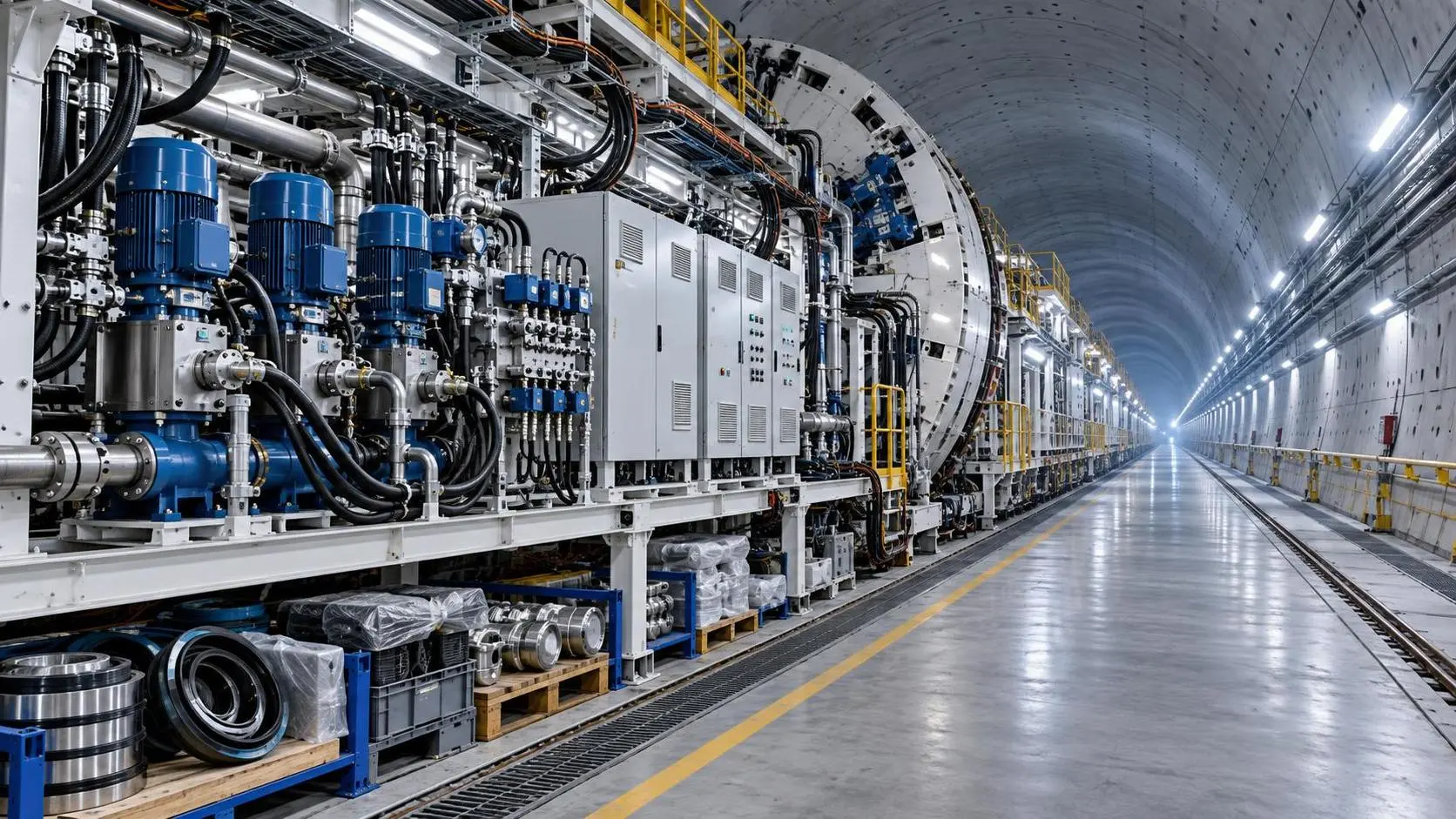
How to Specify TBM Backup System Parts for Reliable Long-Distance Tunnelling
TBM backup system parts: learn how to specify reliable spares for long-distance tunnelling, reduce downtime, ensure compatibility, and speed underground recovery.
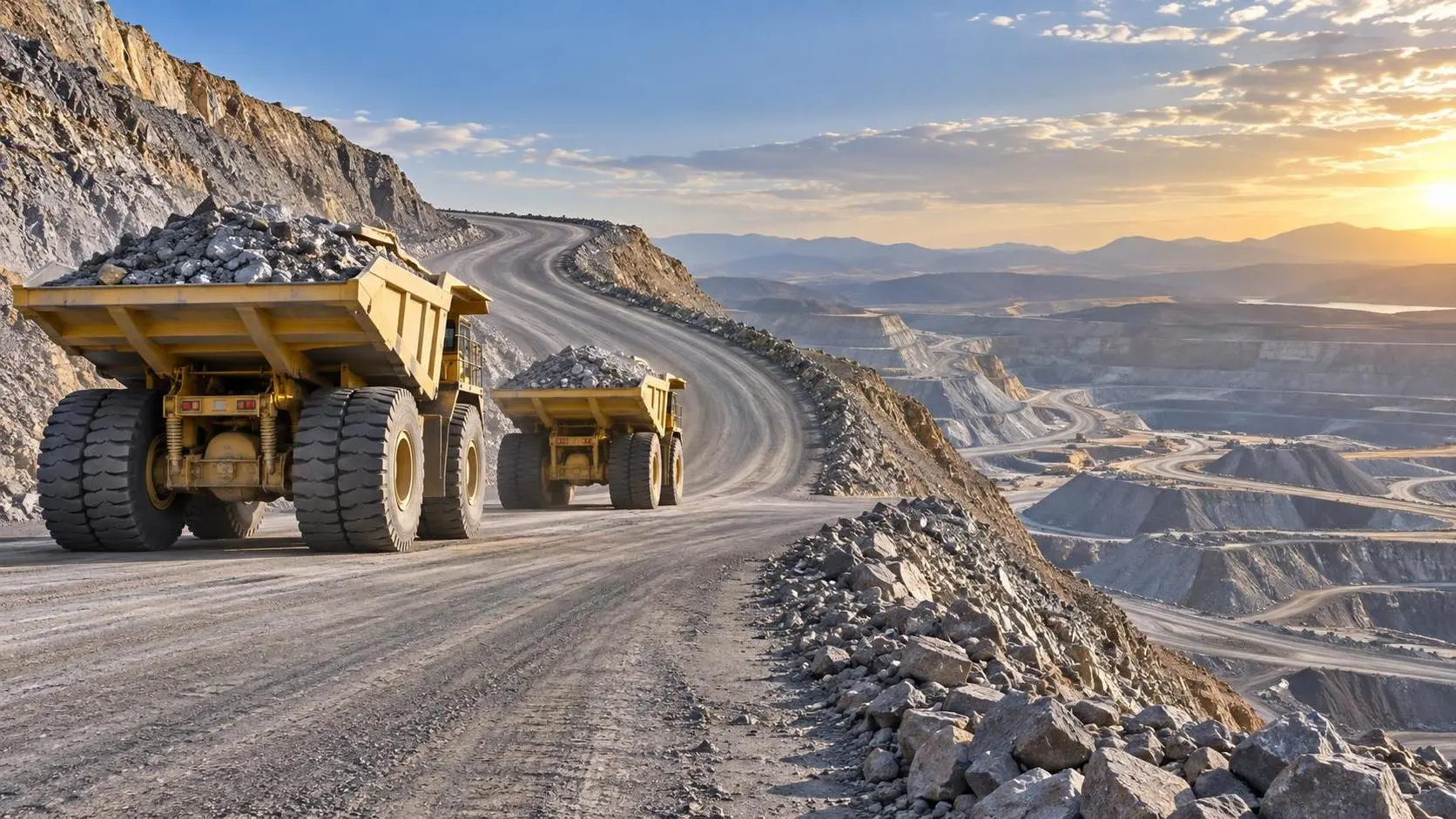
How to Size Open Pit Mining Trucks for Haul Distance, Grade, and Payload?
Open Pit Mining Trucks: learn how to match payload, haul distance, grade, road resistance, and loading capacity for safer, lower-cost mine operations.
Related News
- 00
0000-00
How to Evaluate European Drill-and-Blast Tunnelling Contractors for Complex Projects - 00
0000-00
Which Trenchless Construction Technique Fits Your Utility Crossing Conditions? - 00
0000-00
What Is Driving Metro Tunnelling Demand Across Southeast Asia’s Major Cities? - 00
0000-00
Hard Rock Tunnelling in Australia: Selecting Methods for Variable Ground Conditions - 00
0000-00
Hydropower Tunnel Excavation: Selecting Methods for Variable Rock Conditions
Weekly Insights
Stay ahead with our curated technology reports delivered every Monday.