What Is Driving Metro Tunnelling Demand Across Southeast Asia’s Major Cities?





What Is Driving Metro Tunnelling Demand Across Southeast Asia’s Major Cities?
Metro tunnelling across Southeast Asia is no longer confined to a small number of capital-city showcase projects. It is becoming a practical response to an uncomfortable urban reality: surface transport networks in Jakarta, Bangkok, Manila, Ho Chi Minh City, Kuala Lumpur, and Singapore are under pressure from population growth, dispersed development, limited road capacity, and increasingly disruptive weather events.
For public authorities, an underground rail line can move large passenger volumes without requiring new surface corridors through already dense districts. For contractors, equipment manufacturers, investors, and specialist suppliers, the result is a deeper and more technically varied pipeline of work. Yet metro tunnelling in Southeast Asia is not a single market. Ground conditions, procurement structures, utility congestion, flood risk, local content expectations, and operational maturity differ sharply from one city to another.
The central question for business decision-makers is therefore not simply whether demand will continue. It is where demand is becoming buildable, which construction methods are likely to be selected, and what capabilities will determine delivery performance once machines enter the ground.
Congestion Has Reached the Point Where Surface Solutions Are Not Enough
The most immediate driver is road congestion. In rapidly expanding metropolitan areas, road widening is often politically difficult, commercially disruptive, and physically constrained. Land acquisition can delay a scheme for years. Elevated rail can avoid some of those issues, but it introduces others: visual impact, noise, station footprint requirements, complex interchange design, and public resistance in established commercial or residential areas.
Underground alignments are expensive, but they solve a different class of problem. They allow planners to cross dense business districts, historic zones, waterways, highways, rail corridors, and major utility routes with less permanent disruption at street level. This is particularly relevant where a city needs an interchange station in its most congested area and has little usable surface space left.
Jakarta’s rail expansion discussions are closely tied to chronic traffic pressure and the need to connect activity centres across a sprawling urban region. Bangkok continues to develop an increasingly interconnected urban rail network, while Manila’s rail requirements are shaped by the scale and density of Metro Manila. Singapore, despite having a more mature metro system, still uses underground construction to strengthen network coverage and relieve pressure on heavily used corridors.
This matters because metro demand is not driven only by new lines. It also comes from extensions, cross-city connections, depot access tunnels, underground stations, pedestrian links, utility diversions, and interface works around existing transit assets. A large rail programme can create years of associated demand beyond the headline tunnel drives.
Urbanisation Is Making Network Connectivity More Valuable Than Isolated Lines
Southeast Asian cities are not expanding in a neat radial pattern. New housing districts, industrial estates, airports, logistics areas, universities, commercial clusters, and satellite cities are often distributed across broad urban regions. A short standalone line may improve one corridor, but a connected network changes travel behaviour more fundamentally.
That is why governments increasingly frame metro investment around integration rather than a single route. The value of an underground section rises when it connects suburban rail, buses, airports, commercial districts, and other metro lines. In practice, this places a premium on underground interchange stations and difficult central-city alignments—the parts of a project where tunnelling engineering becomes decisive.
For equipment planners, the implication is important. A pipeline of connected urban rail schemes does not necessarily mean uniform TBM demand. One project may require large-diameter slurry or earth-pressure-balance machines for soft ground and high groundwater conditions. Another may combine mechanical excavation with mined caverns, drill-and-blast sections, cross passages, or complex station boxes. The equipment package must follow the alignment, geology, groundwater regime, and construction sequence rather than a regional assumption.
The most bankable projects are usually those where transport planning, land-use planning, utility relocation, funding arrangements, and operations planning are reasonably aligned. A route can look attractive on a metropolitan map while remaining commercially uncertain if station land, ridership integration, or enabling works have not been resolved.
Flood Resilience Is Changing the Conversation About Underground Infrastructure
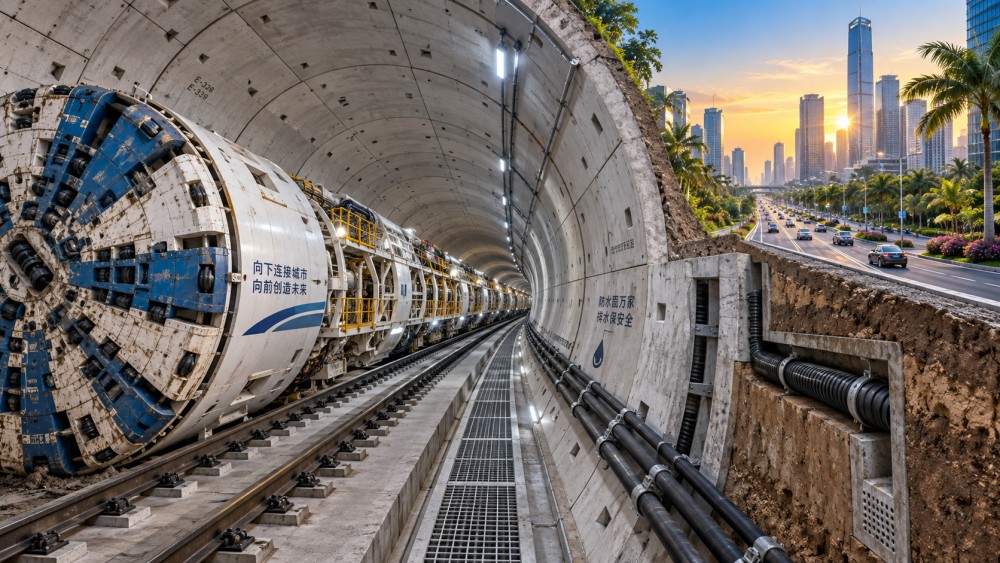
Flooding does not automatically make underground metro construction unsuitable. It makes the engineering and operational requirements more demanding. Many major Southeast Asian cities face intense rainfall, low-lying terrain, tidal influence, constrained drainage networks, or a combination of these factors. A metro system has to be designed as a protected transport asset within a wider urban water-management environment.
This affects tunnel portals, station entrances, ventilation openings, emergency access routes, drainage sumps, pumping systems, waterproofing details, and the interface between rail structures and municipal drainage. It also affects construction. High groundwater pressures, variable soils, and proximity to existing foundations can influence the selection of TBM type, face-pressure control strategy, segment gasket design, grouting approach, and settlement monitoring requirements.
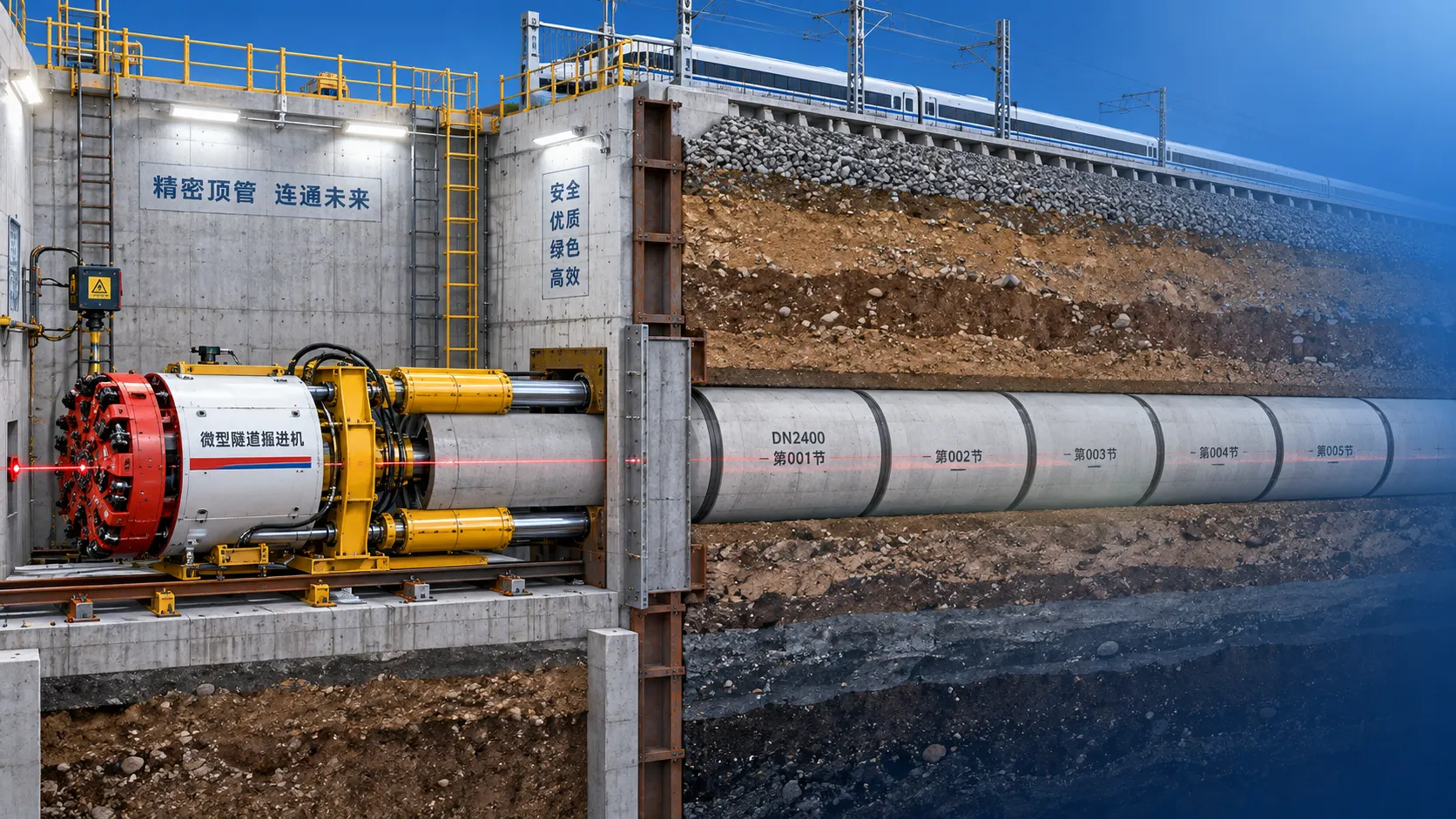
In congested urban areas, trenchless methods can also support resilience-related works around metro programmes. Pipe jacking machines, for example, may be relevant where drainage, utility, or service crossings need to be installed or relocated beneath roads without prolonged open-cut excavation. They do not replace metro TBMs, but they can reduce surface disruption in the enabling works that often determine whether a rail programme stays on schedule.
Decision-makers should be cautious about treating flood resilience as a design add-on. Where water risks are material, they should be evaluated early alongside route depth, geotechnical investigation, station architecture, emergency operating procedures, and long-term maintenance responsibilities. Late changes to these interfaces are often expensive because they affect several packages at once.
Low-Carbon Mobility Is Supporting Investment, but Delivery Still Depends on Economics
Urban rail is widely viewed as a lower-emission mobility option than a transport system dominated by private vehicles. That broad direction supports metro investment, especially where cities are trying to improve air quality, reduce fuel dependency, and make growth less dependent on additional road capacity. However, the environmental case does not remove the need for disciplined project economics.
Underground construction carries substantial upfront costs. It requires detailed surveys, geotechnical risk management, temporary works, segment production, spoil handling, power supply, specialist labour, station construction, systems integration, and testing. A city may have a strong mobility rationale while still needing to phase the programme around financing capacity, procurement readiness, and available construction resources.
The more realistic market view is that decarbonisation strengthens the long-term logic of metro networks, while funding structures determine the immediate pace of construction. Multilateral financing, national budget allocations, public-private partnership models, export credit arrangements, and contractor-led delivery models can all influence timing. They should not be treated as interchangeable. Each changes risk allocation, payment certainty, technical responsibility, and supplier participation in different ways.
Why the Technical Challenge Is Growing Alongside the Market
Metro tunnelling demand in Southeast Asia is attracting attention precisely because many of the future routes are difficult. The easy corridors are rarely the ones that remain. New alignments increasingly pass beneath active roads, dense buildings, rivers, rail lines, utility corridors, and districts where tolerance for settlement or traffic disruption is very low.
Ground conditions can shift over short distances. Soft alluvial soils, weathered materials, mixed-face geology, high groundwater, boulders, and locally variable rock conditions all create different risks. The relevant question is not which TBM is considered broadly suitable for a country. It is whether the machine’s cutterhead configuration, cutter tools, torque capacity, pressure-control system, screw conveyor or slurry circuit, segment erector, and backup arrangement fit the actual geological baseline and anticipated variability.
Machine selection also needs to account for logistics. A technically capable TBM can become a poor commercial choice if segment supply is unreliable, cutter interventions are difficult to support, spare parts lead times are excessive, or local teams lack access to the required maintenance expertise. Urban tunnelling performance is rarely determined by a single specification. It is the outcome of machine design, ground treatment, operator skill, monitoring discipline, maintenance response, and interface management.
This is why digital construction systems are receiving greater attention. Real-time monitoring of face pressure, thrust, torque, cutterhead speed, advance rate, settlement, segment installation, and slurry or spoil-management indicators can help teams identify abnormal conditions early. Data does not eliminate ground risk, but it improves the chance that a developing issue is recognised before it becomes a major delay or a surface-impact event.
The Market Is Moving From Equipment Purchase to Capability Assurance
For project owners and main contractors, the commercial decision is increasingly broader than buying or leasing a machine. They need confidence in a delivery ecosystem: engineering support, segment compatibility, site commissioning, operator training, cutter and tooling availability, remote diagnostics, local maintenance capacity, and clear responsibility when performance differs from tender assumptions.
A low initial equipment price may not compensate for weak after-sales support or long downtime during a critical drive. Conversely, a highly specified machine is not automatically the right answer if the project team cannot sustain its operational requirements. The most useful tender evaluations look beyond headline advance-rate claims and examine availability assumptions, wear exposure, intervention strategy, power needs, spare-parts planning, and contractual treatment of differing ground conditions.
The same logic applies to trenchless equipment used for utility and drainage interfaces. Urban projects are often delayed not by the main tunnel but by unresolved diversions, access constraints, or conflicts with buried services. Suppliers that understand the connection between mainline works and enabling packages may identify opportunities that are invisible in a narrow TBM-only market view.
What Decision-Makers Should Watch Before Committing Resources
The regional outlook is constructive, but project announcements should be separated from executable demand. Before allocating manufacturing capacity, forming a joint venture, or mobilising a specialist team, it is worth testing several practical questions:
- Has the route progressed beyond a high-level concept into a defined alignment, station plan, and delivery package?
- Is the geotechnical information sufficient to support credible method and machine selection?
- How are utility relocation, land access, spoil disposal, segment production, and site power being handled?
- Does the procurement model allocate ground risk in a way that contractors and equipment partners can realistically price?
- What local service, assembly, training, and spare-parts expectations may apply during construction and handover?
These questions can distinguish a promising infrastructure narrative from a near-term equipment opportunity. They also help avoid a common error: assuming that a large metro programme will produce immediate demand for a specific machine type. Detailed design can still alter tunnel diameter, drive lengths, launch arrangements, excavation method, or package boundaries.
Intelligence Around the Ground Is Becoming a Commercial Advantage
The Global Underground Tunnelling & Mining Dynamics (UTMD) follows this market from the perspective that underground infrastructure is a connected technical system, not merely a collection of equipment categories. Full-face TBMs remain central to metro construction, but trenchless engineering, digital monitoring, confined-space electrification, material handling, and maintenance strategy all influence project outcomes.
UTMD’s Strategic Intelligence Center focuses on the engineering and commercial signals behind major underground programmes: tender movement, equipment requirements, rock-cutting and cutter-wear considerations, operational data systems, and the changing expectations placed on heavy equipment in constrained underground environments. That approach is useful when a market is developing quickly but technical assumptions remain project-specific.
The next phase of metro tunnelling in Southeast Asia will be shaped less by broad optimism than by execution quality. Cities will continue to seek underground capacity where surface transport cannot keep pace. The organisations best positioned to participate will be those that can read the pipeline early, test geotechnical and contractual realities carefully, and support the full operating life of the equipment once the tunnel drive begins.
Related News
How to Evaluate European Drill-and-Blast Tunnelling Contractors for Complex Projects
Drill and blast tunnelling contractors Europe: learn how to assess geology expertise, blast control, equipment reliability, safety, and programme resilience for complex projects.
Which Trenchless Construction Technique Fits Your Utility Crossing Conditions?
Trenchless construction techniques compared for utility crossings: choose HDD, microtunnelling, pipe jacking, or auger boring based on ground, accuracy, access, and risk.
Hard Rock Tunnelling in Australia: Selecting Methods for Variable Ground Conditions
Hard rock tunnelling in Australia: compare TBM, drill-and-blast and hybrid methods to manage variable ground, reduce risk and protect project costs.
Hydropower Tunnel Excavation: Selecting Methods for Variable Rock Conditions
Hydropower tunnel excavation methods for variable rock conditions: compare TBM, drill-and-blast, and hybrid strategies to improve safety, progress, and project control.
How to Select Underground Safety Equipment for Tunnelling by Hazard and Work Zone
Underground Safety Equipment for tunnelling: match protection to hazards, work zones, compliance, and emergency needs with this practical selection guide.
EPB or Slurry Shield? Selecting Soft-Ground Tunnelling Equipment by Soil Conditions
Tunnel Excavation Equipment for soft ground: compare EPB and slurry shields by soil, groundwater, settlement risk, and project logistics to choose confidently.
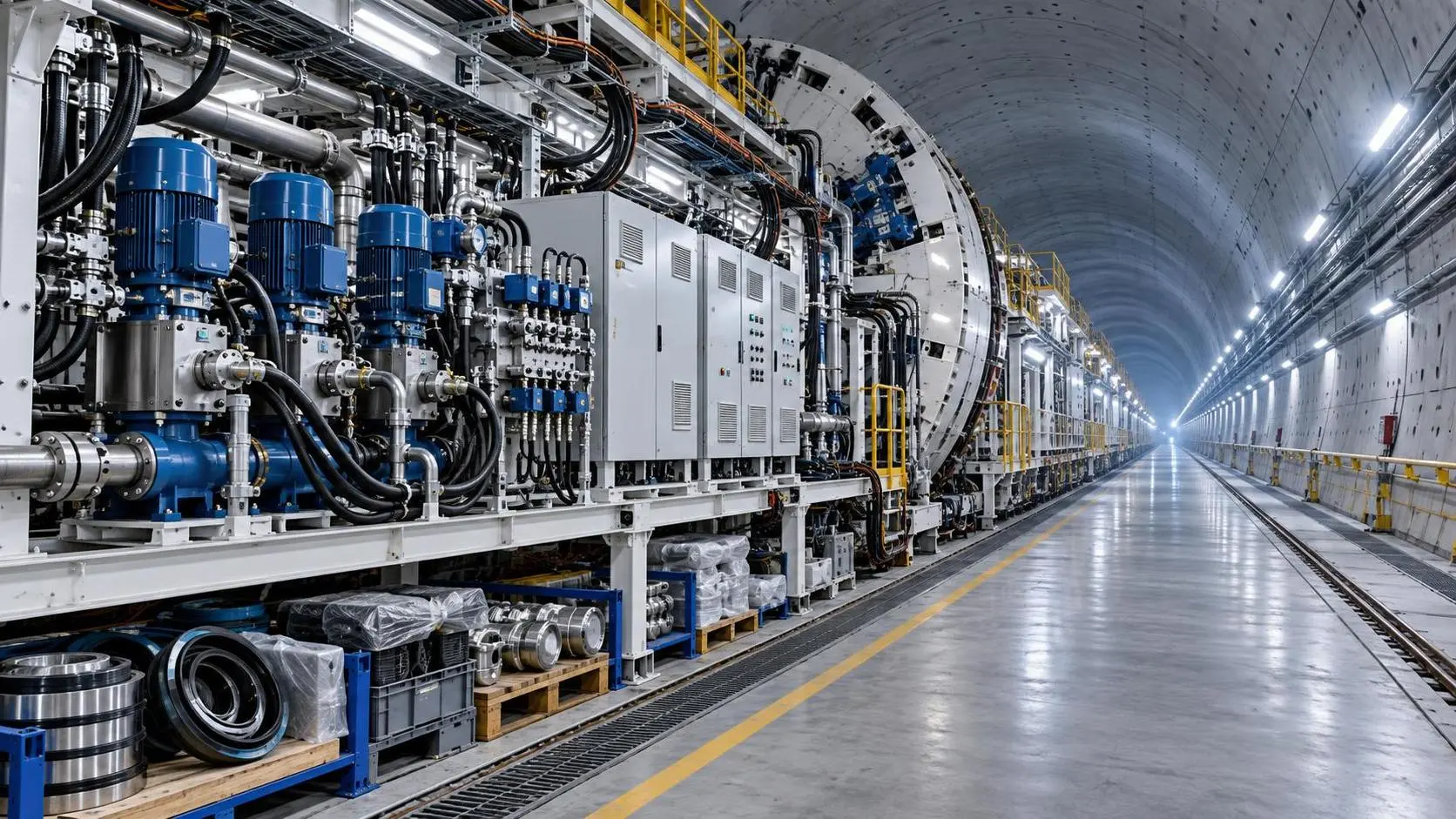
How to Specify TBM Backup System Parts for Reliable Long-Distance Tunnelling
TBM backup system parts: learn how to specify reliable spares for long-distance tunnelling, reduce downtime, ensure compatibility, and speed underground recovery.
How to Size Open Pit Mining Trucks for Haul Distance, Grade, and Payload?
Open Pit Mining Trucks: learn how to match payload, haul distance, grade, road resistance, and loading capacity for safer, lower-cost mine operations.
Evaluating Structural Durability and Maintenance Frequency in Heavy-Duty Concrete Mixer Trailers Under Frequent Dump Cycles
Discover how dump special trailers withstand 12–18 daily dump cycles — structural durability, maintenance optimization & real-world fleet insights revealed.
Related News
- 00
0000-00
How to Evaluate European Drill-and-Blast Tunnelling Contractors for Complex Projects - 00
0000-00
Which Trenchless Construction Technique Fits Your Utility Crossing Conditions? - 00
0000-00
What Is Driving Metro Tunnelling Demand Across Southeast Asia’s Major Cities? - 00
0000-00
Hard Rock Tunnelling in Australia: Selecting Methods for Variable Ground Conditions - 00
0000-00
Hydropower Tunnel Excavation: Selecting Methods for Variable Rock Conditions
Weekly Insights
Stay ahead with our curated technology reports delivered every Monday.