
Hydraulic Tipping Stability Risks in Multi-Axle Dump Special Trailers





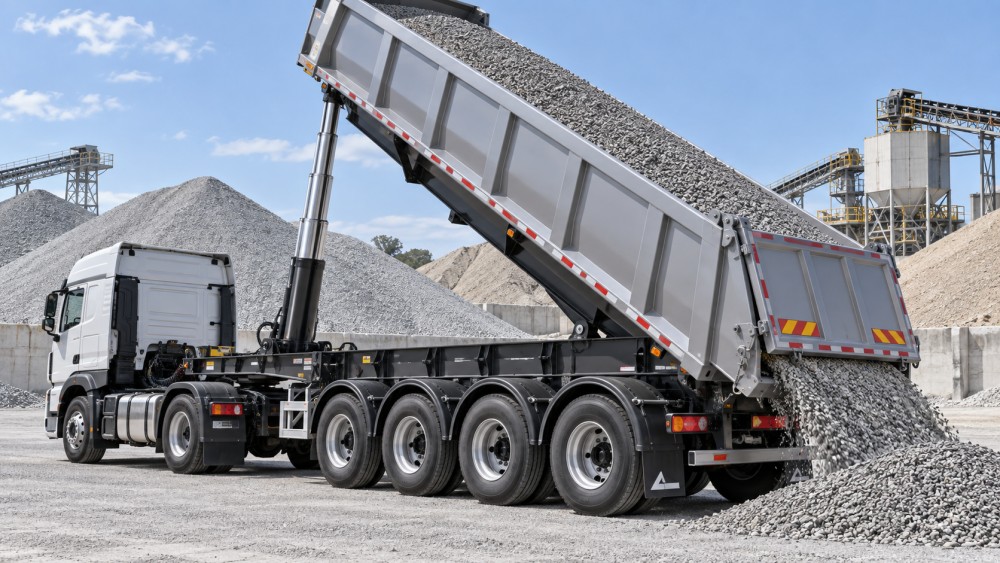
A rear-dump trailer can appear stable while stationary and still become vulnerable during the lift. The critical moment is not when the body begins to rise, but when the payload’s centre of gravity moves upward and rearward, suspension deflection changes, and the load starts to transfer unevenly across the running gear. In multi-axle configurations, the added capacity and longer chassis can introduce further variables: axle-group interaction, frame torsion, tyre deflection, uneven ground contact, and hydraulic force applied through a changing geometry.
For quality-control and safety-management teams, hydraulic tipping incidents should not be treated as driver-behaviour issues alone. A rollover, sudden body drop, twisted chassis, damaged hoist mount, or runaway tailgate event may originate in a combination of product specification, fabrication quality, maintenance condition, loading practice, and site control. The relevant question is whether the trailer, payload, hydraulic system, tractor connection, and tipping surface remain within their intended operating limits throughout the entire discharge cycle.
Why multi-axle tipping changes the stability calculation
Multi-axle dump semi-trailers are commonly selected where operators need higher legal payload potential, improved axle-load distribution for road travel, or more flexibility in bulk-material transport. Those benefits do not automatically translate into a wider stability margin while tipping.
During transport, several axles share vertical load and help support a long chassis. During rear tipping, however, the effective load path changes. As the body pivots around the rear hinge, weight moves toward the rear of the trailer. Depending on body angle, payload condition, suspension travel, and ground profile, some axles may unload sooner than expected while others carry a disproportionate share of the reaction force. A trailer can then rotate or lean around a tyre contact patch rather than remain centred over a broad, evenly loaded axle group.
The number of axles should therefore be assessed as part of a system rather than treated as an independent stability feature. More axles may improve road-load compliance, but they also add suspension components, tyres, brakes, hubs, equalisation mechanisms, and alignment points that require consistent inspection. A small difference in tyre pressure, ride height, bushing condition, or axle alignment can become more consequential when the body is raised.
Longer trailers also tend to experience greater frame deflection when parked on irregular ground. If the tractor and trailer are not aligned on the same plane, the chassis may be preloaded in torsion before the hydraulic cylinder extends. Raising the body does not remove that twist; it can amplify the lateral effect as the load centre rises.
The hydraulic system is a force path, not just a lifting device
A telescopic front-end cylinder, a multi-stage hoist, or another lifting arrangement has to convert hydraulic pressure into controlled body movement. Its behaviour changes substantially through the tipping cycle. At low body angles, the system usually needs high lifting force because the load’s lever arm is least favourable. At greater angles, the cylinder geometry changes, the required force may reduce, and the body becomes more sensitive to lateral movement.
This creates two different risk periods. Early in the lift, excessive pressure may reveal a load that is overloaded, frozen, bridged, or unevenly distributed. Later in the lift, a body may rise smoothly but become unstable if material releases suddenly to one side or remains adhered to one sidewall. Neither condition should be addressed by repeatedly cycling the hydraulics or increasing engine speed without a defined procedure.
Quality teams should verify the complete force path: hydraulic tank, pump, hoses, couplings, control valve, cylinder stages, upper and lower mounts, subframe, body hinge, and chassis reinforcement. Leakage is visible and important, but it is not the only hydraulic concern. Internal cylinder bypass, a malfunctioning relief valve, contamination-related valve sticking, damaged hose reinforcement, or unintended control movement can change lifting speed or holding behaviour. The condition of cylinder pins and bushes also matters because clearance at these joints can alter alignment under load.
Inspection records should distinguish between routine visual checks and measurements that can identify progressive degradation. Pin wear, cracked weld toes around mounting brackets, distorted cross-members, loose fasteners, and abnormal cylinder-stage scoring are more useful as trend indicators when recorded consistently rather than noted only after a failure.
Payload behaviour is often the decisive tipping variable
Rated payload is not the same as a stable tipping payload. A trailer may be within its permitted gross mass and still present an unacceptable tipping condition if the material is concentrated, adhesive, frozen, oversized, or loaded asymmetrically. Wet clay, cohesive soil, demolition debris, wet aggregate fines, and materials that bridge over the tailgate can remain attached to one side of the body as elevation increases. The result is a lateral offset that the suspension and tyres may not be able to tolerate.
Material density also changes procurement assumptions. A body volume that is suitable for dry, low-density material can be overloaded when used for wet aggregate or dense spoil. Procurement specifications should state the intended material range, expected moisture conditions, maximum load mass, and loading method. A generic statement such as “bulk cargo” does not give engineering, production, or safety teams enough information to assess the body, hoist, and chassis arrangement.
Load distribution needs similar attention. Loading from a fixed conveyor, a wheel loader, or an excavator can create different pile shapes and impact zones. Repeated loading in the front section may increase kingpin loading during transport; repeated rearward loading may affect the initial lift and hinge-region stresses. Side loading on uneven ground can leave a heaped payload closer to one wall. Before a tipping investigation begins, teams should determine where the material entered the body, whether it was levelled, and whether the load had been exposed to rain, freezing, or prolonged standing.
Ground conditions can override trailer design margin
A sound trailer cannot compensate for a poor discharge surface. Tipping should occur on ground that is firm, reasonably level, and able to support the tractor and trailer without differential settlement. A surface can look flat while containing a soft wheel track, compacted ridge, drainage channel, or local depression that shifts the trailer laterally as the body rises.
Cross-slope is particularly hazardous because the raised body moves the centre of gravity toward the downhill side. Longitudinal slope can also affect how material moves through the body and how the tractor-trailer combination settles. Loose stone, mud, ice, recently placed fill, or unstable stockpile edges require site-specific controls rather than a visual judgement made from the cab.
A practical discharge-area inspection should cover:
- cross-slope, ruts, potholes, and abrupt grade changes;
- ground bearing condition beneath all relevant tractor and trailer tyres;
- clearance from overhead structures, power lines, conveyors, and stockpile faces;
- space for the tractor-trailer combination to remain straight during tipping;
- the expected material flow path after the tailgate opens; and
- whether personnel and other vehicles can be excluded from the danger zone.
These checks are operational controls, but they also affect product selection. In sites with regularly poor or variable ground, the buyer may need to place more emphasis on body geometry, suspension condition, chassis stiffness, control layout, and practical inspection access than on nominal payload alone.
Specification review: what a buyer should request
When reviewing dump special trailers, safety and quality personnel should move beyond a brochure-level comparison of axle count, body volume, and cylinder type. The purchase file should identify the intended commodity, loading equipment, road route, discharge terrain, operating frequency, and applicable legal limits in the jurisdiction of use. These factors affect whether the selected configuration has a realistic operating margin.
A useful technical review includes the following questions:
The review should also clarify the boundary between trailer and tractor responsibilities. Hydraulic oil supply, pump capacity, control valves, electrical interlocks, tractor fifth-wheel condition, and tractor suspension can influence tipping performance. A trailer may be correctly manufactured yet operate differently when coupled to tractors with inconsistent hydraulic outputs or poorly maintained connections.
Acceptance inspection should simulate the actual duty cycle
Pre-delivery inspection is more meaningful when it follows the intended application. A static walk-around is necessary, but it will not reveal every concern related to body travel, hose clearance, cylinder extension, tailgate operation, or interference between the body and chassis. Where safe facilities and competent personnel are available, acceptance procedures can include controlled empty-body movement, confirmation of smooth control operation, examination of mounting points during a lift cycle, and verification that safety labels and operating instructions are present and legible.
Testing with a full payload requires particular care. It should not be treated as an informal demonstration, because the test itself introduces the same instability hazards that the equipment will face in service. The payload, surface condition, exclusion zone, competent supervision, and emergency response arrangements should be defined in advance. If the buyer requires loaded testing, the method and acceptance criteria should be agreed contractually rather than improvised at handover.
After commissioning, defect reporting should capture operating context. “Trailer leaned while tipping” is not enough for root-cause analysis. The report should record trailer position, slope direction, material type, load estimate, weather, tyre condition, suspension state, body angle when the event occurred, hydraulic symptoms, and whether material discharged evenly. This information helps separate a site-control failure from a mechanical defect, though both may need corrective action.
Maintenance controls that reduce latent risk
Tipping equipment often receives intensive attention after an obvious failure, while gradual degradation goes unnoticed. A planned inspection regime should include hydraulic leaks and hose condition, but also hinge lubrication, cylinder mounting integrity, hoist pin retention, body-to-chassis clearances, weld condition, tyre inflation, suspension wear, axle alignment indicators, and brake-system condition. A damaged suspension component may not prevent road travel, yet it can change how the trailer settles during a lift.
Isolation is essential before work is performed beneath or around an elevated body. In the United States, OSHA’s construction rule at 29 CFR 1926.601(b)(4) states that employees must not work beneath elevated dump truck bodies unless the body is blocked to prevent it from falling. The same principle is relevant to trailer maintenance: hydraulic pressure alone is not a safe support method. Energy-control procedures should also address hydraulic pressure and unintended control activation; OSHA’s lockout/tagout standard, 29 CFR 1910.147, provides a recognised framework for hazardous-energy control.
For road operation, load securement and vehicle-condition obligations may also apply separately from the tipping process. In the United States, the Federal Motor Carrier Safety Regulations include cargo securement requirements in 49 CFR Part 393, Subpart I. Local transport, workplace, and road-safety rules can impose additional obligations, so compliance review should be based on the jurisdiction and the specific commodity carried.
Safety management should treat tipping as a controlled operation
The strongest controls combine equipment condition with disciplined decision-making. Drivers need authority to stop a discharge where ground, load behaviour, or trailer alignment is unsuitable. Site staff need a clear method for directing vehicles without standing in the fall or spill zone. Maintenance teams need a way to quarantine trailers with structural cracking, unusual lift speed, recurrent leakage, or unexplained lean until inspection is complete.
Multi-axle configurations can be effective for demanding bulk-haul applications, but their tipping behaviour depends on far more than axle count or nominal body capacity. A stable operation is built from compatible payload assumptions, a verified hydraulic and structural force path, consistent running-gear condition, and a discharge surface that does not introduce lateral bias at the moment the body is raised.
Sources
- Occupational Safety and Health Administration (OSHA), 29 CFR 1926.601, Motor Vehicles, especially 1926.601(b)(4).
- Occupational Safety and Health Administration (OSHA), 29 CFR 1910.147, The Control of Hazardous Energy (Lockout/Tagout).
- U.S. Federal Motor Carrier Safety Administration, 49 CFR Part 393, Subpart I, Protection Against Shifting and Falling Cargo.
Related News
Tunnel Boring Machine Costs: Budgeting for Purchase, Operation, and Project Risk
Tunnel Boring Machines cost more than purchase price. Learn how to budget lifecycle costs, downtime, logistics, wear, and project risk for smarter TBM decisions.
Open-Pit Haulage Cost Analysis: How Mine Managers Can Cut Cost per Tonne
Open pit haulage cost analysis: discover practical ways to reduce cost per tonne through payload control, cycle-time optimization, road performance, and smarter fleet decisions.
Tunnel Construction Innovations That Reduce Risk and Schedule Delays on Urban Projects
Tunnel construction innovation for urban projects: discover smarter TBMs, real-time monitoring, trenchless methods, and automation that reduce risk and protect schedules.
TBM Disc Cutter Design: Key Geometry and Load Factors for Hard Rock Tunnelling
TBM disc cutter design explained: explore geometry, spacing, load distribution and maintenance factors for reliable, efficient hard-rock tunnelling performance.
When rock reinforcement in tunnel construction must change after blasting
Rock reinforcement in tunnel construction must change when blasting reveals overbreak, weak joints, water inflow, or deformation. Discover key post-blast support decisions.
How tunnel hydraulic systems influence drill jumbo uptime underground
Tunnel hydraulic systems directly influence drill jumbo uptime. Explore how stable pressure, clean oil, cooling, and maintainable design reduce underground downtime.
What to verify before appointing a tunneling vehicles manufacturer
Choosing a tunneling vehicles manufacturer? Verify application fit, reliability, compliance, parts support, training, and channel terms before appointing a partner.
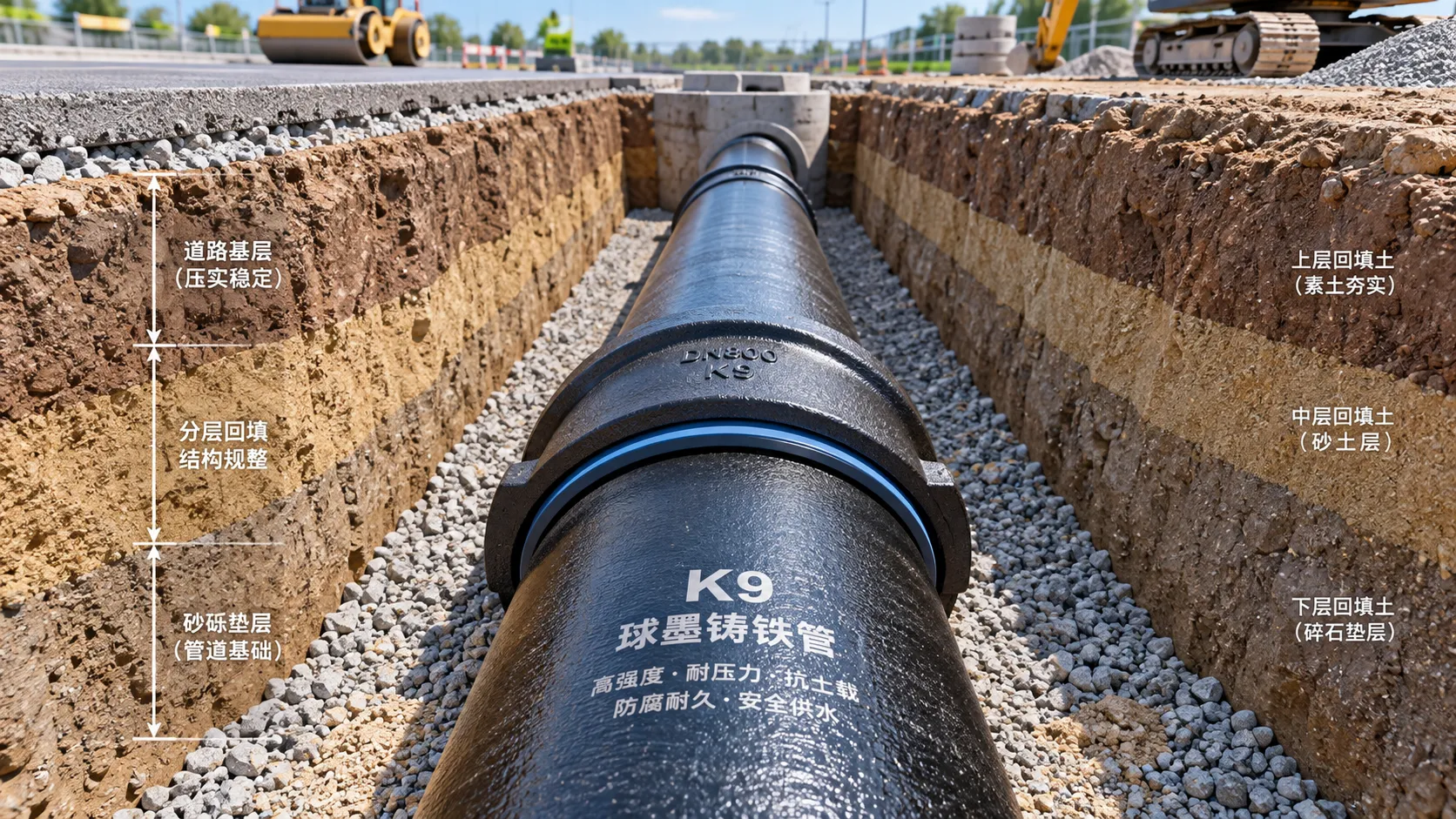
Selecting K9 Ductile Iron Pipe for Buried Water Pipeline Conditions
K9 ductile iron pipe selection for buried water pipelines: compare pressure duty, joints, soil loads, corrosion protection, and installation controls for reliable long-term performance.
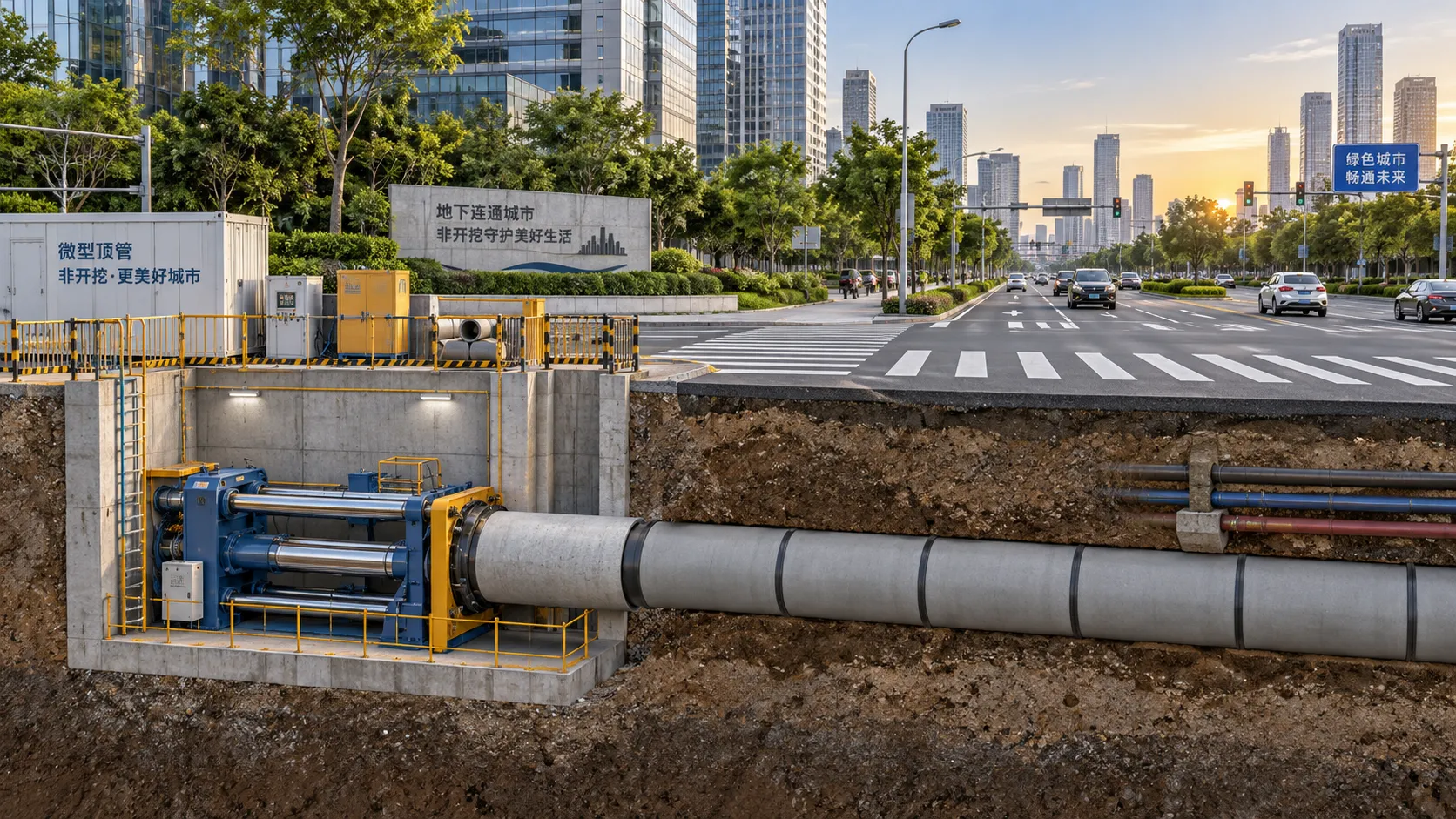
Where Trenchless Technology Delivers the Best Value in Urban Utility Projects
Trenchless Technology applications deliver high value in urban utility projects by reducing disruption, protecting critical crossings, and improving project outcomes.
Related News
- 00
0000-00
Tunnel Boring Machine Costs: Budgeting for Purchase, Operation, and Project Risk - 00
0000-00
Open-Pit Haulage Cost Analysis: How Mine Managers Can Cut Cost per Tonne - 00
0000-00
Tunnel Construction Innovations That Reduce Risk and Schedule Delays on Urban Projects - 00
0000-00
TBM Disc Cutter Design: Key Geometry and Load Factors for Hard Rock Tunnelling - 00
0000-00
Hydraulic Tipping Stability Risks in Multi-Axle Dump Special Trailers
Weekly Insights
Stay ahead with our curated technology reports delivered every Monday.