
Why Round Ductile Iron Manhole Covers Remain Relevant in Road Project Upgrades





Why the round format still fits modern road work
Road upgrade programs rarely deal with pavement alone. Resurfacing, lane additions, drainage improvements, utility renewals, and streetscape work all bring access covers back into the engineering discussion. A cover that was acceptable under an older pavement structure may no longer sit at the correct finished level, match a revised traffic pattern, or tolerate the repeated loading expected after the road reopens.
In that setting, round ductile iron covers remain common because their shape addresses a basic operational concern: a circular cover cannot fall through a circular opening. That apparently simple characteristic matters during inspection, reinstatement, and emergency access, particularly where crews work around live traffic and need predictable handling procedures. The round form also distributes wheel loads around a continuous supporting frame rather than concentrating stress at corners.
Relevance, however, should not be confused with automatic suitability. Road authorities and contractors are revisiting access-cover specifications as they try to reduce repeat interventions, protect newly placed surfacing, and coordinate assets owned by different utility groups. The useful question for a technical evaluator is not whether round covers are traditional, but whether the complete cover-and-frame assembly is appropriate for the road zone, pavement build-up, expected loading, drainage conditions, and maintenance strategy.
Municipal renewal is changing the selection conversation
Many road projects now combine several scopes that were previously delivered separately. A paving contract may encounter aging drainage chambers, telecom access points, water-valve chambers, or cable networks whose cover levels no longer align with the proposed road profile. In built-up areas, there may be little tolerance for subsequent excavation once a new wearing course has been placed.
This has shifted procurement attention from the cover as an isolated casting to the interface between the cover, frame, bedding, chamber neck, and surrounding pavement. A strong cover can still perform poorly if its frame is inadequately seated, if the bearing surfaces rock, or if reinstatement mortar and pavement layers are not designed for the local traffic and temperature conditions. Conversely, a well-installed assembly can help avoid the familiar problems of rattling, settlement, cracked asphalt around the frame, and premature loss of surface level.
Regional demand also varies. Dense urban corridors may emphasize noise control, pedestrian transitions, frequent bus traffic, and rapid reinstatement. Industrial roads may place more weight on turning movements, heavy axles, debris, and contamination. In coastal or wet environments, corrosion exposure, standing water, and drainage behavior become more significant. Rural upgrades may have lower traffic volume but face agricultural loads, freeze-thaw movement, or longer maintenance response times. These differences explain why a single “road cover” specification often produces unsatisfactory results.
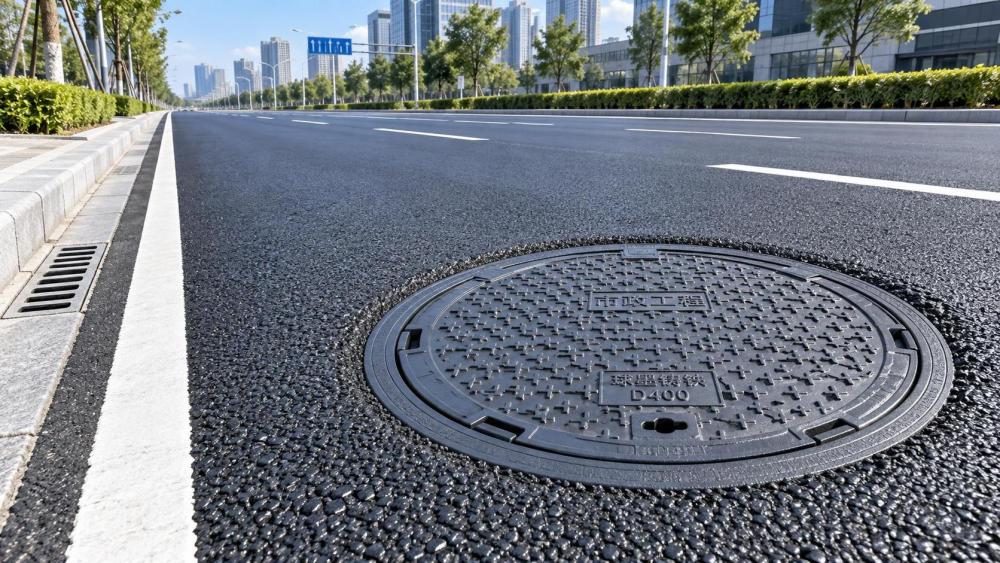
What ductile iron contributes—and what it does not solve
Ductile iron is widely used for roadway access covers because it combines castability with improved toughness compared with conventional gray iron. For project teams, the practical benefit is the ability to use robust cast components with geometry suited to bearing surfaces, lifting features, stiffening patterns, and frame sections. Material selection remains only one part of the performance equation.
When comparing a ductile iron manhole cover with other access-cover options, evaluators should examine the full assembly rather than relying on material name alone. The opening size, clear access requirement, frame depth, seat design, cover mass, locking arrangement, and compatibility with adjustment methods can be more consequential in service than small differences in cover appearance.
Round covers are particularly practical where access chambers are circular or where repeated traffic passes directly over the installation. Their continuous perimeter can simplify load transfer when the frame is correctly supported. Yet round geometry does not remove the need to assess the frame’s anchorage, the local pavement detail, or the direction and intensity of traffic. At a junction, bus stop, braking area, or freight entrance, dynamic effects may be more severe than on an ordinary through lane.
Load is not the same as traffic classification
A common procurement weakness is treating a traffic designation as the only acceptance criterion. Traffic classification is necessary, but it does not describe every condition that affects cover performance. Wheel location, speed changes, braking, acceleration, steering, pavement deflection, and uneven road approaches can introduce repeated impact and torsional forces. A cover placed just outside the normal wheel path may experience a different service pattern from one in the center of a bus lane, even when both are on the same road.
Technical teams should also distinguish between a cover’s structural capacity and its in-service behavior. Rattling often begins with small movements at the bearing interface. Water and fines can enter the seat, bedding may deteriorate, or an uneven frame can transfer load irregularly. These issues may create noise and pavement distress before there is any obvious casting damage. Specifications that address fit, seating, frame support, installation tolerances, and post-installation inspection are more likely to control those risks than specifications focused only on nominal strength.
Surface texture deserves attention as well. The upper face must serve road users in real conditions, not only look acceptable at delivery. Tire interaction, bicycle use, pedestrian crossings near the road edge, moisture, mud, and winter maintenance practices can all affect the appropriate surface detail. In locations where covers may be encountered by cyclists or motorcyclists, placement and transition quality can be as important as the cover material.
Procurement trends favor clearer interfaces and fewer assumptions
Infrastructure buyers are increasingly asked to coordinate design, construction, asset ownership, and maintenance responsibilities. That encourages procurement documents to define interfaces more precisely. Instead of specifying only a cover diameter and generic material, a stronger package identifies the intended installation zone, chamber configuration, finished levels, applicable local requirements, inspection responsibilities, and documents required at delivery.
Manufacturing and supply-chain considerations also influence selection. Covers may need to match an existing chamber population, arrive in a sequence that supports phased paving, or be stored without damage to seating surfaces. When replacement units are expected to remain available over time, dimensional consistency and traceability become practical maintenance concerns. A technically suitable product that does not match the existing frame arrangement may create avoidable site modifications.
For municipal upgrades, standardization can be useful where it reduces spare-part complexity and makes inspection routines more consistent. It should not become a reason to apply the same assembly to every location. A residential access street, a commercial loading zone, and a heavily trafficked arterial road may require different decisions even if their nominal opening dimensions are similar.
A practical technical review before issue of purchase documents
- Map each cover location by traffic exposure rather than treating the whole project as one category.
- Record the chamber type, existing opening geometry, wall condition, and whether the top section can support a replacement frame.
- Confirm finished pavement levels, crossfall, drainage path, and the planned sequence for frame adjustment and paving.
- Define the required clear opening for the utility’s inspection, cleaning, or emergency access operations.
- Review cover-seat design, anti-rocking provisions, lifting points, and any locking or security requirement in the context of local maintenance practice.
- Specify documentation, marking, visual inspection, dimensional checks, and acceptance steps without assuming unverified certifications or product claims.
- State storage and handling expectations so that bearing faces, coatings, and lifting features are not damaged before installation.
- Assign responsibility for checking level, stability, and surrounding reinstatement before the road is opened to traffic.
Installation quality often determines the public-facing result
New pavement tends to make any poorly performing access cover more visible. A localized depression collects water. A proud frame can create impact and noise. A rocking cover may prompt complaints long before an asset manager has scheduled a formal inspection. These outcomes are frequently linked to installation conditions: uneven chamber tops, insufficient support beneath the frame, poor control of adjustment materials, inadequate compaction at the pavement interface, or traffic placed on the area before the installation system has developed the intended support.
The remedial cost can be disproportionately high because work is carried out in a finished road surface. Lane closures, traffic management, saw cutting, reinstatement, and disruption to utility access can outweigh the original component cost. For that reason, technical evaluation should include the proposed installation method and quality-control hold points. A cover specification without a workable construction detail leaves too much to site interpretation.
Round ductile iron units remain relevant partly because installers and maintenance teams are familiar with the basic geometry. Familiarity should support disciplined execution, not replace it. If a project introduces new frame depths, adjustment rings, locking mechanisms, or bedding systems, crews need enough information to avoid mixing components that were not designed to work together.
Questions evaluators should settle early
Can a round cover be used in every road location?
No. It may be well suited to many circular chambers and road applications, but opening geometry, required access size, road-user safety, utility needs, and local authority requirements may point to another configuration. The cover should be selected as part of the chamber and pavement detail.
Is a heavier cover automatically a better choice?
Not necessarily. Mass may affect handling safety and maintenance effort, while performance depends on the whole design: material, geometry, bearing arrangement, frame support, and installation. A heavier component that is difficult to lift or does not seat consistently can create operational problems.
What should be checked when replacing an existing cover?
Measure the existing frame and clear opening, inspect the chamber top, identify the required finished level, and determine whether the frame must also be replaced. Reusing a frame with a different cover design can lead to poor seating, noise, or insecure fit unless compatibility is confirmed.
How can projects reduce future pavement repairs around covers?
Use a site-specific frame support and reinstatement detail, control the finished level carefully, inspect stability before opening to traffic, and consider the actual wheel paths and drainage conditions. Maintenance access should also be planned so routine removal does not damage the seating surfaces or adjacent pavement.
A durable choice when the surrounding decision is equally durable
Round ductile iron manhole covers continue to have a place in road upgrades because they align with common chamber forms, offer practical access characteristics, and can perform effectively in demanding traffic environments when matched to the right assembly and installation detail. Their continued use is less a matter of convention than of fit: fit with the road zone, the utility asset, the construction method, and the authority’s maintenance model.
For technical evaluators, the most reliable approach is to move beyond a material-only comparison. Review the cover, frame, chamber, pavement interface, traffic behavior, and inspection process as one system. That is where a routine access component becomes either a long-term serviceable detail or an early source of road maintenance work.
Related News

How to Evaluate European Drill-and-Blast Tunnelling Contractors for Complex Projects
Drill and blast tunnelling contractors Europe: learn how to assess geology expertise, blast control, equipment reliability, safety, and programme resilience for complex projects.

Which Trenchless Construction Technique Fits Your Utility Crossing Conditions?
Trenchless construction techniques compared for utility crossings: choose HDD, microtunnelling, pipe jacking, or auger boring based on ground, accuracy, access, and risk.

What Is Driving Metro Tunnelling Demand Across Southeast Asia’s Major Cities?
Metro tunnelling Southeast Asia is accelerating as major cities tackle congestion, flooding, and connectivity. Explore the market forces, technical risks, and opportunities shaping demand.

Hard Rock Tunnelling in Australia: Selecting Methods for Variable Ground Conditions
Hard rock tunnelling in Australia: compare TBM, drill-and-blast and hybrid methods to manage variable ground, reduce risk and protect project costs.

Hydropower Tunnel Excavation: Selecting Methods for Variable Rock Conditions
Hydropower tunnel excavation methods for variable rock conditions: compare TBM, drill-and-blast, and hybrid strategies to improve safety, progress, and project control.

How to Select Underground Safety Equipment for Tunnelling by Hazard and Work Zone
Underground Safety Equipment for tunnelling: match protection to hazards, work zones, compliance, and emergency needs with this practical selection guide.

EPB or Slurry Shield? Selecting Soft-Ground Tunnelling Equipment by Soil Conditions
Tunnel Excavation Equipment for soft ground: compare EPB and slurry shields by soil, groundwater, settlement risk, and project logistics to choose confidently.
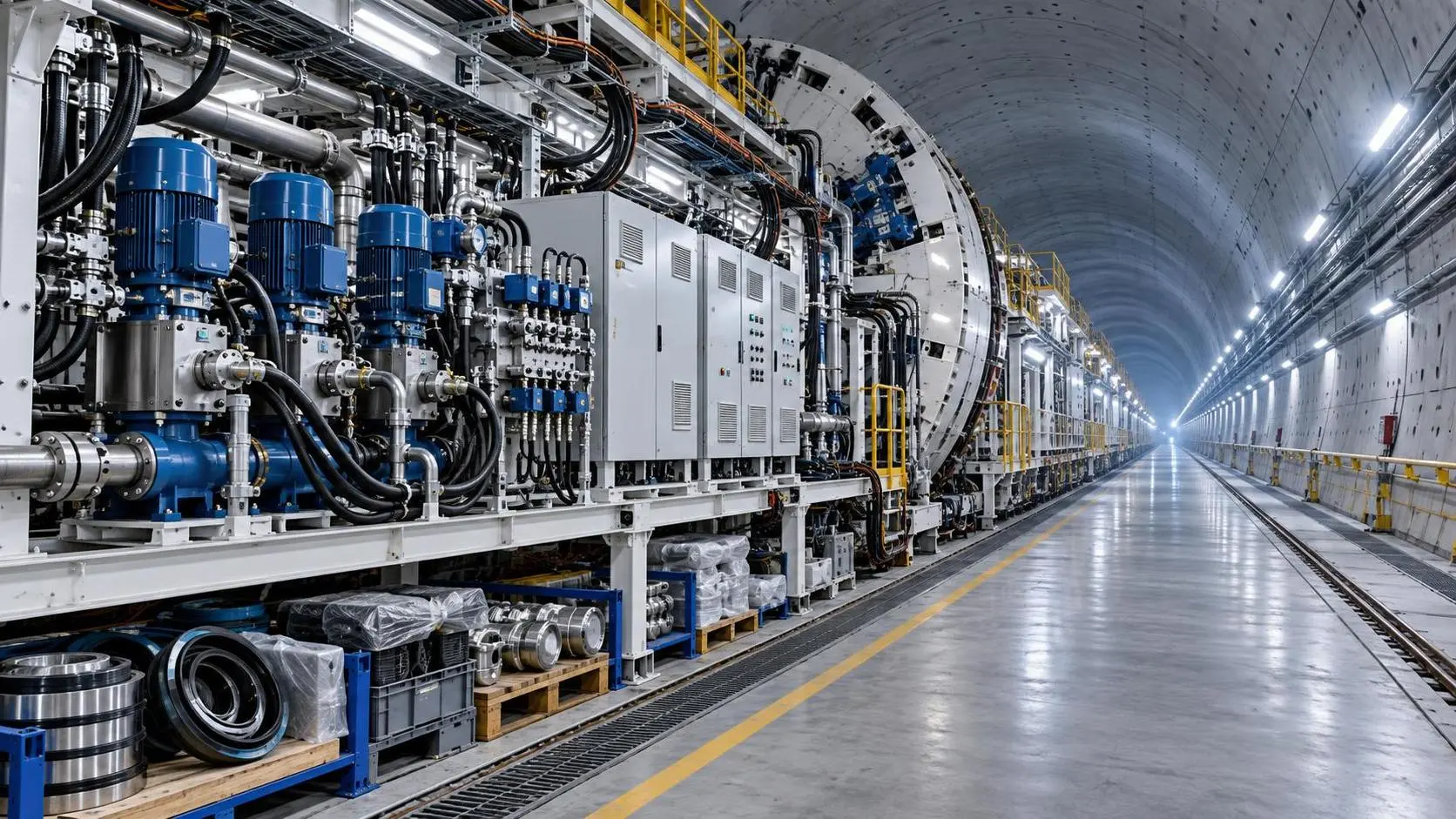
How to Specify TBM Backup System Parts for Reliable Long-Distance Tunnelling
TBM backup system parts: learn how to specify reliable spares for long-distance tunnelling, reduce downtime, ensure compatibility, and speed underground recovery.

How to Size Open Pit Mining Trucks for Haul Distance, Grade, and Payload?
Open Pit Mining Trucks: learn how to match payload, haul distance, grade, road resistance, and loading capacity for safer, lower-cost mine operations.
Related News
- 00
0000-00
How to Evaluate European Drill-and-Blast Tunnelling Contractors for Complex Projects - 00
0000-00
Which Trenchless Construction Technique Fits Your Utility Crossing Conditions? - 00
0000-00
What Is Driving Metro Tunnelling Demand Across Southeast Asia’s Major Cities? - 00
0000-00
Hard Rock Tunnelling in Australia: Selecting Methods for Variable Ground Conditions - 00
0000-00
Hydropower Tunnel Excavation: Selecting Methods for Variable Rock Conditions
Weekly Insights
Stay ahead with our curated technology reports delivered every Monday.