
Battery Electric Mining Equipment Charging: How to Size Power, Chargers, and Shift Cycles





Battery Electric Mining Equipment Charging: How to Size Power, Chargers, and Shift Cycles
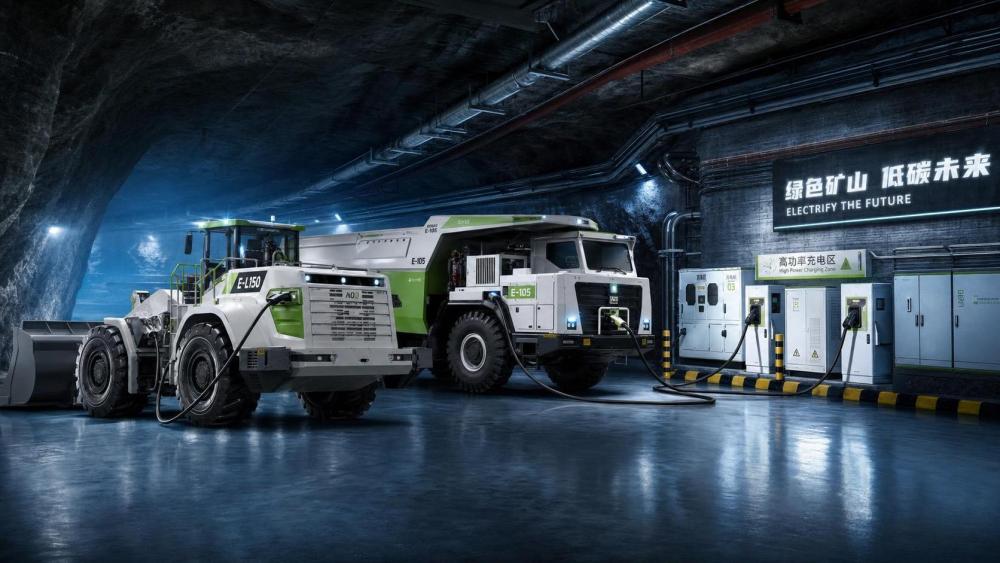
Battery electric mining equipment charging is no longer a side issue in mine planning.
It now affects production uptime, heat load, ventilation demand, and the economics of every shift.
In underground projects, a charging mistake rarely stays small.
It quickly becomes queueing, idle loaders, delayed haulage, and higher peak power charges.
That is why battery electric mining equipment charging should be sized from the production cycle backward.
Start with tonnes, distances, ramp grades, and shift structure.
Then convert that operating pattern into energy demand, charger count, and power supply needs.
This guide lays out a practical way to do that.
Begin With the Duty Cycle, Not the Charger
Many charging plans fail because teams start by picking charger ratings.
The better sequence is to define the real duty cycle first.
For battery electric mining equipment charging, the duty cycle is the operating truth.
It includes payload, haul distance, gradient, cycle time, waiting time, and idle time.
It also includes temperature, ventilation constraints, and operator behavior.
A loader in a short flat loop behaves very differently from a truck climbing long ramps.
Recent mine electrification projects show a consistent pattern.
Energy use varies more by route and traffic design than by brochure battery size.
So the first task is to build an energy map for each machine class.
- Average kWh per cycle
- Peak kW during acceleration and climbing
- Regenerative braking contribution on declines
- Battery reserve required for operational safety
- Time windows available for charging
Once those values are clear, battery electric mining equipment charging becomes a planning exercise, not a guessing exercise.
How to Size Total Power Demand
The next step is sizing site power for battery electric mining equipment charging.
This is where many business cases become unrealistic.
Nameplate charger power is not the same as real demand.
You need to account for coincidence, charging windows, and battery acceptance rates.
In practical terms, start with daily fleet energy consumption.
Then divide by the real charging hours available, not the calendar day.
After that, add diversity and contingency factors.
A simple planning structure looks like this.
- Estimate energy per machine per shift.
- Multiply by the number of active units.
- Subtract expected regenerative recovery where verified.
- Apply charger efficiency losses.
- Divide by effective charging hours.
- Add spare capacity for abnormal queueing or shift overruns.
This gives an operational power requirement, not just an electrical one.
More importantly, it reveals whether your substation and cable plan can support growth.
In actual projects, expansion margin matters more than initial neatness.
A mine that adds two more battery trucks can overload a charging bay faster than expected.
A Quick Example
Assume four electric loaders each consume 220 kWh per shift.
Assume two electric haul trucks each consume 480 kWh per shift.
Total shift demand becomes 1,840 kWh before losses.
With 92% charging efficiency, required input rises to about 2,000 kWh.
If real charging time is four hours, average charging power is roughly 500 kW.
But average is not peak.
If several units connect together, peak demand may reach 700 to 900 kW.
That difference drives transformer, switchgear, and tariff decisions.
How to Choose Charger Quantity and Rating
Battery electric mining equipment charging works best when charger count matches traffic flow.
One oversized charger can still create a queue.
Several right-sized chargers often deliver better fleet availability.
The decision depends on battery size, charge acceptance curve, and operational windows.
Fast charging sounds attractive, but it brings heat, higher infrastructure cost, and stronger grid impact.
It may also increase battery stress if used as the default strategy.
A more reliable approach is to mix opportunity charging with scheduled longer charging.
That keeps state of charge in a healthier operating band.
When evaluating charger layout, check these points.
- Can machines connect without blocking other traffic?
- Does charger location reduce dead travel?
- Is there redundancy if one charger fails?
- Can connectors tolerate dust, water, and rough handling?
- Is maintenance access possible during normal operations?
This is where battery electric mining equipment charging becomes part of mine layout engineering.
The charger is not only an electrical asset.
It is also a production node.
Shift Cycles Decide Whether Charging Will Work
The strongest charging design can still fail under the wrong shift model.
Battery electric mining equipment charging must align with blasting, mucking, hauling, and maintenance windows.
This is often the clearest signal in underground operations.
Good charging plans are actually good shift plans.
Three common models appear in the field.
1. End-of-Shift Charging
This is simple to manage and easy to schedule.
It suits stable production with predictable energy use.
Its weakness is high simultaneous charging demand.
2. Opportunity Charging
This uses short breaks during loading delays, shift changes, or waiting periods.
It lowers battery depth of discharge and reduces peak demand concentration.
But it only works with disciplined traffic control.
3. Battery Swap or Hybrid Strategy
This is useful where uptime is critical and dwell time is costly.
It shifts complexity from the vehicle to logistics and spare battery inventory.
In practice, many mines combine these methods.
That combination usually gives the most resilient battery electric mining equipment charging setup.
Risks That Commonly Undermine Charging Performance
Several recurring issues weaken battery electric mining equipment charging performance.
Most are operational, not theoretical.
From a project perspective, these are controllable risks.
They should be addressed at concept design stage, not after commissioning.
A Practical Planning Framework
A workable battery electric mining equipment charging plan usually follows a clear sequence.
- Define production targets by zone and shift.
- Map machine duty cycles and route conditions.
- Estimate kWh demand by asset type and scenario.
- Test charging windows against real operating delays.
- Size chargers for throughput, not marketing speed.
- Check electrical infrastructure against future fleet growth.
- Build redundancy for outages, maintenance, and traffic disturbances.
- Track actual charging data after deployment and adjust quickly.
This approach keeps battery electric mining equipment charging tied to production reality.
It also supports better discussions with utilities, OEMs, and mine operations teams.
That matters because electrification projects often fail at the interfaces.
Power engineers, planners, and production managers need one operating model, not three separate assumptions.
Conclusion: Size Charging Around Production, Not Around Hardware Alone
Battery electric mining equipment charging succeeds when infrastructure follows the production cycle.
That means understanding route energy, charging behavior, and shift timing in detail.
It also means allowing for queues, outages, thermal limits, and future expansion.
When those factors are modeled early, charging stops being a bottleneck.
It becomes a controllable part of mine productivity.
For teams moving toward zero-emission fleets, that is the real decision point.
Build the battery electric mining equipment charging system around how the mine actually runs, then scale from there.
Related News
Tunnel Boring Machine Costs: Budgeting for Purchase, Operation, and Project Risk
Tunnel Boring Machines cost more than purchase price. Learn how to budget lifecycle costs, downtime, logistics, wear, and project risk for smarter TBM decisions.

Open-Pit Haulage Cost Analysis: How Mine Managers Can Cut Cost per Tonne
Open pit haulage cost analysis: discover practical ways to reduce cost per tonne through payload control, cycle-time optimization, road performance, and smarter fleet decisions.
Tunnel Construction Innovations That Reduce Risk and Schedule Delays on Urban Projects
Tunnel construction innovation for urban projects: discover smarter TBMs, real-time monitoring, trenchless methods, and automation that reduce risk and protect schedules.
TBM Disc Cutter Design: Key Geometry and Load Factors for Hard Rock Tunnelling
TBM disc cutter design explained: explore geometry, spacing, load distribution and maintenance factors for reliable, efficient hard-rock tunnelling performance.
Hydraulic Tipping Stability Risks in Multi-Axle Dump Special Trailers
Dump special trailers: discover key hydraulic tipping stability risks, multi-axle load dynamics, and practical safety controls for safer, smarter bulk hauling.
When rock reinforcement in tunnel construction must change after blasting
Rock reinforcement in tunnel construction must change when blasting reveals overbreak, weak joints, water inflow, or deformation. Discover key post-blast support decisions.
How tunnel hydraulic systems influence drill jumbo uptime underground
Tunnel hydraulic systems directly influence drill jumbo uptime. Explore how stable pressure, clean oil, cooling, and maintainable design reduce underground downtime.
What to verify before appointing a tunneling vehicles manufacturer
Choosing a tunneling vehicles manufacturer? Verify application fit, reliability, compliance, parts support, training, and channel terms before appointing a partner.
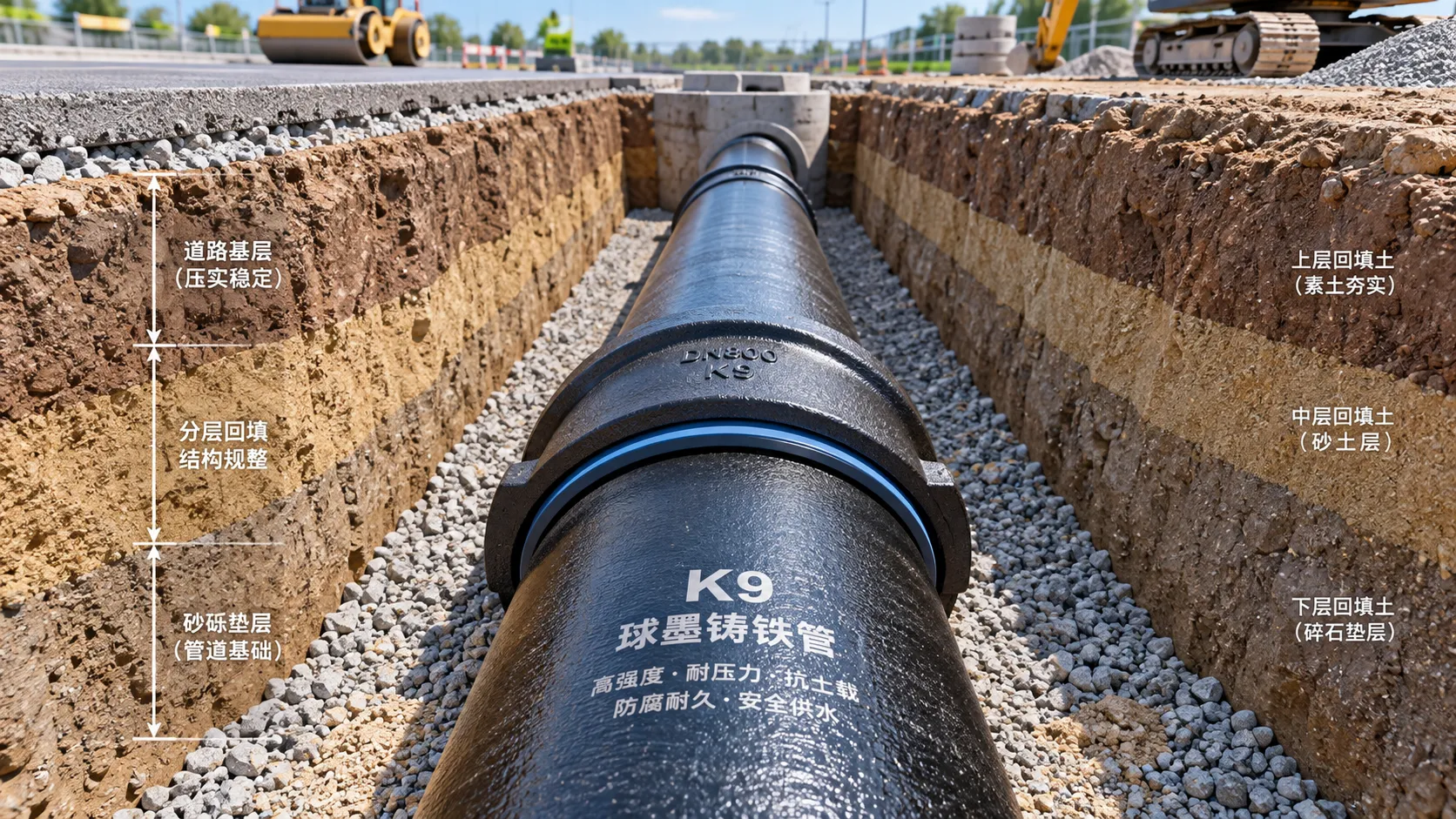
Selecting K9 Ductile Iron Pipe for Buried Water Pipeline Conditions
K9 ductile iron pipe selection for buried water pipelines: compare pressure duty, joints, soil loads, corrosion protection, and installation controls for reliable long-term performance.
Related News
- 00
0000-00
Tunnel Boring Machine Costs: Budgeting for Purchase, Operation, and Project Risk - 00
0000-00
Open-Pit Haulage Cost Analysis: How Mine Managers Can Cut Cost per Tonne - 00
0000-00
Tunnel Construction Innovations That Reduce Risk and Schedule Delays on Urban Projects - 00
0000-00
TBM Disc Cutter Design: Key Geometry and Load Factors for Hard Rock Tunnelling - 00
0000-00
Hydraulic Tipping Stability Risks in Multi-Axle Dump Special Trailers
Weekly Insights
Stay ahead with our curated technology reports delivered every Monday.