
How to Choose a Deep Mine Dewatering System for High Inflow and Harsh Ground Conditions





Meta Title: How to Choose a Deep Mine Dewatering System for High Inflow and Harsh Ground Conditions
When water inflow is high and the ground will not behave, choosing a deep mine dewatering system stops being a routine equipment decision. It becomes a schedule, safety, and cost-control decision. Many projects run into trouble because they size pumps around average inflow, treat fractured ground as a secondary issue, or assume any high-head pump package will solve the problem. In practice, the right system is the one that can keep headings workable through upset conditions, survive abrasive solids, fit the mine layout, and still make operational sense six months after commissioning.
If you are comparing options right now, the shortest useful answer is this: do not start with pump brand or installed power. Start with the water source, inflow variability, geotechnical behavior, lift requirement, solids load, access constraints, and failure consequences. That is what determines whether you need staged pumping, borehole depressurization, sump-based drainage, grouting support, or a hybrid arrangement.
What project teams often get wrong first
A common mistake is treating dewatering as a standalone utility. In deep mines, it is tied directly to development sequencing, ground support, ventilation, power distribution, traffic flow, and maintenance access. High inflow in competent rock is one problem. High inflow through broken ground, faulted zones, swelling formations, or weak contacts is another. The second case usually creates the real pain: sloughing, sump instability, blocked drains, rapid wear, and repeated stoppages at the worst possible time.
Another mistake is designing around “normal” water conditions. Project leaders rarely get criticized for planning for average days; they get criticized for losing the heading during peak inflow, storm recharge, breakthrough into water-bearing zones, or sudden fracture connectivity. Your dewatering system should be judged on upset resilience, not just nominal duty point efficiency.
Deep mine dewatering selection starts with the hydrogeology, not the catalogue
Before comparing equipment, get clear on what water you are actually dealing with. Is it persistent groundwater seepage, localized fracture inflow, perched water, old workings connectivity, process water migration, or a mix? The answer changes the system logic.
For example, if inflow is concentrated through known structures, pre-drainage or depressurization boreholes may reduce the load more effectively than simply installing larger pumps. If inflow is diffuse and continuous along declines or production levels, a staged collection-and-pumping arrangement usually makes more sense. If the mine has fines-heavy water and unstable floor conditions, sump design and solids management may matter just as much as pump curve selection.
On difficult jobs, project teams should ask for three separate inflow views rather than one number:
- Expected steady-state inflow
- Peak episodic inflow
- Credible worst-case inflow during disturbance or interception events
That distinction sounds basic, but it is often where bad decisions begin.
The system type should match the failure mode you are trying to avoid
There is no single best deep mine dewatering architecture. There is only a best fit for the ground and operating risk.
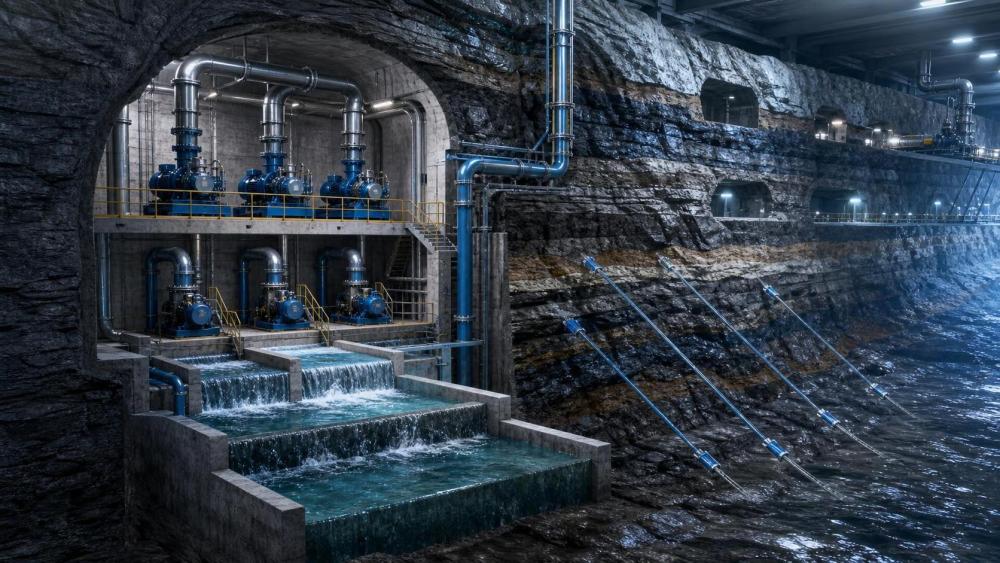
Sump-and-pump systems are widely used because they are straightforward and flexible. They work well where water can be collected predictably and where access for cleaning, inspection, and pump replacement is realistic. Their weakness shows up in highly unstable ground or high-solids service, where sumps fill, floors degrade, and maintenance becomes constant.
Multi-stage pumping systems are usually the practical answer for deep lifts. Instead of forcing one pump arrangement to do everything, the lift is broken into manageable stages. This improves redundancy and maintainability, but it also adds controls, pipework complexity, and more points that can fail if layout discipline is weak.
Borehole dewatering or depressurization is often underused by teams who focus too early on underground pumping hardware. In fractured, water-bearing ground, taking pressure off the rock mass before excavation or ahead of mining can be more valuable than dealing with the full inflow after it arrives. This is especially relevant where water pressure contributes to instability.
Hybrid systems are common in harsh conditions: pre-drain where possible, intercept where necessary, collect in controlled sumps, and pump in stages with built-in standby capacity. These are not the cheapest systems on paper, but they are often the least expensive once delay costs are counted.
High inflow changes the pump discussion in a very practical way
When inflow is high, many teams jump directly to higher-capacity pumps. That is only partly right. Capacity matters, but so do head margin, abrasion resistance, solids handling, motor protection, seal arrangement, and the ability to run reliably away from ideal conditions.
If the water carries cuttings, fines, or broken ground particles, a pump that looks efficient in clean-water documentation may turn into a maintenance problem underground. Likewise, a pump that is technically capable of the required head may still perform badly if suction conditions are poor, the sump geometry is wrong, or the installation encourages clogging and cavitation.
For project evaluation, focus on these questions:
- Can the pump tolerate the expected solids content without constant rebuilds?
- How much performance margin exists above the design point?
- What happens if one unit goes down during a peak inflow window?
- How difficult is replacement at the installed location?
- Does the mine have the power quality and control infrastructure the system needs?
A system that is slightly less elegant hydraulically but far easier to maintain underground often wins in real operations.
Harsh ground conditions usually punish the parts around the pump
Project managers sometimes spend weeks comparing pump models and very little time reviewing the supporting layout. In broken or squeezing ground, the surrounding system is often the first thing to fail: pipe supports deform, access routes become unsafe, cable routing is exposed, valves are hard to reach, and sumps lose shape.
This is why ground conditions should influence civil and mechanical details early. You may need lined or reinforced sumps, protected pump chambers, abrasion-resistant pipe sections in key zones, and isolation valves placed where crews can actually reach them during bad conditions. If your design assumes clean access and stable floor geometry, but the heading routinely degrades, then your dewatering plan is too optimistic.
There is also a sequencing issue. In weak ground, dewatering measures sometimes need to be installed ahead of full excavation progress rather than after water becomes disruptive. Teams that wait for visible flooding are already behind.
Do not separate CAPEX from delay risk
Selection decisions often go wrong in procurement because the cheapest compliant package looks attractive on paper. That view ignores the most expensive line item on difficult underground jobs: lost time.
A lower-cost system can become the more expensive choice if it causes repeated access interruptions, extra rehabilitation, pump changeouts, or reduced advance rates. When you evaluate options, compare them against operational consequences, not just purchase price. A good review should include:
- Installation complexity underground
- Expected wear-part consumption
- Cleaning frequency for sumps and lines
- Standby and redundancy needs
- Impact of a single-point failure on development or production
- Power and automation requirements
If the mine is deep, remote, or logistically constrained, maintenance simplicity becomes a strategic factor, not a minor preference.
Where experienced teams draw the line
Teams with more underground experience usually stop asking, “Which pump is best?” and start asking, “Which system fails gracefully?” That is a much better selection mindset.
In real mine conditions, failures do happen: power trips, lines block, sumps silt up, operators get pulled to other priorities, and water inflow changes faster than predicted. The better system is the one that gives you time to respond. That usually means reserve capacity, staged isolation, level monitoring, accessible maintenance points, and enough layout discipline that one problem does not take down the whole chain.
This is also where digital monitoring starts to matter. You do not need to overcomplicate the package, but level, flow, pressure, and pump status data are useful when inflow patterns are unstable or the dewatering path spans multiple levels. In underground engineering, reliable situational awareness often saves more time than theoretical efficiency gains. That broader systems view is one reason sector intelligence platforms such as UTMD are useful to engineering leaders: they connect mine water handling decisions with the wider realities of underground equipment reliability, development logistics, and harsh-environment operating limits.
A practical evaluation checklist before you approve a system
Before sign-off, confirm these points with the design team, vendor, and operations side together:
- The system is sized for peak and upset inflow, not only average inflow.
- Ground conditions around sumps, chambers, and pipe routes have been considered in the layout.
- The selected pumps match expected solids load and water chemistry as far as can be verified.
- Redundancy is defined clearly: installed standby, mobile backup, or both.
- Maintenance access is realistic under actual underground traffic and support conditions.
- Power, controls, and drainage paths have no obvious single-point failure.
- There is a plan for cleaning, inspection, and recovery after a major inflow event.
If several of those answers are vague, the system is probably not ready for approval.
When a simpler system is enough, and when it is not
Not every mine needs a highly layered deep mine dewatering arrangement. If inflow is moderate, geology is predictable, and access is good, a simpler staged sump-and-pump setup may be entirely appropriate. Overbuilding wastes capital and can create unnecessary maintenance burden.
But once you combine high inflow with fractured rock, long lift distances, abrasive water, and unstable excavations, simple systems run out of road quickly. That is usually the point where hybrid dewatering, pressure relief measures, stronger redundancy, and tighter monitoring stop being optional.
The main decision test is straightforward: if a short dewatering failure can halt development, damage ground conditions, or create a difficult recovery, choose the more resilient system even if the upfront number is harder to accept.
Final decision rule
The right deep mine dewatering system is not the one with the biggest pump or the most impressive specification sheet. It is the one that matches your inflow behavior, ground response, mine geometry, maintenance reality, and tolerance for interruption. If you frame the decision that way, most weak options eliminate themselves fairly quickly.
For project teams, the best next step is usually not asking vendors for a generic quote. It is validating inflow scenarios, reviewing ground-related failure points, and testing whether the proposed dewatering layout still works on the worst day you can reasonably expect underground.
FAQ
Is a higher-capacity pump always better for deep mine dewatering?
No. If solids load, abrasion, poor sump design, or unstable access are the real constraints, a larger pump may increase downtime rather than solve the problem.
When should borehole depressurization be considered?
It is worth serious review when inflow is structurally controlled, water pressure affects ground stability, or post-inflow pumping alone would leave the heading too exposed.
How much redundancy is enough?
There is no universal number. It depends on peak inflow, repair time, access difficulty, and the cost of losing the working area. The harsher the conditions, the less acceptable single-point failure becomes.
Can a low-cost sump system work in bad ground?
Sometimes, but only if sump stability, solids handling, and maintenance access are genuinely manageable. In many fractured or weak zones, the low-cost option becomes expensive very quickly.
Image Placeholder Notes
Suggested placement: after the section comparing system types and before the discussion of pump implications under high inflow.
Suggested image content: a simplified deep mine dewatering layout showing borehole depressurization, collection sumps, staged pumping stations, and discharge path.
Suggested alt text: Deep mine dewatering system layout for high inflow and harsh ground conditions
Internal Link Anchor Text Suggestions
- TBM water control challenges: suggested page on tunnel groundwater management
- underground pump station design: suggested page on mine infrastructure engineering
- fractured rock excavation risk: suggested page on geotechnical risk management
- smart mine equipment reliability: suggested page on underground equipment monitoring
- mine development in high-water zones: suggested page on underground project planning
External Source Directions
- Government mine safety regulator guidance on water hazards and underground pumping requirements
- Pump manufacturer official technical documentation for slurry, drainage, and high-head underground service
- Academic or industry association research on mine hydrogeology, depressurization, and groundwater control in fractured rock
Related News
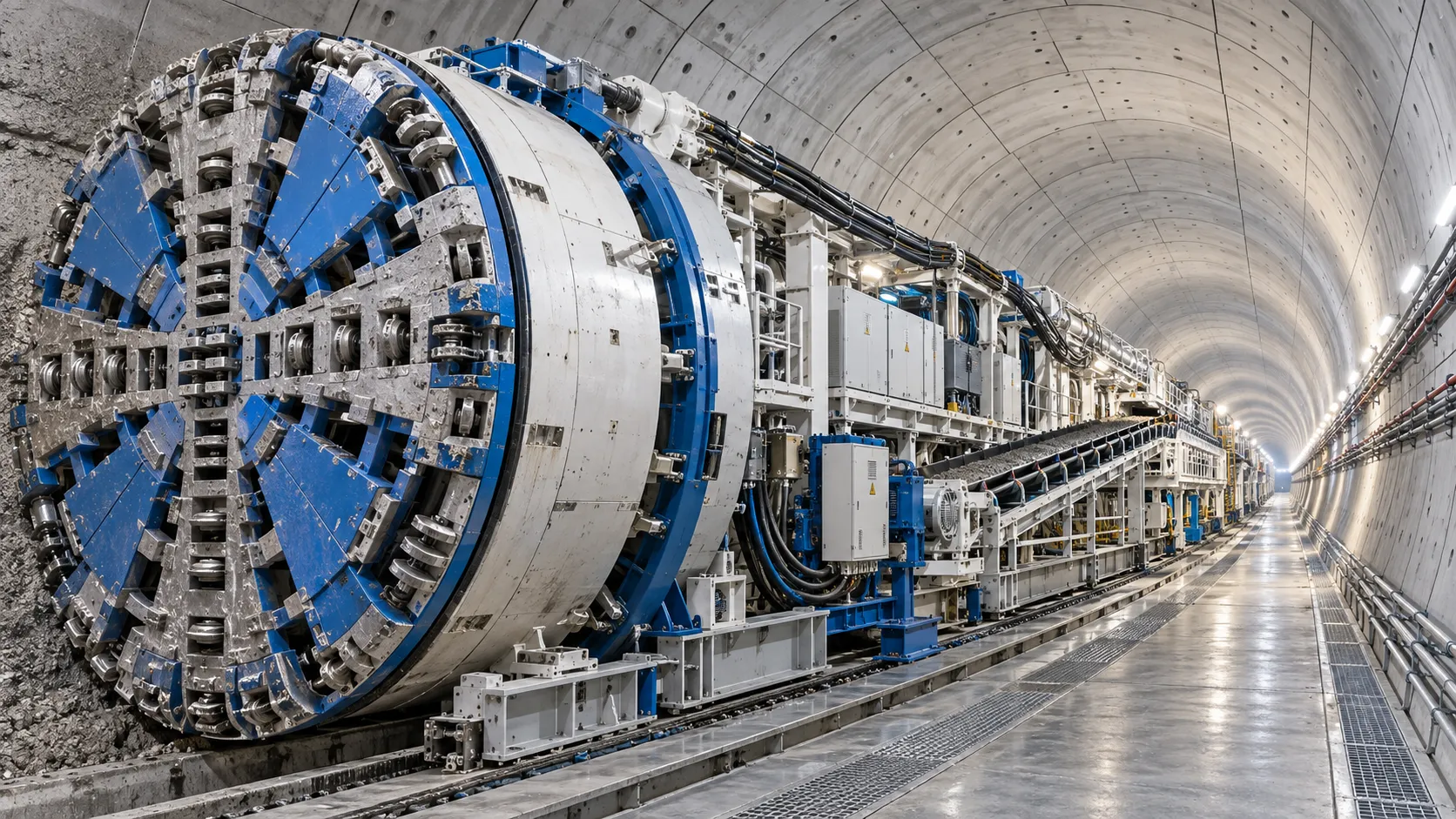
Tunnel Boring Machine Costs: Budgeting for Purchase, Operation, and Project Risk
Tunnel Boring Machines cost more than purchase price. Learn how to budget lifecycle costs, downtime, logistics, wear, and project risk for smarter TBM decisions.
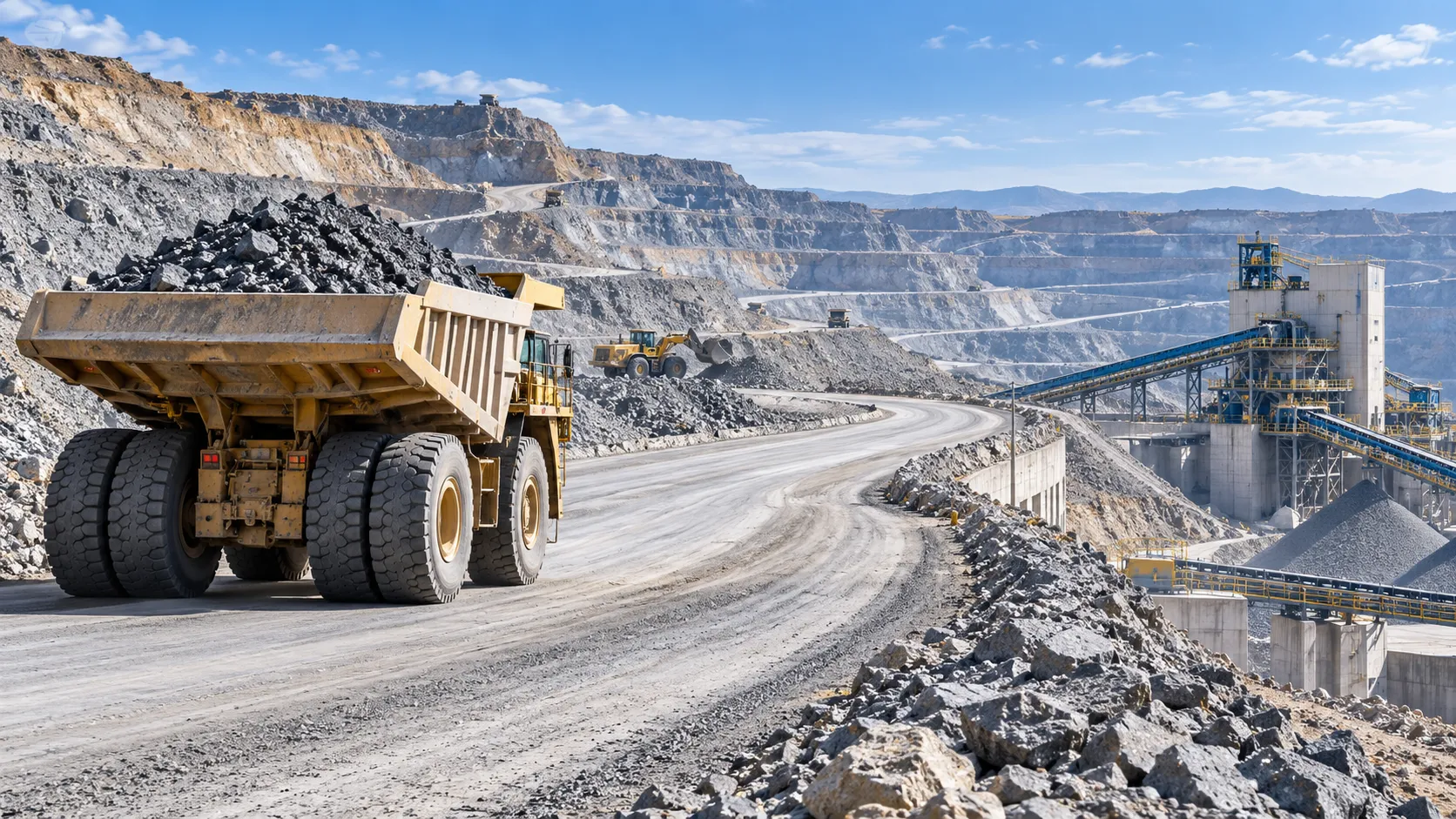
Open-Pit Haulage Cost Analysis: How Mine Managers Can Cut Cost per Tonne
Open pit haulage cost analysis: discover practical ways to reduce cost per tonne through payload control, cycle-time optimization, road performance, and smarter fleet decisions.
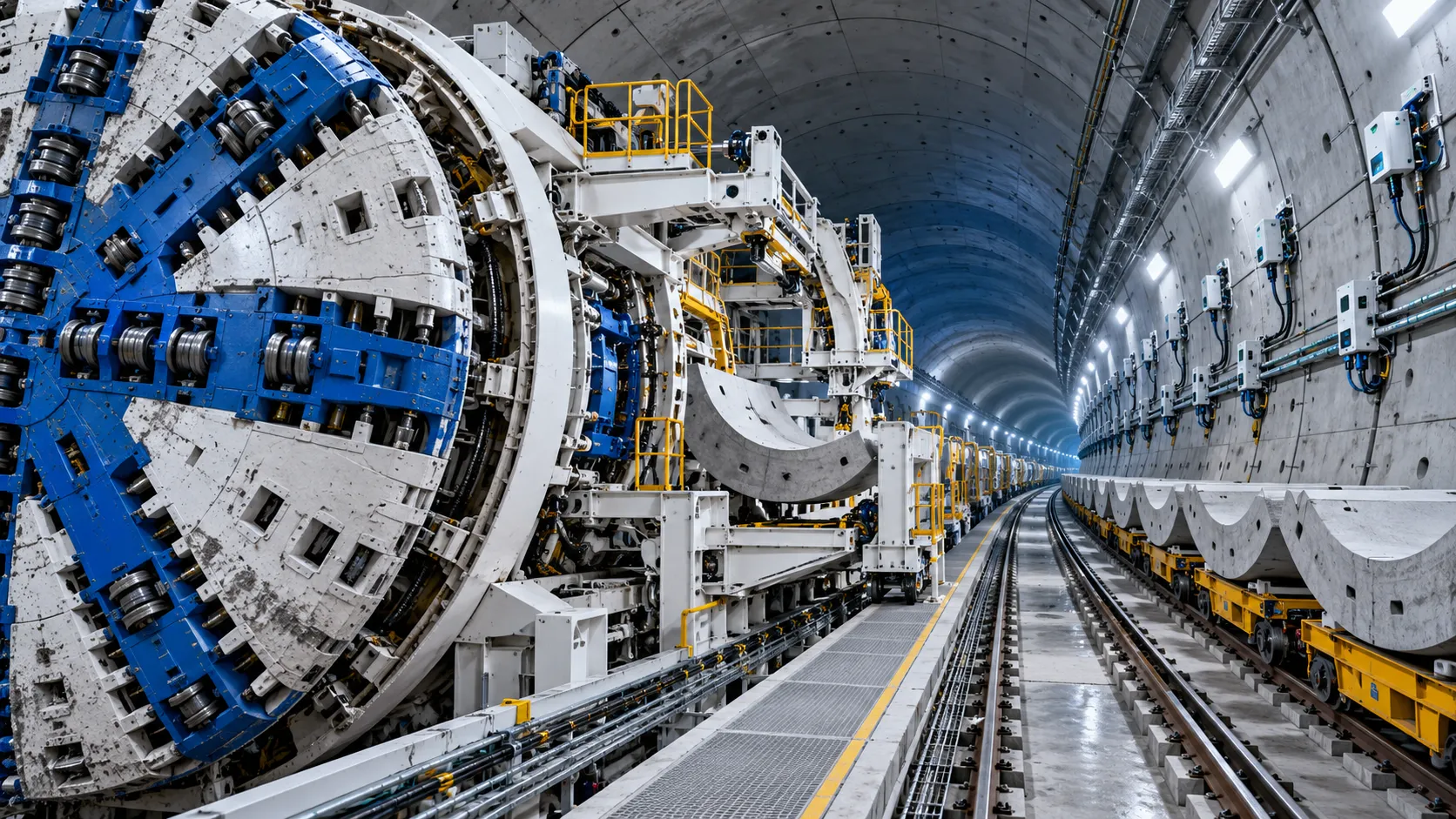
Tunnel Construction Innovations That Reduce Risk and Schedule Delays on Urban Projects
Tunnel construction innovation for urban projects: discover smarter TBMs, real-time monitoring, trenchless methods, and automation that reduce risk and protect schedules.
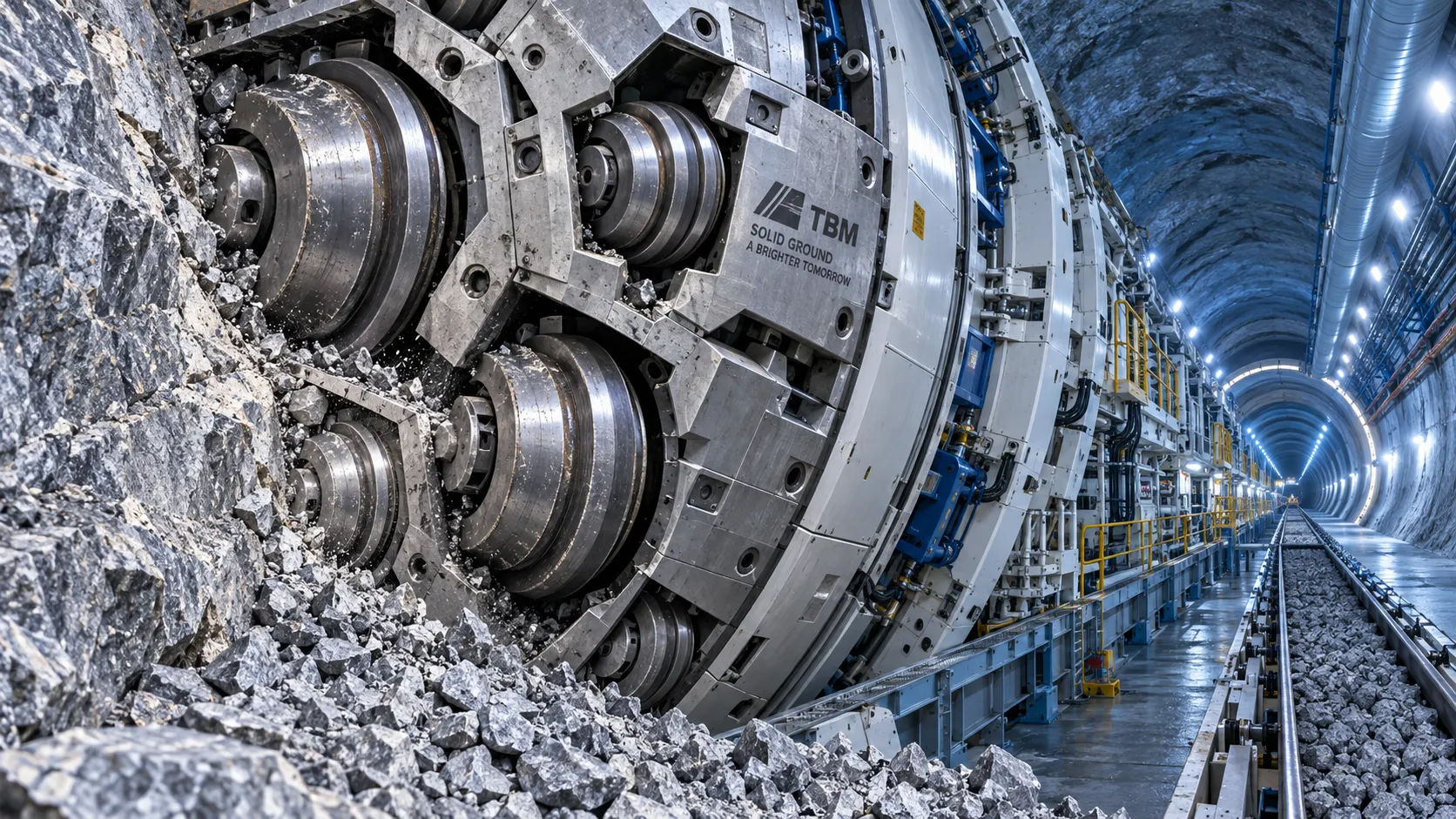
TBM Disc Cutter Design: Key Geometry and Load Factors for Hard Rock Tunnelling
TBM disc cutter design explained: explore geometry, spacing, load distribution and maintenance factors for reliable, efficient hard-rock tunnelling performance.
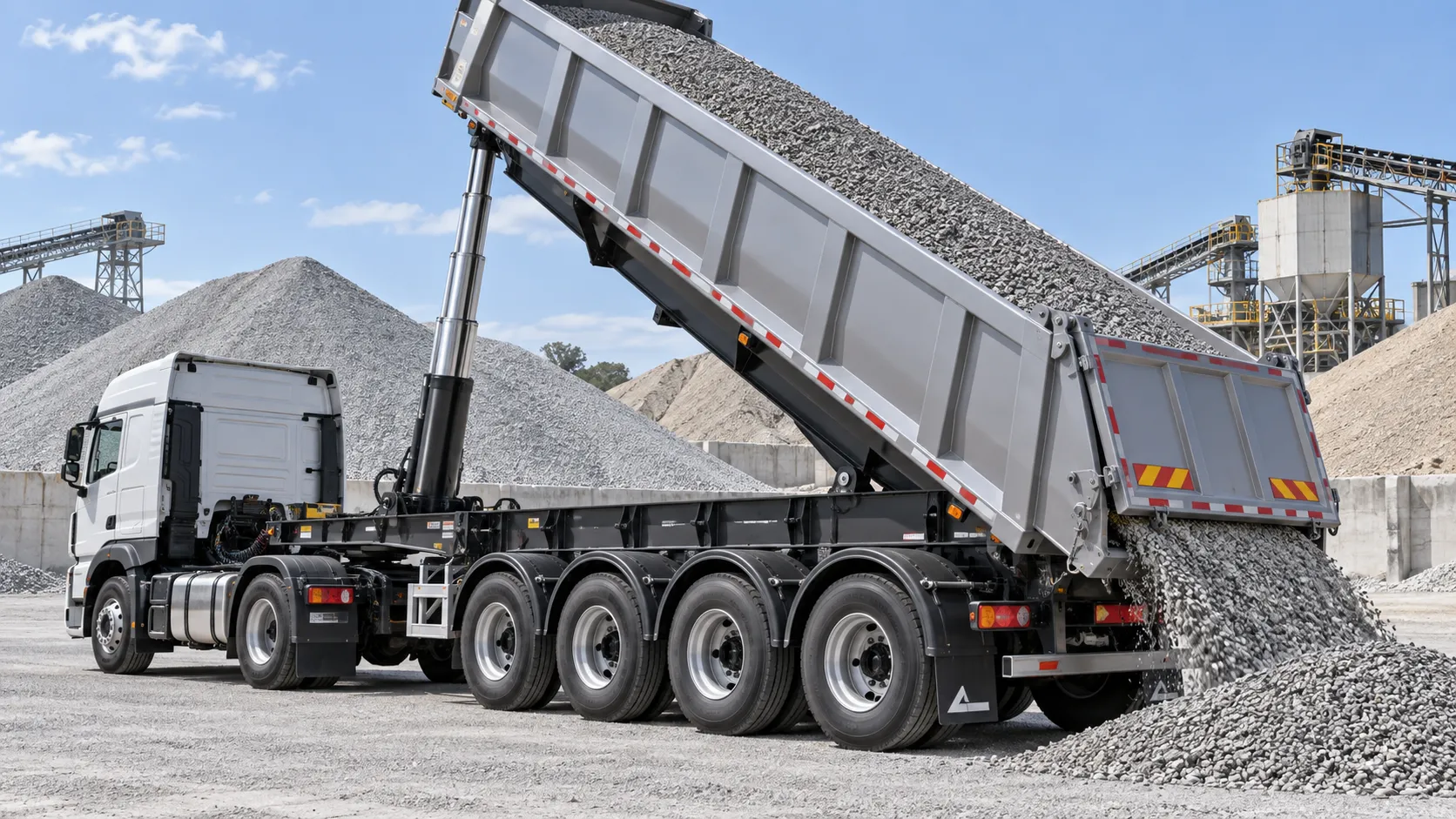
Hydraulic Tipping Stability Risks in Multi-Axle Dump Special Trailers
Dump special trailers: discover key hydraulic tipping stability risks, multi-axle load dynamics, and practical safety controls for safer, smarter bulk hauling.
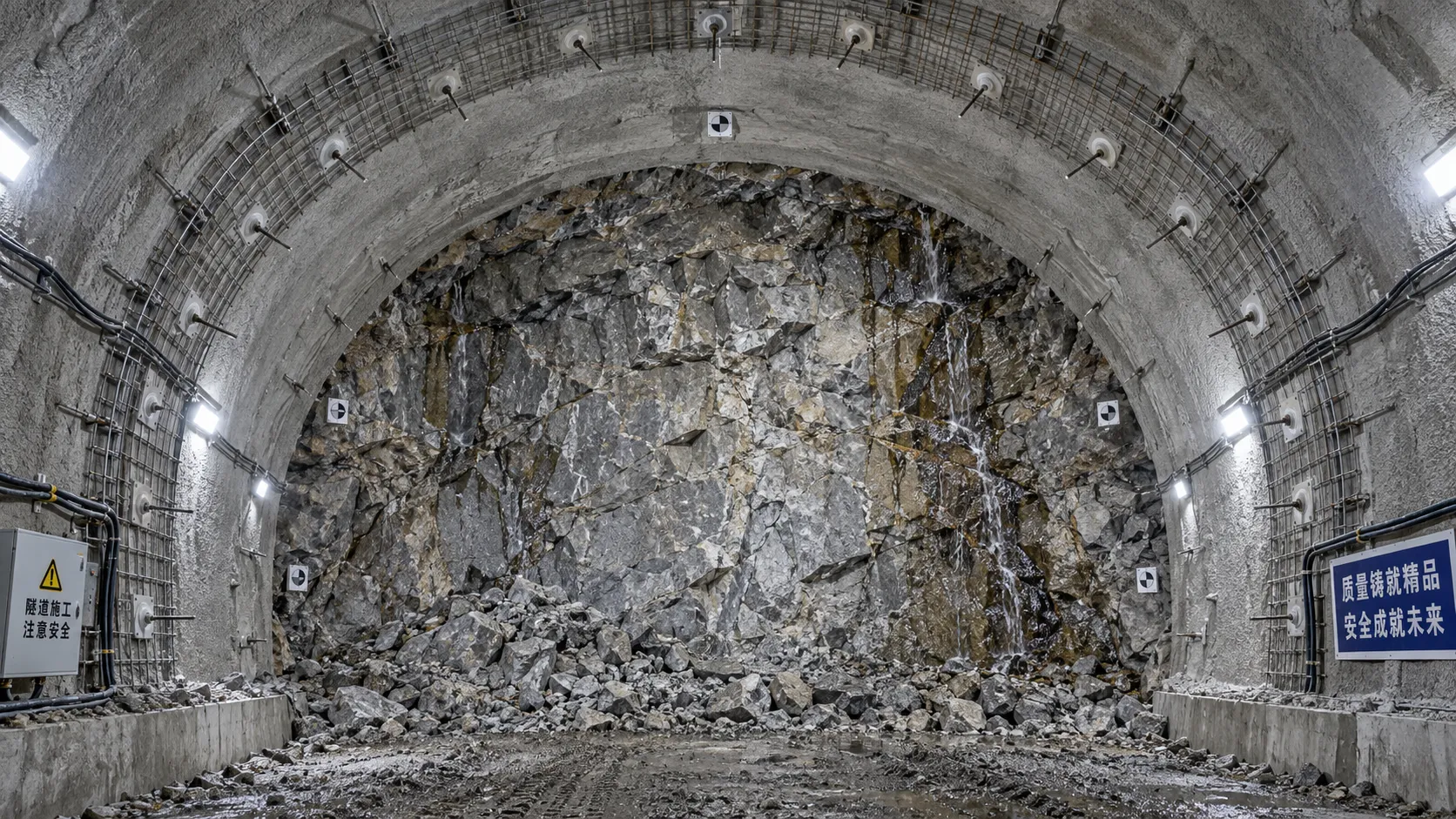
When rock reinforcement in tunnel construction must change after blasting
Rock reinforcement in tunnel construction must change when blasting reveals overbreak, weak joints, water inflow, or deformation. Discover key post-blast support decisions.
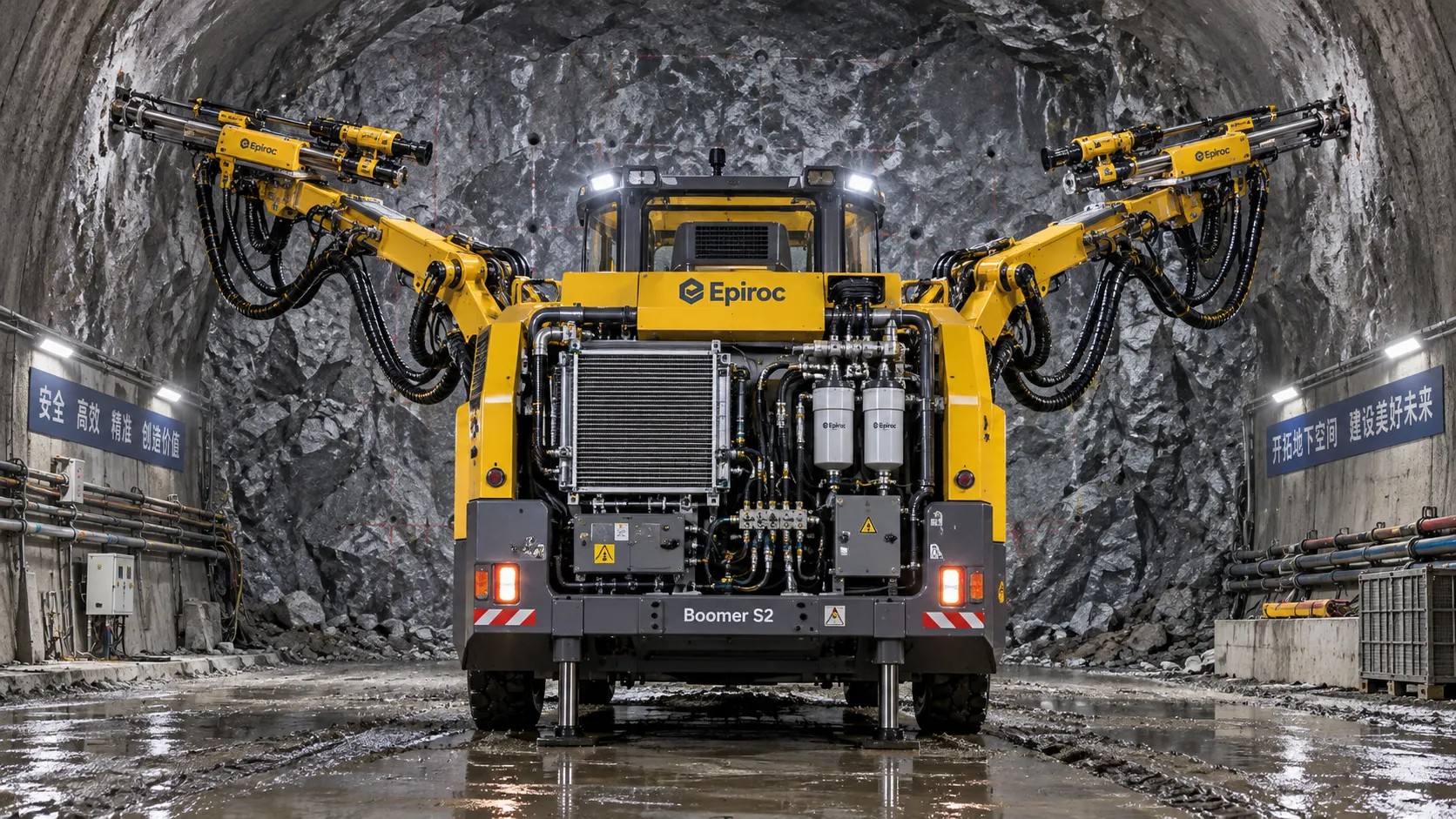
How tunnel hydraulic systems influence drill jumbo uptime underground
Tunnel hydraulic systems directly influence drill jumbo uptime. Explore how stable pressure, clean oil, cooling, and maintainable design reduce underground downtime.
What to verify before appointing a tunneling vehicles manufacturer
Choosing a tunneling vehicles manufacturer? Verify application fit, reliability, compliance, parts support, training, and channel terms before appointing a partner.
Selecting K9 Ductile Iron Pipe for Buried Water Pipeline Conditions
K9 ductile iron pipe selection for buried water pipelines: compare pressure duty, joints, soil loads, corrosion protection, and installation controls for reliable long-term performance.
Related News
- 00
0000-00
Tunnel Boring Machine Costs: Budgeting for Purchase, Operation, and Project Risk - 00
0000-00
Open-Pit Haulage Cost Analysis: How Mine Managers Can Cut Cost per Tonne - 00
0000-00
Tunnel Construction Innovations That Reduce Risk and Schedule Delays on Urban Projects - 00
0000-00
TBM Disc Cutter Design: Key Geometry and Load Factors for Hard Rock Tunnelling - 00
0000-00
Hydraulic Tipping Stability Risks in Multi-Axle Dump Special Trailers
Weekly Insights
Stay ahead with our curated technology reports delivered every Monday.