
Hydrogen Mining Trucks for Open Pit: Key Specs, Range, and Haul Cycle Fit





Hydrogen mining trucks for open pit operations are moving from concept studies into serious fleet evaluation. Interest is rising because mines need lower-emission haulage without giving up payload, shift availability, or long-route productivity.
For heavy haul applications, the real question is not whether hydrogen sounds promising. It is whether the truck can match the mine plan, the road geometry, the refueling window, and the thermal demands of continuous uphill work.
That is why the discussion around hydrogen mining trucks for open pit sites now centers on fit. Technical decisions depend on energy density, tank layout, fuel cell output, buffer battery sizing, and how the truck behaves across the full haul cycle.
Why Open-Pit Haulage Is Testing Hydrogen Seriously
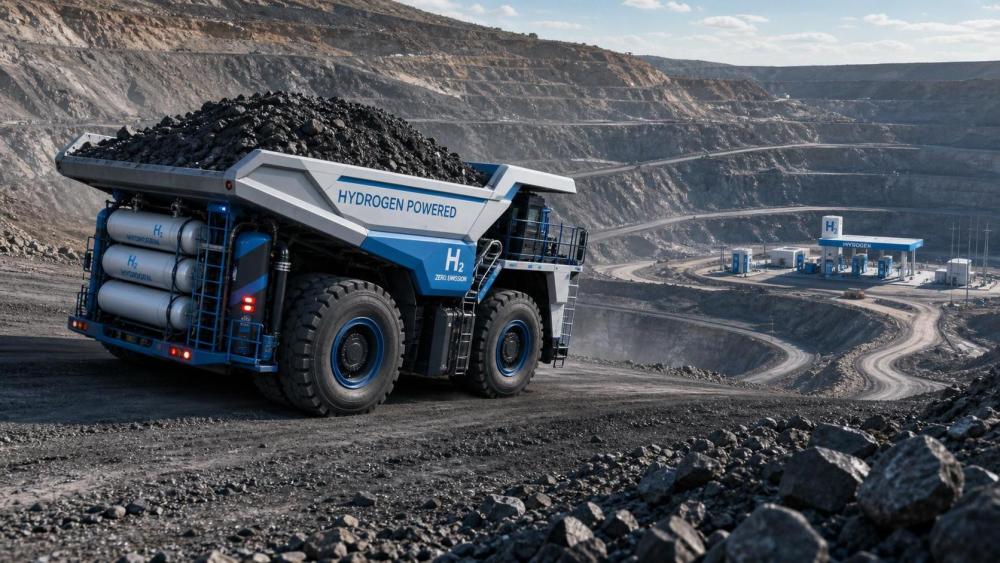
Open-pit mines operate on large tonnage, fixed production targets, and long daily duty hours. Diesel still dominates because it delivers range and fast refueling, but decarbonization pressure is changing the replacement logic.
Battery-electric trucks perform well in some profiles, especially where trolley assist, short cycles, or strong downhill regeneration are available. Yet very long routes, remote sites, and limited charging windows keep hydrogen under active review.
UTMD follows this transition closely because mining dump trucks sit beside TBMs, drilling jumbos, and underground LHDs in the wider shift toward electrified, automated heavy equipment. The same industry logic applies across segments: reliability first, emissions reduction second, and digital control across the whole asset base.
What Hydrogen Truck Architecture Usually Looks Like
In most current designs, hydrogen mining trucks for open pit duty are hybrid electric platforms. Hydrogen is stored on board, converted through fuel cells, and then supplied to electric drive systems through power electronics.
A battery is normally still present. It handles transient peaks, supports launch torque, captures regenerative braking energy, and smooths fuel cell loading during uneven haul cycles.
This matters because open-pit haulage is not a steady highway application. Loaded climbs, queueing, dumping, and empty return legs create sharp changes in demand. The best-performing architecture is therefore a system, not a single component.
Core subsystems under review
- Hydrogen storage pressure, tank volume, and packaging impact
- Fuel cell continuous output versus peak power requirement
- Battery size for ramp response and regenerative capture
- Traction motors, inverters, and thermal control robustness
- Safety systems for leak detection, venting, and shutdown logic
Key Specs That Matter More Than Marketing Claims
Payload class remains the starting point. A truck that reaches emissions goals but loses productive payload may not improve site economics. Tank placement, structural reinforcement, and component weight must be checked against effective payload retention.
Continuous grade performance is equally important. Many published power figures look strong at peak output, yet sustained loaded climbing is where underpowered systems become visible.
Technical evaluators usually need a narrower set of numbers than brochures provide. The table below captures the most decision-relevant points.
Range Is a Site Variable, Not a Single Number
Range claims for hydrogen mining trucks for open pit use often create confusion. A truck may perform well on one mine plan and fall short on another, even within the same payload class.
Haul distance is only one input. Elevation gain, rolling resistance, road maintenance, temperature, stop-start behavior, and waiting time all shape hydrogen consumption.
Long uphill hauls increase steady energy demand. Poor roads raise tire losses and traction inefficiency. Cold environments affect tank management and startup behavior. High ambient heat increases cooling loads.
A practical range estimate should therefore be based on a duty-cycle model. In most evaluations, the useful metric is not kilometers per tank. It is completed loaded cycles per refueling event with acceptable reserve margin.
Range assessment inputs worth modeling
- Loaded and empty travel distances
- Net elevation change by segment
- Average speed and speed restrictions
- Queue times at shovel and dump points
- Seasonal temperature bands and altitude
- Target reserve fuel at dispatch return
Where Haul Cycle Fit Becomes Decisive
Hydrogen mining trucks for open pit sites are most attractive where the haul cycle punishes charging-based systems or where mine planners want diesel-like turnaround without diesel emissions.
Good candidates often include medium-to-long routes, high daily utilization, and operations that cannot easily spare space or power capacity for large charging infrastructure.
Less favorable cases exist too. Very short cycles with strong downhill regeneration may favor battery-electric trucks. Extremely remote sites without reliable hydrogen supply can struggle even if vehicle performance looks acceptable on paper.
Typical fit by operating profile
Infrastructure and Reliability Cannot Be Separated
Vehicle performance alone does not decide feasibility. Hydrogen production, delivery, storage, dispensing rate, redundancy, and maintenance training all influence whether the fleet can support the mine schedule.
This is where UTMD’s broader heavy-equipment view is useful. In underground and surface systems alike, electrification succeeds when machines, energy infrastructure, automation software, and maintenance planning are evaluated as one operating system.
For open-pit fleets, refueling station location matters almost as much as dispenser speed. Poor placement can add dead travel, create queuing, and reduce productive hours. Reliability analysis should include station uptime, spare parts access, and emergency venting procedures.
How to Compare Options Without Oversimplifying
A useful comparison starts with equivalent production output, not energy source preference. The baseline should be tons moved, cycle time, operating availability, and total energy support requirements over the same route map.
When comparing hydrogen mining trucks for open pit deployment against diesel or battery-electric alternatives, several questions usually separate serious options from attractive presentations.
- Can the truck sustain loaded grade speed near target cycle assumptions?
- Does net payload remain competitive after hydrogen system integration?
- How many cycles are completed before refueling under winter and summer cases?
- What infrastructure redundancy exists if hydrogen supply is interrupted?
- How does maintenance complexity compare with current workshop capability?
- Is the truck ready for dispatch integration and future autonomous operation?
A Practical Next Step for Evaluation
The most reliable path is to build a site-specific haul cycle model before judging the platform. Use actual route geometry, payload targets, queue behavior, weather bands, and refueling assumptions rather than generic range claims.
From there, compare hydrogen mining trucks for open pit service on three linked measures: productive tons per shift, infrastructure burden, and operating resilience. That framework tends to reveal where hydrogen is genuinely competitive and where it remains premature.
For organizations tracking zero-emission heavy equipment through the UTMD lens, the strongest decisions usually come from connecting truck specifications with the mine’s physical reality. In open-pit haulage, technology fit is earned at cycle level, not claimed at headline level.
Related News
Tunnel Boring Machine Costs: Budgeting for Purchase, Operation, and Project Risk
Tunnel Boring Machines cost more than purchase price. Learn how to budget lifecycle costs, downtime, logistics, wear, and project risk for smarter TBM decisions.
Open-Pit Haulage Cost Analysis: How Mine Managers Can Cut Cost per Tonne
Open pit haulage cost analysis: discover practical ways to reduce cost per tonne through payload control, cycle-time optimization, road performance, and smarter fleet decisions.
Tunnel Construction Innovations That Reduce Risk and Schedule Delays on Urban Projects
Tunnel construction innovation for urban projects: discover smarter TBMs, real-time monitoring, trenchless methods, and automation that reduce risk and protect schedules.
TBM Disc Cutter Design: Key Geometry and Load Factors for Hard Rock Tunnelling
TBM disc cutter design explained: explore geometry, spacing, load distribution and maintenance factors for reliable, efficient hard-rock tunnelling performance.
Hydraulic Tipping Stability Risks in Multi-Axle Dump Special Trailers
Dump special trailers: discover key hydraulic tipping stability risks, multi-axle load dynamics, and practical safety controls for safer, smarter bulk hauling.
When rock reinforcement in tunnel construction must change after blasting
Rock reinforcement in tunnel construction must change when blasting reveals overbreak, weak joints, water inflow, or deformation. Discover key post-blast support decisions.
How tunnel hydraulic systems influence drill jumbo uptime underground
Tunnel hydraulic systems directly influence drill jumbo uptime. Explore how stable pressure, clean oil, cooling, and maintainable design reduce underground downtime.
What to verify before appointing a tunneling vehicles manufacturer
Choosing a tunneling vehicles manufacturer? Verify application fit, reliability, compliance, parts support, training, and channel terms before appointing a partner.
Selecting K9 Ductile Iron Pipe for Buried Water Pipeline Conditions
K9 ductile iron pipe selection for buried water pipelines: compare pressure duty, joints, soil loads, corrosion protection, and installation controls for reliable long-term performance.
Related News
- 00
0000-00
Tunnel Boring Machine Costs: Budgeting for Purchase, Operation, and Project Risk - 00
0000-00
Open-Pit Haulage Cost Analysis: How Mine Managers Can Cut Cost per Tonne - 00
0000-00
Tunnel Construction Innovations That Reduce Risk and Schedule Delays on Urban Projects - 00
0000-00
TBM Disc Cutter Design: Key Geometry and Load Factors for Hard Rock Tunnelling - 00
0000-00
Hydraulic Tipping Stability Risks in Multi-Axle Dump Special Trailers
Weekly Insights
Stay ahead with our curated technology reports delivered every Monday.