
How Regenerative Braking Technology Works in Mining Trucks and Where It Delivers Value





How Regenerative Braking Technology Works in Mining Trucks and Where It Delivers Value
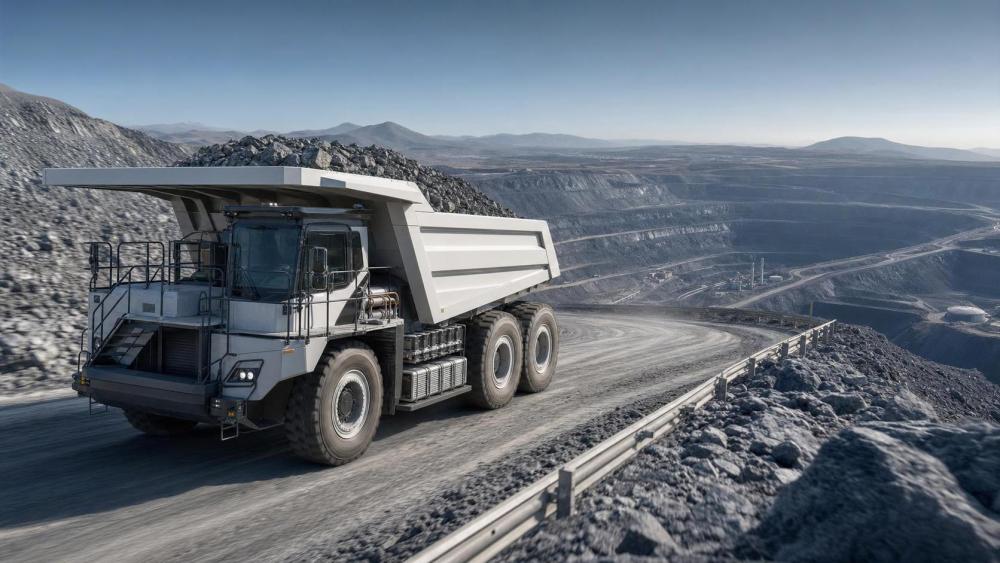
Regenerative Braking technology is changing the economics of heavy haulage. In mining trucks, it turns downhill motion into usable electrical energy instead of wasting it as heat.
That matters because haul cycles are energy intensive, brake systems face constant stress, and mine operators are under pressure to cut emissions without sacrificing output.
For fleets moving ore over long gradients, Regenerative Braking technology can improve efficiency, reduce maintenance, and support safer speed control in one integrated system.
The real question is not whether the concept works. The real question is where it works best, how it interacts with truck architecture, and what value shows up on an operating balance sheet.
What Regenerative Braking Technology Actually Does
At a basic level, Regenerative Braking technology converts kinetic energy into electrical energy during deceleration. In mining trucks, the traction motor switches roles and acts as a generator.
Instead of relying only on friction brakes, the truck slows through electrical resistance and energy recovery. That recovered energy is then routed to where the vehicle can use it.
In battery-electric trucks, the energy usually goes back into the battery pack. In trolley or hybrid systems, it may support onboard loads or feed into an electrical network.
This is why Regenerative Braking technology is more than a braking feature. It is also an energy management function tied directly to drivetrain design, thermal control, and route profile.
The core energy flow
- Loaded truck descends on a haul road.
- Traction motor shifts into generator mode.
- Mechanical energy becomes electrical energy.
- Control system regulates torque and wheel speed.
- Energy is stored, reused, or dissipated when storage is limited.
That last point is important. Regenerative Braking technology creates the most value when the truck and site can absorb recovered energy efficiently and repeatedly.
How the System Works Inside a Mining Truck
In practice, the system depends on several tightly connected components. The truck needs power electronics, traction motors, software controls, and a storage or discharge path for the generated energy.
During a downhill loaded segment, the vehicle control unit calculates target speed, gradient, payload, traction conditions, and battery state. It then commands braking torque from the drive system.
The inverter manages current flow between the motors and battery. If the battery is near full charge, the available regenerative braking force may be limited.
That is one reason route planning matters. A truck starting a long descent with a full battery cannot capture as much value from Regenerative Braking technology as one with available storage headroom.
Key technical elements
- Electric drive motors sized for haulage and braking torque.
- Inverters that control bidirectional power flow.
- Battery management systems protecting charge limits and temperature.
- Brake blending logic balancing regenerative and friction braking.
- Thermal monitoring for motors, converters, and battery packs.
Brake blending is especially critical. Regenerative Braking technology does not fully replace service brakes in every condition. It works alongside them, with software deciding the safest mix.
On steep grades, wet roads, or low traction surfaces, the control strategy must prioritize stability. That makes system calibration just as important as motor efficiency.
Where Regenerative Braking Technology Delivers the Most Value
Not every mine gets the same return. The highest value appears where duty cycles create repeatable downhill energy recovery and where trucks spend meaningful time under heavy braking demand.
Open-pit operations with long loaded descents are the strongest match. So are haul profiles with high elevation changes and frequent deceleration zones before dumping or queuing points.
From a business view, Regenerative Braking technology usually creates value across four areas: energy, maintenance, safety, and system-level decarbonization performance.
1. Lower energy consumption
Recovered energy reduces net electricity demand or diesel-equivalent energy use, depending on the truck platform. Over thousands of cycles, that can materially improve cost per tonne moved.
2. Reduced brake wear
Friction brakes generate heat and wear quickly under downhill haul loads. Regenerative Braking technology lowers brake usage, extending component life and cutting replacement frequency.
3. Better speed control on descents
Continuous electrical retardation gives operators and autonomous systems more stable descent control. That can improve confidence on steep haul roads and reduce overheating risk in conventional brake systems.
4. Stronger ESG and electrification outcomes
For mines evaluating fleet electrification, Regenerative Braking technology improves the business case. It supports lower energy intensity, cleaner underground or pit environments, and clearer sustainability reporting.
What Determines Real-World Performance
The headline benefits are attractive, but actual performance depends on site conditions. Mines should avoid assuming that every electric truck will recover the same share of braking energy.
Grade length is one major factor. A short descent may not produce enough recoverable energy to justify aggressive expectations, while a long steady decline often produces repeatable gains.
Payload consistency also matters. A loaded truck descending from the face has much more recoverable energy than an empty truck returning uphill.
Battery temperature, charge window, and charging strategy shape recovery efficiency too. If the battery is too hot or too full, Regenerative Braking technology may be partially constrained.
Road conditions play a role as well. Loose surfaces, water, snow, and variable traction can all reduce the braking torque that software is willing to apply electrically.
Useful questions before investment
- How much loaded downhill travel exists per haul cycle?
- What battery charge range is available before descent?
- How often do service brakes overheat or wear prematurely today?
- Can the mine monitor energy recovery by route and payload class?
- How will autonomous control systems integrate braking logic?
Standards, Safety, and Integration Considerations
For technical and procurement teams, performance alone is not enough. Regenerative Braking technology must be evaluated within a wider safety and compliance framework.
Brake redundancy is essential. If regenerative braking availability drops, the truck must still meet stopping and speed-control requirements through service and emergency braking systems.
Thermal protection and fault handling also need close review. High-power downhill recovery creates electrical and battery heat that must be managed without degrading uptime.
Integration with fleet management platforms is another practical point. Mines need route-level data, event logs, and energy recovery reports to validate the promised value.
This is where recent market shifts are more visible. Buyers increasingly want traceable operating data, not just supplier estimates, especially in large electrification or autonomy programs.
What to review during technical due diligence
- Brake blending behavior across payload, speed, and slope conditions.
- Battery acceptance rate during long continuous descents.
- Failure modes when storage capacity is temporarily limited.
- Control compatibility with autonomous haulage systems.
- Availability of route-specific monitoring and diagnostics.
Where the Strongest Return Usually Appears
The strongest return from Regenerative Braking technology usually appears in mines with predictable haul patterns, steep loaded descents, and high annual truck utilization.
It also tends to perform better where maintenance costs are already high. If brake replacements, cooling issues, or downhill safety controls are frequent pain points, the value is easier to capture.
Operations pursuing full electrification can benefit even more. Regenerative Braking technology strengthens battery-electric fleet efficiency and helps reduce the size of avoidable energy losses.
By contrast, flatter sites or irregular short-cycle routes may see smaller gains. In those cases, the decision should rely on measured route simulations and pilot data rather than broad assumptions.
A Practical Decision Framework
Regenerative Braking technology is no longer a niche feature. It is becoming a strategic performance lever in electric and autonomous mining truck design.
Still, its value is highly site-specific. The best decisions come from matching truck capability with grade profile, payload pattern, battery strategy, and maintenance history.
A practical next step is to compare three things side by side: recoverable downhill energy, current brake-related costs, and route-level production targets.
When those numbers align, Regenerative Braking technology can deliver clear operational value, not just technical appeal. That is where electrified haulage starts to make measurable commercial sense.
Related News
Tunnel Boring Machine Costs: Budgeting for Purchase, Operation, and Project Risk
Tunnel Boring Machines cost more than purchase price. Learn how to budget lifecycle costs, downtime, logistics, wear, and project risk for smarter TBM decisions.
Open-Pit Haulage Cost Analysis: How Mine Managers Can Cut Cost per Tonne
Open pit haulage cost analysis: discover practical ways to reduce cost per tonne through payload control, cycle-time optimization, road performance, and smarter fleet decisions.
Tunnel Construction Innovations That Reduce Risk and Schedule Delays on Urban Projects
Tunnel construction innovation for urban projects: discover smarter TBMs, real-time monitoring, trenchless methods, and automation that reduce risk and protect schedules.
TBM Disc Cutter Design: Key Geometry and Load Factors for Hard Rock Tunnelling
TBM disc cutter design explained: explore geometry, spacing, load distribution and maintenance factors for reliable, efficient hard-rock tunnelling performance.
Hydraulic Tipping Stability Risks in Multi-Axle Dump Special Trailers
Dump special trailers: discover key hydraulic tipping stability risks, multi-axle load dynamics, and practical safety controls for safer, smarter bulk hauling.
When rock reinforcement in tunnel construction must change after blasting
Rock reinforcement in tunnel construction must change when blasting reveals overbreak, weak joints, water inflow, or deformation. Discover key post-blast support decisions.
How tunnel hydraulic systems influence drill jumbo uptime underground
Tunnel hydraulic systems directly influence drill jumbo uptime. Explore how stable pressure, clean oil, cooling, and maintainable design reduce underground downtime.
What to verify before appointing a tunneling vehicles manufacturer
Choosing a tunneling vehicles manufacturer? Verify application fit, reliability, compliance, parts support, training, and channel terms before appointing a partner.
Selecting K9 Ductile Iron Pipe for Buried Water Pipeline Conditions
K9 ductile iron pipe selection for buried water pipelines: compare pressure duty, joints, soil loads, corrosion protection, and installation controls for reliable long-term performance.
Related News
- 00
0000-00
Tunnel Boring Machine Costs: Budgeting for Purchase, Operation, and Project Risk - 00
0000-00
Open-Pit Haulage Cost Analysis: How Mine Managers Can Cut Cost per Tonne - 00
0000-00
Tunnel Construction Innovations That Reduce Risk and Schedule Delays on Urban Projects - 00
0000-00
TBM Disc Cutter Design: Key Geometry and Load Factors for Hard Rock Tunnelling - 00
0000-00
Hydraulic Tipping Stability Risks in Multi-Axle Dump Special Trailers
Weekly Insights
Stay ahead with our curated technology reports delivered every Monday.