
How Rectangular Pipe Jacking Solves Urban Crossing Challenges Beneath Busy Roads





How Rectangular Pipe Jacking Solves Urban Crossing Challenges Beneath Busy Roads
Beneath congested roads, urban crossing projects demand precision, speed, and minimal disruption. Rectangular pipe jacking enables wide underground passages without extensive surface excavation, protecting traffic flow and nearby assets.
For project managers, the central question is not whether trenchless construction sounds attractive. It is whether the method can deliver predictable cost, programme, safety, and stakeholder outcomes.
In suitable ground and corridor conditions, rectangular pipe jacking urban crossing solutions can materially reduce road occupation, utility relocation, reinstatement work, and public disruption compared with open-cut construction.
The method is especially relevant where a conventional circular pipe cannot provide the required usable width. Pedestrian underpasses, utility galleries, culverts, and station connections often require rectangular internal space.
Why Busy-Road Crossings Become High-Risk Projects
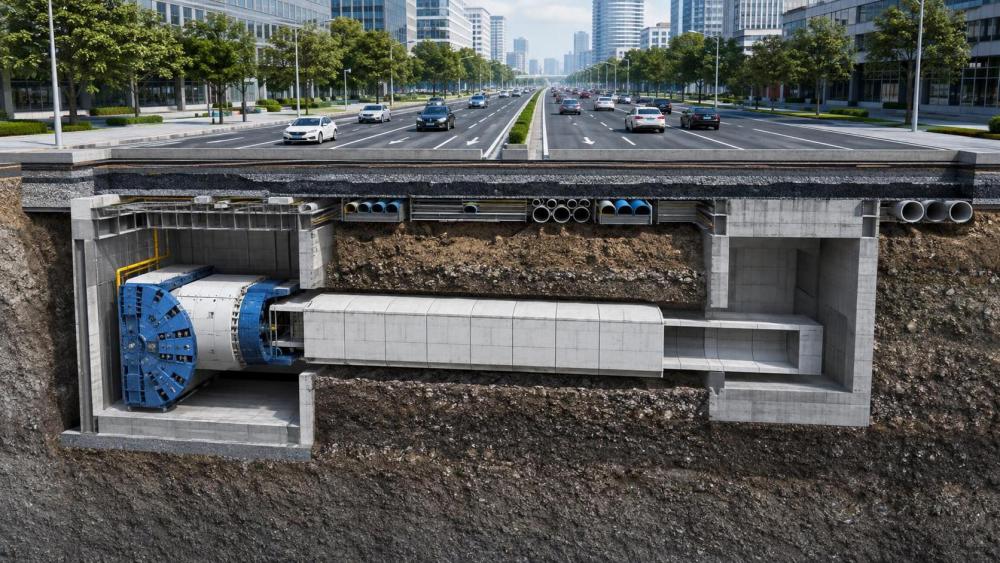
Crossing beneath a major road is rarely a simple excavation decision. Traffic capacity, buried utilities, groundwater, adjacent structures, and municipal permits all create connected delivery risks.
Open-cut construction can appear straightforward during early estimating. However, lane closures, diversion roads, utility protection, temporary support, and pavement reconstruction can quickly expand the overall project scope.
Road authorities may also limit possession windows to nights, weekends, or short seasonal periods. These restrictions can turn an otherwise manageable excavation into a prolonged programme challenge.
Urban corridors contain infrastructure accumulated over decades. Records may be incomplete, utility depths can vary, and abandoned services may be discovered only after construction begins.
For project leaders, disruption is often the cost driver that receives too little attention. Traffic delays, business-access complaints, emergency-service constraints, and reputational exposure can outweigh excavation savings.
Ground movement is another critical concern. Settlement beneath live carriageways may damage pavement, disturb utilities, affect rail assets, or trigger corrective work that is difficult to execute safely.
A rectangular pipe jacking urban crossing approach shifts most construction activity into launch and reception shafts. The road surface remains largely operational while the structure advances underground.
This does not eliminate risk. It changes the risk profile from broad surface disruption to controlled subsurface excavation, jacking-force management, face stability, alignment control, and shaft logistics.
That distinction matters when comparing options. A successful selection process evaluates total delivery consequences, rather than comparing only the direct price of excavation per cubic metre.
What Rectangular Pipe Jacking Changes in Practice
Rectangular pipe jacking installs precast or fabricated box-shaped elements by pushing them from a launch shaft toward a reception shaft beneath the obstacle being crossed.
A specialized rectangular jacking machine excavates the face while the pipe or box sections follow behind. Hydraulic jacks transfer controlled thrust through the advancing structure.
Unlike a circular drive, the rectangular profile can create a wider and lower passage. This geometry is valuable where vertical clearance is limited but operational width is essential.
Typical applications include pedestrian and cycle underpasses, drainage culverts, multi-utility corridors, livestock crossings, rail access links, and short highway-related service tunnels.
The method can also support staged construction. A project may install the structural crossing first, then complete internal drainage, electrical systems, finishes, or utility fit-out from protected access points.
For a project manager, the major benefit is surface continuity. Traffic can continue above the drive, subject to monitoring plans and any limited work required around shafts.
Fewer lane closures can reduce coordination pressure with transport agencies. It can also avoid the cascading effects of detours on bus routes, freight access, local businesses, and residents.
Rectangular sections may reduce the need for internal secondary structures. When the finished asset requires a flat floor and vertical sidewalls, the jacked box can closely match final-use requirements.
However, this geometry also introduces technical demands. The machine must control excavation across a non-circular face, while the jacked structure must resist uneven loading and steering effects.
When Is Rectangular Pipe Jacking the Right Choice?
Rectangular pipe jacking is strongest where surface occupation is expensive, politically difficult, operationally unacceptable, or physically constrained by traffic and existing development.
It is often a compelling option for crossings beneath arterial roads, highway ramps, urban intersections, rail-adjacent corridors, airport access roads, and industrial logistics routes.
The required finished opening should drive the initial assessment. A wide utility gallery or accessible underpass may fit naturally within rectangular geometry, unlike a circular pipe.
Shallow cover can strengthen the case for trenchless installation because open excavation near a live road becomes more disruptive. Yet shallow drives require particularly careful settlement control.
Limited headroom is another practical consideration. Where a crossing must pass above deep sewers or below a roadway, a low-profile rectangular section may use the available envelope efficiently.
Projects with immovable utilities may also benefit. The ability to pass below a road without exposing every service can reduce relocation scope, although verified clearance remains mandatory.
Longer drives are not automatically better candidates. Jacking force increases with distance, soil conditions, lubrication performance, and interface friction, potentially requiring intermediate jacking stations.
Very hard rock, mixed-face geology, boulders, uncontrolled fill, or major obstructions may alter equipment needs and cost. A detailed geotechnical model is therefore a decision prerequisite.
The method may be less attractive where a wide work zone is already available, traffic disruption is acceptable, groundwater is simple, and the required structure is easily built by open cut.
How Project Managers Should Compare Cost and Programme
Comparing construction methods requires a whole-project financial view. The apparent premium for specialized jacking equipment may be offset by savings outside the tunnelling work package.
Include traffic management, pavement removal, temporary works, utility diversions, contaminated-material handling, road reinstatement, environmental controls, and extended supervision when building the open-cut baseline.
Also consider indirect costs that may not sit within the civil contractor's estimate. These include business disruption, authority restrictions, public communications, claims exposure, and lost network capacity.
Rectangular pipe jacking generally concentrates activity into defined shaft sites. This can make logistics more manageable, but shafts require adequate land, crane access, spoil handling, and safe workforce circulation.
Programme certainty depends on early preparation. Utility investigations, ground verification, machine selection, shaft design, procurement lead times, and authority approvals must be resolved before the drive begins.
A short jacking drive can be completed quickly once mobilized. Yet teams should not assume that trenchless means instant, because specialist design and equipment procurement may require significant lead time.
Use scenario-based estimates rather than a single deterministic number. Compare likely, optimistic, and adverse outcomes for settlement mitigation, obstruction removal, groundwater treatment, and jacking-force escalation.
The decision should include schedule risk monetization. Avoiding a multi-month road closure may justify a higher direct construction cost when delay penalties or stakeholder consequences are substantial.
A useful executive test is simple: does the selected approach reduce the project's most expensive uncertainty? In busy urban crossings, that uncertainty is frequently disruption rather than excavation itself.
Managing Settlement, Utilities, and Groundwater
Technical success begins with understanding the ground. Boreholes, laboratory testing, groundwater observations, historical mapping, and targeted geophysics should create a realistic subsurface risk model.
Ground investigation should extend beyond the crossing centerline. Launch shafts, reception shafts, nearby foundations, utility corridors, and potential intervention zones all influence construction risk.
Settlement control relies on balancing excavation volume with advance rate, face support, steering corrections, annular lubrication, and the response of soils around the advancing box.
Monitoring must be designed as an active management tool, not merely a contractual deliverable. Road levels, utility movement, building response, and machine parameters should inform daily decisions.
Trigger levels need clear ownership and pre-agreed actions. A monitoring alert without a defined response process can delay intervention at the moment construction teams need decisive direction.
Utility records should be treated as hypotheses until verified. Trial pits, surveying, non-destructive detection, and engagement with asset owners help reduce surprises near shafts and crossing interfaces.
Groundwater can affect face stability, shaft construction, and spoil handling. The design team must assess pressure conditions, inflow pathways, drawdown impacts, and discharge permissions early.
For sensitive roads or rail-adjacent assets, consider an observational approach. This combines conservative design assumptions with monitoring, contingency resources, and agreed escalation processes during the drive.
Project managers should ask contractors for evidence from comparable geology and dimensions. Generic trenchless experience is useful, but rectangular profile performance depends heavily on site-specific conditions.
Equipment Selection and Construction Control Matter
Not all jacking machines are interchangeable. The cutterhead arrangement, face-support method, excavation chamber design, steering capability, and spoil-removal system must match anticipated ground conditions.
In soft ground, maintaining face stability is central. Earth pressure balance, slurry-based systems, or other controlled excavation approaches may be selected according to permeability and groundwater conditions.
Rectangular drives require disciplined alignment management because correction capacity can be constrained after substantial box sections have been installed. Survey control must be frequent and reliable.
Jacking force predictions should be reviewed independently where consequences are high. Excessive thrust can damage pipe joints, overload equipment, interrupt progress, or require costly recovery measures.
Lubrication planning is not a minor operational detail. Properly managed bentonite or compatible lubrication systems can reduce friction, limit jacking force, and improve drive consistency.
Launch and reception shaft design deserves executive attention. Shaft failure, restricted access, inadequate thrust blocks, or poor spoil logistics can undermine an otherwise sound jacking methodology.
Contract documents should define performance expectations clearly. Include line and level tolerances, settlement limits, monitoring frequency, reporting requirements, response actions, and acceptance criteria for finished works.
A collaborative delivery model can help where uncertainty is material. Early contractor involvement allows constructability knowledge to improve ground investigations, equipment selection, sequencing, and contingency planning.
Procurement Questions That Reduce Delivery Risk
Before appointing a contractor, request a method statement tailored to the proposed crossing. It should explain machine selection, face control, spoil transport, lubrication, monitoring, and emergency procedures.
Ask for completed projects with comparable cross-sectional area, drive length, cover depth, ground conditions, groundwater regime, and nearby operational constraints. Similarity matters more than project count alone.
Review the contractor's approach to obstructions. Urban ground can contain old foundations, timber, concrete, buried steel, or undocumented utility remnants that affect progress and machine safety.
Require transparent assumptions in the jacking-force calculation. The programme should identify expected advance rates, maintenance windows, contingency duration, and thresholds for deploying intermediate jacks.
Clarify responsibility for third-party interfaces. Utility owners, road agencies, rail operators, environmental regulators, and adjacent landowners can introduce approvals that directly affect construction sequencing.
Commercial terms should address risk fairly. Unclear allocation of differing ground conditions can produce defensive behavior, disputes, and delayed decisions when the project encounters real uncertainty.
Evaluate data visibility as part of contractor capability. Real-time or frequent reporting of thrust, torque, pressure, alignment, excavation volume, and monitoring results improves management confidence.
Finally, ensure that handover requirements are understood. As-built geometry, joint records, testing results, drainage provisions, and future inspection access should reflect the asset owner's operational needs.
A Practical Decision Framework for Urban Crossings
Start by defining the non-negotiables: required internal dimensions, allowable road closures, target completion date, utility constraints, ground risks, budget ceiling, and stakeholder commitments.
Then develop at least two credible construction options. A meaningful comparison normally includes open cut, rectangular pipe jacking, and, where appropriate, alternative trenchless or bridge solutions.
Score each option against total cost, programme certainty, safety exposure, traffic impact, utility conflict, environmental effects, settlement risk, land requirements, and long-term asset performance.
Do not let a single weighted score conceal critical constraints. An option with the lowest modelled cost may still be unacceptable if it cannot meet traffic or authority requirements.
Use early design reviews with the road authority and utility owners. Their operational constraints may determine feasibility before detailed engineering effort is spent on an unsuitable concept.
Where rectangular pipe jacking is preferred, invest in investigation and design maturity before tender. Better information usually produces more realistic pricing and fewer avoidable construction claims.
Maintain contingency at both programme and budget level. The best trenchless project teams plan for credible intervention events without assuming that every underground condition will behave ideally.
The objective is not to select the most technically impressive method. It is to select the method that delivers the required asset with the most acceptable total project risk.
Conclusion: Choose the Method That Protects the Urban Network
Rectangular pipe jacking provides a practical answer when urban crossings need wide underground space but cannot tolerate major disruption at the surface.
Its value lies in preserving traffic operations, reducing excavation footprints, limiting reinstatement, and fitting functional passages within constrained vertical envelopes beneath busy roads.
For project managers, the strongest business case comes from whole-life evaluation. Direct construction cost must be considered alongside programme risk, utility exposure, stakeholder disruption, and operational continuity.
The method succeeds when site conditions, equipment capability, shaft logistics, monitoring, and risk allocation are aligned. It should be selected through evidence, not through a generic preference for trenchless technology.
With early investigation and disciplined delivery controls, a rectangular pipe jacking urban crossing can transform a disruptive road excavation into a more predictable underground infrastructure project.
Related News
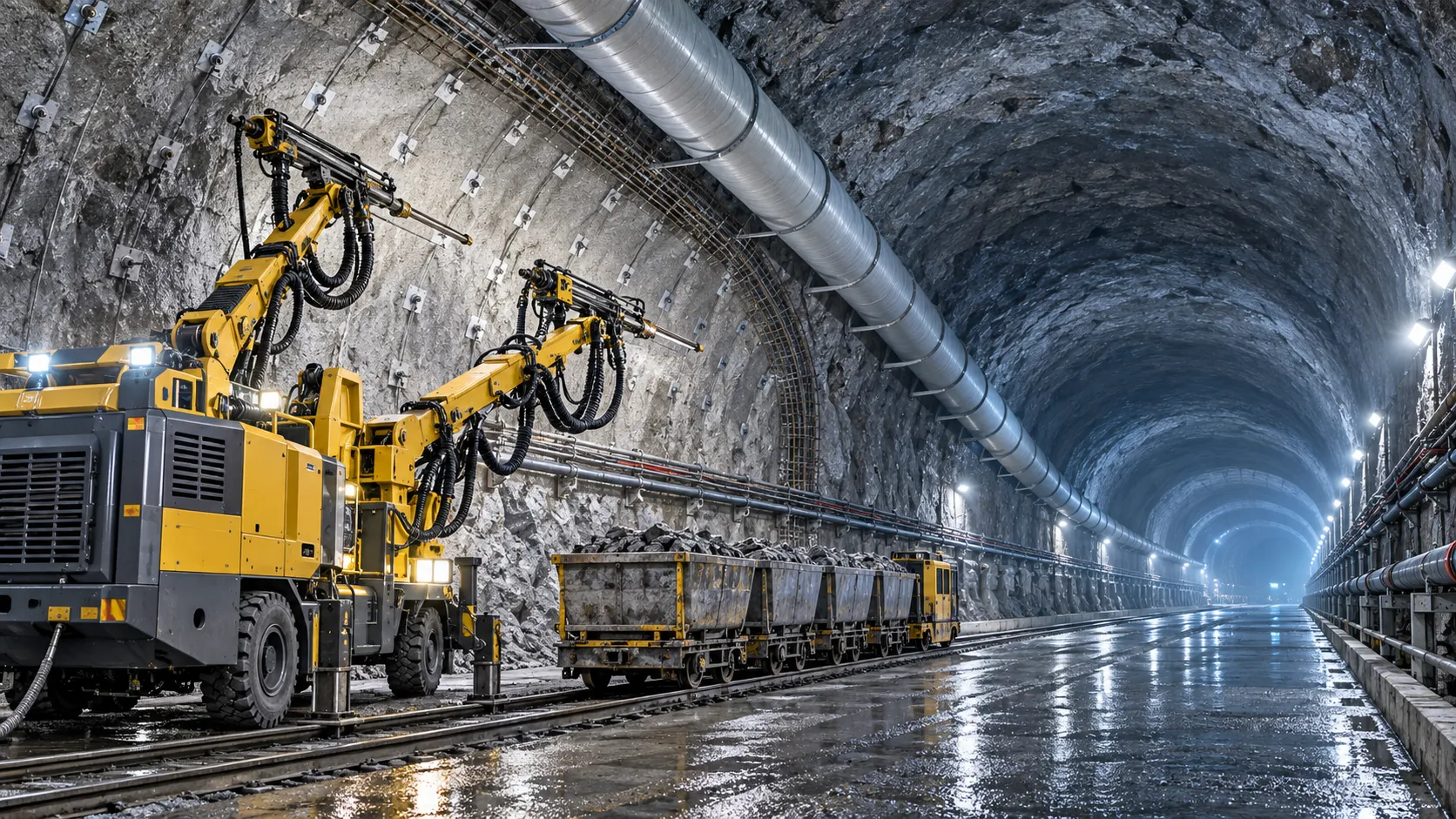
How to Evaluate European Drill-and-Blast Tunnelling Contractors for Complex Projects
Drill and blast tunnelling contractors Europe: learn how to assess geology expertise, blast control, equipment reliability, safety, and programme resilience for complex projects.
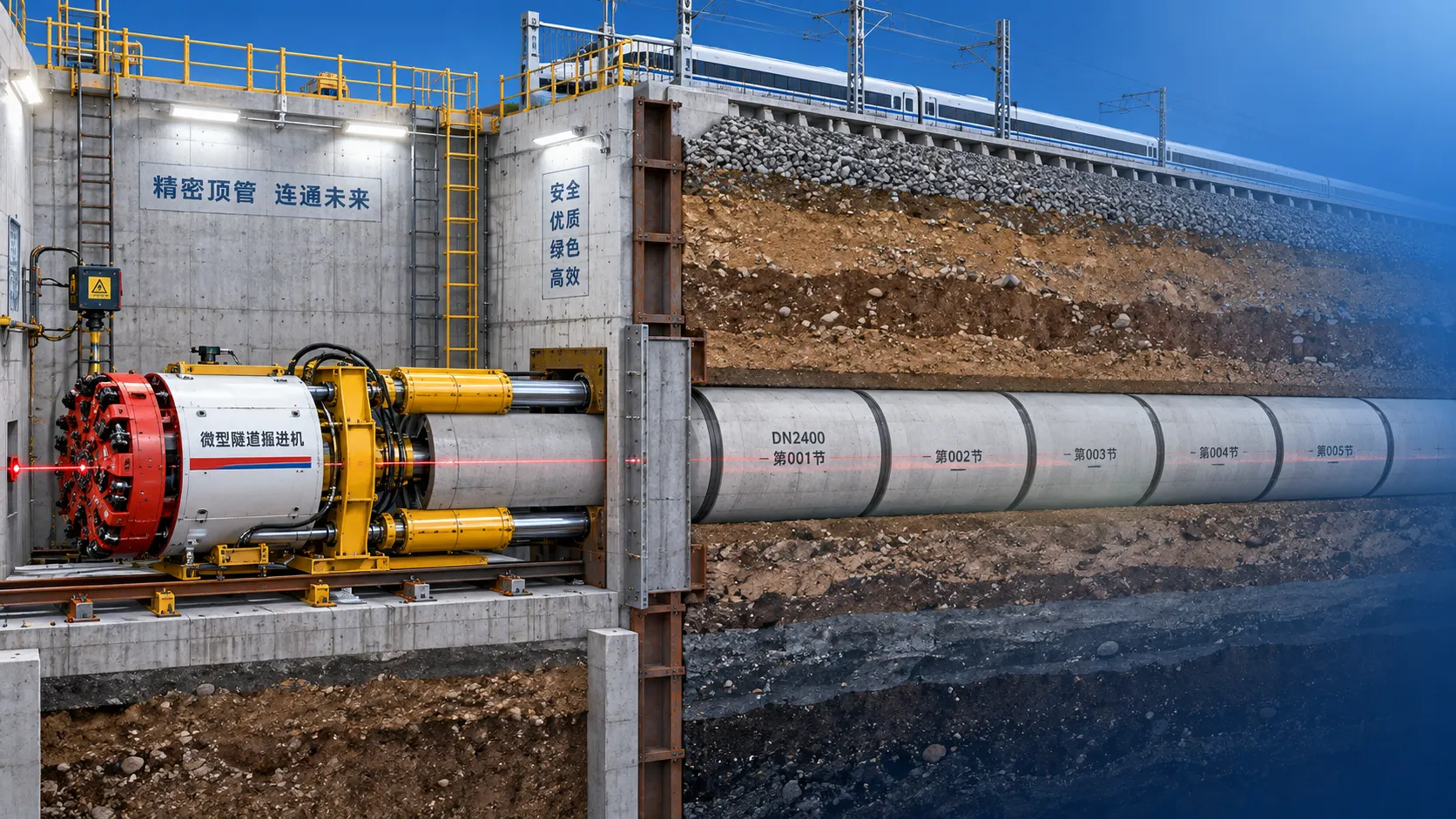
Which Trenchless Construction Technique Fits Your Utility Crossing Conditions?
Trenchless construction techniques compared for utility crossings: choose HDD, microtunnelling, pipe jacking, or auger boring based on ground, accuracy, access, and risk.
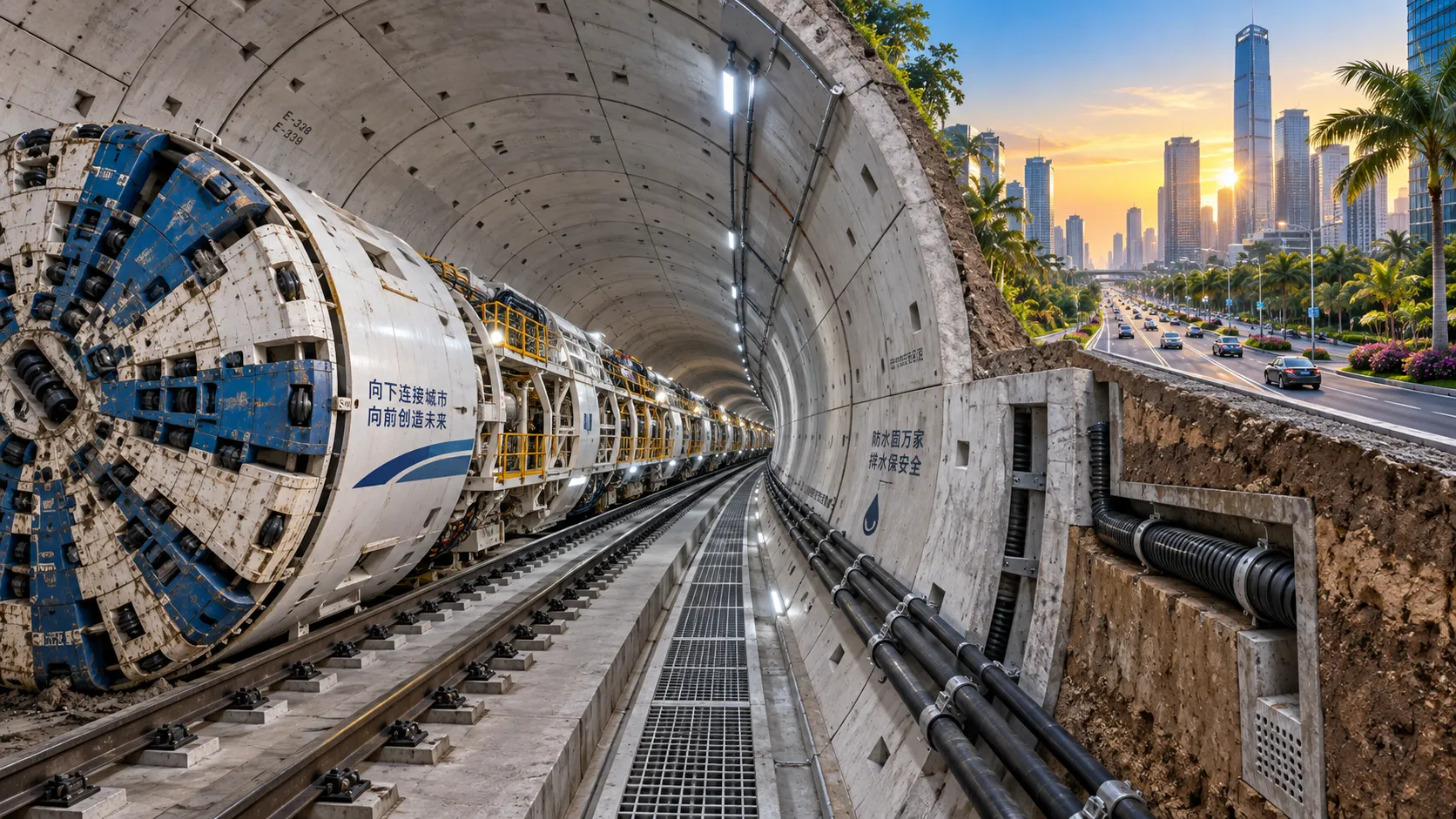
What Is Driving Metro Tunnelling Demand Across Southeast Asia’s Major Cities?
Metro tunnelling Southeast Asia is accelerating as major cities tackle congestion, flooding, and connectivity. Explore the market forces, technical risks, and opportunities shaping demand.
Hard Rock Tunnelling in Australia: Selecting Methods for Variable Ground Conditions
Hard rock tunnelling in Australia: compare TBM, drill-and-blast and hybrid methods to manage variable ground, reduce risk and protect project costs.
Hydropower Tunnel Excavation: Selecting Methods for Variable Rock Conditions
Hydropower tunnel excavation methods for variable rock conditions: compare TBM, drill-and-blast, and hybrid strategies to improve safety, progress, and project control.
How to Select Underground Safety Equipment for Tunnelling by Hazard and Work Zone
Underground Safety Equipment for tunnelling: match protection to hazards, work zones, compliance, and emergency needs with this practical selection guide.
EPB or Slurry Shield? Selecting Soft-Ground Tunnelling Equipment by Soil Conditions
Tunnel Excavation Equipment for soft ground: compare EPB and slurry shields by soil, groundwater, settlement risk, and project logistics to choose confidently.
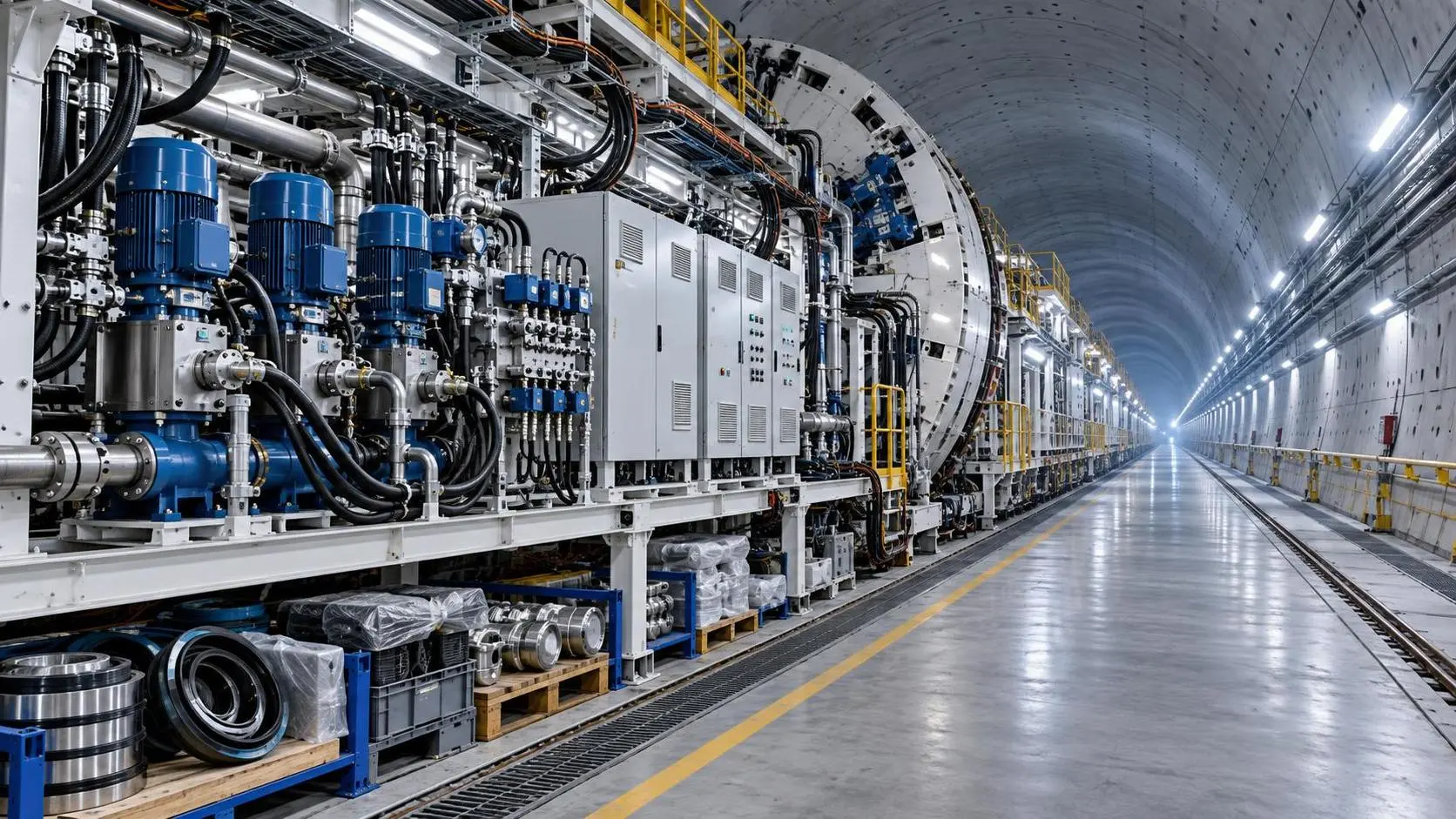
How to Specify TBM Backup System Parts for Reliable Long-Distance Tunnelling
TBM backup system parts: learn how to specify reliable spares for long-distance tunnelling, reduce downtime, ensure compatibility, and speed underground recovery.

How to Size Open Pit Mining Trucks for Haul Distance, Grade, and Payload?
Open Pit Mining Trucks: learn how to match payload, haul distance, grade, road resistance, and loading capacity for safer, lower-cost mine operations.
Related News
- 00
0000-00
How to Evaluate European Drill-and-Blast Tunnelling Contractors for Complex Projects - 00
0000-00
Which Trenchless Construction Technique Fits Your Utility Crossing Conditions? - 00
0000-00
What Is Driving Metro Tunnelling Demand Across Southeast Asia’s Major Cities? - 00
0000-00
Hard Rock Tunnelling in Australia: Selecting Methods for Variable Ground Conditions - 00
0000-00
Hydropower Tunnel Excavation: Selecting Methods for Variable Rock Conditions
Weekly Insights
Stay ahead with our curated technology reports delivered every Monday.