
Indonesia Port Project Highlights Rectangular Pipe Jacking





On April 12, 2026, China Road and Bridge won the supporting port contract for the FHT nickel iron project in Indonesia, covering the construction and upgrading of four berths. The development is drawing industry attention not only because it advances port-side infrastructure for a nickel iron project, but also because the land connection section will use Chinese-made Rectangular Pipe Jacking equipment at scale for an integrated utility corridor. For contractors, equipment suppliers, procurement teams, and cross-border infrastructure service providers, the case is worth watching as a practical reference for how this construction method is being applied in Southeast Asian conditions.
A confirmed step forward in the FHT port package
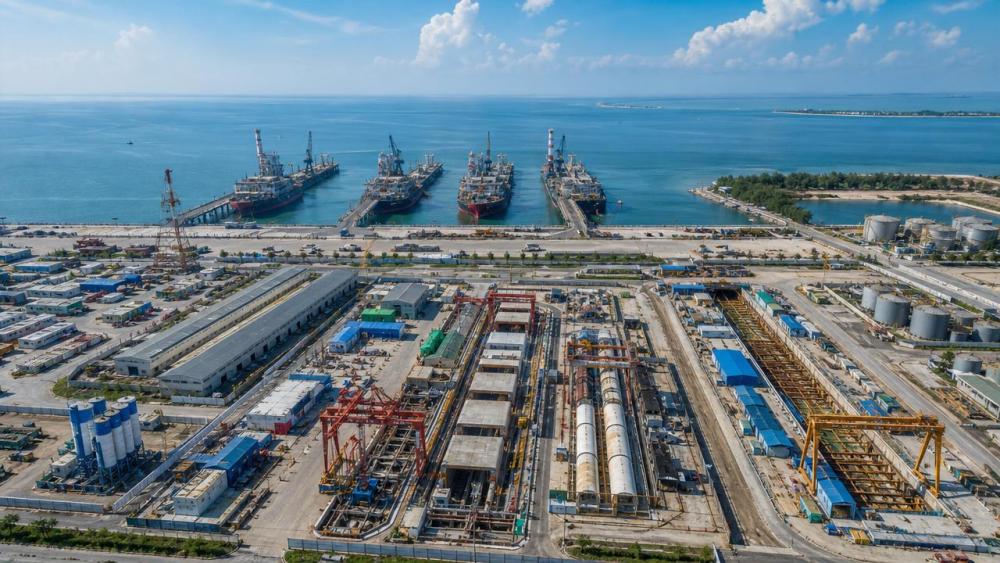
According to the provided information, the awarded contract relates to the supporting port works of the FHT nickel iron project in Indonesia. The package includes the new construction and renovation of four berths. In the land-side connection section, Chinese-made Rectangular Pipe Jacking equipment will be used on a large scale to install an integrated utility corridor.
The supplied summary also states that the equipment is suited to tropical rainforest soft soil and high groundwater conditions, and that the construction period is reduced by 35%. The case is described as another benchmark for the overseas expansion of Chinese rectangular pipe jacking technology in Southeast Asian infrastructure after the Jakarta-Bandung High-Speed Railway.
Why different parts of the supply chain may pay attention
For engineering contractors, the method matters as much as the award
From an industry perspective, contractors may focus on the fact that the project combines berth works with a large-scale application of Rectangular Pipe Jacking in the land connection section. This could affect how contractors assess construction sequencing, underground corridor planning, and delivery arrangements in projects facing difficult soil and water conditions.
For equipment makers, exportability is becoming part of the discussion
Analysis shows that equipment manufacturers may read this event as a project-based validation of Chinese-made Rectangular Pipe Jacking equipment in Southeast Asia. The immediate impact is not a confirmed market expansion, but it does put greater attention on equipment suitability, localization support, and the ability to meet project requirements under soft-soil and high-water-table conditions.
For procurement and supply-chain teams, timelines may become a key variable
What deserves closer attention is the reported 35% schedule compression. For procurement teams and supply-chain service providers, that can shift attention toward delivery timing, supporting materials for utility corridor installation, and coordination between civil works and equipment deployment. The key point is not just faster construction in theory, but whether procurement and logistics can match the revised pace of execution.
For downstream industrial users, the signal is about infrastructure readiness
For companies watching nickel iron project development, the port package matters because supporting infrastructure influences project implementation rhythm. Observably, the more relevant takeaway for downstream business roles is not a direct change in demand or supply today, but a closer link between industrial project delivery and the construction methods chosen for associated infrastructure.
What companies should track from here
Watch for further official wording around project execution
Companies involved in contracting, equipment supply, or related services should pay close attention to any later official disclosures about construction scope, implementation progress, and technical execution. The current information confirms the award and method choice, but follow-up wording will matter for understanding how the technology is applied in practice.
Check where the method affects real business interfaces
For suppliers and service providers, the practical question is which interfaces may change because an integrated utility corridor is being installed through Rectangular Pipe Jacking. That can influence coordination points such as technical documentation, delivery schedules, and site-side communication during execution.
Separate technology signal from immediate market conclusion
Analysis shows that this case should not automatically be treated as proof of broad near-term demand across all overseas projects. A more careful reading is that a visible project has created a reference point. Companies should therefore distinguish between a confirmed project application and a wider commercial rollout that would still require continued verification.
Prepare for stricter performance and fulfillment expectations
If project owners and contractors increasingly pay attention to geotechnical adaptability and schedule efficiency, suppliers may face closer scrutiny on qualification materials, fulfillment timing, and technical communication. The event does not confirm new rules, but it does suggest that these points may carry greater weight in similar project discussions.
How this news is best interpreted at this stage
Observably, this development carries two layers of meaning. First, it is a confirmed project award tied to four berths and a defined construction method in the land connection section. Second, it serves as an industry signal that Rectangular Pipe Jacking is being positioned in a more visible way within Southeast Asian infrastructure delivery where soil and groundwater conditions are challenging.
It is more appropriate to understand this as a meaningful project-level signal rather than a fully established regional trend. The information provided supports attention to method adoption, delivery efficiency, and overseas engineering application, but it does not by itself confirm broader market outcomes beyond this case.
A project milestone with wider technical implications
The current significance of this news lies in the combination of contract award, port infrastructure scope, and the large-scale use of Chinese-made Rectangular Pipe Jacking equipment in Indonesia. For industry participants, the value of the case is less about headline impact and more about what it reveals regarding construction-method selection in overseas projects.
At this stage, the most neutral reading is that the event marks a concrete implementation milestone and a technology reference point. Whether it develops into a wider pattern for regional infrastructure projects will require continued observation of subsequent project disclosures and similar applications.
Basis of this article and items requiring follow-up verification
This article is generated based on the user-provided news title, event date, and event summary. The analysis above is limited to the confirmed information provided: the April 12, 2026 timing, China Road and Bridge's contract award for the supporting port works of the Indonesia FHT nickel iron project, the four-berth construction and renovation scope, the large-scale use of Chinese-made Rectangular Pipe Jacking for the land connection section, the stated suitability for tropical rainforest soft soil and high groundwater conditions, and the reported 35% schedule reduction.
For this type of industry update, source categories that usually merit cross-checking include official project announcements, company announcements, industry association releases, authoritative media coverage, and relevant technical or standards-related documents. A specific official source link was not provided in the input, so further verification is still needed. Follow-up attention should focus on later official disclosures regarding implementation progress, technical execution, and whether similar applications appear in other regional infrastructure projects.
Related News

How to Evaluate European Drill-and-Blast Tunnelling Contractors for Complex Projects
Drill and blast tunnelling contractors Europe: learn how to assess geology expertise, blast control, equipment reliability, safety, and programme resilience for complex projects.

Which Trenchless Construction Technique Fits Your Utility Crossing Conditions?
Trenchless construction techniques compared for utility crossings: choose HDD, microtunnelling, pipe jacking, or auger boring based on ground, accuracy, access, and risk.

What Is Driving Metro Tunnelling Demand Across Southeast Asia’s Major Cities?
Metro tunnelling Southeast Asia is accelerating as major cities tackle congestion, flooding, and connectivity. Explore the market forces, technical risks, and opportunities shaping demand.

Hard Rock Tunnelling in Australia: Selecting Methods for Variable Ground Conditions
Hard rock tunnelling in Australia: compare TBM, drill-and-blast and hybrid methods to manage variable ground, reduce risk and protect project costs.

Hydropower Tunnel Excavation: Selecting Methods for Variable Rock Conditions
Hydropower tunnel excavation methods for variable rock conditions: compare TBM, drill-and-blast, and hybrid strategies to improve safety, progress, and project control.

How to Select Underground Safety Equipment for Tunnelling by Hazard and Work Zone
Underground Safety Equipment for tunnelling: match protection to hazards, work zones, compliance, and emergency needs with this practical selection guide.

EPB or Slurry Shield? Selecting Soft-Ground Tunnelling Equipment by Soil Conditions
Tunnel Excavation Equipment for soft ground: compare EPB and slurry shields by soil, groundwater, settlement risk, and project logistics to choose confidently.

How to Specify TBM Backup System Parts for Reliable Long-Distance Tunnelling
TBM backup system parts: learn how to specify reliable spares for long-distance tunnelling, reduce downtime, ensure compatibility, and speed underground recovery.

How to Size Open Pit Mining Trucks for Haul Distance, Grade, and Payload?
Open Pit Mining Trucks: learn how to match payload, haul distance, grade, road resistance, and loading capacity for safer, lower-cost mine operations.
Related News
- 00
0000-00
How to Evaluate European Drill-and-Blast Tunnelling Contractors for Complex Projects - 00
0000-00
Which Trenchless Construction Technique Fits Your Utility Crossing Conditions? - 00
0000-00
What Is Driving Metro Tunnelling Demand Across Southeast Asia’s Major Cities? - 00
0000-00
Hard Rock Tunnelling in Australia: Selecting Methods for Variable Ground Conditions - 00
0000-00
Hydropower Tunnel Excavation: Selecting Methods for Variable Rock Conditions
Weekly Insights
Stay ahead with our curated technology reports delivered every Monday.