
Trenchless Construction Techniques Explained: Which Method Fits Urban Utility Projects?





Trenchless Construction Techniques Explained: Which Method Fits Urban Utility Projects?
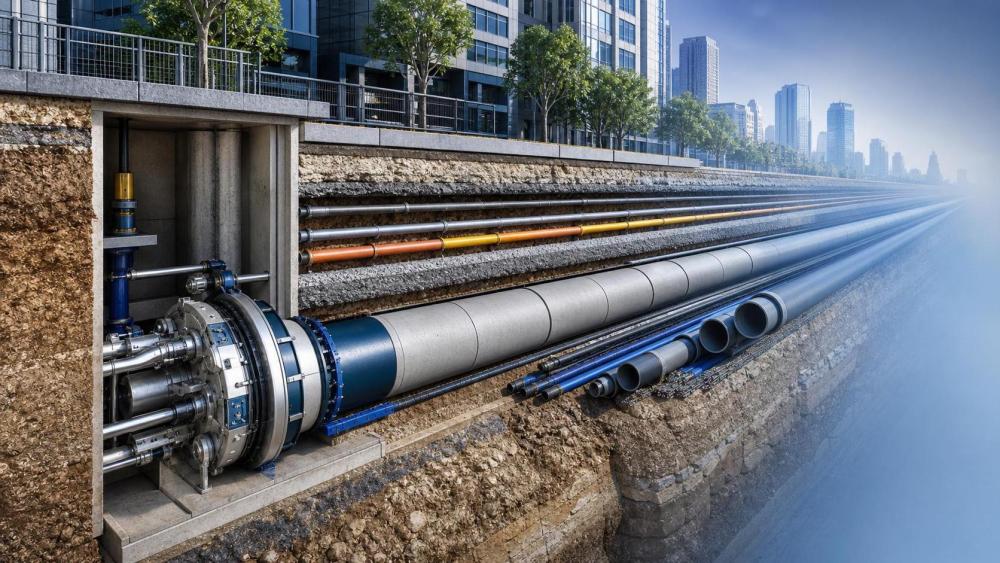
For urban utility upgrades, method selection shapes schedule, risk, cost, and public tolerance.
That is why trenchless construction techniques matter far beyond installation speed alone.
In dense corridors, surface excavation quickly triggers traffic disruption, utility conflicts, noise complaints, and commercial losses.
Well-chosen trenchless construction techniques reduce those pressures while keeping underground work controlled and predictable.
Still, no single option works everywhere.
Ground conditions, pipe diameter, alignment tolerance, launch space, depth, and existing assets all influence the answer.
Recent urban projects show a stronger shift toward methods that combine low settlement risk with higher digital control.
That trend is especially clear where regulators demand fewer emissions, less spoil handling, and tighter utility protection.
This guide breaks down the main trenchless construction techniques and shows where each one fits best.
Why Urban Utility Projects Need Method Discipline
Urban corridors are unforgiving.
A poor method choice can create settlement, utility strikes, traffic chaos, and long approval delays.
In practice, trenchless construction techniques succeed when they are matched to physical constraints early, not after procurement.
This also means design teams and field teams must evaluate risk using the same assumptions.
The key urban pressures usually include:
- Shallow cover under roads, rail, or sensitive structures
- Congested subsurface utility networks with incomplete records
- Restricted shafts, staging areas, and spoil removal routes
- Demand for precise line and grade control
- Community pressure for quieter, cleaner construction
Against that backdrop, trenchless construction techniques should be compared by performance, not by familiarity.
The Main Trenchless Construction Techniques
Several methods dominate urban utility work, but they solve different problems.
Pipe Jacking
Pipe jacking pushes prefabricated pipes from a launch shaft to a reception shaft.
It is one of the most trusted trenchless construction techniques for sewer, drainage, and utility tunnels.
It performs well on straight drives with medium to large diameters.
Its strength is structural reliability and reduced surface disruption.
Microtunneling
Microtunneling combines remote-controlled excavation, slurry transport, and accurate guidance.
Among trenchless construction techniques, it is preferred when settlement tolerance is extremely low.
It handles groundwater better than simpler methods and supports very accurate line and grade installation.
Horizontal Directional Drilling
HDD installs a pipe through a drilled curved alignment.
It is widely used for water, gas, telecom, and power crossings.
These trenchless construction techniques are attractive where shafts are difficult and long crossings are needed.
However, HDD is less suitable where exact gravity grade must be maintained.
Auger Boring and Pipe Ramming
These methods serve short crossings under roads or railways.
They can be cost-effective, but alignment control and geology tolerance are more limited.
For that reason, they are usually niche trenchless construction techniques in complex urban settings.
How To Choose the Right Method
The best selection process starts with constraints, not equipment preference.
A practical review should cover five decision areas.
1. Ground and Groundwater
Mixed face conditions increase risk for many trenchless construction techniques.
Soft ground with high groundwater often favors microtunneling or controlled pipe jacking systems.
Stable, drillable ground may open the door for HDD on pressure pipelines.
2. Diameter and Alignment
Gravity sewers require precise grade control.
That usually points toward pipe jacking or microtunneling rather than HDD.
Large diameters also narrow the field of viable trenchless construction techniques.
3. Surface Sensitivity
Busy intersections, hospitals, rail corridors, and heritage zones raise the value of low-disturbance methods.
In these areas, trenchless construction techniques with active face support usually offer stronger risk control.
4. Shaft and Site Access
Some methods reduce surface excavation but still need major shaft space.
This is where HDD may outperform other trenchless construction techniques on constrained sites.
5. Risk, Schedule, and Stakeholder Impact
The cheapest installation method can become the most expensive if it triggers claims or rework.
Method selection should account for permit timing, traffic staging, spoil logistics, and contingency planning.
Best Fit by Urban Utility Scenario
A scenario-based view makes trenchless construction techniques easier to compare.
This comparison is not absolute.
Still, it shows how trenchless construction techniques align with urban utility priorities.
Common Mistakes That Undermine Trenchless Performance
Many projects do not fail because the technology is weak.
They fail because the selected trenchless construction techniques were oversimplified during planning.
- Using limited geotechnical data to price a high-risk drive
- Ignoring shaft construction difficulty and dewatering needs
- Choosing HDD for assets that require tight gravity tolerance
- Underestimating spoil treatment, slurry management, or haul routes
- Treating community disruption as a communication issue, not a method issue
More capable trenchless construction techniques often justify themselves by avoiding these downstream problems.
A Practical Selection Framework
When urban utility decisions need to move quickly, a simple framework helps.
- Define non-negotiables: grade, diameter, depth, cover, and protection zones.
- Rank ground uncertainty and groundwater exposure by segment.
- Compare trenchless construction techniques against access, emissions, and traffic limits.
- Model delivery risk, not just installation cost.
- Engage specialist equipment insight early for realistic production assumptions.
This is where market intelligence also becomes useful.
Equipment capability, automation features, cutterhead suitability, and slurry system performance can change the practical answer.
For teams evaluating trenchless construction techniques, that detail often separates a workable plan from a risky one.
Final Decision: Fit the Method to the Urban Reality
The right trenchless construction techniques are not defined by popularity.
They are defined by fit.
For dense city utility work, pipe jacking and microtunneling usually lead where control and protection matter most.
HDD remains highly effective for long pressure-line crossings with limited surface access.
Shorter, simpler crossings may still favor auger boring or pipe ramming.
The practical move is to test trenchless construction techniques against actual site constraints before locking budget and schedule.
That approach leads to fewer surprises, stronger stakeholder confidence, and better-performing urban infrastructure delivery.
Related News
How to Evaluate Pipe Jacking Equipment for Municipal Sewer and Utility Projects
Pipe jacking equipment for municipal projects: learn how to compare machine type, steering, spoil handling, safety, and lifecycle cost for reliable sewer and utility installation.
How YLCSD300 Cutter Suction Dredger Parameters Affect River Dredging Output
YLCSD300 cutter suction dredger output depends on cutter, pump, pipe, depth, and hull balance. Learn how river conditions shape real dredging performance before you buy.
What Should a Mine Decarbonization Roadmap Include to Cut Emissions Without Hurting Output?
Mine decarbonization roadmap essentials: learn how to cut mining emissions with phased electrification, ventilation planning, and infrastructure readiness—without sacrificing output.
How to Evaluate Underground Mine Automation Companies for Safety and ROI
Underground mine automation companies vary widely in safety, interoperability, and ROI. Learn how to compare vendors, reduce deployment risk, and choose a scalable solution.
How to Evaluate Underground Haulage Systems for Ore Output, Ramp Grade, and Ventilation Limits
Underground haulage systems should be evaluated by ore output, ramp grade, and ventilation limits—not brochures. Learn how to compare trucks, LHDs, and electric options for smarter mine planning.
How to Evaluate a Pipe Jacking Equipment Distributor for Project Support and Uptime
Pipe jacking equipment distributor evaluation made practical: learn how to assess parts support, service response, training, and technical readiness to reduce downtime and protect project uptime.
How to Build a Mining Decarbonization Strategy That Balances Emissions, Cost, and Fleet Reality
Mining decarbonization strategy starts with fleet reality. Learn how to cut emissions, control cost, and align power, ventilation, and production for a practical mine transition.

How to Evaluate Articulated Dump Trucks Payload for Haul Road Conditions and Cycle Efficiency
Articulated Dump Trucks payload evaluation starts with real haul road conditions, not brochure numbers. Learn how to balance payload, traction, grades, and cycle efficiency for safer, higher output.
How Pipe Fittings Material and Pressure Class Affect Water Line Selection
Pipe fittings selection starts with material and pressure class. Learn how these factors affect water line reliability, corrosion resistance, installation, and long-term cost.
Related News
- 00
0000-00
How to Evaluate Pipe Jacking Equipment for Municipal Sewer and Utility Projects - 00
0000-00
How YLCSD300 Cutter Suction Dredger Parameters Affect River Dredging Output - 00
0000-00
What Should a Mine Decarbonization Roadmap Include to Cut Emissions Without Hurting Output? - 00
0000-00
How to Evaluate Underground Mine Automation Companies for Safety and ROI - 00
0000-00
How to Evaluate Underground Haulage Systems for Ore Output, Ramp Grade, and Ventilation Limits
Weekly Insights
Stay ahead with our curated technology reports delivered every Monday.