
How autonomous mining transport reduces haul-road collision risks





Haul-road collisions are rarely caused by one failure alone. They emerge when a large vehicle, a light vehicle, a pedestrian, another truck, or a fixed hazard enters a shared operating space while visibility, radio communication, road condition, vehicle condition, or operator attention is already degraded. Autonomous mining transport can reduce that exposure by making vehicle movement more predictable, continuously monitored, and subject to enforced operating rules.
It does not remove collision risk simply because a truck has no driver. The safety benefit depends on whether the autonomous system can reliably determine its position, recognize hazards, control speed, respect separation rules, and transition to a safe state when information becomes uncertain. For safety and quality teams, the practical question is therefore not whether autonomy is “safer” in the abstract. It is whether the mine can create and sustain the controlled haulage environment that allows automation to prevent the collision scenarios it is designed to address.
Where collision risk changes most
In conventional haulage, collision controls often rely on a chain of human actions: operators maintain following distance, scan blind spots, interpret road conditions, communicate at intersections, and respond to changing instructions. Those controls are necessary, but their execution varies with fatigue, workload, visibility, training, and the quality of information available in the cab.
Autonomous mining transport transfers part of that chain into repeatable system behavior. A vehicle can follow defined routes, speed limits, stopping distances, priority rules, and geofenced restrictions every cycle. Its behavior does not become less consistent late in a shift or after repeated loading and dumping cycles. That consistency is particularly valuable on high-frequency routes where trucks repeatedly meet at the same ramps, dump points, loading areas, and intersections.
The strongest reduction in collision exposure usually comes from controlling interactions rather than from obstacle detection alone. A detection sensor may identify an object in a vehicle’s path, but a fleet-control system can also prevent two autonomous trucks from being assigned to occupy the same constrained segment, or hold one vehicle before it reaches a merging point. This shifts safety from last-second avoidance toward planned separation.
That distinction matters because heavy haul trucks need distance to stop, particularly on downhill sections, wet surfaces, loose material, or roads affected by changing rolling resistance. A system that avoids creating a conflict is generally more robust than one that must repeatedly resolve conflicts at short range.
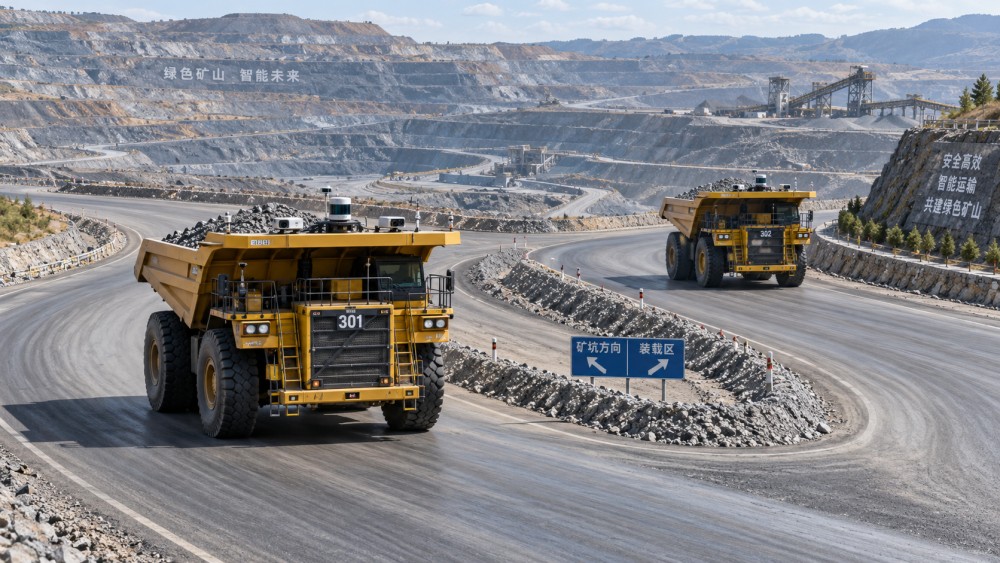
Four controls that make automated haulage safer
1. Route discipline and geofenced operating limits
Autonomous vehicles operate within mapped work areas and approved travel paths. Geofences can impose different rules by location: lower speed near a crusher, restricted access around a berm repair, exclusion zones at a blast boundary, or one-way travel on a narrow ramp. When those restrictions are linked to vehicle control rather than left solely to signage and radio calls, they are applied consistently.
For safety managers, the value is not merely that routes are digitized. It is that route changes can become formal control points. A road closure, temporary hazard, or revised traffic pattern should trigger an authorized update to the operating map and fleet rules, with clear confirmation that every relevant vehicle has received the change. Informal route changes are a major weakness in mixed and rapidly changing operations.
2. Controlled separation and intersection management
Following too closely, overtaking in poor visibility, and entering intersections without clear priority are common collision precursors. Autonomous fleet management can reserve road segments, sequence arrivals, impose headway, and assign right-of-way under predefined rules. In well-defined operating zones, trucks do not need to negotiate every encounter through judgment calls or incomplete radio exchanges.
These controls are especially relevant where large haul trucks share ramps or pass through constrained areas near loading and dumping points. The fleet system should account for more than vehicle location. It also needs to recognize vehicle direction, stopping capability, work-zone restrictions, and whether a route remains clear enough for the planned movement. A nominal position display is useful, but it is not a substitute for collision logic.
3. Speed control matched to conditions
Excessive speed is not only a matter of a posted limit. A speed that is acceptable on a dry, wide haul road may leave inadequate stopping margin at a blind crest, on a sharp curve, near an active work area, or during poor visibility. Automated transport can apply speed profiles that change by road segment, direction of travel, vehicle status, and operational zone.
For quality and safety assurance, speed control should be evaluated as a closed-loop function. The important questions are whether the truck receives the correct restriction, whether it achieves the target speed before entering the restricted area, and whether exceptions are logged. A system that records overspeed events but allows them to persist without enforced intervention offers much less protection than one that actively constrains vehicle behavior.
4. Detection, warning, and safe stopping
Perception systems provide the final layer when an unexpected object, vehicle, person, or obstruction appears. Cameras, radar, lidar, proximity technologies, and other sensing methods may contribute depending on the operating environment. Their effectiveness is shaped by dust, rain, fog, glare, mud accumulation, vibration, road geometry, and the difference between detecting an object and classifying it reliably enough to choose a response.
A safety case should therefore define what happens when the system has low confidence. The preferred response in many high-consequence situations is a controlled reduction in speed or a stop, rather than continuing under uncertain perception. However, unnecessary stops can create their own operational and safety complications if they occur on ramps, at intersections, or in locations that obstruct traffic. Safe-stop behavior needs to be designed around the actual haul-road layout, not treated as a generic software setting.
The collision risks autonomy does not solve by itself
Autonomous mining transport is often described as a way to remove human error. That is too broad. It may reduce certain operator-dependent errors inside the autonomous fleet, while introducing a different set of system, interface, and operational-control risks.
Mixed traffic is one of the most important examples. Autonomous haul trucks may share roads with light vehicles, graders, water trucks, service equipment, drill rigs, or manually operated trucks. Those vehicles may not follow the same route rules, carry compatible locating equipment, or behave predictably around autonomous equipment. A mine cannot assume that the autonomous truck will compensate for every unsafe entry into its work area.
Pedestrian exposure also requires separate control. People working near parked equipment, loading areas, maintenance bays, or temporary roadside work zones may be difficult to detect early enough under all conditions. Physical separation, access control, designated crossing points, lockout procedures, and clear work-zone authorization remain essential. Automation can reinforce those controls, but it should not become the sole barrier protecting people from heavy equipment.
Another limitation is infrastructure degradation. Autonomous operation relies on the continued quality of road maps, communications, positioning references, vehicle sensors, and fleet-management data. A change in berm location, a new windrow, poor drainage, unreported road damage, or a missing restriction in the digital map can create a mismatch between the system’s operating assumptions and site reality. This is a quality-management issue as much as an automation issue.
What safety and quality teams should test before expanding deployment
Autonomous haulage should be assessed through operating scenarios, not only through a technology demonstration. A truck traveling successfully along a clean, static route does not prove that the system will manage the conditions that create most serious collision exposure.
Evaluation should include the mine’s most demanding interaction points: ramp merges, blind crests, narrow passing sections, loading approaches, dumping areas, intersections, roadside maintenance zones, low-visibility conditions, and transitions between autonomous and manually controlled areas. The objective is to verify the behavior of the complete operating system: vehicle, fleet control, road design, communications, traffic rules, and people.
- Location integrity: Determine how the system detects positioning uncertainty, how it responds to lost or degraded positioning, and how quickly operations can identify a vehicle operating outside expected tolerances.
- Road-change control: Verify that altered road geometry, closures, temporary hazards, and maintenance areas cannot be introduced informally without a governed update to digital maps and traffic rules.
- Obstacle-response logic: Review detection range, response thresholds, braking behavior, alert escalation, and procedures for sensor obstruction or degraded visibility.
- Mixed-fleet rules: Define where manual vehicles may travel, how they request access, what locating or communications equipment they require, and who has authority to release restricted zones.
- Fallback operation: Test network interruptions, fleet-management outages, sensor faults, blocked routes, and emergency stops. The response should be understandable to operators, supervisors, and emergency personnel.
- Event traceability: Confirm that near misses, forced stops, overspeed attempts, unauthorized entries, map exceptions, and manual interventions are recorded in a form that supports investigation and corrective action.
Traceability is particularly important for quality professionals. Autonomous operations generate more machine-state and event data than conventional haulage, but data volume alone does not improve safety. The site needs defined ownership for reviewing exceptions, distinguishing nuisance events from meaningful precursors, assigning corrective actions, and confirming that those actions remain effective after the road or operating plan changes.
Road design still determines the margin for error
Automation can enforce better driving discipline, but it cannot create physical clearance where the road design provides none. Berms, drainage, road width, curve geometry, line of sight, intersection layout, lighting where applicable, signage for manual traffic, and safe locations for stopped vehicles remain part of the collision-control system.
This is often where an autonomous transport program reveals underlying road-quality problems. A manually driven fleet may have developed informal workarounds for a blind corner or a poorly defined merge. An autonomous fleet needs explicit rules for that same condition. If the rule cannot be safely encoded, the road or process may need to change.
How to judge whether the application is ready
A mine is a stronger candidate for autonomous transport when its haul cycles are repetitive, routes can be clearly controlled, traffic roles are well defined, and the operation has discipline around road maintenance and change management. A highly variable environment can still be automated, but the implementation burden rises quickly when traffic patterns change frequently, access is loosely controlled, or temporary work is introduced without reliable coordination.
Safety managers should look for evidence that the organization can manage exceptions, not only normal cycles. Autonomous vehicles will encounter blocked roads, abnormal loads, equipment failures, emergency activity, poor weather, and unplanned work. The maturity of the response process for these conditions is a better indicator of collision-risk reduction than the number of automated trucks alone.
The most useful deployment sequence is usually one that begins with a bounded operating domain, proves the controls at known conflict points, and expands only after the site can demonstrate reliable handling of deviations. This gives the safety team time to refine traffic rules, emergency procedures, inspection routines, and event-review practices before more vehicles and more interfaces are added.
Autonomous mining transport reduces haul-road collision risk when it turns safe movement into an enforced operating condition: separated routes, controlled speed, managed right-of-way, defined exclusion zones, and recorded exceptions. Its limitations become visible wherever road design, mixed traffic, data quality, or site discipline are weak. For a mine evaluating the technology, the central decision is whether autonomy will be supported by a controlled transport system, rather than expected to compensate for an uncontrolled one.
Related News
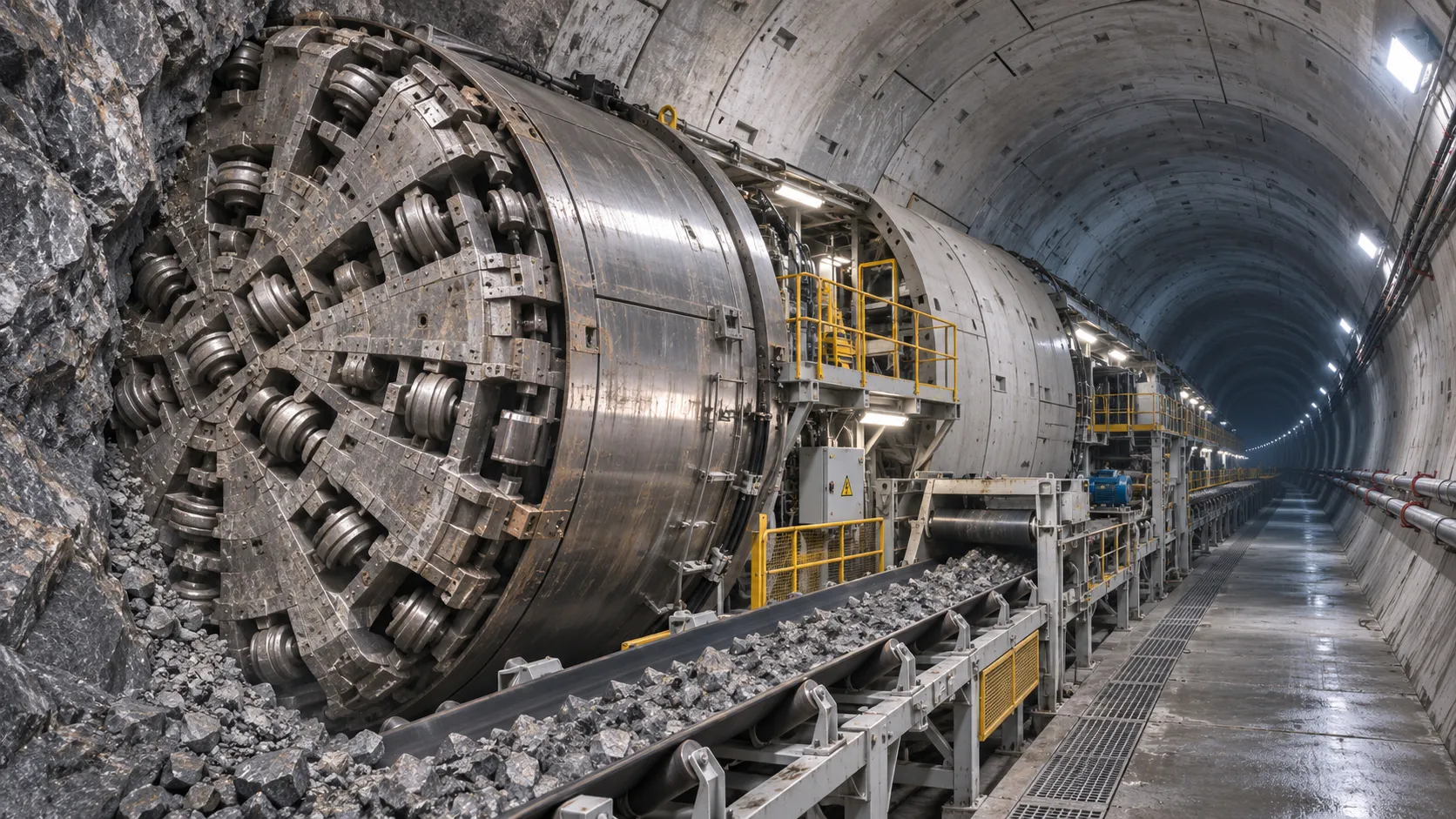
How TBM Excavation Works in Rock and Soft Ground: A Practical Guide
TBM Excavation in rock and soft ground explained: compare machine types, ground support, spoil removal, and the factors that guide smarter project planning.
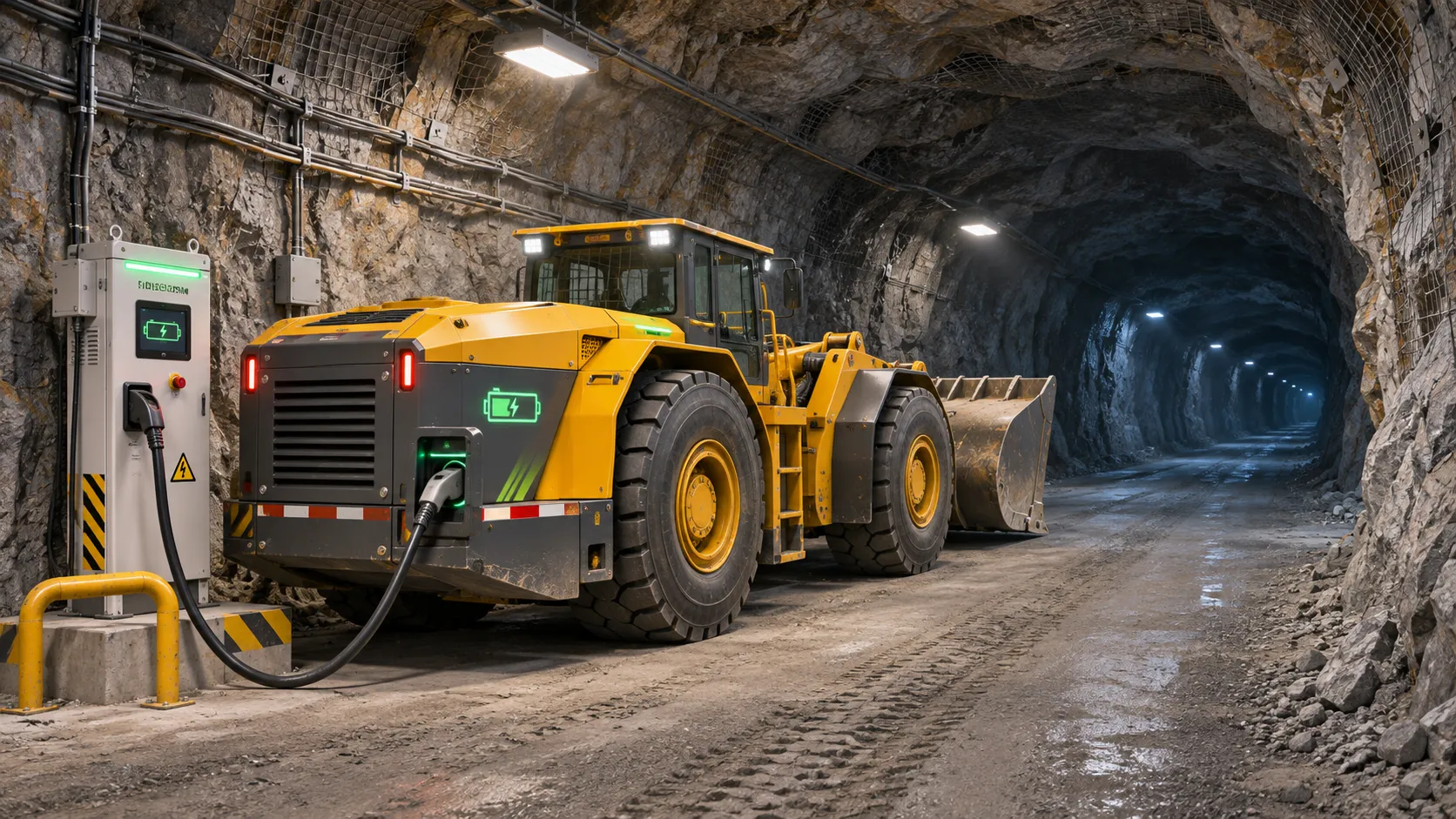
Choosing a Zero-Emission Underground Equipment Supplier: What to Check
Choosing a zero emission underground equipment supplier? Compare duty-cycle performance, charging, safety, total costs and support before you commit.
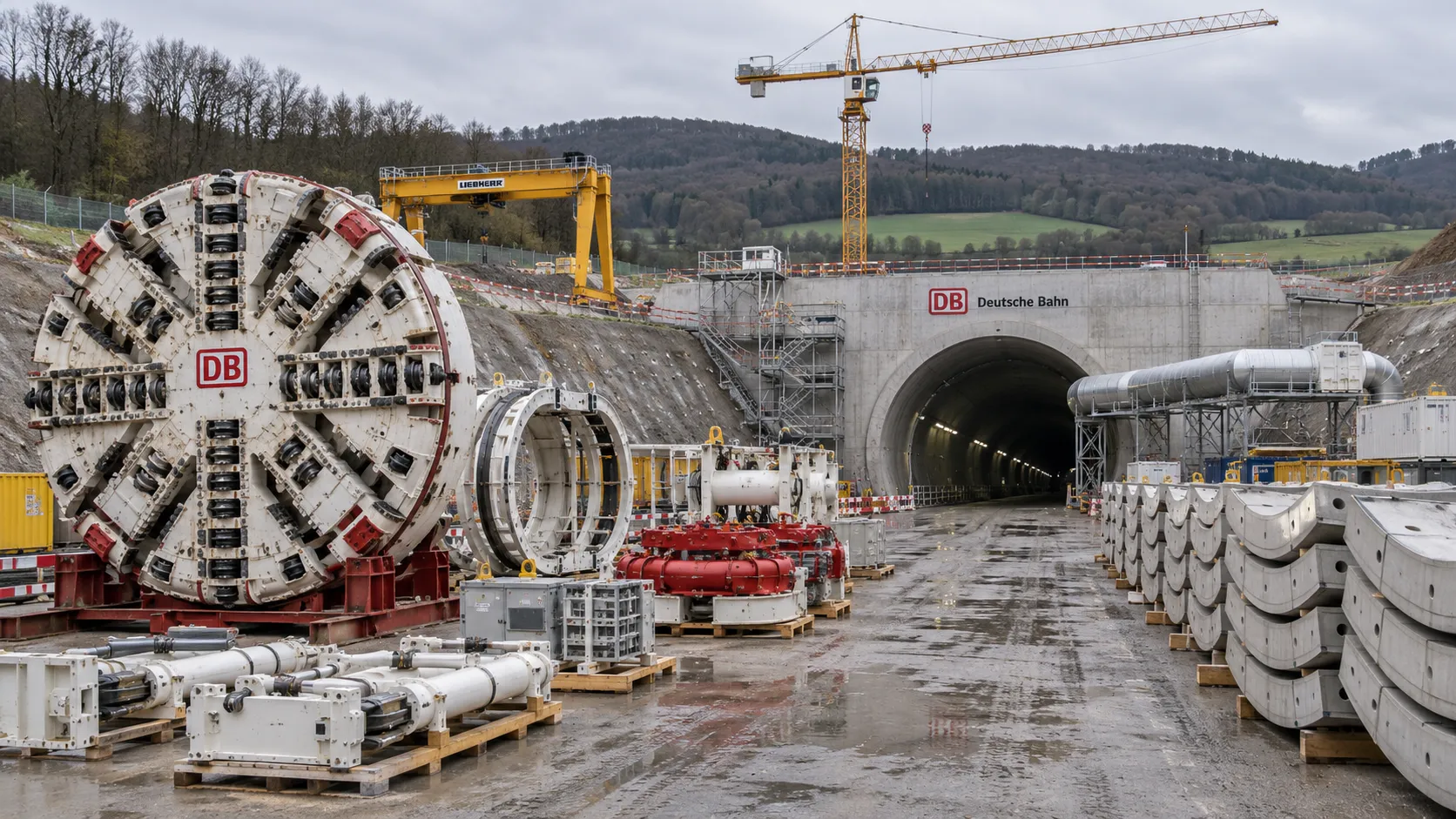
Construction Starts on Germany's Pfaffensteig Rail Tunnel, With Two TBMs Planned
Pfaffensteig rail tunnel construction is underway in Germany. Discover how two planned TBMs will support the 11-kilometre project near Stuttgart.
How Real-Time Underground Mapping Systems Work in Tunneling
Discover how real-time underground mapping systems guide tunneling teams, integrate sensor data, and support confident decisions with verified accuracy.
First Mechanized Tunnel Crossing Beneath the Panama Canal Completed
Panama Canal tunnel crossing: Explore the reported Metro Line 3 milestone and what it could mean for future underwater tunneling projects.
Underground Utility Construction Equipment: Choosing by Ground Conditions
Choose underground utility construction equipment with confidence. Compare trenching, HDD, microtunnelling and TBMs by ground conditions, risk and cost.
China Sets Tunnel Boring Machine Export Controls as India Pushes Local Production
China tunnel boring machine export controls could reshape procurement as India pushes local production. Explore potential supply and project impacts.
Choosing a Trenchless Pipeline Installation Contractor: Key Qualifications
Choose a trenchless pipeline installation contractor with confidence. Learn how to assess experience, equipment, safety, costs, and project risks before you hire.
China's 70% TBM Share and Export Controls Challenge India's Local Production
China's TBM export controls could challenge India's local production and infrastructure sourcing. Explore the potential risks and procurement options.
Related News
- 00
0000-00
How TBM Excavation Works in Rock and Soft Ground: A Practical Guide - 00
0000-00
Choosing a Zero-Emission Underground Equipment Supplier: What to Check - 00
0000-00
Construction Starts on Germany's Pfaffensteig Rail Tunnel, With Two TBMs Planned - 00
0000-00
How Real-Time Underground Mapping Systems Work in Tunneling - 00
0000-00
First Mechanized Tunnel Crossing Beneath the Panama Canal Completed
Weekly Insights
Stay ahead with our curated technology reports delivered every Monday.