
Which autonomous haulage solutions suit mixed truck fleets





A mixed fleet creates a different autonomy decision from a greenfield mine with one truck model. A site may operate haul trucks from several generations, contractor-owned units, support vehicles, and perhaps an emerging battery-electric segment. In that setting, the most effective autonomous haulage solutions available are rarely a single “driverless truck” package. The strongest fit is usually a layered system: vehicle-level autonomy that can be applied to the intended truck classes, backed by an independent fleet-management and safety-control layer that governs every autonomous and manually operated asset in the operating zone.
The central decision is whether the operation needs maximum automation on a limited, stable fleet or needs interoperability across changing equipment. OEM-integrated autonomy can be a sound choice where truck models are standardized and the haul circuit is controlled. A vehicle-agnostic retrofit approach is often more suitable where fleet diversity, remaining asset life, and replacement timing matter. Before comparing features, leaders should define the operating domain, traffic interactions, production bottleneck, and the level of control the site is prepared to maintain.
Start with the haulage problem, not the autonomy label
Autonomy is frequently evaluated as a truck capability, yet the production impact usually comes from the haulage system. A mixed fleet can lose time at intersections, loading queues, dump approaches, fuel or charging areas, maintenance crossings, and shift-change handovers. Automating a few trucks without resolving these interfaces may move the constraint rather than remove it.
A useful first question is: which movements must become predictable to protect production? On some sites, the priority is repetitive loaded haulage between a shovel and a crusher. Elsewhere, steep downhill routes, restricted visibility, congested dumps, or labor exposure create the strongest business case. The answer determines whether a fully autonomous haulage system, a constrained autonomous zone, or an operator-assist program is the practical first step.
Map the current circuit before selecting a solution. The map should identify road widths, grades, berms, intersections, turning radii, loading and dumping positions, mobile service areas, communications coverage, and places where people or light vehicles routinely enter the truck route. It should also record how often haul plans change. A route redesigned every week requires a different autonomy operating model from a long-life, repetitive production loop.
Four solution paths and where each one fits
OEM-integrated systems are generally most compelling when the mine can align its procurement plan with a single truck family or a narrow set of compatible models. Their advantage is not simply that autonomy is installed at the factory. The deeper value lies in coordinated control of steering, braking, propulsion, payload-related functions, diagnostics, and fault handling. That integration can simplify responsibility for vehicle behavior, particularly when the mine has a long-term fleet standard.
For a mixed fleet, however, standardization may be years away. A site may have trucks with substantially different control architectures, operating hours, braking performance, payload systems, and remaining service life. A retrofit autonomy solution can be more rational if it supports the required vehicle types and has a defined method for interfacing with each truck’s steering, braking, propulsion, emergency stop, and health-monitoring systems. “Vehicle-agnostic” should never be treated as proof of compatibility. It means the provider may have an adaptable architecture; each truck configuration still needs formal technical acceptance.
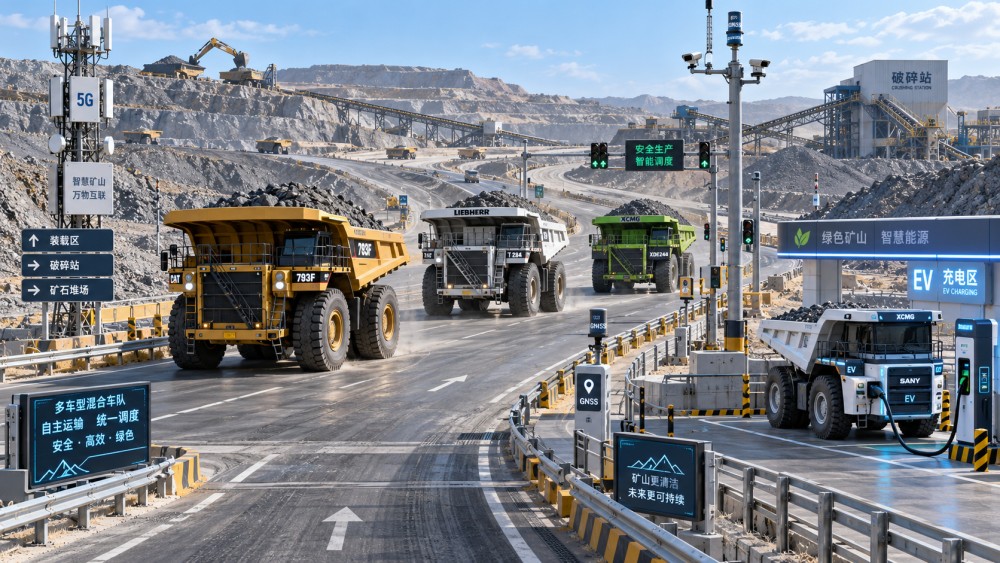
A third path is to establish a dedicated autonomous haulage zone instead of attempting mine-wide conversion. For example, the operation may automate a defined shovel-to-dump or shovel-to-crusher route while keeping workshop areas, construction zones, and short-term pits under conventional control. This model is especially useful where the fleet includes manual trucks that cannot yet be replaced or upgraded. It works only when access rules are enforceable and the transition points between manual and autonomous traffic are designed as operating controls rather than painted lines on a map.
The fleet-management layer determines whether mixed operations remain manageable
Truck autonomy and fleet orchestration are related but separate capabilities. In a mixed environment, a central management layer must maintain an accurate view of truck location, movement authority, route status, speed restrictions, payload assignment, exclusion areas, and interaction with human-driven equipment. Without that common operational picture, autonomous units may operate safely in isolation while the overall mine remains difficult to coordinate.
Decision-makers should examine whether the proposed control system can do the following:
- Identify autonomous trucks, manually driven haul trucks, light vehicles, graders, water carts, loaders, and personnel access points within the defined operating domain.
- Apply right-of-way and separation logic at intersections, narrow road sections, loading queues, and dump areas.
- Issue route restrictions when roads are closed, blasting preparations begin, visibility deteriorates, or ground conditions change.
- Maintain an auditable record of manual overrides, loss-of-communications events, emergency stops, and route exceptions.
- Exchange usable data with dispatch, maintenance, production planning, payload, and condition-monitoring systems without forcing the site to duplicate work.
Interoperability is more than data sharing. The system must make safe decisions when equipment reports incomplete, delayed, or inconsistent information. A manual water truck, for instance, may not have the same localization accuracy or communications interface as an autonomous haul truck. The autonomy design should recognize that difference and apply conservative separation, access control, or escort procedures instead of assuming every asset behaves identically.
Do not confuse remote operation with autonomous haulage
Remote control can reduce exposure in hazardous areas and is valuable for recovery, inspection, or irregular tasks. It is not automatically a substitute for autonomous haulage. Remote operation still depends on a person issuing continuous driving decisions, and it may place strong demands on communications quality, camera coverage, and operator workload. Full autonomy relies on defined operating rules, onboard perception and localization, machine control, and supervisory management. Many mines need both: autonomy for repeatable production cycles and remote capability for exceptions that cannot be safely or efficiently automated.
Evaluate the operating envelope before promises of scale
Every credible system has an operating design domain: the specific roads, gradients, weather or dust conditions, vehicle states, traffic rules, and tasks in which it is intended to function. A decision should be based on the real operating envelope, not a demonstration route with ideal conditions.
Ask how the solution performs when roads are regraded, windrows move, GNSS availability is reduced, dust affects perception, or a loading location shifts. Underground, the questions become more demanding: how is localization maintained without satellite positioning; what communications redundancy exists; how are narrow headings, ventilation constraints, pedestrians, and temporary ground-support activity handled? In open pits, traffic density and evolving dumps may be the more important challenge. The system does not need to solve every scenario autonomously on day one, but it must define what happens outside its approved envelope.
That fallback behavior should be explicit. A truck may stop in a controlled manner, request remote assistance, divert to a safe holding area, or transfer to manual operation under a documented procedure. The safest response is not always to continue moving slowly. At a congested intersection or near a dump edge, a controlled stop may be the correct machine action, provided the fleet controller can prevent that stop from creating a new traffic hazard.
Safety architecture is a procurement requirement, not an implementation detail
Mixed fleets introduce uneven safety capability. A new autonomous truck may have integrated sensing, health diagnostics, and redundant controls, while a legacy support vehicle may have limited digital visibility. The practical response is to design the autonomous area around managed access, vehicle classification, speed rules, physical separation where needed, and unambiguous entry and exit protocols.
Review how the proposed solution handles emergency stopping, obstacle detection, communications loss, degraded positioning, braking faults, unauthorized entry, and recovery after a fault. Also examine who can authorize a return to service. Operations, maintenance, and control-room staff need different permissions. A process that allows informal resets may preserve short-term availability while weakening the safety case.
Training should cover more than software screens. Haul-truck operators transitioning to other roles, light-vehicle drivers, dispatchers, maintainers, and contractors all need to understand how autonomous vehicles behave. In particular, people must know where autonomous units can travel, how they signal intent, which radio or digital procedures apply, and what to do when a vehicle stops unexpectedly. Clear behavior around the system is often more important than sophisticated technology in preventing avoidable conflicts.
Electrification changes the selection criteria
Where battery-electric haul trucks are part of the fleet plan, autonomy and energy management should be assessed together. Electric trucks may follow charging or battery-exchange cycles that differ from diesel refueling patterns. Charging bays can become queue points, and route assignments may need to account for state of charge, grade, payload, temperature, and the availability of charging infrastructure.
An autonomous haulage solution should therefore be able to receive the operational constraints that matter to electric vehicles. It does not necessarily need to control the charging equipment itself, but it should avoid assigning a truck to a cycle it cannot complete safely or sending multiple vehicles into an unprepared charging area. On long downhill hauls, regenerative braking may influence energy use and braking strategy; on uphill loaded routes, energy demand may constrain dispatch flexibility. These are fleet-level planning questions, not merely vehicle specifications.
For mixed diesel and electric fleets, maintain separate assumptions for refueling, charging, thermal management, maintenance windows, and recovery procedures. Treating all trucks as identical dispatch resources can create hidden delays and make autonomous scheduling appear unreliable when the real issue is energy availability.
A phased decision process reduces avoidable disruption
Begin with fleet segmentation. Group trucks by model, age, control architecture, payload class, expected remaining life, and operating route. Then identify which units are technically eligible for autonomy, which should remain manual, and which are near replacement. This prevents the common mistake of designing a program around trucks that are costly to integrate or too close to retirement to justify conversion.
Next, choose a first operating area that is productive but bounded. It should be representative enough to reveal real integration issues, yet not so complex that every exception becomes a redesign exercise. Define the success criteria in operational terms: cycle consistency, queue behavior, availability causes, intervention frequency, safety-rule compliance, and interaction with manual traffic. Avoid reducing the evaluation to tonnes moved alone; a system can move material while creating maintenance, dispatch, or access-control burdens that block scale-up.
During the initial deployment, record every intervention by category. Was it caused by road geometry, poor communications, loading variability, perception limits, unclear traffic rules, vehicle health, or human access? This evidence helps distinguish problems that require engineering changes from those that require better operating discipline. It also exposes whether a purportedly fleet-agnostic solution behaves consistently across the truck models that matter to the mine.
Questions that expose weak proposals
When comparing suppliers or internal options, insist on precise answers rather than broad compatibility claims. Which truck models and configurations are approved for autonomous conversion? What modifications are required on each? Who owns responsibility when the autonomy layer, truck controls, communications network, and dispatch system interact incorrectly? What functions continue during a network interruption, and what functions stop?
Ask how new road segments, changing dump faces, temporary exclusions, and revised loading locations are introduced into the operating environment. Determine the time, skill level, verification process, and authority required. A solution that depends on specialist intervention for every minor route change may be appropriate for a stable operation but burdensome in a rapidly changing mine.
Finally, test the commercial model against fleet reality. The relevant comparison is not only the price of an autonomous kit or new autonomous truck. It includes communications infrastructure, road preparation, control-room changes, training, maintenance support, software lifecycle obligations, spare parts, integration work, and the operational cost of running a transition period with both autonomous and manual vehicles.
The best mixed-fleet autonomy choice is the one that makes vehicle behavior, traffic rules, exceptions, and responsibilities more controllable as the fleet evolves. For a stable single-model fleet, that may favor deeply integrated truck autonomy. For operations with varied assets and staged replacement plans, an interoperable retrofit strategy combined with a disciplined autonomous zone often provides a more realistic path to scale.
Related News
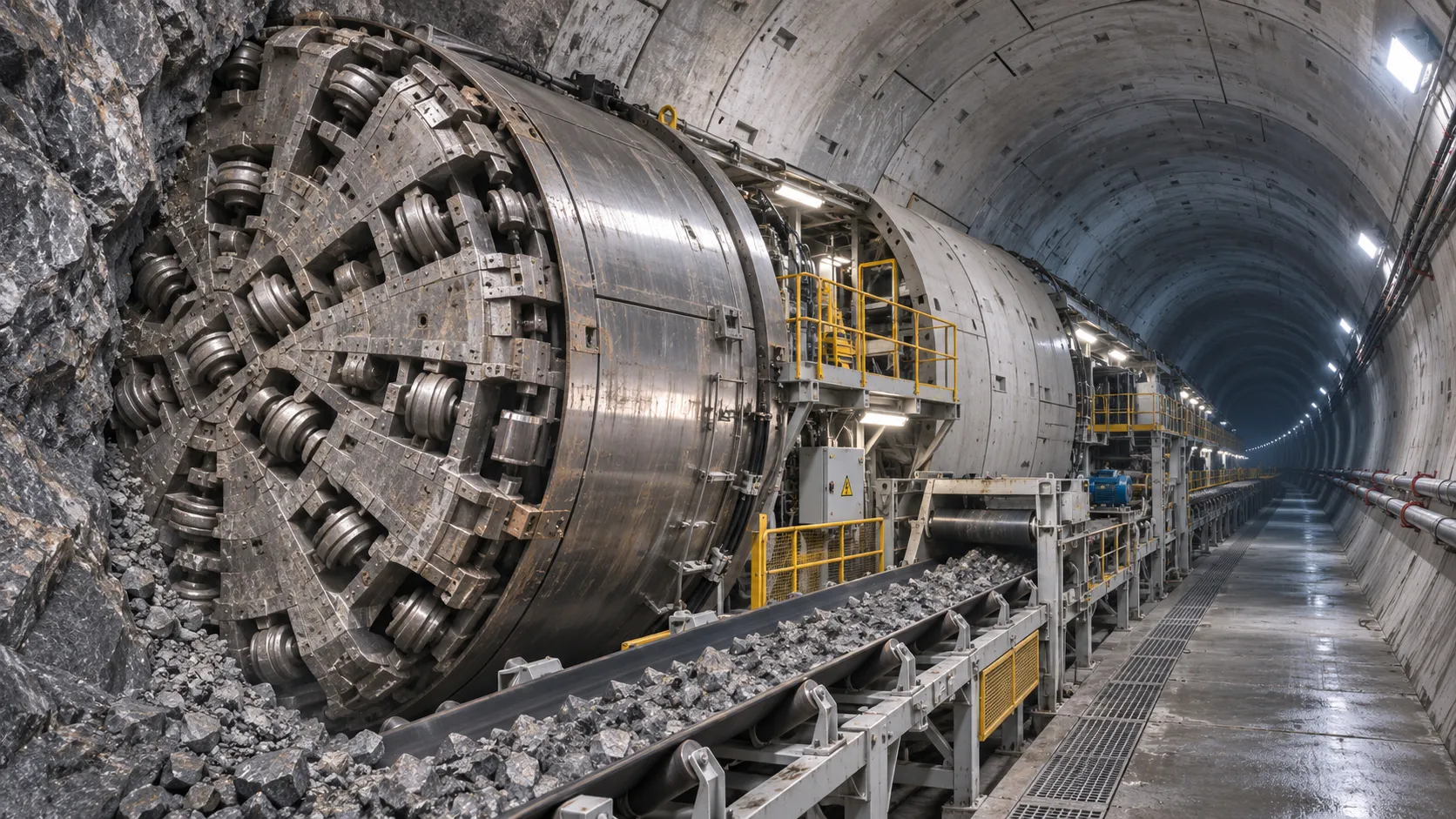
How TBM Excavation Works in Rock and Soft Ground: A Practical Guide
TBM Excavation in rock and soft ground explained: compare machine types, ground support, spoil removal, and the factors that guide smarter project planning.
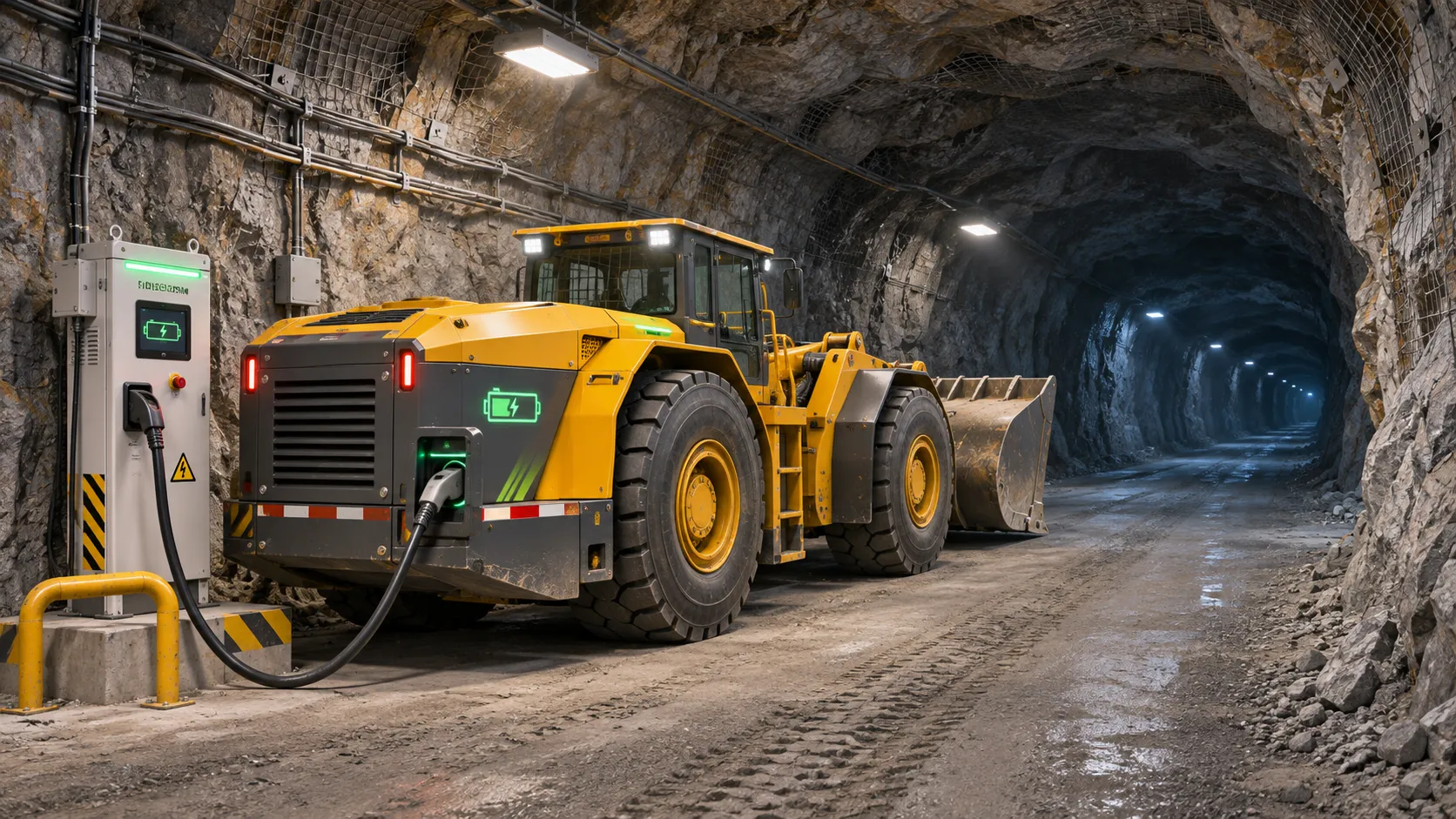
Choosing a Zero-Emission Underground Equipment Supplier: What to Check
Choosing a zero emission underground equipment supplier? Compare duty-cycle performance, charging, safety, total costs and support before you commit.
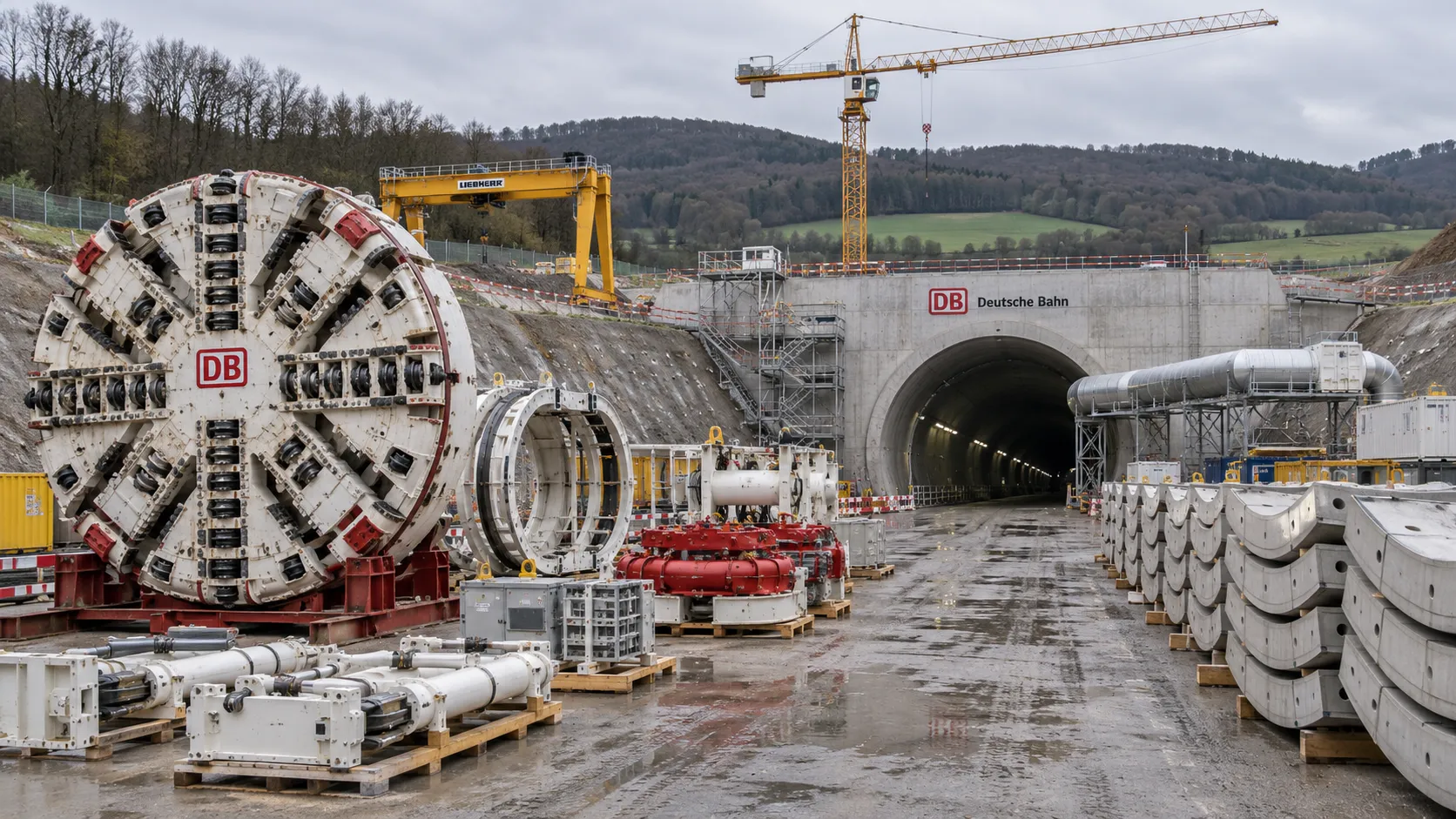
Construction Starts on Germany's Pfaffensteig Rail Tunnel, With Two TBMs Planned
Pfaffensteig rail tunnel construction is underway in Germany. Discover how two planned TBMs will support the 11-kilometre project near Stuttgart.
How Real-Time Underground Mapping Systems Work in Tunneling
Discover how real-time underground mapping systems guide tunneling teams, integrate sensor data, and support confident decisions with verified accuracy.
First Mechanized Tunnel Crossing Beneath the Panama Canal Completed
Panama Canal tunnel crossing: Explore the reported Metro Line 3 milestone and what it could mean for future underwater tunneling projects.
Underground Utility Construction Equipment: Choosing by Ground Conditions
Choose underground utility construction equipment with confidence. Compare trenching, HDD, microtunnelling and TBMs by ground conditions, risk and cost.
China Sets Tunnel Boring Machine Export Controls as India Pushes Local Production
China tunnel boring machine export controls could reshape procurement as India pushes local production. Explore potential supply and project impacts.
Choosing a Trenchless Pipeline Installation Contractor: Key Qualifications
Choose a trenchless pipeline installation contractor with confidence. Learn how to assess experience, equipment, safety, costs, and project risks before you hire.
China's 70% TBM Share and Export Controls Challenge India's Local Production
China's TBM export controls could challenge India's local production and infrastructure sourcing. Explore the potential risks and procurement options.
Related News
- 00
0000-00
How TBM Excavation Works in Rock and Soft Ground: A Practical Guide - 00
0000-00
Choosing a Zero-Emission Underground Equipment Supplier: What to Check - 00
0000-00
Construction Starts on Germany's Pfaffensteig Rail Tunnel, With Two TBMs Planned - 00
0000-00
How Real-Time Underground Mapping Systems Work in Tunneling - 00
0000-00
First Mechanized Tunnel Crossing Beneath the Panama Canal Completed
Weekly Insights
Stay ahead with our curated technology reports delivered every Monday.