Mega Tunnel Excavation Methods Compared: When TBM, Drill and Blast, or Pipe Jacking Fits Best





Mega Tunnel Excavation Methods Compared: When TBM, Drill and Blast, or Pipe Jacking Fits Best
Choosing the right mega tunnel excavation method can determine a project’s cost, schedule, risk profile, and long-term performance.
For complex underground works, the choice usually narrows to TBM, drill and blast, or pipe jacking.
Each method solves a different construction problem.
The real challenge is knowing which one fits the geology, alignment, urban setting, and delivery target.
This mega tunnel excavation comparison focuses on practical selection logic rather than theory alone.
Why Mega Tunnel Excavation Method Selection Matters Early
A mega tunnel excavation decision affects far more than equipment procurement.
It shapes shaft locations, spoil handling, ventilation, lining design, utility protection, and stakeholder risk.
It also influences how quickly a project can move from concept to construction.
From recent market shifts, the clearer signal is this.
Owners now expect underground delivery to meet tighter carbon, safety, and urban disruption targets.
That means the best mega tunnel excavation method is not always the fastest in pure cutting terms.
It is the one that performs best across the full project system.
- Ground behavior and rock strength
- Tunnel length, diameter, and alignment geometry
- Surface sensitivity and right-of-way constraints
- Water ingress, gas, and ventilation demands
- Capital cost versus production certainty
- Lining requirements and final asset performance
When TBM Fits Best in Mega Tunnel Excavation
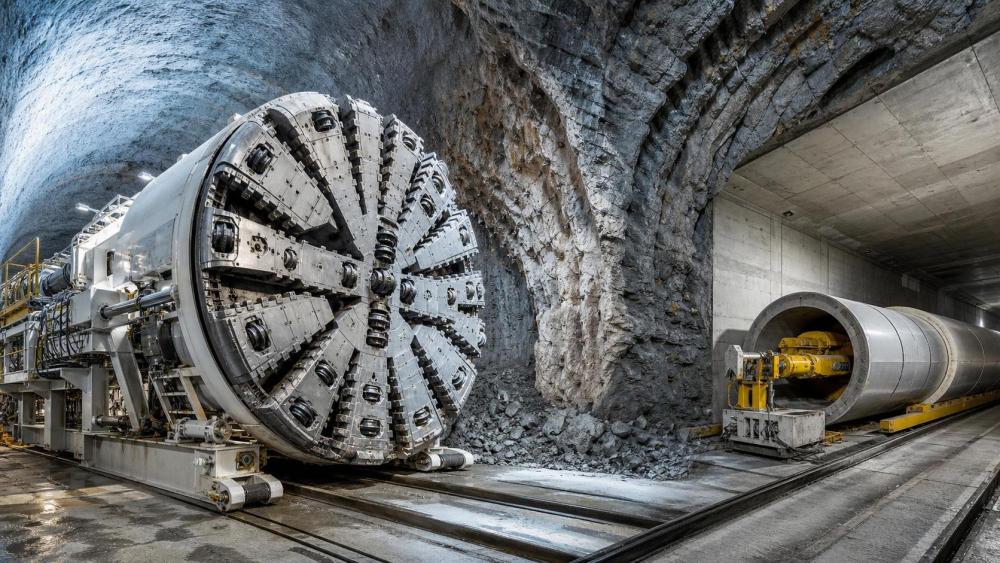
TBM is usually strongest where long drives, consistent alignment, and high production stability matter most.
For major rail, highway, water transfer, and deep utility corridors, TBM often becomes the benchmark option.
Its advantage in mega tunnel excavation comes from continuous cutting and integrated lining installation.
That creates a more repeatable cycle than blast-based excavation.
Best-fit conditions for TBM
- Long tunnel lengths that justify high mobilization cost
- Relatively consistent geology over extended sections
- Urban corridors needing low vibration and controlled settlement
- Projects requiring predictable finished tunnel geometry
- Schemes where worker exposure must be reduced
In practical delivery, TBM selection works best when the front-end investigation is strong.
Disc cutter wear, fault zones, groundwater pressure, and muck logistics all need early modeling.
Without that, a TBM can become an expensive bottleneck.
The method is less attractive for short tunnels, sharp curves, frequent cross passages, or highly mixed ground.
So in mega tunnel excavation planning, TBM wins when repetition, length, and control outweigh flexibility.
Where Drill and Blast Still Outperforms
Drill and blast remains highly relevant, especially in hard rock and variable geology.
It offers a level of adaptability that many mechanized systems cannot match.
That flexibility matters when tunnel shape changes, access is fragmented, or geology shifts quickly.
Best-fit conditions for drill and blast
- Very hard rock with frequent strength variation
- Shorter tunnels or staged development programs
- Complex tunnel profiles, caverns, or junctions
- Remote projects where TBM logistics are difficult
- Mining and hydropower works needing excavation flexibility
In a mega tunnel excavation program, drill and blast often handles uncertainty better than expected.
Crews can adjust drilling patterns, support classes, and advance lengths with less system-wide disruption.
That said, the tradeoff is clear.
Production is cyclic, not continuous, and blast restrictions can slow urban delivery.
Ventilation, fumes, overbreak, and vibration management also require tighter discipline.
For that reason, drill and blast is strongest where geology complexity is the dominant risk.
When Pipe Jacking Is the Smarter Urban Choice
Pipe jacking is different from the other two methods.
It is not the default answer for every mega tunnel excavation scenario.
But for municipal tunnels, utility corridors, sewer upgrades, and crossings beneath dense infrastructure, it can be the best choice.
The core value is minimal surface disruption.
Best-fit conditions for pipe jacking
- Urban routes with strict traffic and utility constraints
- Smaller diameter tunnels with launch and reception shafts
- Projects needing reduced noise, settlement, and community impact
- Crossings under railways, roads, rivers, or active facilities
In real project environments, pipe jacking performs well when land access is politically sensitive.
It avoids the broad excavation footprint of open cut methods and limits disruption above ground.
Still, it comes with boundaries.
Drive length, diameter, lubrication control, and line accuracy can become decisive constraints.
So pipe jacking fits best when the tunnel function is urban, targeted, and alignment discipline is high.
Key Comparison Table for Mega Tunnel Excavation Decisions
A Practical Selection Framework
A strong mega tunnel excavation decision usually follows a simple sequence.
- Define the tunnel’s operational purpose, not just its alignment.
- Map geology uncertainty and ground treatment needs early.
- Test urban, environmental, and permitting constraints.
- Compare production logic, not headline advance rates.
- Assess lifecycle reliability of the finished tunnel system.
This also means procurement should support the excavation strategy.
For example, a TBM project needs strong spare parts, cutter management, and digital condition monitoring.
A drill and blast program depends more on jumbo productivity, explosives planning, and disciplined ground support cycles.
A pipe jacking scheme needs close control of lubrication, jacking force, and shaft interface risks.
The right answer comes from system fit, not equipment preference alone.
Final Takeaway for Better Method Selection
There is no universal winner in mega tunnel excavation.
TBM fits long, high-output drives with strong geometry control.
Drill and blast fits variable hard rock and complex underground layouts.
Pipe jacking fits sensitive urban corridors where surface disruption must stay low.
The most reliable selection process starts with geology, alignment, and stakeholder constraints, then tests equipment options against delivery reality.
In actual business decisions, that discipline reduces rework, claims exposure, and schedule surprises.
For any upcoming mega tunnel excavation program, build the method review around risk transfer, operational fit, and long-term asset value.
That is usually where the best decision becomes clear.
Related News
How to Evaluate Underground Haulage Systems for Ore Output, Ramp Grade, and Ventilation Limits
Underground haulage systems should be evaluated by ore output, ramp grade, and ventilation limits—not brochures. Learn how to compare trucks, LHDs, and electric options for smarter mine planning.
How to Evaluate a Pipe Jacking Equipment Distributor for Project Support and Uptime
Pipe jacking equipment distributor evaluation made practical: learn how to assess parts support, service response, training, and technical readiness to reduce downtime and protect project uptime.
How to Build a Mining Decarbonization Strategy That Balances Emissions, Cost, and Fleet Reality
Mining decarbonization strategy starts with fleet reality. Learn how to cut emissions, control cost, and align power, ventilation, and production for a practical mine transition.
How to Evaluate Articulated Dump Trucks Payload for Haul Road Conditions and Cycle Efficiency
Articulated Dump Trucks payload evaluation starts with real haul road conditions, not brochure numbers. Learn how to balance payload, traction, grades, and cycle efficiency for safer, higher output.
How Pipe Fittings Material and Pressure Class Affect Water Line Selection
Pipe fittings selection starts with material and pressure class. Learn how these factors affect water line reliability, corrosion resistance, installation, and long-term cost.
What Drives TBM Excavation Cost in Urban Tunneling Projects?
tbm excavation cost in urban tunneling depends on geology, shafts, segment lining, logistics, and risk. Discover the key cost drivers and compare bids with greater confidence.
What Does Energy Metals Mining in Australia Mean for Supply, Cost, and Project Risk?
Energy metals mining Australia is reshaping supply, cost, and project risk. Discover what it means for buyers, investors, and operators.
EU Eases Dual CE and UKCA Path for Chinese Tunnel Boring Equipment
EU eases CE and UKCA certification for Chinese tunnel boring equipment, cutting compliance time and helping importers move faster.
Flameproof Underground Safety Equipment: What Mine Teams Should Check Before Buying
Underground Safety Equipment flameproof buying guide: learn how mine teams should verify certification, durability, serviceability, and supplier support before purchase.
Related News
- 00
0000-00
How to Evaluate Underground Haulage Systems for Ore Output, Ramp Grade, and Ventilation Limits - 00
0000-00
How to Evaluate a Pipe Jacking Equipment Distributor for Project Support and Uptime - 00
0000-00
How to Build a Mining Decarbonization Strategy That Balances Emissions, Cost, and Fleet Reality - 00
0000-00
How to Evaluate Articulated Dump Trucks Payload for Haul Road Conditions and Cycle Efficiency - 00
0000-00
How Pipe Fittings Material and Pressure Class Affect Water Line Selection
Weekly Insights
Stay ahead with our curated technology reports delivered every Monday.