
Soft Ground Tunnelling Methods Compared: EPB, Slurry Shield, Ground Freezing, and More





Choosing among soft ground tunnelling methods shapes far more than excavation speed. It affects settlement control, face stability, spoil handling, groundwater risk, energy use, and public acceptance in dense urban corridors.
That is why comparisons between EPB, slurry shield, ground freezing, and related techniques matter across transport, utilities, and underground development. Method selection influences both engineering performance and commercial outcomes.
Within UTMD’s intelligence lens, this topic also connects directly to TBM evolution, trenchless construction strategy, and the wider push toward digital, low-emission underground operations.
Why soft ground demands different tunnelling logic
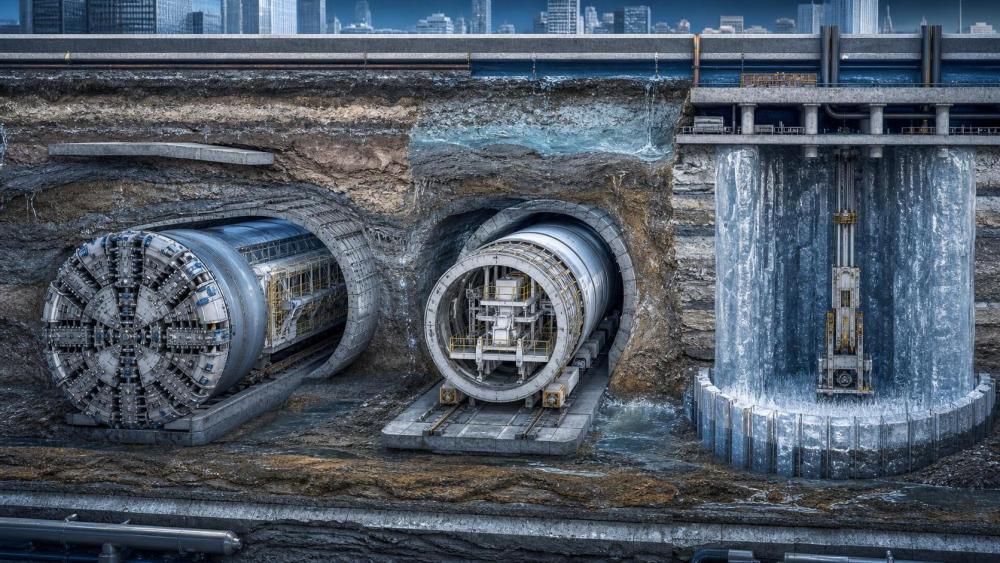
Soft ground tunnelling methods are used where soils behave less like stable rock and more like a changing pressure system. Clay, silt, sand, fill, and mixed faces can deform quickly.
The central challenge is not only excavation. It is maintaining face support while controlling water inflow, minimizing surface movement, and keeping lining installation synchronized with advance.
In cities, the margin for error is narrow. Existing buildings, roads, rail lines, sewers, and utility corridors often sit directly above or beside the tunnel alignment.
This is where method choice becomes strategic. The right approach balances ground response, project geometry, environmental constraints, and available equipment capability.
The main families of soft ground tunnelling methods
Most soft ground tunnelling methods fall into two broad groups. One group excavates with continuous mechanical support at the face. The other improves or stabilizes the ground before excavation.
Earth Pressure Balance and slurry shield TBMs dominate many large urban tunnel drives. Ground freezing, dewatering, grouting, compressed air, and sequential excavation usually play supporting or site-specific roles.
EPB tunnelling in practical terms
EPB remains one of the most discussed soft ground tunnelling methods because it fits many metro and utility tunnel conditions. The excavated soil itself becomes part of the pressure control system.
A screw conveyor regulates spoil extraction. Soil conditioning with foam, polymers, or water adjusts plasticity, flow, and chamber stability.
This approach works well where fines content is sufficient to form a stable paste. It is often attractive when surface settlement tolerance is tight and spoil treatment simplicity matters.
However, EPB performance depends heavily on operator control, chamber pressure management, conditioning recipes, and consistent geology. Abrupt changes in permeability can create risk quickly.
From an equipment intelligence perspective, EPB also benefits from better sensor integration. Pressure, torque, advance rate, and screw data increasingly support predictive control models.
Where slurry shields are stronger
Slurry shield systems are often selected when groundwater pressure is high and the soil skeleton cannot reliably support itself. Bentonite slurry transmits pressure to the tunnel face.
These soft ground tunnelling methods are particularly effective in sands and gravels below the water table. They can deliver stable excavation where EPB would struggle to maintain control.
The tradeoff is process complexity. A slurry circuit requires separation plants, pipelines, additives management, and stricter spoil processing logistics.
That added complexity can still be justified. On high-risk alignments, better face support may protect schedule certainty, nearby assets, and claims exposure more effectively than a simpler machine concept.
For UTMD-style market tracking, slurry adoption often signals projects with demanding hydrogeology, premium risk control requirements, and strong owner emphasis on settlement performance.
Ground freezing and auxiliary stabilization methods
Ground freezing is different from TBM-based face support. It is a temporary ground improvement technique that turns water-bearing soil into a stronger, less permeable frozen mass.
It is commonly used for cross passages, station connections, shafts, and localized breakthrough zones. In those settings, conventional soft ground tunnelling methods may need additional protection.
Freezing is valued when water exclusion is critical and geometric control must be precise. It can be safer than aggressive dewatering near sensitive structures or contaminated ground.
Yet it is rarely the default for long drives. It consumes time, energy, and specialist supervision, so it is usually reserved for difficult interfaces rather than bulk tunnel advance.
Other auxiliary measures, including jet grouting, permeation grouting, and dewatering, often fill the gap between standard TBM operation and exceptional geotechnical conditions.
Typical triggers for auxiliary treatment
- Launch or reception shafts in unstable saturated soils
- Cross passages between twin bored tunnels
- Mixed-face transitions near buried obstructions
- Protection of historic buildings or critical utilities
- Localized inflow zones beyond normal machine tolerance
What actually drives method selection
Comparing soft ground tunnelling methods only by excavation principle is not enough. Real selection starts with how ground, water, alignment, and project interfaces interact.
Several factors usually dominate the decision:
- Permeability and groundwater pressure across the alignment
- Expected settlement tolerance at the surface and underground
- Grain size distribution, fines content, and mixed-face probability
- Tunnel diameter, depth, and curvature constraints
- Spoil handling, treatment, and disposal requirements
- Power demand, emissions targets, and site footprint
- Contract packaging, schedule pressure, and local execution capability
A method that is technically feasible can still be commercially weak if logistics, environmental permits, or plant layout make it difficult to sustain production.
This is where industry intelligence becomes valuable. UTMD’s focus on TBMs, trenchless systems, and zero-emission underground operations reflects the reality that machine choice now sits inside a broader operational ecosystem.
Why the topic is gaining more attention
The debate around soft ground tunnelling methods is growing because projects are becoming denser, deeper, and less tolerant of disruption. Urban owners now expect both precision and cleaner construction practices.
Digital monitoring has also changed expectations. Real-time data from TBMs, settlement arrays, slurry plants, and logistics chains can expose weak assumptions earlier than before.
Another shift is environmental performance. Spoil treatment, water reuse, energy consumption, and equipment electrification are moving from side issues to procurement criteria.
That aligns with UTMD’s broader industry view. Underground infrastructure no longer depends only on excavation mechanics. It increasingly depends on automation, asset utilization, and low-emission system design.
A practical framework for comparison
A useful way to compare soft ground tunnelling methods is to separate headline claims from project-specific evidence. Four questions usually sharpen the assessment.
Ground behavior
Does the method maintain stable face pressure through expected geological variability, not just under average conditions?
Interface risk
How does it perform at shafts, cross passages, station boxes, and transitions where many failures actually occur?
Operational continuity
Can the supply chain support additives, spoil treatment, power demand, maintenance access, and continuous advance without repeated stoppages?
Whole-life efficiency
Does the method reduce claims risk, rework, settlement remediation, and environmental burden enough to offset upfront complexity?
Where to look next
No single entry in the family of soft ground tunnelling methods is universally superior. EPB, slurry shield, ground freezing, and auxiliary treatments each solve different combinations of pressure, permeability, and access risk.
The more reliable path is to build a comparison around ground data quality, interface conditions, environmental targets, and machine-system compatibility. That produces a better decision than method labels alone.
For deeper evaluation, it helps to review case histories by soil profile, groundwater regime, tunnel diameter, and settlement outcome. Tracking equipment trends, control systems, and operational data can further clarify which approach is likely to hold its advantage on future projects.
Related News
Tunnel Boring Machine Costs: Budgeting for Purchase, Operation, and Project Risk
Tunnel Boring Machines cost more than purchase price. Learn how to budget lifecycle costs, downtime, logistics, wear, and project risk for smarter TBM decisions.
Open-Pit Haulage Cost Analysis: How Mine Managers Can Cut Cost per Tonne
Open pit haulage cost analysis: discover practical ways to reduce cost per tonne through payload control, cycle-time optimization, road performance, and smarter fleet decisions.
Tunnel Construction Innovations That Reduce Risk and Schedule Delays on Urban Projects
Tunnel construction innovation for urban projects: discover smarter TBMs, real-time monitoring, trenchless methods, and automation that reduce risk and protect schedules.
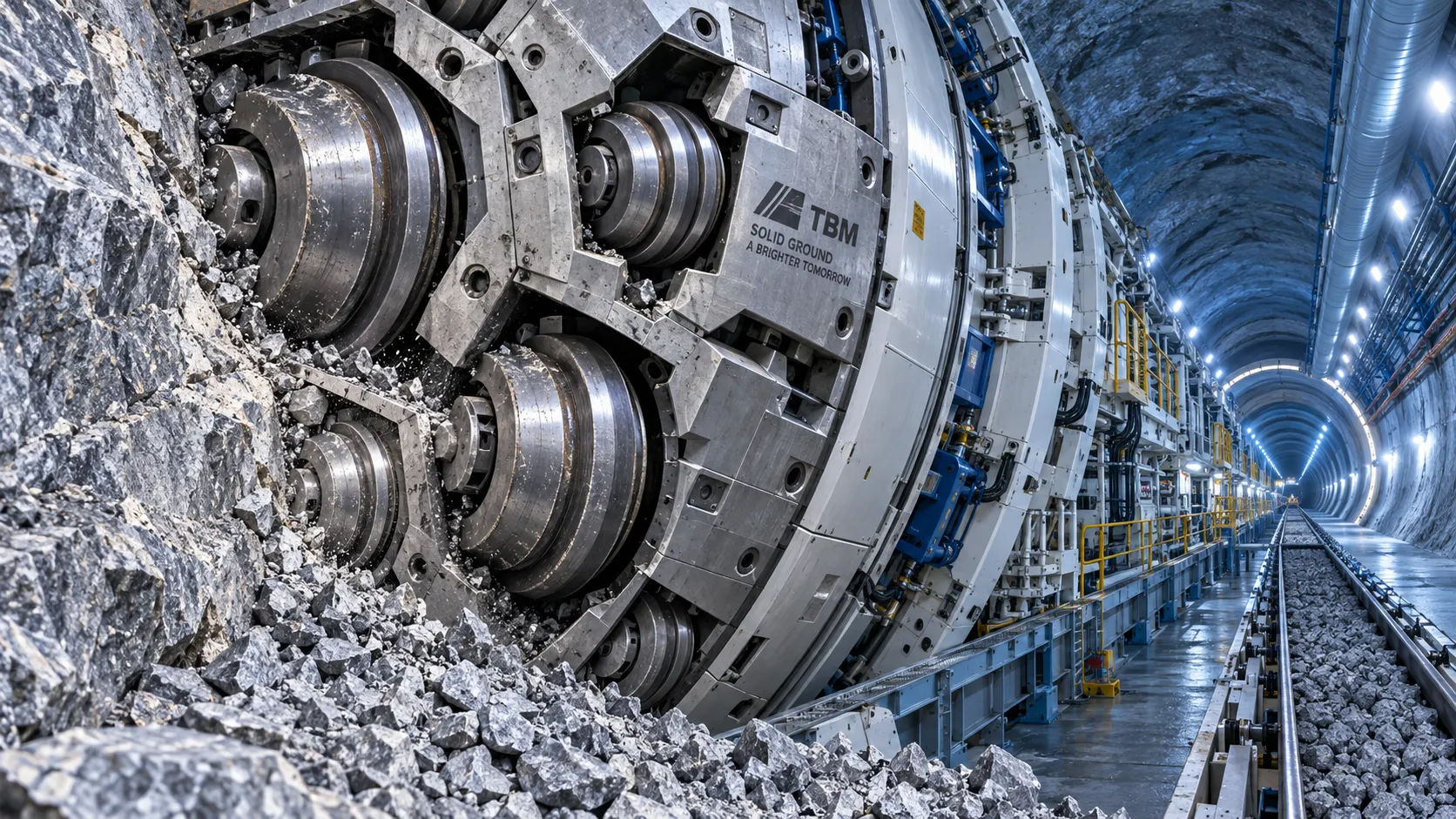
TBM Disc Cutter Design: Key Geometry and Load Factors for Hard Rock Tunnelling
TBM disc cutter design explained: explore geometry, spacing, load distribution and maintenance factors for reliable, efficient hard-rock tunnelling performance.
Hydraulic Tipping Stability Risks in Multi-Axle Dump Special Trailers
Dump special trailers: discover key hydraulic tipping stability risks, multi-axle load dynamics, and practical safety controls for safer, smarter bulk hauling.
When rock reinforcement in tunnel construction must change after blasting
Rock reinforcement in tunnel construction must change when blasting reveals overbreak, weak joints, water inflow, or deformation. Discover key post-blast support decisions.
How tunnel hydraulic systems influence drill jumbo uptime underground
Tunnel hydraulic systems directly influence drill jumbo uptime. Explore how stable pressure, clean oil, cooling, and maintainable design reduce underground downtime.
What to verify before appointing a tunneling vehicles manufacturer
Choosing a tunneling vehicles manufacturer? Verify application fit, reliability, compliance, parts support, training, and channel terms before appointing a partner.
Selecting K9 Ductile Iron Pipe for Buried Water Pipeline Conditions
K9 ductile iron pipe selection for buried water pipelines: compare pressure duty, joints, soil loads, corrosion protection, and installation controls for reliable long-term performance.
Related News
- 00
0000-00
Tunnel Boring Machine Costs: Budgeting for Purchase, Operation, and Project Risk - 00
0000-00
Open-Pit Haulage Cost Analysis: How Mine Managers Can Cut Cost per Tonne - 00
0000-00
Tunnel Construction Innovations That Reduce Risk and Schedule Delays on Urban Projects - 00
0000-00
TBM Disc Cutter Design: Key Geometry and Load Factors for Hard Rock Tunnelling - 00
0000-00
Hydraulic Tipping Stability Risks in Multi-Axle Dump Special Trailers
Weekly Insights
Stay ahead with our curated technology reports delivered every Monday.