
South Africa Adds 5G-RAN Rule for Autonomous LHDs





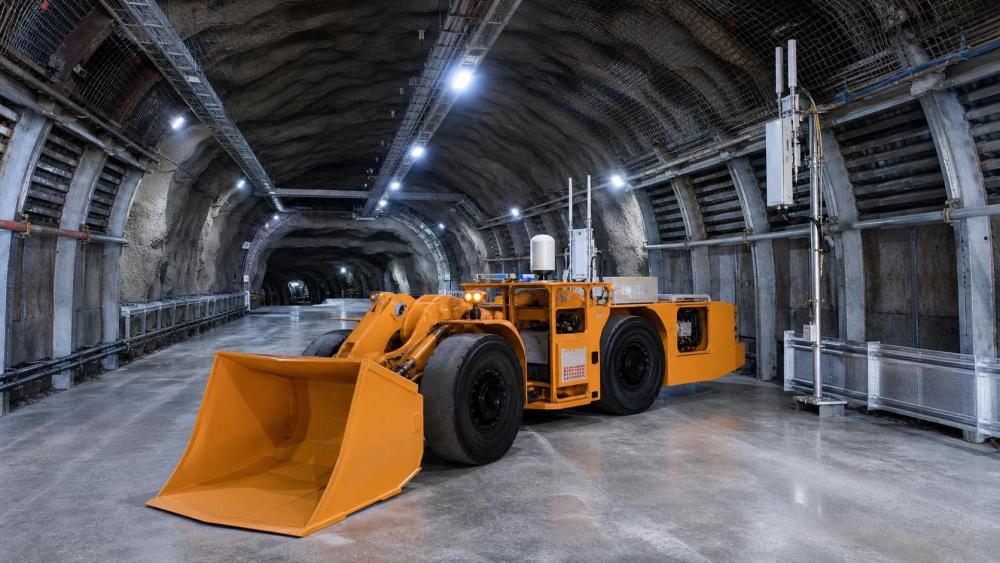
On July 8, 2026, South Africa’s Department of Mineral Resources and Energy (DMR) revised its 2026 access list for underground transport equipment, adding a new mandatory communications requirement for Autonomous LHDs. The change links market access from October 1, 2026 to both a 3GPP Release 17-compliant 5G-RAN remote-control module and a field latency stress test under SANS 10264-4:2026 with end-to-end latency no higher than 85 ms. For equipment exporters, integrators, procurement teams, certification-related service providers, and local delivery partners, this is worth close attention because it affects not only product configuration but also testing readiness and coordination with in-country communications services.
What the revised access list now requires
According to the provided event summary, DMR updated the underground transport equipment access list on July 8, 2026. Under the revised requirement, all Autonomous LHDs submitted for network access from October 1, 2026 must include a 5G-RAN remote-control module that supports 3GPP Release 17. The same equipment must also pass the SANS 10264-4:2026 on-site latency stress test, with end-to-end latency at or below 85 ms.
The provided information also states that this adjustment will affect the pre-installed hardware and software configuration of Chinese Autonomous LHDs exported to South Africa, as well as coordination plans involving local communications service providers.
Where the pressure is likely to appear first
Export configuration moves from optional feature to market-entry condition
From an industry perspective, exporters of Autonomous LHDs to South Africa may be affected first because the rule change is tied to access eligibility rather than a later operational preference. The practical effect is that hardware and software pre-installation plans may need to align in advance with the 5G-RAN remote-control requirement and the cited standard. What deserves closer attention is whether product files, technical specifications, and delivery documentation clearly reflect support for 3GPP Release 17 and readiness for the required field test.
System integration and local service coordination become part of delivery planning
Analysis shows the requirement does not stop at equipment assembly. Because the rule refers to a remote-control module and an on-site latency stress test, system integrators and delivery teams may need to treat local communications coordination as part of the compliance path. For companies shipping from China into South Africa, the point to watch is the interface between the machine-side configuration and the local communications service arrangement, since the event summary explicitly identifies that coordination as an affected area.
Procurement and project scheduling may need earlier technical alignment
Procurement teams and buyers may also face a change in workflow. Observably, once a communications function becomes a mandatory access item, technical bid alignment, specification review, and acceptance planning may need to be handled earlier in the purchasing cycle. The issue is not only whether an Autonomous LHD can be supplied, but whether the supplied unit is prepared for the required module support and field verification conditions before shipment, installation, or network submission.
Testing and compliance support functions gain a narrower focus
Certification-related service providers, testing support teams, and after-sales coordinators may need to pay closer attention to the documentation and test-preparation side of delivery. Analysis shows the cited SANS 10264-4:2026 latency threshold creates a specific compliance checkpoint, so the business impact may appear in test planning, technical file review, and evidence collection rather than only in product marketing claims.
What companies should track before October 2026
Check whether product baselines already match the new entry condition
Companies involved in exports or project delivery should first review whether current Autonomous LHD configurations already include the required 5G-RAN remote-control capability at the stated standard level. Where the existing baseline differs, the immediate concern is whether the gap affects pre-installation, model configuration control, or submission documentation.
Prepare technical files around the testable requirement, not just the feature list
Analysis shows that compliance attention should focus on demonstrable readiness rather than broad statements of connectivity capability. Technical descriptions, configuration records, and submission materials may need to be checked for consistency with the Release 17 support requirement and the field latency test condition under SANS 10264-4:2026.
Review local communications coordination as a delivery risk point
The provided summary directly points to coordination with local communications service providers. It is therefore more appropriate to understand communications setup as part of the commercial and delivery workflow, not only a post-sale technical matter. Companies should watch for changes in project planning, partner coordination, and acceptance timing where local network readiness may affect compliance outcomes.
Keep watching for execution language beyond the headline rule
The available information confirms the rule change and effective date, but it does not provide fuller execution detail. For that reason, companies should continue to monitor how the requirement is described in official wording, certification practice, tender documents, technical schedules, and project-level compliance requests. This remains a monitoring point rather than a confirmed procedural outcome.
Why this reads as an execution signal
Observably, this update is more than a general policy direction because it ties a specific equipment category to a named communications standard, a stated effective date, and a measurable latency threshold. That makes it more appropriate to understand the development as an execution-oriented market-entry signal rather than a broad statement of intent. At the same time, analysis shows the operational meaning for exporters and service partners will still depend on how testing, documentation review, and local coordination are applied in practice.
How the market is likely to interpret the change now
At this stage, the most balanced reading is that the revised access list establishes a concrete new compliance condition for Autonomous LHDs entering the South African market from October 1, 2026. The rule change should not be treated as a complete picture of downstream implementation, but neither should it be viewed as a distant policy discussion. It is better understood as a confirmed access requirement with immediate implications for configuration, compliance preparation, and cross-border delivery planning.
Basis of this article and points still requiring verification
This article is based on the user-provided news title, event date, and event summary. For events of this type, relevant source categories usually include official regulatory notices, releases from supervisory authorities, trade or customs authorities, industry association updates, standards organization documents, and reporting by established industry media. A specific official source link was not provided in the input, so the exact source document still needs further verification. What still merits continued monitoring includes any detailed implementation language, certification interpretation, tender-document updates, industry feedback, and how companies executing exports or local delivery adjust their compliance approach.
Related News

What Should a Mine Decarbonization Roadmap Include to Cut Emissions Without Hurting Output?
Mine decarbonization roadmap essentials: learn how to cut mining emissions with phased electrification, ventilation planning, and infrastructure readiness—without sacrificing output.

How to Evaluate Underground Mine Automation Companies for Safety and ROI
Underground mine automation companies vary widely in safety, interoperability, and ROI. Learn how to compare vendors, reduce deployment risk, and choose a scalable solution.
How to Evaluate Underground Haulage Systems for Ore Output, Ramp Grade, and Ventilation Limits
Underground haulage systems should be evaluated by ore output, ramp grade, and ventilation limits—not brochures. Learn how to compare trucks, LHDs, and electric options for smarter mine planning.

How to Evaluate a Pipe Jacking Equipment Distributor for Project Support and Uptime
Pipe jacking equipment distributor evaluation made practical: learn how to assess parts support, service response, training, and technical readiness to reduce downtime and protect project uptime.

How to Build a Mining Decarbonization Strategy That Balances Emissions, Cost, and Fleet Reality
Mining decarbonization strategy starts with fleet reality. Learn how to cut emissions, control cost, and align power, ventilation, and production for a practical mine transition.

How to Evaluate Articulated Dump Trucks Payload for Haul Road Conditions and Cycle Efficiency
Articulated Dump Trucks payload evaluation starts with real haul road conditions, not brochure numbers. Learn how to balance payload, traction, grades, and cycle efficiency for safer, higher output.
How Pipe Fittings Material and Pressure Class Affect Water Line Selection
Pipe fittings selection starts with material and pressure class. Learn how these factors affect water line reliability, corrosion resistance, installation, and long-term cost.

What Drives TBM Excavation Cost in Urban Tunneling Projects?
tbm excavation cost in urban tunneling depends on geology, shafts, segment lining, logistics, and risk. Discover the key cost drivers and compare bids with greater confidence.

What Does Energy Metals Mining in Australia Mean for Supply, Cost, and Project Risk?
Energy metals mining Australia is reshaping supply, cost, and project risk. Discover what it means for buyers, investors, and operators.
Related News
- 00
0000-00
What Should a Mine Decarbonization Roadmap Include to Cut Emissions Without Hurting Output? - 00
0000-00
How to Evaluate Underground Mine Automation Companies for Safety and ROI - 00
0000-00
How to Evaluate Underground Haulage Systems for Ore Output, Ramp Grade, and Ventilation Limits - 00
0000-00
How to Evaluate a Pipe Jacking Equipment Distributor for Project Support and Uptime - 00
0000-00
How to Build a Mining Decarbonization Strategy That Balances Emissions, Cost, and Fleet Reality
Weekly Insights
Stay ahead with our curated technology reports delivered every Monday.