
South Africa Halts Uncertified Rock Drill Imports





On June 18, 2026, South Africa’s mining regulator signaled an immediate tightening of market access for hydraulic rock drills by suspending import permission for equipment that has not obtained SABS SANS 1368:2025 certification. Because all arriving shipments now face 100% on-site SABS inspection and uncertified units may be detained and sent back, the change matters not only to manufacturers and exporters, but also to importers, procurement teams, certification service providers, and delivery planners working around mining equipment supply.
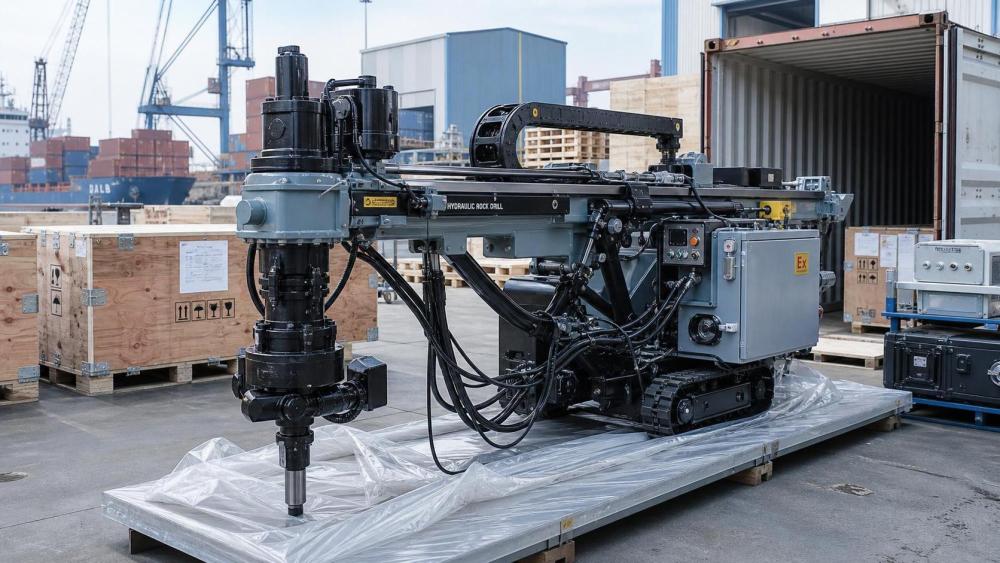
The rule change now applies at import clearance
According to the information provided, South Africa’s Department of Mineral Resources and Energy (DMRE) issued an urgent notice on June 18, 2026. From that date, import permits are suspended for hydraulic rock drills that do not hold SABS SANS 1368:2025 certification.
The same notice states that all arriving goods in this category must undergo 100% on-site inspection by SABS. Equipment without the required certification may be detained at the port of arrival and placed into a return-shipment process.
The new requirements add test items covering drill arm sealing performance, impact energy attenuation rate, and the IP68 grade of explosion-proof junction boxes. The provided information also states that the current certification pass rate among major Chinese manufacturers is below 35%, and that the delivery window has narrowed significantly.
Where the pressure is likely to appear first
Export shipments now face a stricter pre-shipment threshold
From an industry perspective, exporters of hydraulic rock drills are likely to feel the impact first because the rule change is no longer limited to product positioning or tender language; it now affects whether goods can enter the market at all. What deserves closer attention is the shift from a documentation-based trade step to a certification-gated import condition, especially where shipments were previously planned around standard customs timing.
For export-facing businesses, the main pressure points are likely to include product eligibility review before shipment, completeness of certification files, consistency between technical documents and declared product configuration, and the risk of cargo being held if compliance status is unclear.
Importers and procurement teams face tighter delivery planning
Observably, importers, distributors, and procurement teams tied to mining projects may need to reassess order timing and supplier qualification checks. A 100% inspection rate changes the practical rhythm of customs clearance, while the suspension of non-certified imports raises the risk that booked equipment cannot move into final delivery as originally scheduled.
The business impact is likely to concentrate in purchasing schedules, inbound inventory planning, project equipment readiness, and contract execution where delivery dates depend on specific hydraulic rock drill models. Buyers may need to pay closer attention to whether suppliers can demonstrate valid certification status under SABS SANS 1368:2025 rather than relying only on prior trading experience or general product conformity claims.
Certification and testing service providers may see demand shift toward new test items
Analysis shows that certification-related firms and testing bodies connected to this product line may face a more concentrated workload around the newly added technical items. The practical issue is not simply whether certification exists, but whether current product configurations can satisfy the updated testing focus on sealing, impact energy attenuation, and IP68 protection for explosion-proof junction boxes.
For companies supporting compliance preparation, technical file review, sample testing, and document alignment may become more important in the near term than routine paperwork support alone.
What companies should review immediately
Recheck certification status against the exact product being shipped
Analysis shows that companies should first verify whether the hydraulic rock drills intended for South Africa already hold the required SABS SANS 1368:2025 certification, and whether that certification matches the exact shipped configuration. Where product variants, component substitutions, or packaging declarations differ from certified specifications, the compliance risk may increase.
Prepare for deeper scrutiny of technical and clearance documents
Because the inspection rate has been raised to 100%, businesses should pay closer attention to the completeness and consistency of certification materials, testing records, product descriptions, and shipment documents. It is more appropriate to understand this as a need for stronger document alignment, not merely an extra customs formality.
Adjust delivery commitments with a narrower timing margin
Observably, the combination of import suspension for non-certified goods and universal on-site inspection can compress delivery flexibility. Companies involved in export sales, project procurement, and channel supply should review whether current lead times, promised delivery dates, and buffer stock assumptions still match the new compliance path described in the notice.
Watch for further clarification in execution practice
The provided information confirms the immediate rule shift, but it does not set out every operational detail of implementation. For that reason, companies should continue tracking how the certification requirement is applied in practice, how inspection handling is interpreted at the clearance stage, and whether related tender or procurement documents begin to reflect the same compliance emphasis more explicitly.
Why this reads as an execution signal, not just a policy note
From an industry perspective, this development is better understood as an executed access condition rather than a distant policy discussion, because the requirement is tied directly to import permission and physical inspection at arrival. That said, it is also still a rule change that requires continued observation, since the full market response, the consistency of enforcement practice, and the way buyers rewrite technical and qualification requirements will only become clearer over time.
Analysis shows that the most important signal is the compression of room for informal compliance assumptions. Once certification status becomes a direct gate for import and every shipment is inspected on site, risk moves upstream into design verification, certification planning, shipment release decisions, and supplier qualification.
How the market should read this development now
At this stage, the event is most appropriately read as a concrete compliance tightening in South Africa’s mining equipment trade environment for hydraulic rock drills. The confirmed facts already point to a narrower path for market entry, more sensitive delivery planning, and greater dependence on certification readiness.
A cautious conclusion is that this is neither a routine customs adjustment nor a basis for sweeping market predictions. It is a clear enforcement-linked change with immediate trade relevance, while the finer points of implementation, procurement response, and broader industry adaptation still require close observation.
Basis of this article and what still needs verification
This article is generated from the user-provided news title, event date, and event summary. For events of this kind, relevant source categories usually include official notices, releases from regulatory authorities, customs or trade administration updates, industry association communications, standards organization documents, and reporting by authoritative media.
No specific official source link was provided in the input, so the exact official publication path still requires further verification. Observably, the areas that remain worth tracking include detailed implementation language, certification enforcement criteria, possible changes in tender documents, market feedback from affected participants, and how companies execute compliance and delivery adjustments in practice.
Related News
How to Evaluate European Drill-and-Blast Tunnelling Contractors for Complex Projects
Drill and blast tunnelling contractors Europe: learn how to assess geology expertise, blast control, equipment reliability, safety, and programme resilience for complex projects.
Which Trenchless Construction Technique Fits Your Utility Crossing Conditions?
Trenchless construction techniques compared for utility crossings: choose HDD, microtunnelling, pipe jacking, or auger boring based on ground, accuracy, access, and risk.

What Is Driving Metro Tunnelling Demand Across Southeast Asia’s Major Cities?
Metro tunnelling Southeast Asia is accelerating as major cities tackle congestion, flooding, and connectivity. Explore the market forces, technical risks, and opportunities shaping demand.
Hard Rock Tunnelling in Australia: Selecting Methods for Variable Ground Conditions
Hard rock tunnelling in Australia: compare TBM, drill-and-blast and hybrid methods to manage variable ground, reduce risk and protect project costs.
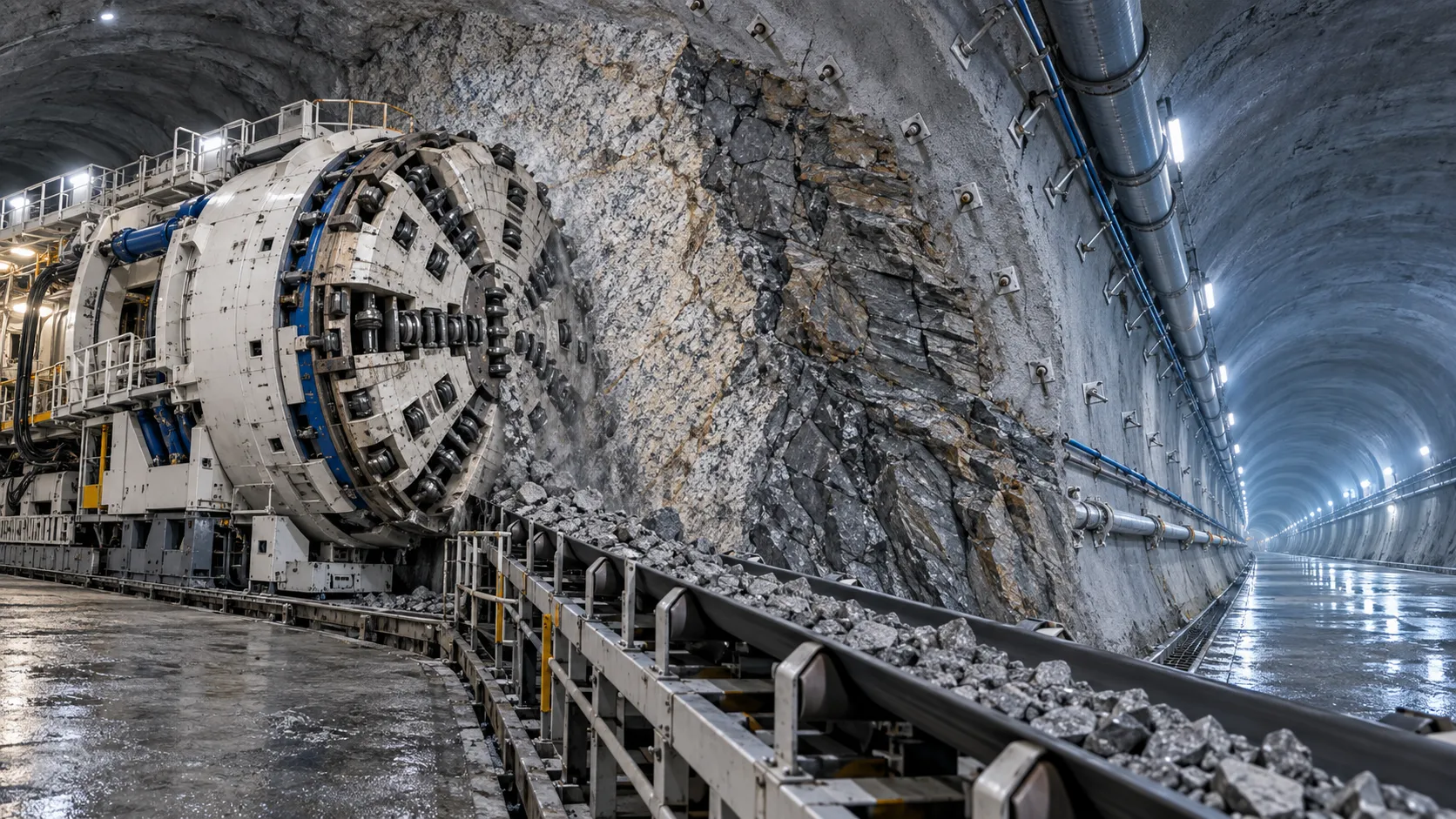
Hydropower Tunnel Excavation: Selecting Methods for Variable Rock Conditions
Hydropower tunnel excavation methods for variable rock conditions: compare TBM, drill-and-blast, and hybrid strategies to improve safety, progress, and project control.
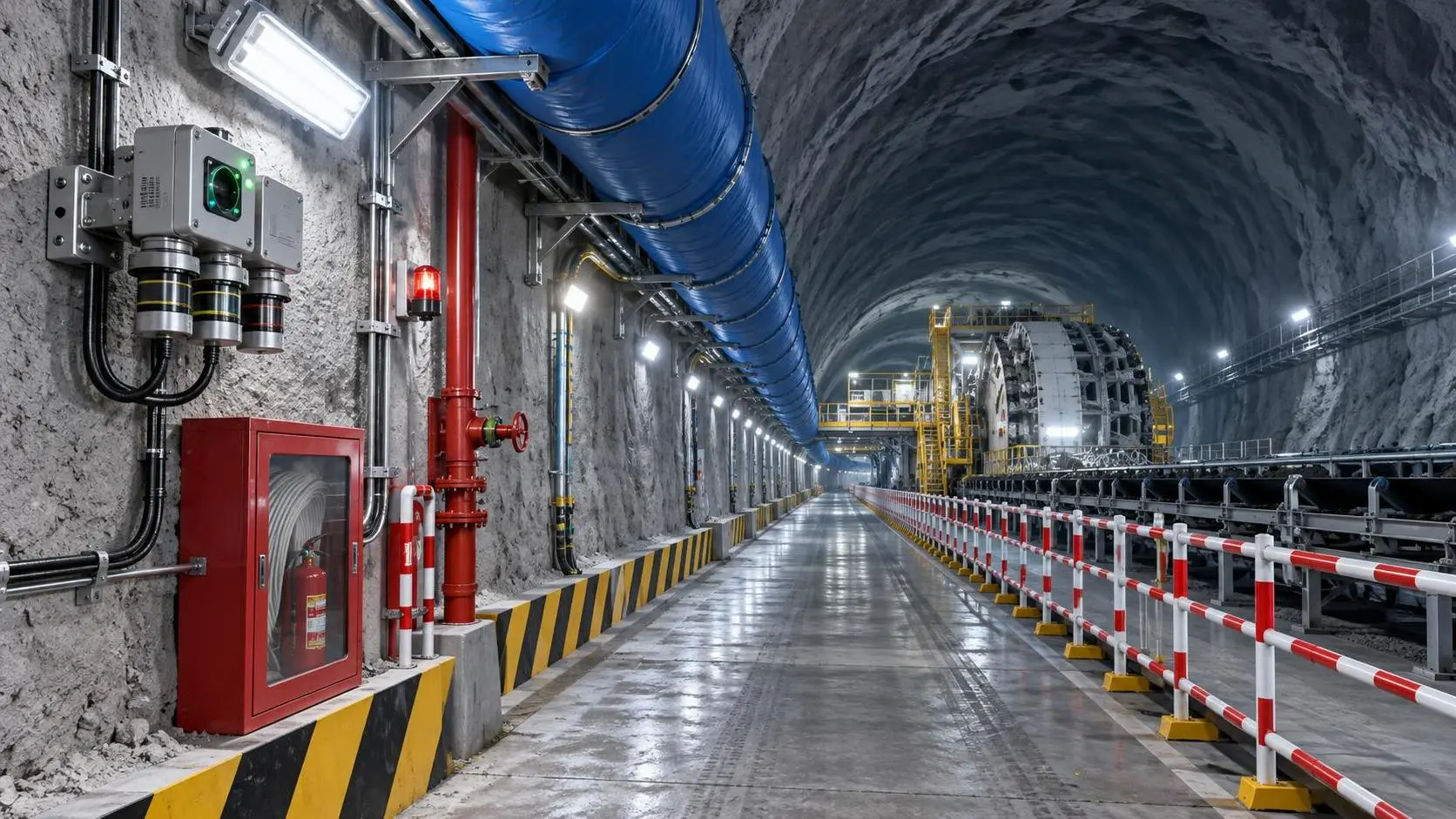
How to Select Underground Safety Equipment for Tunnelling by Hazard and Work Zone
Underground Safety Equipment for tunnelling: match protection to hazards, work zones, compliance, and emergency needs with this practical selection guide.

EPB or Slurry Shield? Selecting Soft-Ground Tunnelling Equipment by Soil Conditions
Tunnel Excavation Equipment for soft ground: compare EPB and slurry shields by soil, groundwater, settlement risk, and project logistics to choose confidently.

How to Specify TBM Backup System Parts for Reliable Long-Distance Tunnelling
TBM backup system parts: learn how to specify reliable spares for long-distance tunnelling, reduce downtime, ensure compatibility, and speed underground recovery.

How to Size Open Pit Mining Trucks for Haul Distance, Grade, and Payload?
Open Pit Mining Trucks: learn how to match payload, haul distance, grade, road resistance, and loading capacity for safer, lower-cost mine operations.
Related News
- 00
0000-00
How to Evaluate European Drill-and-Blast Tunnelling Contractors for Complex Projects - 00
0000-00
Which Trenchless Construction Technique Fits Your Utility Crossing Conditions? - 00
0000-00
What Is Driving Metro Tunnelling Demand Across Southeast Asia’s Major Cities? - 00
0000-00
Hard Rock Tunnelling in Australia: Selecting Methods for Variable Ground Conditions - 00
0000-00
Hydropower Tunnel Excavation: Selecting Methods for Variable Rock Conditions
Weekly Insights
Stay ahead with our curated technology reports delivered every Monday.