
Planning Underground Mine Transport: Choosing Systems for Haulage Distance and Ore Output





Planning Underground Mine Transport: Choosing Systems for Haulage Distance and Ore Output
Planning underground transport in mines requires more than choosing a loader, truck, or conveyor. Project managers must match the haulage system to production targets, travel distance, tunnel constraints, ventilation capacity, and mine-life economics.
The central decision is straightforward: short, flexible routes generally favor LHD-based truck haulage, while long, stable, high-output routes increasingly justify conveying, rail, or hybrid transport systems. The correct threshold varies by mine design.
For an engineering project leader, the practical objective is not simply buying productive equipment. It is designing an underground transport system that maintains planned tonnes, avoids development bottlenecks, controls operating cost, and remains adaptable as the mine expands.
Start With the Production System, Not the Equipment List
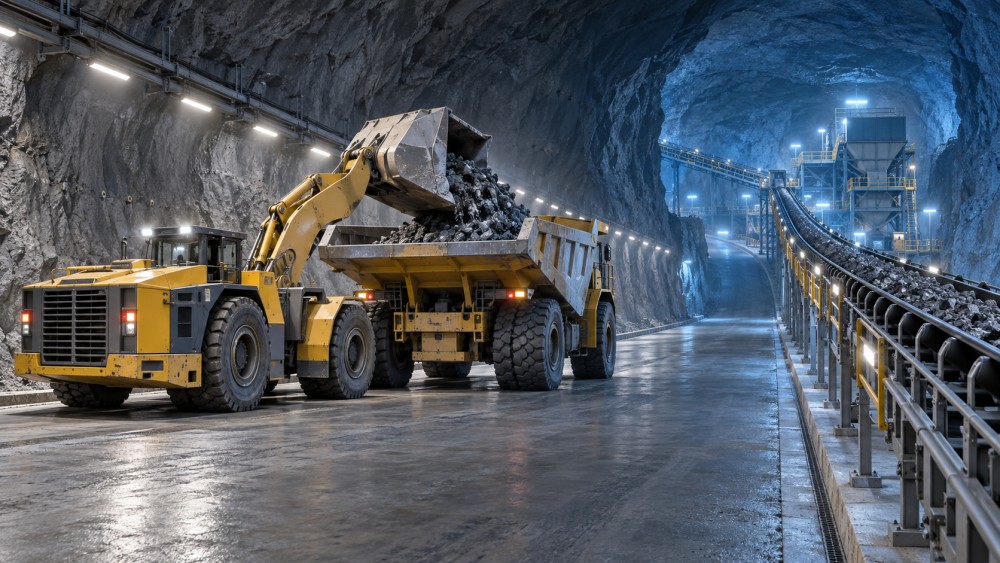
Underground transport in mines should be designed as a continuous materials-flow system. Ore loading, dumping, crushing, transfer, storage, hoisting, and surface handling must work at compatible capacities rather than being specified independently.
A high-capacity underground haul truck cannot compensate for an undersized orepass, a restricted loading bay, or a crusher that regularly stops. In practice, the slowest reliable stage determines the sustainable production rate.
Begin by defining the required annual ore output, operating days, shift schedule, planned availability, and peak production allowance. These inputs establish the hourly material flow that the haulage network must reliably deliver.
Project teams should distinguish between nominal capacity and dependable capacity. Nominal capacity assumes favorable cycle times and high equipment availability, while dependable capacity recognizes delays, maintenance, congestion, and variable ground conditions.
For example, a mine targeting 1.8 million tonnes annually may need considerably more than its average hourly rate during operating periods. Development interruptions, blasting windows, and crusher downtime require meaningful transport capacity margin.
A practical planning approach is to model average, peak, and recovery production cases. The recovery case matters because the mine must regain schedule after delays without triggering unsafe traffic density or excessive equipment utilization.
Production requirements must also be separated by mining area. A central haulage level may receive ore from several stopes, while remote panels may have lower but highly variable output needing flexible mobile equipment.
This distinction prevents a common error: applying one transport technology across the entire mine because it performs well in one zone. Underground transport systems often need different solutions at the production face, main level, and shaft interface.
Use Haulage Distance as the First Technology Screen
Haulage distance is usually the most influential early-stage variable. As travel distance rises, mobile equipment spends a growing share of each cycle traveling empty or loaded rather than loading and dumping.
Short-distance haulage normally supports LHDs working directly between drawpoints and nearby orepasses, stockpiles, or crushers. This configuration is flexible, easy to relocate, and well suited to changing production faces.
For short routes, compact LHDs can offer strong productivity because loading time remains a meaningful portion of the total cycle. Their maneuverability also fits narrow drifts, steep ramps, and irregular stoping layouts.
However, direct LHD haulage becomes increasingly inefficient when travel distances extend. Tire wear, battery consumption, diesel emissions, operator exposure, and congestion rise while bucket utilization declines across the working shift.
Medium-distance routes commonly favor a load-haul-dump and truck combination. LHDs load ore at the production face, then transfer it to underground haul trucks at designated loading points or ore handling stations.
This arrangement separates face productivity from main-haul travel. LHDs remain near their loading zone, while trucks carry larger payloads over ramps or main drifts to crushers, orepasses, shaft pockets, or transfer stations.
There is no universal distance at which trucks automatically become superior. Gradient, payload, loading method, road condition, passing bays, truck size, and loading-point availability can shift the economic crossover materially.
As a preliminary screen, project managers should treat short routes as candidates for direct LHD haulage, intermediate routes as truck-haul candidates, and long-life high-tonnage routes as potential conveyor, rail, or hybrid corridors.
The decision should be confirmed through cycle-time simulation and life-cycle cost analysis, not by a simple distance rule. A transport route with frequent intersections may perform worse than a longer, uninterrupted route.
Match Ore Output to the Haulage Capacity You Can Sustain
Ore output affects both the selected system and the redundancy required. A low-output mine may accept lower fleet utilization in exchange for flexibility, while a high-output operation needs predictable flow and standby capacity.
Mobile truck fleets scale by adding units, but this scalability has limits. More trucks can create queueing at loading points, dump locations, fuel bays, battery stations, workshops, and intersections before capacity actually improves.
At higher production rates, traffic management becomes a production issue rather than a logistics detail. Vehicle interactions can add minutes to each cycle, and repeated minor delays can eliminate the assumed fleet capacity.
Conveyors often become more attractive when output is high, routes are stable, and mine life is sufficient to recover installation cost. They offer continuous flow and can reduce dependence on large mobile fleets.
Yet conveyors are not automatically the lowest-risk choice. They need well-defined alignment, reliable transfer points, effective belt cleaning, spillage control, maintenance access, and contingency planning for unexpected stoppages.
Rail haulage can also be effective in large, long-life mines with regular routes and substantial tonnage. Its value is strongest where grades, drift dimensions, loading infrastructure, and operating discipline support repeatable train movements.
For many mines, the best answer is a hybrid architecture. LHDs handle localized loading, trucks serve developing or remote areas, and a conveyor or orepass system carries the main production stream toward the shaft or surface plant.
Hybrid systems allow the mine to reserve capital-intensive fixed infrastructure for stable corridors. They also preserve mobile flexibility where stopes move frequently or future orebody geometry remains uncertain during early project stages.
Capacity design should include planned maintenance, unscheduled downtime, and operational variability. A system that meets daily tonnes only under perfect conditions is under-designed for a commercial mining operation.
Assess Tunnel Geometry, Grade, and Mine Layout Before Selecting Fleet Size
Equipment selection must fit the physical mine, not an idealized layout. Drift width, turning radius, back height, ramp grade, ventilation raises, refuges, and passing arrangements directly affect transport performance and safety.
A larger truck may carry more payload per trip but require wider drifts, greater excavation volume, stronger roadways, larger bays, and more costly ground support. Those civil consequences must enter the fleet comparison.
Ramp grade is especially important for loaded truck performance. Steeper grades reduce speed, increase energy demand, accelerate wear, and may require derating payloads to maintain safe braking and tire operating conditions.
For battery-electric equipment, grade and route length influence energy use, regeneration opportunities, charging demand, and battery-swap frequency. A fleet plan should use actual duty-cycle data rather than flat-route manufacturer assumptions.
Mine layout also determines whether transport routes can be separated. Separating people, service vehicles, development traffic, and production haulage reduces interference and helps preserve the cycle time assumed in the production model.
Where separation is impossible, route controls become essential. Passing bays, one-way loops, dispatch rules, signaling, and intersection priorities should be designed before operations begin, rather than added after congestion appears.
Orepass location deserves particular attention. A well-positioned orepass can shorten LHD travel dramatically and reduce the truck fleet requirement, but it also introduces geotechnical, hang-up, and material-handling design obligations.
Project managers should compare transport alternatives alongside development quantities. A lower-cost truck fleet can become uneconomic if it requires extensive ramp development, while a fixed system may reduce total mine development requirements.
Compare Capital Cost Against Life-Cycle Cost and Schedule Risk
Purchase price is a poor proxy for transport-system value. The relevant comparison includes development cost, equipment capital, power supply, ventilation, maintenance facilities, labor, energy, spares, automation systems, and production disruption risk.
Diesel fleets often have lower initial infrastructure requirements, particularly in early-stage mines. However, diesel equipment can impose major recurring ventilation costs and creates additional heat, emissions, fuel handling, and maintenance burdens.
Battery-electric LHDs and trucks can reduce underground emissions and ventilation demand, but they require a realistic charging or battery-swapping strategy. Electrical distribution, charger availability, battery inventory, and maintenance capability are critical factors.
Do not evaluate electrification solely through energy cost per tonne. The business case should also quantify reduced ventilation infrastructure, lower heat load, improved working conditions, possible productivity gains, and regulatory or ESG benefits.
Fixed conveying systems commonly require larger upfront capital and longer installation lead times. Their economics strengthen when a route is long, production is sustained, and mobile-haul operating costs would otherwise dominate the mine plan.
Schedule risk should be evaluated with the same discipline as cost. A conveyor delayed by permitting, excavation, procurement, or complex installation can affect first production, while trucks can often be mobilized in stages.
Conversely, deferring fixed infrastructure too long can lock a project into expensive truck haulage. The project may then face a difficult mid-life conversion while production commitments leave little room for planned disruption.
A phased strategy can reduce this risk. Many mines begin with flexible mobile haulage during ramp-up, then commission fixed haulage corridors when ore output, route stability, and reserve confidence justify the investment.
The key is to protect the future option during initial design. Reserve space for transfer stations, electrical infrastructure, conveyor alignment, orepass connections, and maintenance access even when those assets are not built immediately.
Build Reliability, Ventilation, and Safety Into the Transport Decision
Transport systems fail operationally when reliability is treated as a maintenance department concern rather than a design requirement. Every haulage choice should include availability assumptions supported by service access and spare-parts strategy.
Underground maintenance conditions affect real fleet performance. Workshops, wash bays, lifting equipment, tire-handling provisions, parts storage, technician access, and planned maintenance windows are all part of haulage capacity design.
Ventilation is equally central to underground transport in mines. Diesel fleet growth can trigger costly fan upgrades, larger airways, refrigeration demand, and operating restrictions, particularly in deep or high-temperature mines.
Battery-electric equipment can relieve some ventilation demand, but it does not remove the need for airflow planning. Heat from people, rock, electrical systems, and battery charging must still be considered in the ventilation model.
Safety design should address interactions between machines, pedestrians, and fixed infrastructure. Collision avoidance, proximity detection, communication coverage, visibility standards, refuge arrangements, and emergency egress should influence route and fleet decisions.
Automation can improve consistency and reduce personnel exposure on repetitive routes. Autonomous or remote-operated LHDs are particularly relevant where loading occurs in hazardous zones or where shift changes reduce conventional utilization.
Automation projects need operational readiness, not just equipment capability. Reliable communications, accurate positioning, route standardization, maintenance skills, control-room procedures, and clear intervention rules are necessary for dependable outcomes.
For project leaders, the right question is not whether autonomous haulage is technically possible. It is whether the mine design and operating model can consistently support its expected production, safety, and cost benefits.
Use a Structured Selection Process Before Finalizing the Mine Plan
A robust selection process begins with a transport basis of design. This document should state ore output, material characteristics, mine schedule, haul routes, operating hours, equipment availability targets, and constraints that cannot be compromised.
Next, develop several credible scenarios rather than one preferred concept. Compare direct LHD haulage, truck haulage, orepass-supported haulage, conveying, rail, and hybrid options against the same production and geometry assumptions.
Each scenario should include cycle-time calculations, fleet counts, queuing assumptions, energy demand, ventilation implications, infrastructure needs, maintenance requirements, capital cost, operating cost, and sensitivity to schedule changes.
Simulation is valuable where multiple loading points, shared routes, or variable production sources create interactions that simple spreadsheet calculations cannot capture. It can reveal queueing, bottleneck locations, and hidden spare-capacity requirements.
Risk workshops should test what happens when a truck fails, an orepass hangs up, a conveyor stops, a battery station loses power, or a major heading closes. These events define whether the system has operational resilience.
Supplier data should be validated against the intended mine duty cycle. Payload ratings, speed, energy consumption, battery life, and availability figures can vary significantly according to gradient, road quality, ambient temperature, and operator practices.
Finally, align the selected system with project staging. Confirm what must be built before first production, what can be deferred, and what future expansion pathways must be physically protected in the initial underground layout.
Conclusion: Select the System That Protects Tonnes, Cost, and Future Flexibility
The best underground transport system is not necessarily the biggest truck, the newest battery platform, or the most automated solution. It is the system that delivers planned ore tonnes safely and reliably under real mine conditions.
Short and changing routes usually reward flexible LHD-based operations. Medium-distance production often supports truck haulage, while long, stable, high-output corridors may justify conveyors, rail, orepasses, or carefully designed hybrid systems.
Project managers should make the decision through integrated analysis of haulage distance, ore output, layout, gradient, ventilation, capital timing, reliability, and expansion plans. Treating these factors separately produces avoidable bottlenecks and cost escalation.
When underground transport in mines is planned as a mine-wide production system, equipment choices become clearer. The result is a haulage strategy that supports ramp-up, protects long-term economics, and gives the operation room to adapt.
Related News
Tunnel Boring Machine Costs: Budgeting for Purchase, Operation, and Project Risk
Tunnel Boring Machines cost more than purchase price. Learn how to budget lifecycle costs, downtime, logistics, wear, and project risk for smarter TBM decisions.
Open-Pit Haulage Cost Analysis: How Mine Managers Can Cut Cost per Tonne
Open pit haulage cost analysis: discover practical ways to reduce cost per tonne through payload control, cycle-time optimization, road performance, and smarter fleet decisions.
Tunnel Construction Innovations That Reduce Risk and Schedule Delays on Urban Projects
Tunnel construction innovation for urban projects: discover smarter TBMs, real-time monitoring, trenchless methods, and automation that reduce risk and protect schedules.
TBM Disc Cutter Design: Key Geometry and Load Factors for Hard Rock Tunnelling
TBM disc cutter design explained: explore geometry, spacing, load distribution and maintenance factors for reliable, efficient hard-rock tunnelling performance.
Hydraulic Tipping Stability Risks in Multi-Axle Dump Special Trailers
Dump special trailers: discover key hydraulic tipping stability risks, multi-axle load dynamics, and practical safety controls for safer, smarter bulk hauling.
When rock reinforcement in tunnel construction must change after blasting
Rock reinforcement in tunnel construction must change when blasting reveals overbreak, weak joints, water inflow, or deformation. Discover key post-blast support decisions.
How tunnel hydraulic systems influence drill jumbo uptime underground
Tunnel hydraulic systems directly influence drill jumbo uptime. Explore how stable pressure, clean oil, cooling, and maintainable design reduce underground downtime.
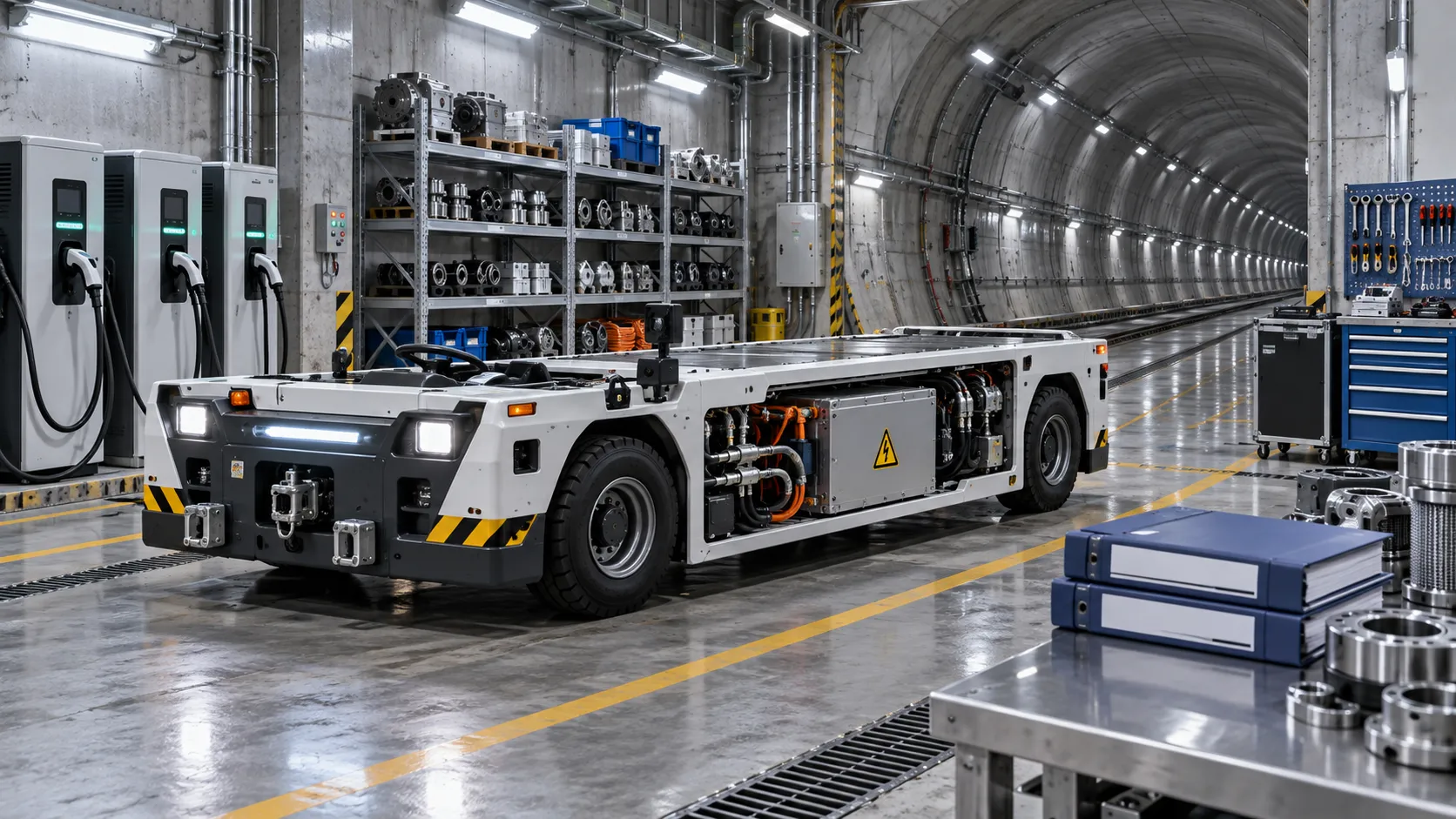
What to verify before appointing a tunneling vehicles manufacturer
Choosing a tunneling vehicles manufacturer? Verify application fit, reliability, compliance, parts support, training, and channel terms before appointing a partner.
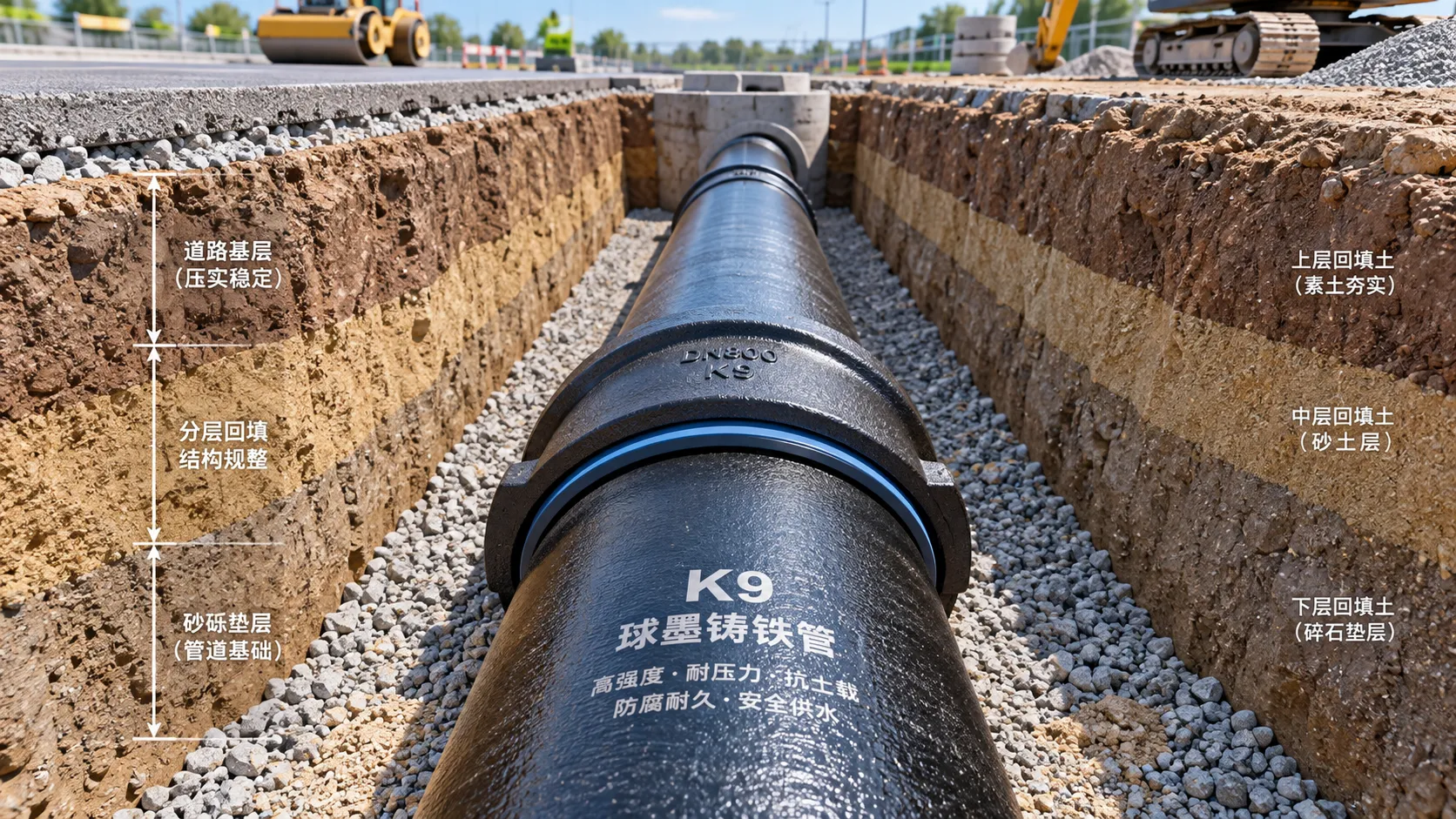
Selecting K9 Ductile Iron Pipe for Buried Water Pipeline Conditions
K9 ductile iron pipe selection for buried water pipelines: compare pressure duty, joints, soil loads, corrosion protection, and installation controls for reliable long-term performance.
Related News
- 00
0000-00
Tunnel Boring Machine Costs: Budgeting for Purchase, Operation, and Project Risk - 00
0000-00
Open-Pit Haulage Cost Analysis: How Mine Managers Can Cut Cost per Tonne - 00
0000-00
Tunnel Construction Innovations That Reduce Risk and Schedule Delays on Urban Projects - 00
0000-00
TBM Disc Cutter Design: Key Geometry and Load Factors for Hard Rock Tunnelling - 00
0000-00
Hydraulic Tipping Stability Risks in Multi-Axle Dump Special Trailers
Weekly Insights
Stay ahead with our curated technology reports delivered every Monday.