
SLAM Algorithms for Underground Mining: How to Compare Accuracy, Drift, and Compute Load





Why SLAM Comparison Matters Underground
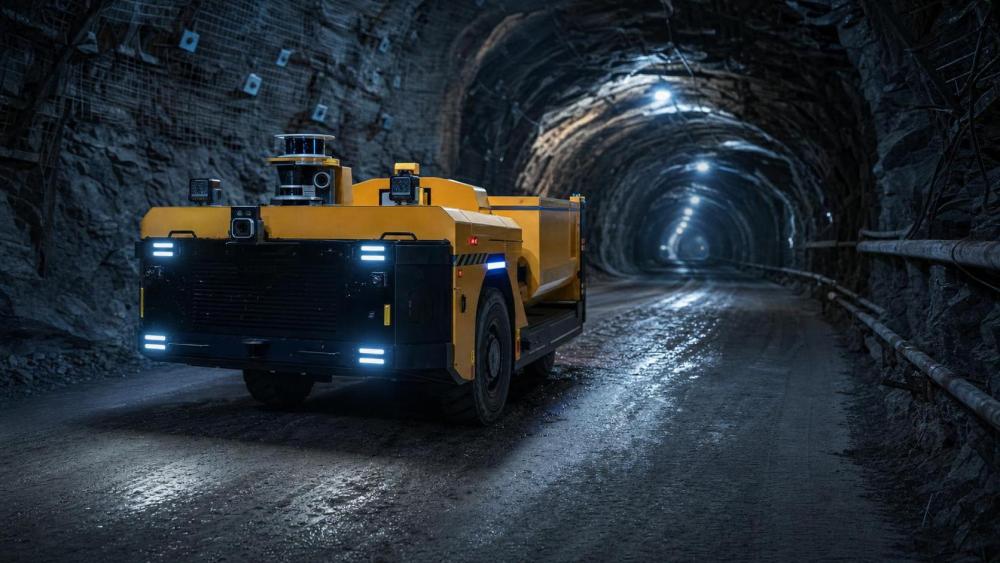
Comparing SLAM Algorithms for underground mining starts with a simple reality: tunnel vehicles do not operate in laboratory conditions.
They run in dust, darkness, vibration, water spray, reflective rock, and GPS-denied drifts where every sensing weakness becomes operational risk.
That is why a single accuracy headline rarely helps.
A map can look sharp during a short demo, yet still fail after repeated cycles, route changes, or long haul distances.
For underground LHDs, battery-electric haulage units, drilling support platforms, and other mobile assets, localization quality directly affects safety margins, traffic coordination, and productivity.
This is also why the topic sits naturally within UTMD’s broader view of smart underground transport systems.
As mines and tunnel projects move toward electrification, automation, and remote operation, dependable positioning becomes a core operating layer, not an optional software feature.
What SLAM Really Means in a Mining Context
SLAM combines localization and mapping at the same time.
In practical terms, the machine estimates where it is while continuously building or updating a map of the underground environment.
In surface logistics, GNSS can support this process.
Underground, that support disappears.
The algorithm must instead rely on sensors such as LiDAR, cameras, IMUs, wheel encoders, radar, or sensor fusion stacks.
Different SLAM Algorithms for underground mining handle this challenge in different ways.
Some prioritize geometric consistency through LiDAR point clouds.
Some try to recover more context through visual features.
Some reduce risk by fusing multiple sensors, accepting extra compute and integration complexity.
The comparison therefore is not algorithm versus algorithm in isolation.
It is algorithm, sensor stack, vehicle dynamics, roadway condition, and operating cycle considered together.
Why Accuracy Alone Misleads
Accuracy is still important, but it needs context.
A vendor may report centimeter-level error on a fixed test route.
That number says little about how the system behaves after several hours, after muck piles reshape the scene, or after wheel slip increases.
Underground routes often contain repetitive geometry.
Long drifts can look similar for hundreds of meters, creating false matches or weak feature diversity.
Fresh excavation changes wall texture.
Water, fog, and dust reduce visibility.
These conditions can break systems that look excellent on clean benchmark datasets.
A more useful question is this: accuracy under which mission profile, over what distance, with what environmental variation, and with which recovery behavior after degradation?
Metrics worth checking together
- Absolute trajectory error during short and long routes
- Relative pose error during turns, grades, and stop-start cycles
- Map consistency after repeated passes
- Relocalization time after occlusion or sensor dropout
- Performance under dust, spray, dynamic obstacles, and lighting changes
Drift Is Often the Deciding Factor
For many operations, drift matters more than peak precision.
A vehicle can tolerate small local error.
It cannot tolerate error that accumulates quietly until route planning, docking, or intersection behavior becomes unreliable.
Long-run drift becomes critical in autonomous haul loops, loading points, ore pass approaches, and battery-swap stations.
It also affects production reporting, because location-tagged cycle data loses credibility when position history wanders.
SLAM Algorithms for underground mining should therefore be judged by how they limit drift, not only by how they initialize.
Loop closure capability matters here.
So does the algorithm’s ability to reject false loop closures in tunnels that look almost identical.
Strong fusion with inertial sensing can stabilize motion estimates.
But poor calibration can turn that advantage into another drift source.
Compute Load Is an Operational Constraint
Compute load is often treated as a secondary issue until deployment starts.
Then the tradeoff becomes obvious.
High-fidelity perception consumes power, produces heat, and competes with other onboard functions such as vehicle control, obstacle detection, telemetry, and health monitoring.
That matters even more for battery-electric underground fleets, where every watt affects usable shift performance.
Heavy models may also require specialized GPUs or edge computers with stronger cooling and enclosure demands.
In confined underground equipment, packaging is never trivial.
A practical comparison should test latency, peak resource usage, and graceful degradation.
If compute headroom disappears during rough sections or dense traffic, navigation quality may collapse precisely when the machine most needs stability.
A usable evaluation lens
Different Underground Assets Need Different SLAM Priorities
Not every mobile machine asks the same question of SLAM.
An underground LHD operating in narrow headings needs dependable localization around muck piles, uneven floors, and repeated reversing maneuvers.
A mine truck on longer haul roads may value drift control over wide distance and stable operation at higher speed.
A drilling jumbo may need finer positional confidence near the working face, where mapping detail supports setup quality.
The same logic applies across UTMD’s equipment landscape.
Whether the asset is part of a smart mine transport loop or linked to tunnel development workflows, the SLAM choice should match motion profile, environment change rate, and consequence of localization failure.
This is where many comparisons go wrong.
They compare algorithms across generic benchmarks instead of mission-critical behaviors.
How to Read Vendor Claims More Carefully
Claims around SLAM Algorithms for underground mining often sound strong because they are built around best-case tests.
The important step is to inspect the test design behind the numbers.
Useful questions include the following.
- Was the route static or changing during the trial?
- How long did the run last before metrics were captured?
- Were dust, spray, and moving vehicles present?
- Did the system rely on prior maps or operate in a fresh heading?
- What happened after sensor contamination or temporary failure?
- How much onboard hardware was required to reach the reported result?
A rigorous evaluation should also separate algorithm capability from sensor quality.
An impressive result may owe more to an expensive LiDAR stack than to the underlying SLAM method.
From Pilot Success to Production Readiness
The move from pilot to production is where selection discipline pays off.
A pilot usually proves that a route can be mapped and followed.
Production demands much more.
It demands maintainable calibration, manageable compute load, recoverable failure modes, and map updates that fit shift operations.
It also demands compatibility with fleet management, traffic rules, safety logic, and remote supervision.
In that sense, SLAM Algorithms for underground mining are part of a system architecture decision.
They influence uptime, maintenance planning, autonomous expansion, and the quality of operational data flowing into a strategic intelligence layer.
That broader view aligns with how UTMD tracks underground engineering: not as isolated equipment stories, but as linked transitions in automation, electrification, and asset reliability.
A Practical Next Step for Evaluation
A useful next step is to build a comparison matrix around the actual route, vehicle, and failure tolerance of the target operation.
Start with three weighted dimensions: accuracy where precision is mission-critical, drift over realistic cycle duration, and compute load on the intended hardware platform.
Then add robustness, recovery behavior, and integration effort.
That approach produces a clearer decision than benchmark ranking alone.
For organizations tracking underground automation, the real question is not which SLAM method appears most advanced.
It is which option remains dependable when rock conditions, route geometry, and equipment constraints begin to push back.
That is the point where SLAM Algorithms for underground mining stop being a software topic and become an operational decision with measurable consequences.
Related News
Tunnel Boring Machine Costs: Budgeting for Purchase, Operation, and Project Risk
Tunnel Boring Machines cost more than purchase price. Learn how to budget lifecycle costs, downtime, logistics, wear, and project risk for smarter TBM decisions.
Open-Pit Haulage Cost Analysis: How Mine Managers Can Cut Cost per Tonne
Open pit haulage cost analysis: discover practical ways to reduce cost per tonne through payload control, cycle-time optimization, road performance, and smarter fleet decisions.
Tunnel Construction Innovations That Reduce Risk and Schedule Delays on Urban Projects
Tunnel construction innovation for urban projects: discover smarter TBMs, real-time monitoring, trenchless methods, and automation that reduce risk and protect schedules.

TBM Disc Cutter Design: Key Geometry and Load Factors for Hard Rock Tunnelling
TBM disc cutter design explained: explore geometry, spacing, load distribution and maintenance factors for reliable, efficient hard-rock tunnelling performance.
Hydraulic Tipping Stability Risks in Multi-Axle Dump Special Trailers
Dump special trailers: discover key hydraulic tipping stability risks, multi-axle load dynamics, and practical safety controls for safer, smarter bulk hauling.
When rock reinforcement in tunnel construction must change after blasting
Rock reinforcement in tunnel construction must change when blasting reveals overbreak, weak joints, water inflow, or deformation. Discover key post-blast support decisions.
How tunnel hydraulic systems influence drill jumbo uptime underground
Tunnel hydraulic systems directly influence drill jumbo uptime. Explore how stable pressure, clean oil, cooling, and maintainable design reduce underground downtime.
What to verify before appointing a tunneling vehicles manufacturer
Choosing a tunneling vehicles manufacturer? Verify application fit, reliability, compliance, parts support, training, and channel terms before appointing a partner.
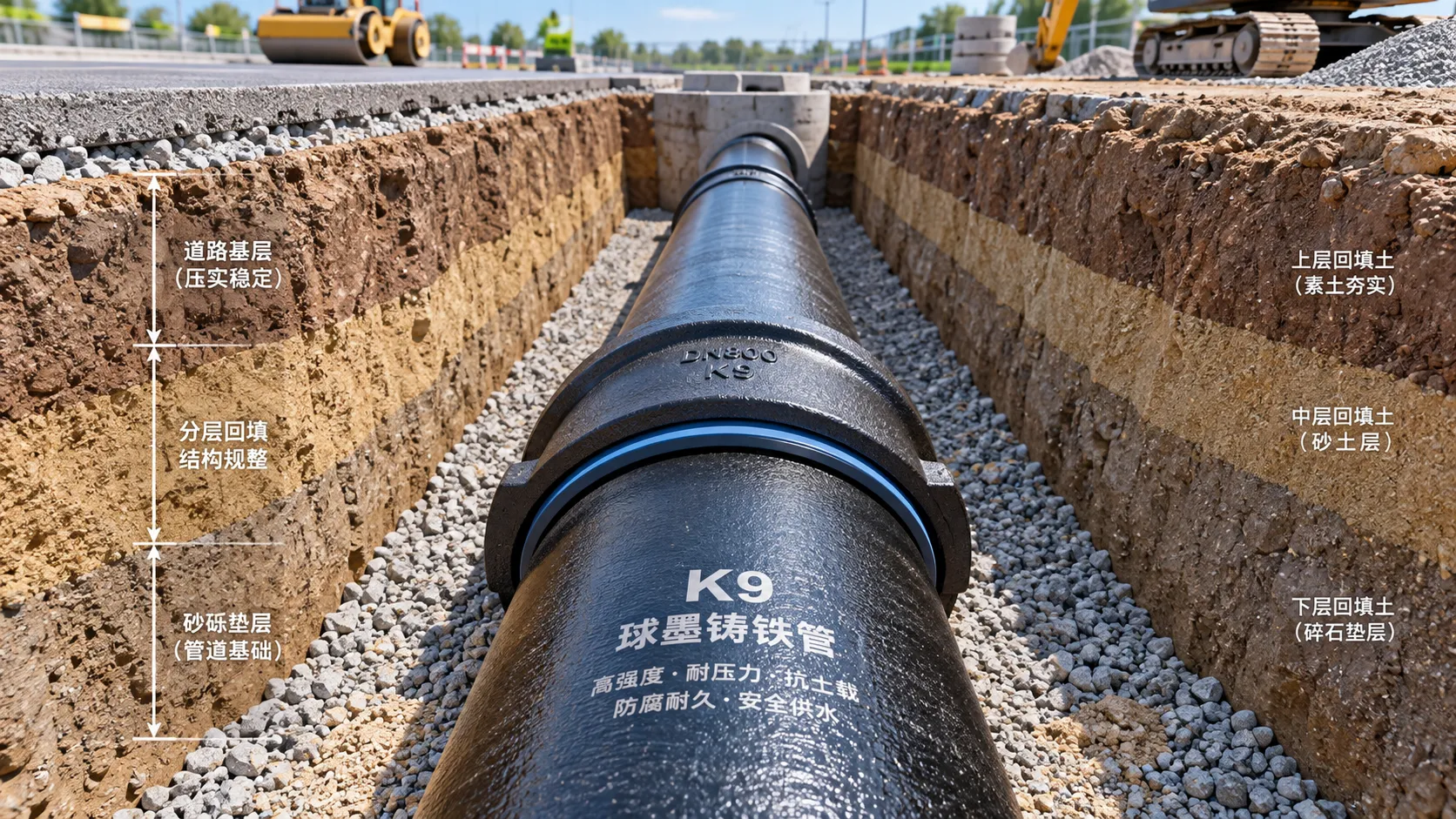
Selecting K9 Ductile Iron Pipe for Buried Water Pipeline Conditions
K9 ductile iron pipe selection for buried water pipelines: compare pressure duty, joints, soil loads, corrosion protection, and installation controls for reliable long-term performance.
Related News
- 00
0000-00
Tunnel Boring Machine Costs: Budgeting for Purchase, Operation, and Project Risk - 00
0000-00
Open-Pit Haulage Cost Analysis: How Mine Managers Can Cut Cost per Tonne - 00
0000-00
Tunnel Construction Innovations That Reduce Risk and Schedule Delays on Urban Projects - 00
0000-00
TBM Disc Cutter Design: Key Geometry and Load Factors for Hard Rock Tunnelling - 00
0000-00
Hydraulic Tipping Stability Risks in Multi-Axle Dump Special Trailers
Weekly Insights
Stay ahead with our curated technology reports delivered every Monday.